
Imagine stepping into a space where the walls don't just enclose—they speak . A hotel lobby where the cladding shimmers like stardust at dusk, or a community center that feels both modern and rooted in nature, its exterior soft to the touch yet tough against the elements. These aren't just dreams of architects; they're the result of choosing the right cladding materials. Today, we're putting two heavyweights head-to-head: the warm, organic charm of Poly Wood Board and the bold, innovative versatility of the MCM Project Series. Both have redefined what's possible in architectural design, but how do they stack up in real-world, large-scale installations? Let's dive in.
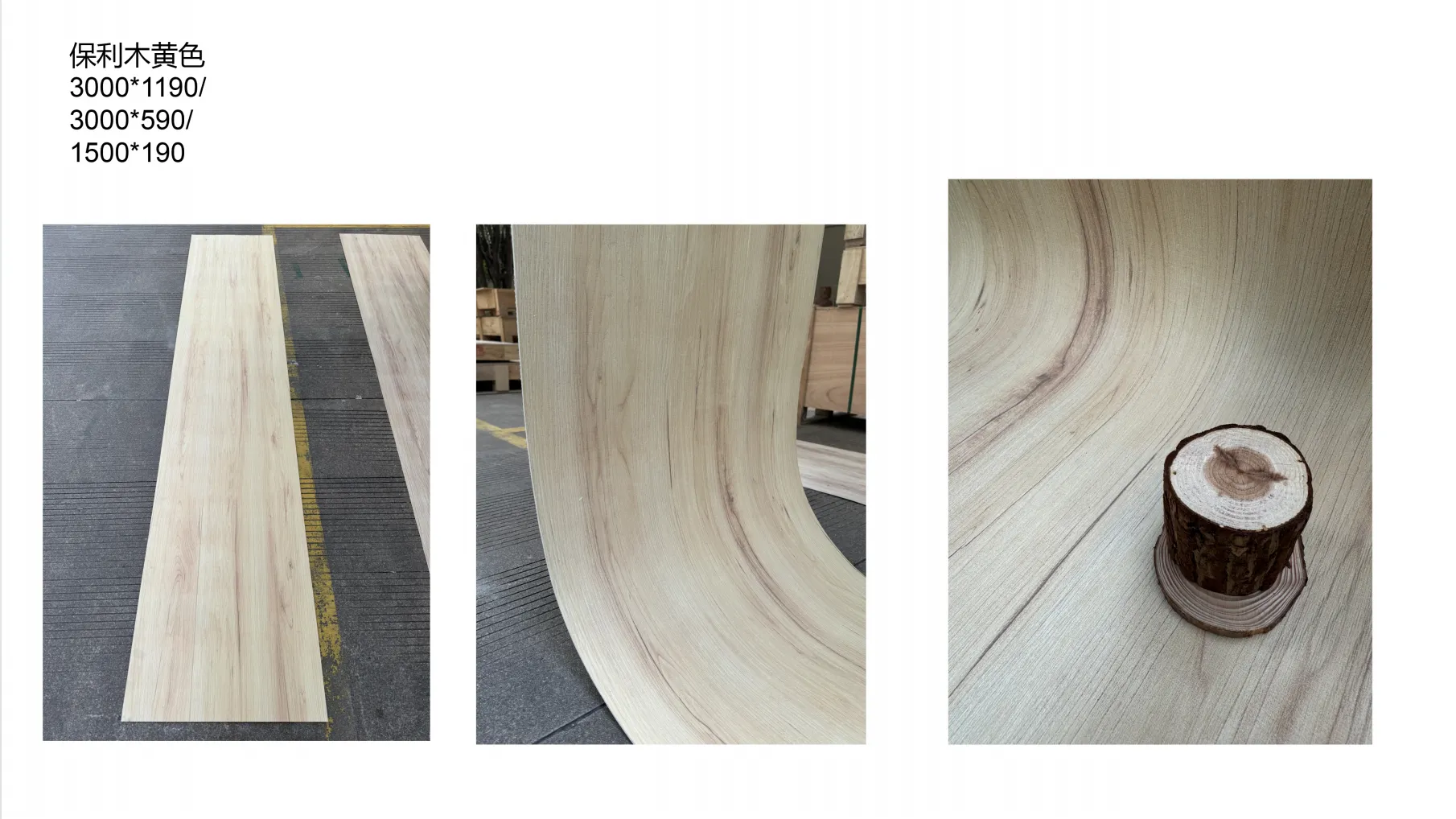
If you've ever walked through a space and thought, "This feels like a cozy cabin, but with the sleekness of a city loft," chances are Poly Wood Board played a role. At first glance, it's easy to mistake it for real wood—its surface carries the same gentle grain patterns, the subtle knots, and the warm, earthy tones that make wood a timeless favorite. But here's the twist: Poly Wood Board isn't just wood. It's a hybrid material, crafted from recycled wood fibers, polymers, and eco-friendly resins, designed to capture wood's beauty without its drawbacks.
What makes it stand out? For starters, durability. Unlike natural wood, it doesn't warp in humidity, crack in dry climates, or fall prey to termites. A beachfront restaurant in Bali, for example, used Poly Wood Board for its exterior walls and decking—after five years of salt spray, rain, and intense sun, the boards still look as rich and warm as the day they were installed. "We wanted that 'tropical retreat' vibe, but we needed something that could handle the elements," says the project's architect, Mia Wong. "Poly Wood gave us the best of both worlds: the look of teak, but with the resilience of a synthetic material."
Then there's the texture. Run your hand over a Poly Wood panel, and you'll feel the faint ridges of the grain, the slight give where a knot would be in real wood. It's tactile in a way that synthetic materials often aren't, inviting touch and creating a sense of warmth. This makes it a favorite for spaces where comfort is key—think boutique hotels, community centers, or even residential exteriors where homeowners want to blend into a wooded neighborhood without the upkeep of real timber.
And let's not forget sustainability. With global forests under pressure, Poly Wood Board offers a guilt-free alternative. Most manufacturers use 80% recycled materials, and the boards themselves are 100% recyclable at the end of their lifespan. For a tech campus in Portland aiming for LEED Platinum certification, this was a dealbreaker. "We wanted our buildings to reflect our commitment to the planet," explains sustainability director James Chen. "Poly Wood let us do that without sacrificing aesthetics."
If Poly Wood Board is the "warm hug" of cladding materials, the MCM Project Series is the "bold statement." Short for Modified Composite Material, MCM isn't just one product—it's a family of cladding solutions designed to push the boundaries of what's possible. From the flexibility of MCM Flexible Stone to the geometric precision of the 3D Printing Series, it's a toolkit for architects who refuse to play by the rules.
Let's start with the star of the show: MCM Flexible Stone. Imagine taking a slab of natural stone—say, a piece of travertine with its signature pitted surface or a marble with swirling veins—and making it thin enough to bend. That's MCM Flexible Stone. It's crafted by grinding natural stone into a fine powder, mixing it with a lightweight, flexible polymer matrix, and pressing it into sheets as thin as 3mm. The result? A material that looks and feels like real stone but weighs a fraction of the traditional stuff.
Why does that matter? For high-rise buildings, weight is everything. A traditional stone facade can add tons to a building's load, requiring reinforced structures and driving up costs. MCM Flexible Stone slashes that weight by up to 70%, making it possible to clad skyscrapers with the look of marble or travertine without the engineering headaches. Take the Azure Tower in Singapore: its 40-story facade is wrapped in MCM Flexible Stone in "Lunar Peak Golden"—a warm, metallic gold that shimmers like liquid sunlight at noon and softens into a honey hue at sunset. "We wanted a material that would make the building feel iconic, like a beacon in the skyline," says lead architect Raj Patel. "Lunar Peak Golden gave us that drama, and the flexibility meant we could curve the panels around the tower's unique oval shape."
The MCM Project Series doesn't stop at stone. Its 3D Printing Series lets designers create cladding with textures that were once impossible—think wave panels that ripple like ocean surf, or star gravel surfaces that look like someone scattered stardust across the wall. A museum in Madrid, dedicated to marine biology, used MCM 3D Wave Panels for its exterior. The panels, molded to mimic the movement of water, catch the light differently throughout the day, transforming the building into a living, breathing tribute to the ocean. "Kids stop and run their hands over the walls now," laughs curator Elena Marquez. "It's not just a building anymore—it's part of the exhibit."
To truly understand how these materials stack up, let's break down their key features, from aesthetics to practicality. Here's a side-by-side look at what makes each unique:
| Feature | Poly Wood Board | MCM Project Series (MCM Flexible Stone as representative) |
|---|---|---|
| Core Aesthetic | Warm, organic, wood-like. Tones range from honey blonde to deep walnut, with natural grain patterns. | Bold, varied, and customizable. Can mimic stone (travertine, marble), metal (Lunar Peak series), or even 3D textures (wave panels, star gravel). |
| Texture & Feel | Tactile, with subtle grain ridges and a slight "give" like real wood. Invites touch. | Depends on the variant: Stone-like variants have cool, smooth surfaces with natural pits; metallic Lunar Peak has a sleek, reflective finish; 3D panels are sculptural and dimensional. |
| Durability | Resistant to warping, rotting, and pests. Ideal for high-moisture or high-traffic areas (e.g., decks, pool surrounds). | Exceptionally durable: Weather-resistant, scratch-resistant, and colorfast. MCM Flexible Stone can even withstand extreme temperature swings (from -40°C to 80°C). |
| Installation | Lightweight and easy to cut with standard woodworking tools. Can be nailed, screwed, or glued. | Ultra-lightweight (3-5kg/m²) and flexible, making it easy to install on curved or irregular surfaces. Requires specialized adhesives but no heavy machinery. |
| Best For | Cozy, nature-inspired spaces: Boutique hotels, cafes, residential exteriors, and areas where warmth is a priority. | Statement-making projects: Skyscrapers, museums, tech headquarters, or any space needing unique textures (e.g., 3D wave panels) or stone/metal aesthetics. |
Numbers and features tell part of the story, but it's the real-world installations that bring these materials to life. Let's explore two large-scale projects—one using Poly Wood Board, the other MCM—and see how they shaped the spaces they inhabit.
Nestled in a Seattle suburb surrounded by pine forests, the Evergreen Community Center was designed to be a "bridge between nature and community." The architects wanted the building to blend into its wooded surroundings, but with a modern twist. Enter Poly Wood Board.
The center's exterior is clad in Poly Wood Board in "Rustic Pine"—a soft, golden-brown shade with subtle knots and grain lines that mirror the nearby trees. Inside, the lobby features a 20-foot accent wall made from the same material, paired with floor-to-ceiling windows that flood the space with natural light. "We wanted people to feel like they were stepping into a forest clearing, not a concrete building," says lead designer Sarah Kim. "Poly Wood made that possible. Parents now sit on the lobby benches (also Poly Wood) and comment on how 'homey' it feels, even though it's a public space."
The material's durability has also been a win. The center hosts weekly farmers' markets, and the Poly Wood decking outside the entrance sees heavy foot traffic—strollers, picnic baskets, even the occasional rogue soccer ball. "After three years, there's not a scratch or a stain," Sarah adds. "It's like the wood that never ages."
In downtown Tokyo, where innovation is the currency, Nova Tech wanted a headquarters that screamed "future-forward." Their brief to architects: "Make it look like it belongs in a sci-fi movie, but grounded in nature." The solution? A mix of MCM Flexible Stone and 3D Printing Series.
The building's facade is a striking combination of two MCM products: "Travertine (Starry Green)" and "Lunar Peak Silvery." The lower floors feature the Starry Green—travertine-like panels embedded with tiny, iridescent flecks that catch the light, resembling a starry night sky. "We chose green to nod to our sustainability goals," explains Nova Tech's CEO, Hiro Tanaka. "The starry flecks? They represent our mission to 'reach for the stars' in tech."
Above the 10th floor, the cladding shifts to Lunar Peak Silvery—a sleek, metallic silver with a matte finish that reflects the Tokyo skyline. To add dimension, the architects incorporated MCM 3D Wave Panels along the corners, creating the illusion of the building "flowing" into the sky. "At night, with the LED lights behind the wave panels, it looks like the building is glowing from within," Hiro says. "We've had clients tell us they scheduled meetings here just to see the facade at sunset."
So, how do you decide between Poly Wood Board and MCM Project Series? It all comes down to the narrative of your space. Ask yourself: What feeling do I want to evoke?
Choose Poly Wood Board if… You're drawn to warmth, sustainability, and a connection to nature. It's perfect for spaces where people gather to relax—think cafes, libraries, or residential communities. It's also ideal if you're working with a tight budget but don't want to compromise on aesthetics; its lower installation costs (no specialized labor needed) make it accessible for smaller projects.
Choose MCM Project Series if… You want to make a statement. Whether you're designing a landmark building, a museum, or a tech hub, MCM's versatility lets you push boundaries. Need a facade that looks like it's covered in starry travertine? Done. Want 3D-printed panels that mimic mountain peaks? No problem. Just keep in mind: custom textures or rare variants (like Lunar Peak Golden) may come with a higher price tag, but the payoff in uniqueness is often worth it.
Recommend Products












