
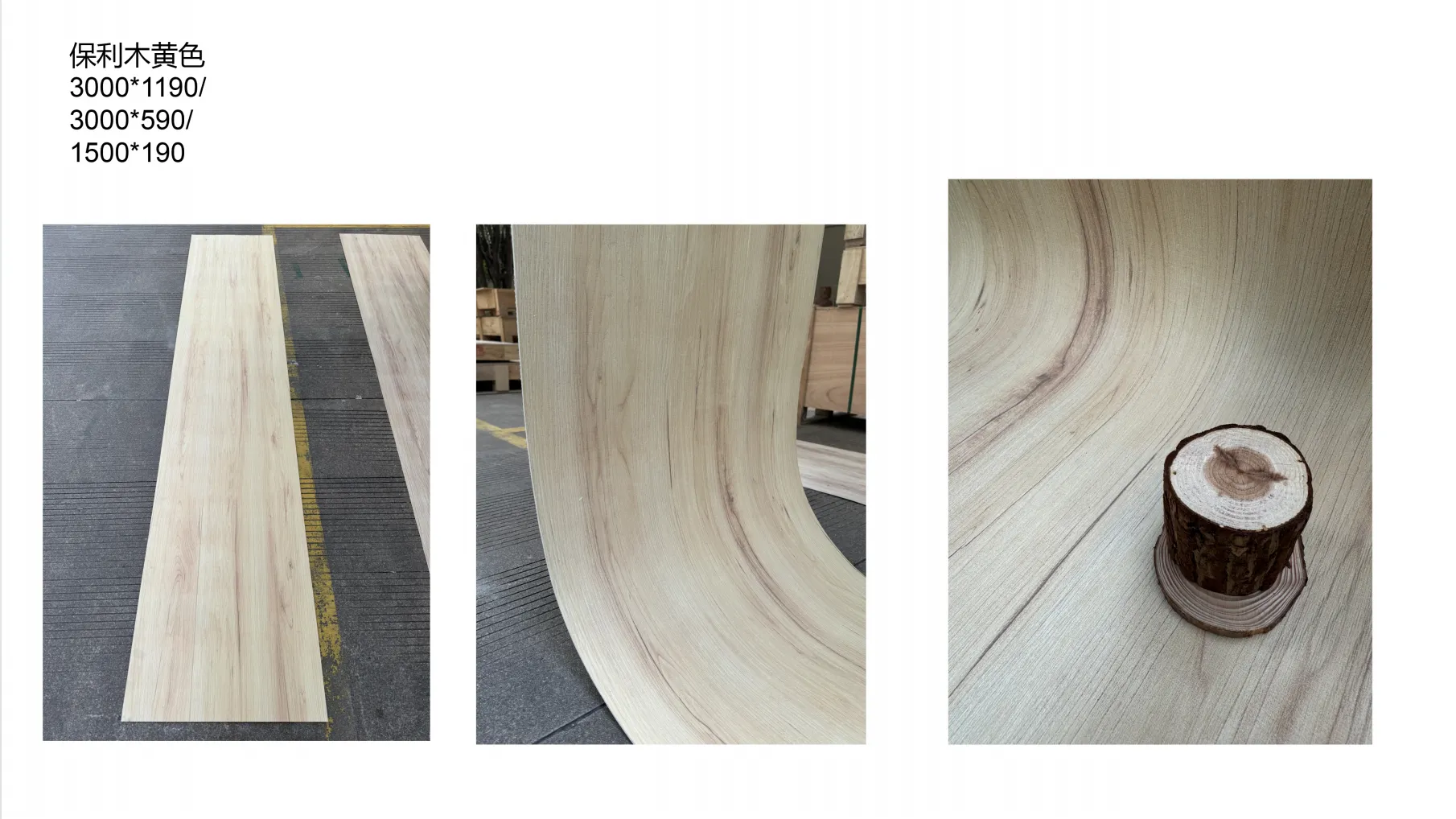
Choosing the right material for your commercial project isn't just about checking boxes on a spec sheet—it's about crafting a space that tells a story. Whether you're designing a bustling café, a sleek tech office, or a high-end retail store, the walls, ceilings, and cladding you pick will shape how people feel when they walk in. Today, we're diving into two heavyweights in the commercial materials game: Poly Wood Board and MCM. Let's break down their personalities, strengths, and how they stack up in real-world projects.
Imagine stepping into a coastal bistro where the walls feel like they're wrapped in weathered oak, but there's no musty smell of real wood or fear of warping from the ocean air. Chances are, that's Poly Wood Board at work. This material blends wood fibers with high-density polymers to mimic the look and texture of natural wood—think wood grain board with the warmth of a cabin and the resilience of a modern composite.
What makes it a favorite? For starters, it's a low-maintenance dream. Unlike solid wood, it won't crack, rot, or fade under sunlight. Spills? Wipe them off with a damp cloth. Scratches? A quick sand and refinish (though you'll rarely need to). And sustainability? Many Poly Wood Boards use recycled wood fibers and are 100% recyclable, so you can feel good about that "green" design badge.
Aesthetically, it's versatile but leans warm. You'll find it in finishes from honeyed pine to deep walnut, perfect for spaces that want to feel inviting. A recent project I consulted on—a boutique bookstore in Portland—used Poly Wood Board for their ceiling cladding. The result? A cozy, library-like vibe that customers rave about, without the worry of real wood reacting to the Pacific Northwest's humidity.
If Poly Wood Board is the cozy friend, MCM (Modified Composite Material) is the bold, creative one. Short for Modified Composite Material, MCM is all about flexibility—literally. These thin, lightweight panels can mimic just about anything: stone, metal, concrete, even fabric. And the star of the show? MCM flexible stone . It looks and feels like quarried travertine or granite, but at a fraction of the weight (we're talking 3-5mm thin!) and cost.
But MCM doesn't stop at stone. Ever seen a building with a sleek, metallic exterior that shimmers like aged silver? That's probably foamed aluminium alloy board (vintage silver) —a type of MCM that brings industrial chic to life without the heft of solid metal. Or maybe you've walked past a minimalist café with walls that look like raw concrete but feel surprisingly smooth? That's MCM's take on fair-faced concrete , minus the porousness of traditional concrete that stains easily.
Durability? MCM laughs at harsh conditions. It's fire-resistant, water-proof, and can handle extreme temperatures—ideal for exteriors in snowy Chicago or sunny Dubai. A tech campus in Austin recently clad their innovation hub in MCM's lunar peak black panels. The sharp, matte finish stands out against the Texas sky, and after two years of hailstorms and heatwaves, it still looks brand new.
Let's cut to the chase. Here's how Poly Wood Board and MCM measure up in the categories that matter most for commercial projects:
| Feature | Poly Wood Board | MCM |
|---|---|---|
| Aesthetic Vibe | Warm, organic, rustic to mid-century modern | Bold, versatile—stone, metal, concrete, and beyond |
| Durability | Great for indoors; resists moisture/rot but not ideal for heavy impact | Indoor/outdoor; fire-resistant, scratch-proof, weather-proof |
| Installation | Lightweight but requires solid backing; DIY-friendly for small projects | Ultra-light (3-8kg/m²); flexible, so it bends around curves—needs pro install for large areas |
| Cost | Mid-range ($25-$45/sq ft installed) | Wide range ($30-$80/sq ft installed, depending on finish) |
| Sustainability | High—recycled materials, low VOCs | High—minimal waste, energy-efficient production |
| Best For | Indoor spaces (cafés, offices, retail) needing warmth | High-traffic or exterior projects (hospitals, airports, storefronts) |
Numbers tell part of the story, but let's talk about how these materials feel in action. Take "The Hive," a co-working space in Denver. They wanted a mix of industrial edge and comfort, so they paired Poly Wood Board (in a light ash finish) for their lounge walls with MCM's foamed aluminium alloy board (vintage gold) for the reception desk backdrop. The contrast? Stunning. Members say the wood walls make the lounge feel like a "productive living room," while the gold MCM adds a touch of sophistication that clients notice immediately.
Then there's "GreenLeaf," a fast-casual restaurant chain. Their challenge? Keeping kitchen backsplashes clean and looking fresh despite constant steam and grease. They tested Poly Wood Board first but found it stained easily near the grills. Switching to MCM flexible stone in travertine (starry white) solved the problem. Now, staff wipes down the backsplashes daily, and after a year, they still look as crisp as opening day.
And let's not forget exteriors. The "Skyline Tower" in Seattle used MCM's boulder slab (vintage black) for its facade. The panels are so lightweight that the building's structural load was reduced by 30% compared to traditional stone, saving on construction costs. Plus, the matte black finish absorbs less heat, cutting AC bills in summer—a win-win for both budget and sustainability.
It boils down to three questions:
At the end of the day, there's no "better" material—only the right one for your project. Poly Wood Board wraps spaces in warmth and nostalgia, perfect for brands that want to feel approachable. MCM, with its endless finishes (from fair-faced concrete to MCM flexible stone ), is for those who want to push boundaries and make a statement.
I once heard a designer say, "Materials are the words; the space is the sentence." So whether you choose the cozy cadence of Poly Wood Board or the bold punctuation of MCM, make sure it's a sentence your clients and customers will want to read—again and again.
Recommend Products












