
Choosing the right cladding or surfacing material for your home, office, or commercial space is more than just a practical decision—it's about crafting a vibe. Whether you're going for cozy and rustic, sleek and modern, or something in between, the materials you pick shape how a space feels, functions, and even ages over time. Today, we're diving into two popular options that often end up on designers' shortlists: Poly Wood Board and stone veneer. We'll break down their aesthetics, costs, and everything in between to help you decide which one aligns with your vision (and budget).
But first, let's set the scene. Imagine walking into a café with walls that look like they're made of weathered oak, warm and inviting, but you later find out they're actually Poly Wood Board—no splinters, no warping, just that timeless woody charm. Now, step into a boutique hotel lobby where a feature wall shimmers with swirled greens and golds, like a piece of the earth's crust brought indoors. That? Could be travertine (starry green) , a type of stone veneer that adds instant luxury. Both have their appeal, but how do they stack up when it comes to looks and dollars? Let's find out.
When it comes to aesthetics, the battle between Poly Wood Board and stone veneer is like comparing a cozy cabin to a mountain retreat—both beautiful, but serving different moods.
Poly Wood Board: The Chameleon of Warmth
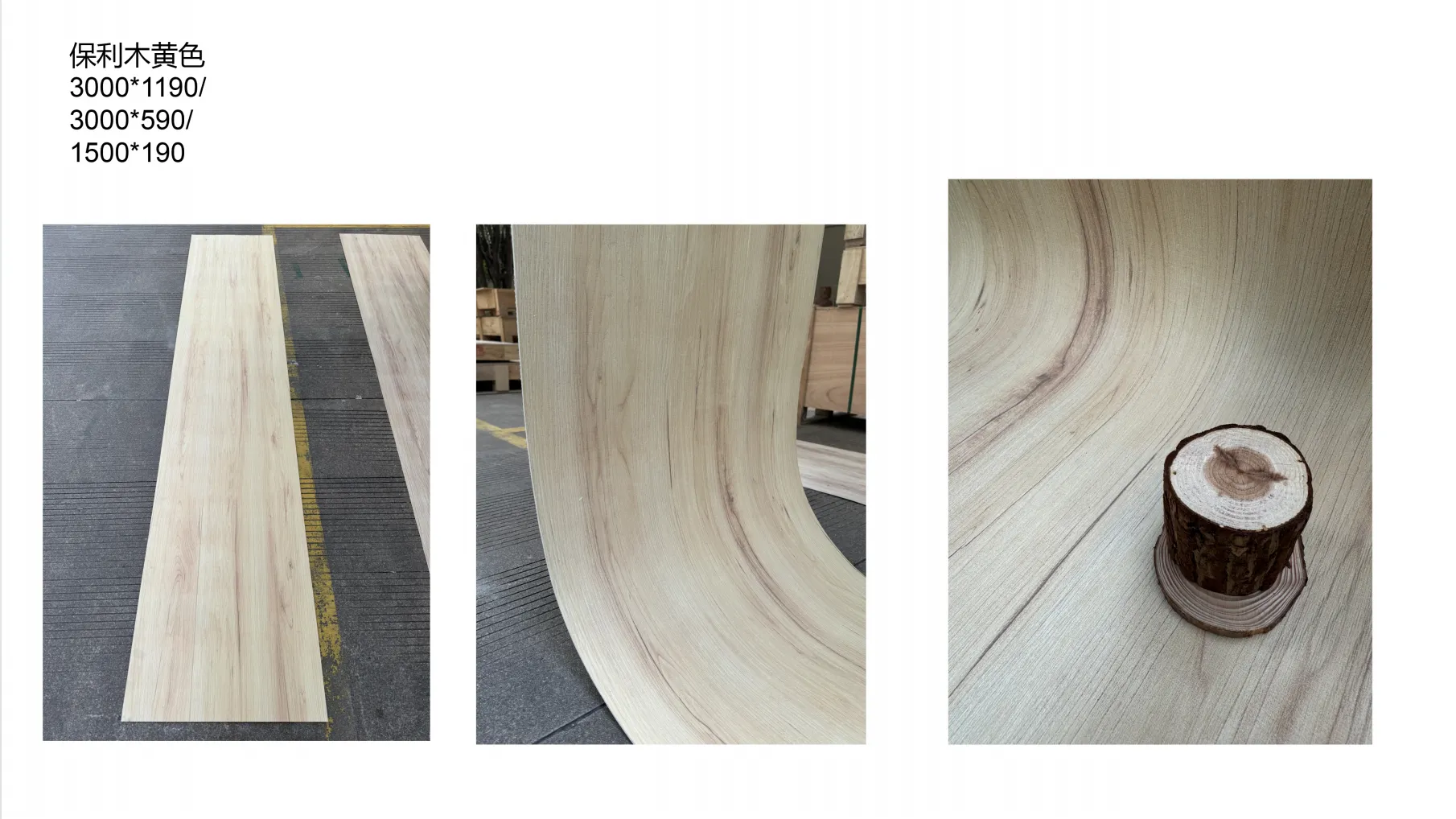
Poly Wood Board has come a long way from the plastic-y imitations of the past. Today's versions are crafted to mimic real wood so closely, you might find yourself reaching out to check if it's "real." What makes it stand out is its versatility. Many options, like
wood grain board
variants, feature authentic-looking knots, grains, and textures that replicate oak, pine, cedar, or even teak. The color range is impressive too—think soft beiges, rich mahoganies, weathered grays, and warm honey tones. It's the kind of material that adds instant coziness to a space, whether you're using it for accent walls, ceiling panels, or outdoor decks.
One of the best things about Poly Wood Board is its consistency. Unlike real wood, which can have unpredictable knots or color variations, Poly Wood lets you control the look. Want a uniform wall of light oak? Done. Prefer a mix of warm browns for a more rustic feel? That's an option too. It plays well with other materials, pairing beautifully with metal accents, fair-faced concrete floors, or even stone elements for a balanced, modern-rustic vibe.
Stone Veneer: Nature's Artwork, Minus the Weight
Stone veneer, on the other hand, is all about bringing the raw beauty of nature indoors (or outdoors) without the heft of full stone slabs. Take
mcm flexible stone
, for example—a modern innovation that's thin, lightweight, and surprisingly durable. It's made from natural stone particles bonded with polymers, so it captures that authentic stone texture but bends slightly, making it perfect for curved walls or uneven surfaces.
Then there's travertine (starry green) , a showstopper in the stone veneer world. Its name gives a hint: "starry" refers to the tiny, iridescent flecks that catch the light, while "green" ranges from deep forest hues to soft sage, swirled with gold or cream veins. Each piece is unique—no two panels will have the exact same pattern—so your wall becomes a one-of-a-kind artwork. Stone veneer isn't just about green, though; you'll find options in earthy browns, cool grays, and even bold reds, each with its own personality. It adds depth and texture that's hard to replicate—run your hand over it, and you'll feel the subtle ridges and pits, a reminder of its natural origins.
The Verdict on Aesthetics
If you want warmth, consistency, and a "homey" feel, Poly Wood Board is your go-to. It's approachable, versatile, and works in almost any style from farmhouse to mid-century modern. Stone veneer, though, is for when you want to make a statement—think luxury, earthiness, and that "wow" factor. It's perfect for focal walls, entryways, or commercial spaces where first impressions matter. And if you're torn? There's no rule against mixing them. Imagine a Poly Wood ceiling paired with a travertine (starry green) accent wall—cozy meets luxury, and it just works.
Let's talk numbers—the part that often makes or breaks a design decision. When comparing Poly Wood Board and stone veneer, costs can vary widely based on quality, brand, and installation. Here's a detailed breakdown:
Material Costs: Poly Wood Board (The Affordable Contender)
Poly Wood Board is generally the more budget-friendly option upfront. On average, you'll pay between $3 and $8 per square foot for standard Poly Wood Board, with premium
wood grain board
varieties (think ultra-realistic textures) pushing up to $10 per square foot. The price depends on thickness (thicker boards cost more) and color (custom hues might add a few dollars). For a 100-square-foot wall, that's $300–$1,000, which is manageable for most DIYers or small projects.
Material Costs: Stone Veneer (The Luxury Player)
Stone veneer, especially natural or high-end options like
travertine (starry green)
or
mcm flexible stone
, is pricier. Basic stone veneer starts around $6–$12 per square foot, but specialty types can jump to $15–$30 per square foot. Travertine (starry green), with its unique starry pattern, falls on the higher end—expect to pay $20–$28 per square foot. For that same 100-square-foot wall, you're looking at $600–$3,000. Why the jump? Stone veneer is often made from natural materials, and the manufacturing process (especially for flexible variants like mcm) is more complex.
Installation Costs: DIY vs. Pro Help
Installation is where Poly Wood Board really shines for budget-conscious folks. Since it's lightweight (most boards weigh 1–2 pounds per square foot) and easy to cut with standard tools (a circular saw or jigsaw works), many homeowners tackle it as a DIY project. If you hire a pro, labor costs run $2–$5 per square foot, so a 100-square-foot wall adds $200–$500 to your total.
Stone veneer, though, is trickier. Even lightweight mcm flexible stone is heavier than Poly Wood (around 3–5 pounds per square foot), and natural stone veneer can weigh up to 10 pounds per square foot. That weight means you'll likely need a professional installer to ensure it's properly adhered and won't crack or fall off. Labor costs here range from $8–$15 per square foot, adding $800–$1,500 for that 100-square-foot wall. Some installers also charge extra for preparing the surface (like applying a moisture barrier or metal lath), so factor that in too.
Long-Term Costs: Maintenance and Durability
Poly Wood Board wins again here. It's low-maintenance—just wipe it down with soap and water, and it'll look fresh for years. It's resistant to rot, pests, and fading (thanks to UV inhibitors in many brands), so you won't need to repaint or seal it. Over 10 years, maintenance costs are near-zero.
Stone veneer, while durable, needs a bit more TLC. Natural stone like travertine is porous, so it should be sealed every 2–3 years to prevent staining (sealer costs $0.50–$1 per square foot). Harsh cleaners can damage the surface, so you'll need to use pH-neutral products. If a piece cracks or chips (unlikely, but possible), replacing it can be costly since stone veneer is often sold in batches with unique color patterns—matching a replacement might mean buying a whole new box. Over 10 years, maintenance for stone veneer could add $100–$300 for sealing and occasional repairs.
| Cost Category | Poly Wood Board (100 sq ft) | Stone Veneer (100 sq ft, e.g., travertine starry green) |
|---|---|---|
| Material Cost | $300–$1,000 | $600–$3,000 |
| Installation Cost (Pro) | $200–$500 | $800–$1,500 |
| 10-Year Maintenance | $0–$50 | $100–$300 |
| Total Estimated Cost | $500–$1,550 | $1,500–$4,800 |
The Cost Verdict
If you're on a tight budget or love DIY projects, Poly Wood Board is the clear winner. It's affordable upfront and cheap to maintain. Stone veneer, though pricier, is an investment in luxury and durability—perfect if you want a high-end look that lasts decades. Think of it this way: Poly Wood Board is like a stylish, reliable jacket you can wear every day, while stone veneer is that statement coat you pull out for special occasions (or, if you can afford it, wear all the time).
Aesthetics and cost are important, but what good is a beautiful material if it falls apart after a year? Let's compare how these two hold up in real-world conditions.
Poly Wood Board: The Resilient Workhorse
Poly Wood Board is built to withstand the elements, making it great for both indoor and outdoor use. It's water-resistant, so you won't have to worry about rot, mold, or mildew in bathrooms, kitchens, or outdoor patios. UV-resistant formulas mean it won't fade in sunlight, even if installed on a south-facing wall. It's also scratch-resistant (good for homes with kids or pets) and doesn't warp or split like real wood. The only downside? Extreme heat (like a fire pit nearby) can melt it, so keep it away from high-heat sources.
Stone Veneer: The Tough-as-Nails Option
Stone veneer, especially
mcm flexible stone
and travertine, is incredibly durable. It's heat-resistant (great for fireplaces), scratch-resistant, and can handle moisture if sealed properly. Natural stone veneer can last 50+ years with minimal maintenance, making it a legacy material. The catch? Weight. Heavier stone veneer can put stress on walls, so it's not ideal for weak or drywall-only surfaces—you may need to reinforce the wall first. Also, while flexible stone veneer is lighter, it's still more fragile than Poly Wood Board; dropping a heavy object on it could crack the surface.
Practicality for Different Spaces
-
Outdoor Use:
Poly Wood Board is a no-brainer for decks, fences, or outdoor kitchens—it handles rain, sun, and snow like a champ. Stone veneer works too (think exterior accent walls), but ensure it's sealed and installed by a pro to prevent water from seeping behind the veneer.
-
High-Traffic Areas:
Both hold up well, but Poly Wood Board is easier to repair if scratched (just sand and repaint). Stone veneer chips are harder to fix.
-
Wet Spaces:
Poly Wood Board is better for bathrooms or laundry rooms—no sealing required. Stone veneer can work but needs frequent sealing to avoid water damage.
At the end of the day, the choice between Poly Wood Board and stone veneer comes down to your priorities: Do you value budget and warmth, or luxury and long-term investment? Are you DIY-savvy, or do you prefer hiring pros? Here's a quick guide to help you decide:
Choose Poly Wood Board If:
- You're on a budget.
- You want a warm, wood-like aesthetic.
- You plan to install it yourself.
- You need a low-maintenance option for indoor or outdoor use.
Choose Stone Veneer (e.g., travertine starry green, mcm flexible stone) If:
- You want a high-end, natural look.
- You're willing to invest in installation and maintenance.
- You're creating a focal point or luxury space.
- You want a material that ages beautifully (stone develops character over time).
And remember—there's no rule that says you have to pick one! Mixing Poly Wood Board with stone veneer can create a dynamic, layered look that balances cost and luxury. For example, use Poly Wood for most walls and splurge on a travertine (starry green) accent wall to add that "wow" factor without breaking the bank.
At the end of the day, the best material is the one that makes you smile every time you walk into the room. Whether it's the cozy warmth of Poly Wood Board or the earthy luxury of stone veneer, both have the power to transform a space into something special. Happy designing!
Recommend Products












