
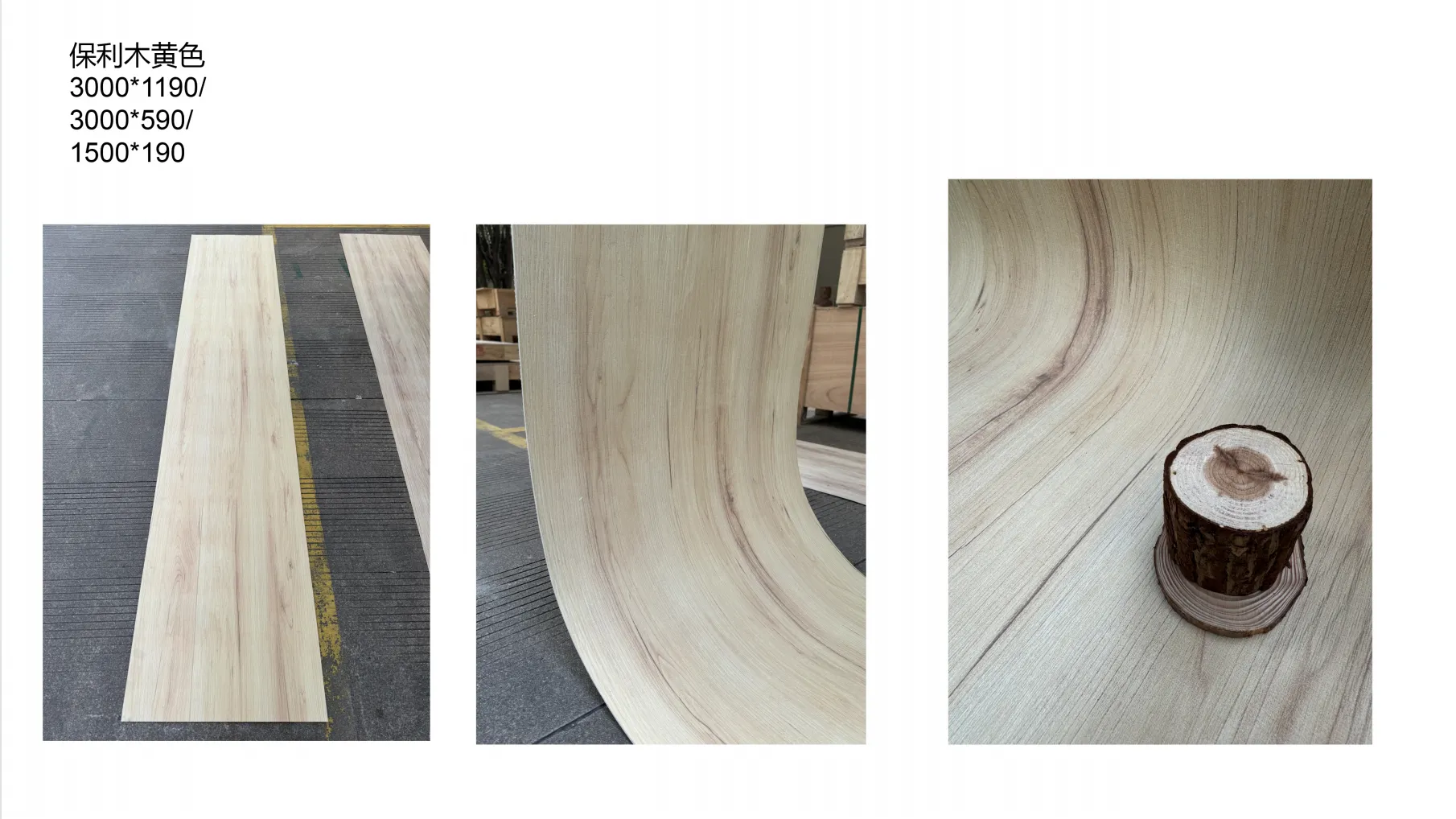
How a Modern Composite Material is Redefining Durability for Homes, Restaurants, and Public Spaces Worldwide
Let's start with a scenario we've all encountered—or feared: You invest in a beautiful outdoor deck, patio, or siding, only to watch it degrade within a few years. The coastal home's wooden deck warps and turns gray under salt spray. The desert patio's stone tiles crack from 120°F heat. The mountain cabin's siding peels after a single winter of freeze-thaw cycles. Weather, it turns out, is the silent enemy of even the priciest building materials. But what if there was a material that didn't just "resist" harsh conditions—it thrived in them? Enter COLORIA MCM's poly wood board, a modified composite material (MCM) that's changing the game for architects, homeowners, and business owners tired of replacing weather-worn surfaces. In this article, we'll dive into how this innovative product holds up in the world's toughest climates, share real stories from those who've tested it, and explore why it's quickly becoming the go-to choice over traditional options like rough granite stone, travertine, and even foamed aluminium alloy board.
Maria, a restaurant owner in Charleston, South Carolina, still cringes when she talks about her first outdoor dining deck. "We went with travertine—everyone said it was 'durable.' Two years later, the tiles were chalky, cracked, and stained from salt mist. We had to replace them, and it cost a fortune." That's when a local architect recommended COLORIA MCM's poly wood board. "I was skeptical at first," Maria admits. "It looked too nice—like real wood, but how could something that lightweight stand up to our coastal weather?"
Five years later, Maria's deck tells the story. The poly wood boards still have their warm, honeyed tone; there's not a single crack or warp, even after hurricanes and daily salt-laden breezes. "We hose it down once a month, and it looks brand new," she says. "Last summer, a regular customer asked if we'd just installed it. I laughed and told her it's been here since 2020."
Coastal environments are brutal: salt air accelerates corrosion, humidity breeds mold, and UV rays fade colors. Traditional materials like travertine or rough granite stone absorb moisture, creating weak points where salt crystals expand and crack the surface. Poly wood board, by contrast, is engineered with MCM technology—a blend of natural minerals (think the resilience of rough granite stone, but lighter) and reinforced polymers that repel water and salt. Its low water absorption rate (less than 0.5%) means salt can't seep in, and its UV-stable pigments resist fading. Even compared to foamed aluminium alloy board (vintage silver)—another durable MCM option—poly wood offers a warmer, more organic look that feels inviting for outdoor dining.
Ahmed, a homebuilder in Phoenix, Arizona, knows a thing or two about extreme heat. "We used to specify rough granite stone for patios because everyone thought 'stone = tough,'" he says. "But homeowners hated it. The stone would absorb so much heat that you couldn't walk on it barefoot in July—it was like stepping on a griddle. And the sandstorms? They'd scratch the surface, leaving it looking dull after a year."
Then he discovered COLORIA MCM's poly wood board. "The first test was a client's backyard oasis. We installed poly wood decking around their pool, and within a month, they called to say, 'You have to come see this—it's 115°F outside, and the deck feels cool enough to sit on!'" Ahmed grins. "Turns out, the MCM core reflects heat instead of absorbing it. And when the summer sandstorms hit? The boards just shook off the grit—no scratches, no dulling. Three years later, that deck still looks like it was installed last week."
Desert climates demand materials that can handle not just extreme heat, but also rapid temperature swings (120°F days to 60°F nights) and abrasive sand. Traditional wood warps and splits under these conditions; rough granite stone, as Ahmed learned, becomes a heat trap. Poly wood board, however, uses a flexible MCM matrix that expands and contracts minimally, preventing cracks. Its textured surface also resists sand abrasion—unlike travertine, which has porous pits that trap grit and degrade over time. For clients who want a more industrial look, Ahmed often pairs poly wood with mcm flexible stone for accent walls; the stone's thin, lightweight design stands up to desert winds without cracking, just like the poly wood.
Up in the Rockies, where winter temperatures drop to -20°F and snow piles up feet high, Lisa, a lodge owner, faced a different problem: "Our wooden siding was a disaster. Every spring, the boards would warp and peel from the freeze-thaw cycles. Water would seep into cracks, freeze, expand, and by March, we'd have gaping holes. We tried painting, sealing, even switching to vinyl—but nothing lasted."
Then she met a COLORIA MCM rep at a building expo, who showed her samples of poly wood board and mcm flexible stone. "I was skeptical—how could something that thin (it's only 4mm thick!) stand up to our winters?" Lisa recalls. "But we installed the poly wood siding on one wing of the lodge as a test. That was five winters ago. No warping, no peeling, no cracks. Even after heavy snow loads and ice dams, the boards stayed tight. And the best part? The color hasn't faded a bit, even with all that bright mountain sun reflecting off the snow."
Mountain environments test materials in unique ways: constant moisture from snowmelt, extreme cold that makes brittle materials snap, and high winds that hurl ice and debris. Traditional wood and vinyl fail here, but poly wood board's MCM structure is inherently flexible—think of it as "tough but bendable." It won't crack under ice pressure, and its low water absorption means it doesn't swell or shrink with moisture. For lodge owners like Lisa, who also used mcm flexible stone for the fireplace surround, the peace of mind is priceless: "I used to spend every spring fixing siding. Now, I can focus on hosting guests."
In cities like Chicago, where pollution, acid rain, and freeze-thaw cycles collide, public spaces take a beating. "We manage a downtown park with outdoor seating areas," says Raj, a municipal facilities manager. "We tried concrete benches—they stained and cracked. Travertine tiles? Acid rain etched them into a pockmarked mess. Even rough granite stone showed wear after a few years of people dragging chairs and dropping coffee cups."
Then Raj's team switched to COLORIA MCM's poly wood board for benches and picnic tables. "It's been a game-changer," he says. "Coffee spills wipe right off with a damp cloth. Graffiti? A little acetone and it's gone, no staining. After three winters of salt, snow, and subzero temps, the boards still look new. We even installed mcm flexible stone for the park's retaining walls—same durability, but with a natural stone look that fits the park's vibe."
Urban environments are a gauntlet of stressors: smog chemicals that eat away at porous materials, de-icing salts that corrode metal, and constant foot traffic that scuffs surfaces. Poly wood board's non-porous surface repels chemicals and salts, while its scratch-resistant finish stands up to daily use. Unlike foamed aluminium alloy board (vintage gold), which can show fingerprints, poly wood's matte texture hides minor scuffs, keeping public spaces looking tidy with minimal maintenance.
At the heart of COLORIA MCM's poly wood board is a simple but genius idea: take the best properties of natural materials (the warmth of wood, the strength of stone) and eliminate their weaknesses (porosity, weight, brittleness) with modern engineering. MCM, or modified composite material, is a layered product: a core of mineral-filled polymers (think limestone and fiberglass) is sandwiched between a decorative surface layer (mimicking wood, stone, or metal) and a protective backing. The result? A material that's 70% lighter than rough granite stone, 300% more flexible than traditional concrete, and virtually impervious to water, salt, and UV rays.
To put it to the test, COLORIA's lab subjects poly wood board to rigorous trials: 2,000 hours of salt spray testing (no corrosion), 5,000 hours of UV exposure (less than 5% color fade), and 100 freeze-thaw cycles (no cracking). Compare that to travertine, which often shows signs of degradation after just 50 freeze-thaw cycles, or untreated wood, which warps in high humidity. Even rough granite stone, while strong, is heavy and prone to chipping under impact—something poly wood avoids thanks to its flexible core.
Sustainability is another win. Poly wood board contains 30% recycled materials, and its long lifespan (30+ years) means less frequent replacement, reducing waste. Unlike foamed aluminium alloy board, which requires energy-intensive mining, MCM production uses low heat and emits minimal VOCs. For eco-conscious builders, it's a no-brainer.
| Material | Weight (lbs/sq ft) | Coastal Salt Resistance | Desert Heat Resistance | Mountain Freeze-Thaw Resistance | Annual Maintenance | Est. Lifespan |
|---|---|---|---|---|---|---|
| COLORIA Poly Wood Board | 2.5 | Excellent (no corrosion) | Excellent (heat-reflective) | Excellent (no cracking) | Low (hose down, occasional cleaning) | 30+ years |
| Rough Granite Stone | 18 | Good (prone to salt staining) | Poor (heat-absorbent) | Fair (chips in freeze-thaw) | High (seal yearly, repair chips) | 15-20 years |
| Travertine | 15 | Poor (porous, salt damage) | Fair (fades in UV light) | Poor (cracks in freeze-thaw) | Very High (seal twice yearly, replace cracked tiles) | 5-8 years (outdoors) |
| Foamed Aluminium Alloy Board (Vintage Silver) | 3.0 | Excellent (corrosion-resistant) | Good (heat-conductive, may get hot) | Excellent (no cracking) | Low (wipe clean, no sealing) | 25+ years |
| MCM Flexible Stone | 2.0 | Excellent (non-porous) | Excellent (UV-stable) | Excellent (flexible, no cracking) | Low (hose down, no sealing) | 30+ years |
Weather doesn't care about your budget, your design vision, or how "durable" a salesperson claims a material is. It tests, erodes, and degrades—unless you choose something engineered to fight back. COLORIA MCM's poly wood board isn't just a "good" material; it's a material that understands the frustrations of homeowners, business owners, and builders who've watched their investments crumble. It's the deck that stays beautiful after a hurricane, the patio that stays cool in the desert, the siding that laughs off mountain winters.
And it's not alone. Paired with mcm flexible stone, foamed aluminium alloy board, or even rough granite stone-inspired MCM panels, COLORIA offers a full suite of weather-resistant options for every aesthetic. Whether you're building a coastal restaurant, a desert home, or a mountain lodge, there's an MCM solution that combines durability with beauty—no compromises.
So the next time you're planning an outdoor project, ask yourself: Do I want to spend the next decade replacing and repairing? Or do I want a material that grows old with grace, standing strong against whatever the weather throws its way? For Maria, Ahmed, Lisa, and Raj, the answer was clear. Poly wood board isn't just a building material—it's peace of mind, in a warm, weatherproof package.
Recommend Products












