
In the world of architecture and interior design, materials are more than just building blocks—they're storytellers. They shape how a space feels, how it functions, and even how it ages. But for too long, the conversation around materials has been split: durability versus beauty, practicality versus creativity. Today, we're zeroing in on a factor that bridges this divide: weight. Lightweight materials aren't just a logistical convenience; they're a catalyst for innovation. And at the heart of this movement? Poly Wood Board, a material that's redefining what's possible. Let's dive into why weight matters, how Poly Wood Board stacks up against other MCM (Modified Composite Material) alternatives, and why real photos are the unsung heroes of material selection.
Think about the last time you walked into a space that took your breath away. Maybe it was a soaring atrium with delicate screens, a rooftop bar with a seamless indoor-outdoor flow, or a home with a cantilevered deck that seemed to defy gravity. Chances are, lightweight materials played a quiet role in making that magic happen. Heavy materials—think traditional stone, solid wood, or thick concrete—demand more from a structure. They require beefier support beams, stronger foundations, and often limit where and how you can use them. A designer might dream of cladding a wall in a textured stone, but if that stone weighs 50kg per square meter, suddenly that dream becomes a structural headache.
Lightweight materials flip the script. They reduce the load on buildings, making it easier to experiment with bold designs: overhangs, floating shelves, curved walls, or even temporary installations that can be reconfigured. They also cut down on installation time and labor costs—no need for a team of workers to maneuver heavy slabs when a single person can carry a panel of Poly Wood Board. And let's not forget sustainability: lighter materials mean less fuel used in transportation, fewer carbon emissions, and often, more recyclable or eco-friendly compositions. In short, lightweight isn't just a feature—it's a gateway to more creative, efficient, and responsible design.
If lightweight materials are the future, Poly Wood Board is leading the charge. Part of MCM's innovative lineup, this material marries the warmth and texture of wood with the durability and lightness of modern composites. Unlike solid wood planks, which can warp, rot, or add significant weight, Poly Wood Board is engineered to be both strong and surprisingly light—typically weighing in at just 8-12kg per square meter, depending on thickness. That's less than half the weight of traditional hardwood and a fraction of natural stone.
But what really sets Poly Wood Board apart is its versatility. It's available in a range of finishes that mimic the look of real wood grain—from the rich, dark tones of walnut to the light, airy feel of oak—without the maintenance. It resists moisture, so it works in bathrooms or outdoor patios. It's fire-retardant, making it suitable for commercial spaces. And because it's lightweight, it can be used in places solid wood never could: as a ceiling panel in a historic building where structural upgrades are limited, as a cladding for a mobile pop-up shop, or as a decorative screen that sways gently in the breeze.
Designers often rave about its workability, too. Unlike brittle materials that crack when cut, Poly Wood Board can be shaped, drilled, or sanded to fit custom designs. Want a curved accent wall? No problem. Need to cut intricate patterns for a room divider? Easy. It's a material that bends to the designer's vision, not the other way around.
To truly appreciate Poly Wood Board, let's put it head-to-head with other popular MCM options. We'll focus on weight, but also touch on design flexibility, durability, and visual appeal—because in the world of materials, numbers tell part of the story, but how a material looks and feels tells the rest.
| Material | Weight (kg/m²) | Key Design Benefits | Best For |
|---|---|---|---|
| Poly Wood Board | 8-12 | Wood-like texture, moisture-resistant, easy to shape, low maintenance | Indoor walls, ceilings, outdoor cladding, furniture, screens |
| MCM Flexible Stone | 15-20 | Thin, bendable, mimics natural stone textures (e.g., marble, slate) | Curved walls, accent panels, backsplashes |
| Foamed Aluminium Alloy Board (Vintage Silver) | 10-14 | Metallic finish, lightweight, corrosion-resistant, modern aesthetic | Commercial facades, feature walls, industrial-chic interiors |
| Fair-Faced Concrete | 25-30 | Raw, minimalist look, high durability, thermal mass properties | Structural walls, floors, brutalist or industrial designs |
| Travertine (Starry Green) | 22-28 (natural stone); 18-22 (MCM version) | Unique starry veining, earthy tones, natural texture | Accent walls, fireplace surrounds, luxury interiors |
Let's break this down. MCM Flexible Stone is a close contender in the lightweight space, and it's beloved for its ability to mimic the look of natural stone—think the veining of marble or the roughness of slate—without the heft. At 15-20kg/m², it's lighter than natural stone but still a bit heavier than Poly Wood Board. It's ideal for curved surfaces, where its flexibility shines, but if you're after a warm, organic wood look, Poly Wood Board has the edge in texture and versatility.
Foamed Aluminium Alloy Board (Vintage Silver) is another lightweight option, with a sleek, metallic finish that adds a modern, industrial vibe. It's slightly lighter than MCM Flexible Stone but on par with Poly Wood Board in weight. However, its metallic look limits its use in spaces where a softer, more natural aesthetic is desired. Poly Wood Board, with its wood grain patterns, fits seamlessly into both rustic and contemporary designs, making it more adaptable for residential and commercial projects alike.
Fair-Faced Concrete is a classic, prized for its raw, unpolished beauty. But at 25-30kg/m², it's significantly heavier than Poly Wood Board, which means it's better suited for structural elements rather than decorative cladding or features that require flexibility. And while travertine (Starry Green) is stunning—with its unique star-like flecks adding depth and intrigue—even the MCM version is heavier than Poly Wood Board. It's a showstopper for accent walls, but if you're covering large areas or need to keep weight low, Poly Wood Board is the more practical choice.
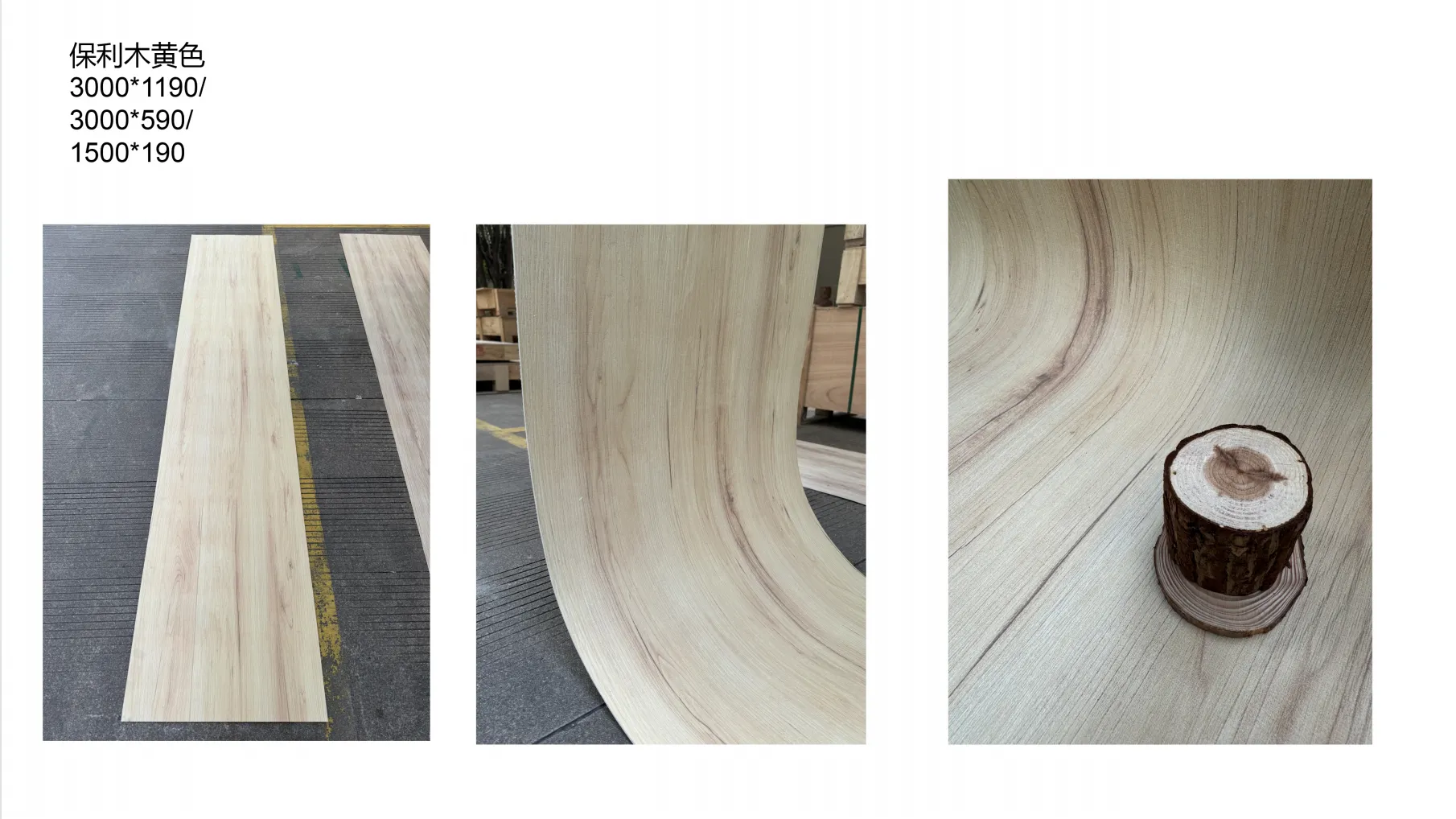
Numbers and specs are important, but when it comes to design, seeing is believing. That's where real photos come in. MCM's commitment to transparency means that for every product—from Poly Wood Board to Travertine (Starry Green) to Foamed Aluminium Alloy Board—there's a library of high-quality, unedited real photos that showcase the material exactly as it looks in person. No filters, no exaggerated colors, just the true texture, finish, and color of the product.
Why does this matter? Imagine ordering a material based on a swatch or a stock image, only to have it arrive and realize the "warm oak" finish is actually more "ash gray" in real life, or the "subtle veining" in the travertine is bolder than expected. Real photos eliminate that guesswork. They let designers zoom in on the details: the way light catches the grain of Poly Wood Board, the depth of the starry flecks in Travertine (Starry Green), or the matte sheen of Foamed Aluminium Alloy Board (Vintage Silver). They show how the material looks in different lighting—natural sunlight, warm indoor bulbs, cool LED—and how it pairs with other materials like metal, glass, or fabric.
Take Poly Wood Board's real photos, for example. A quick scroll through them reveals the nuances of each finish: the "Weathered Teak" has soft, grayish-brown tones with subtle knots that mimic aged wood; "Natural Maple" is light and bright, with fine grain lines that add texture without overwhelming a space. These photos aren't just pretty pictures—they're tools. A designer working on a coastal home can use them to confirm that "Driftwood" Poly Wood Board will complement the ocean views, while a restaurant owner can visualize how "Smoked Walnut" panels will warm up their dining room.
Real photos also help clients get on board. It's one thing to tell a homeowner, "This material is lightweight and durable." It's another to show them a photo of a Poly Wood Board-clad accent wall in a similar home, where the wood grain pops against neutral paint and the space feels inviting. Photos bridge the gap between technical jargon and emotional connection, making it easier for everyone involved to align on the vision.
To see how Poly Wood Board performs in the real world, let's look at a few hypothetical (but realistic) scenarios. These aren't just abstract ideas—they're the kinds of projects designers and architects tackle every day, where lightweight materials make all the difference.
A boutique hotel wants to transform its underused rooftop into a lush garden retreat with seating areas, a small bar, and a fire pit. The problem? The rooftop has a weight limit of 15kg per square meter for non-structural elements. Traditional wood decking would weigh in at 20-25kg/m², putting it over the limit. Poly Wood Board, at 8-12kg/m², fits comfortably within the restriction. The design team uses "Natural Oak" Poly Wood Board for the decking and "Weathered Pine" for the bar front. Real photos help them confirm that the wood tones complement the greenery and outdoor lighting, creating a cozy, inviting space that guests love. Because the material is lightweight, installation takes half the time, and the hotel avoids costly structural upgrades.
A homeowner wants a home office with a statement cantilevered desk—a sleek, floating surface that extends 1.2 meters from the wall. The challenge? A solid wood desk top would be too heavy, requiring bulky brackets that ruin the clean look. Poly Wood Board comes to the rescue. The designer chooses "Smoked Walnut" Poly Wood Board for the desk, which weighs just 10kg for the 2m x 1m surface. The lightweight material allows for a minimalist steel bracket that's nearly invisible, making the desk look like it's floating. Real photos of the "Smoked Walnut" finish ensure the color matches the existing bookshelves, creating a cohesive, polished space.
A fashion retailer wants to update its store layout seasonally to keep the space fresh. Traditional drywall or stone cladding is too heavy to move, and painting every few months is time-consuming. The solution? Poly Wood Board panels. The team uses "White Wash" Poly Wood Board for movable accent walls that can be rearranged with minimal effort. Each panel weighs just 12kg, so two staff members can reconfigure the space in an afternoon. Real photos of the panels in different lighting help the retailer plan displays—they can see how the white wash finish reflects light, making the store feel bright and airy, which highlights the clothing. Plus, the material is scratch-resistant, standing up to the wear and tear of daily customer traffic.
We've talked about design freedom and practicality, but there's another layer to the lightweight material story: sustainability. The construction industry is one of the largest contributors to carbon emissions, and material choices play a big role in that impact. Heavy materials require more energy to extract, transport, and install. For example, shipping a truckload of traditional stone that weighs 10 tons emits far more CO2 than shipping the same area of Poly Wood Board, which might weigh just 2 tons. That's a 400% reduction in transportation emissions for the same coverage.
Poly Wood Board also scores points for durability. Unlike solid wood, which can warp or rot, it's resistant to moisture, pests, and UV damage, meaning it lasts longer and needs less frequent replacement. Less replacement means less waste. And because it's a composite material, it often contains recycled content—like reclaimed wood fibers or recycled plastics—keeping those materials out of landfills. For designers and builders aiming for green certifications (like LEED or BREEAM), lightweight, durable materials like Poly Wood Board are a straightforward way to earn points and reduce a project's environmental footprint.
Materials are the foundation of design, but they shouldn't be a limitation. Poly Wood Board embodies this idea: it's lightweight enough to open up new design possibilities, durable enough to stand the test of time, and visually rich enough to tell a story. Whether you're designing a cozy home, a bustling commercial space, or a bold architectural statement, it offers the best of both worlds: the warmth of wood, the practicality of modern composites, and the freedom to create without being weighed down.
And let's not forget the role of real photos in this journey. They're more than just marketing tools—they're a bridge between the technical and the emotional, helping designers, builders, and clients alike make confident choices. When you can see the exact texture of Poly Wood Board's grain, or how Foamed Aluminium Alloy Board (Vintage Silver) catches the light, you're not just selecting a material—you're crafting an experience.
In the end, the future of design isn't just about how things look—it's about how they work, how they're made, and how they make us feel. Poly Wood Board, and lightweight MCM materials like it, are leading that charge. They're proof that when we prioritize innovation, sustainability, and beauty, the only limit is our imagination.
Recommend Products












