

There's something timeless about the warmth of natural stone. Walk into a space clad in red travertine, and you're not just looking at a material—you're feeling history. The stone's earthy red hues, the way light dances in its tiny pits, the subtle veining that tells a story of millions of years of geological formation… it's no wonder architects, designers, and homeowners alike chase that authentic look. But here's the catch: natural red travertine is heavy, porous, and often comes with a steep price tag. Enter the imitators: porcelain tiles crafted to "look like" red travertine, and the newer kid on the block, MCM flexible stone . Both promise to deliver that coveted natural aesthetic without the headaches—but which one actually gets it right? Let's break it down.
Before we pit the imitators against each other, let's ground ourselves in what makes real travertine (starry red) so special. Red travertine is a type of limestone formed by mineral-rich hot springs, known for its signature "pitted" surface—small cavities created by trapped gases during formation. Its color ranges from soft terracotta to deep brick red, with veins of cream, gold, or even hints of orange running through it. It's warm, organic, and unapologetically imperfect—and that imperfection is exactly what makes it beautiful.
But real red travertine isn't without flaws. It's heavy (think 25-30 kg per square meter for a standard slab), which limits where it can be used—forget about installing it on a second-story facade without reinforcing the structure. It's also porous, meaning it stains easily; a spilled glass of wine or a splash of oil can leave a permanent mark if not sealed regularly. And let's not overlook cost: high-quality red travertine can run $50-$100 per square foot, before installation. For many projects, that's simply not feasible.
So, the industry responded with alternatives. First came porcelain tiles printed to mimic stone. Then, in recent years, MCM (Modified Composite Material) flexible stone arrived—a technology that blends natural stone particles with polymers to create a lightweight, bendable material that looks and feels like the real thing. Today, we're putting two of the most popular red travertine imitators head-to-head: the tried-and-true porcelain red travertine look and the innovative MCM red travertine . Which one comes closer to capturing that natural magic?
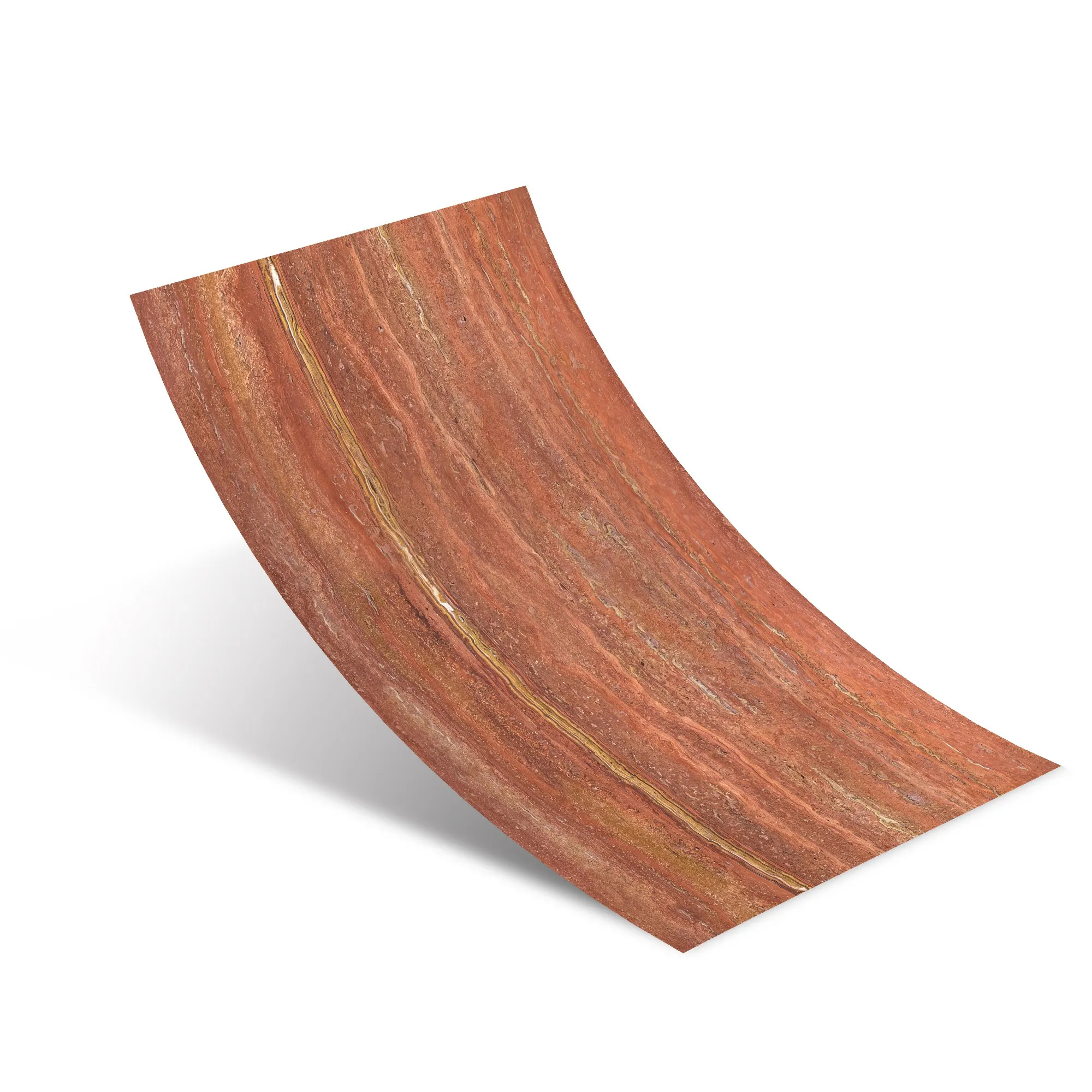
Porcelain tiles have been a go-to for stone mimicry for decades, and for good reason. They're durable, water-resistant, and relatively affordable. Porcelain "red travertine look" tiles are made by printing high-resolution images of real travertine onto a dense porcelain base, then adding a textured glaze to mimic the stone's surface. Some even have a "lapping" or "honed" finish to replicate the feel of natural stone.
The appeal is clear: porcelain is tough. It resists scratches, stains, and moisture, making it a favorite for high-traffic areas like kitchens and bathrooms. It's also lighter than natural stone (around 15-20 kg per square meter) and easier to install, with standard tile-setting tools. For budget-conscious projects or spaces where durability is non-negotiable, porcelain has long been the default.
But here's where it falls short: aesthetic depth . Even the best porcelain prints can feel… flat. Step back, and they might pass for travertine. Get up close, though, and the illusion fades. The veining often looks repetitive, like a pattern repeated across the tile (because it is). The texture, while better than older porcelain tiles, is still a glaze—run your finger over it, and it feels smooth, almost plastic-like, missing the subtle grit and irregularity of real travertine's pits. And because the color is printed on top, it doesn't have the same depth as natural stone; light hits it differently, lacking the warmth and dimensionality that makes travertine feel alive.
Real-World Scenario: A homeowner in Phoenix wanted a red travertine backsplash for their kitchen but worried about stains from cooking oils. They chose porcelain "red travertine look" tiles. From across the room, guests compliment the "stone" backsplash. But the homeowner admits, "Up close, I notice the pattern repeats every few tiles. It's nice, but it doesn't have that 'soul' my friend's real travertine fireplace has."
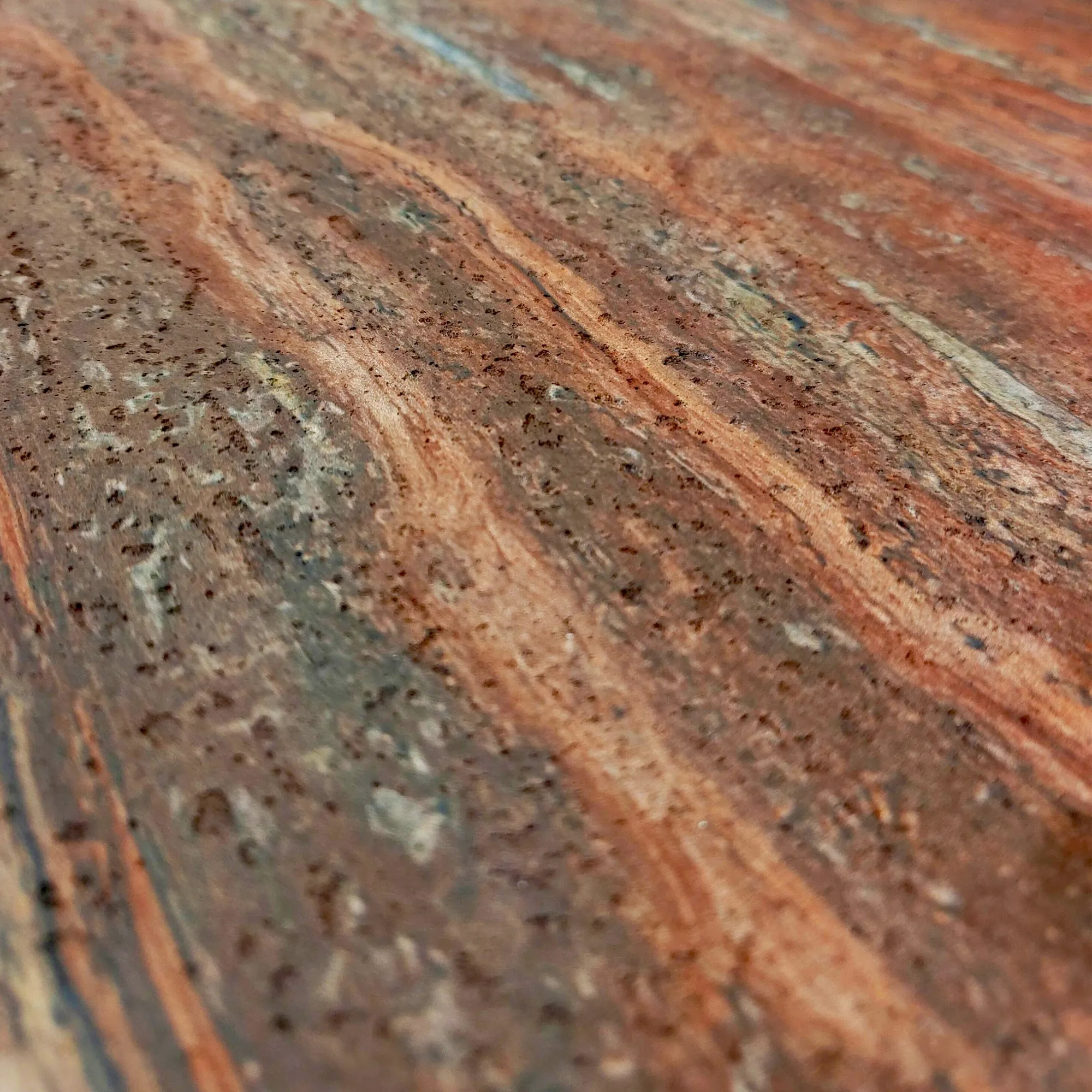
If porcelain is the "print" of natural stone, MCM flexible stone is more like a "sculpture." MCM (Modified Composite Material) is made by grinding down natural stone—including real travertine—into fine particles, then mixing those particles with polymers and reinforcing fibers. The result? A thin (usually 3-5mm thick), flexible sheet that's lightweight (just 4-6 kg per square meter) but retains the mineral composition and texture of the original stone.
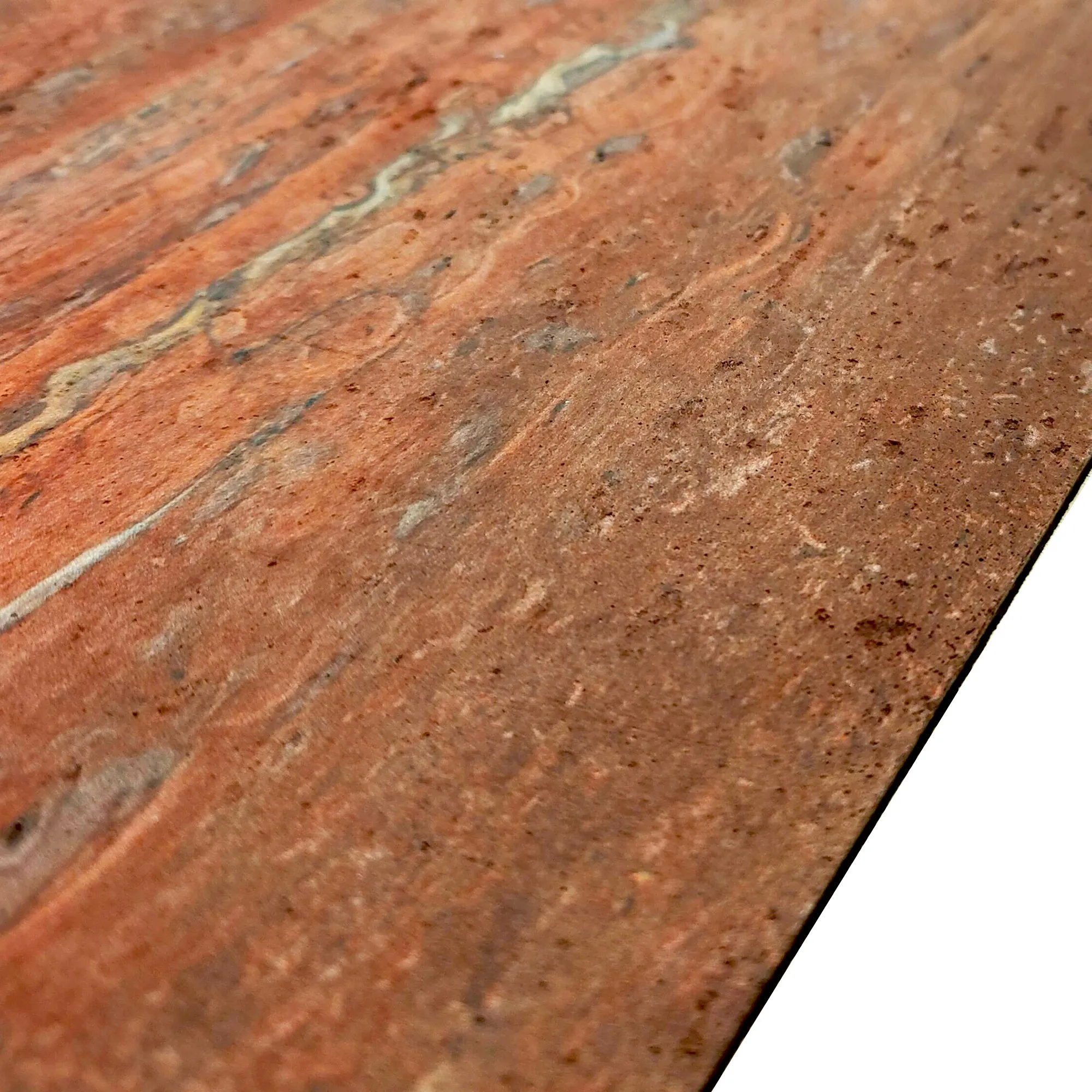
MCM red travertine takes this a step further. Manufacturers often use molds cast from real travertine (starry red) slabs to replicate the stone's surface texture exactly—pits, ridges, and all. The color comes from the natural stone particles themselves, not a printed layer, so it has the same depth and warmth as the real thing. And because it's flexible, it can bend up to 30 degrees without cracking, making it ideal for curved walls, columns, or uneven surfaces where rigid porcelain or natural stone would fail.
But MCM isn't just about looks. It's also surprisingly durable. The polymer binding makes it water-resistant and stain-resistant (no need for frequent sealing like natural travertine), and it holds up well to heat and UV rays, making it suitable for both indoor and outdoor use. And because it's so lightweight, it reduces structural load—meaning you can install it on high-rise facades or over existing walls without reinforcing the building. For projects where design flexibility and authenticity matter most, MCM is turning heads.
Real-World Scenario: A boutique hotel in (Dali) wanted to clad its curved lobby wall in red travertine to evoke the region's red rock landscapes. Natural stone was too heavy for the curved structure, and porcelain couldn't wrap around the bend without visible seams. They opted for MCM big slab board series in red travertine. The result? A seamless, curved wall that guests swear is "real stone." The hotel's designer notes, "The texture is so authentic, I've had contractors run their hands over it and ask where we sourced the travertine."
To really see which mimics the real thing better, let's compare them across the metrics that matter most to anyone chasing that authentic stone look.
| Feature | Porcelain Red Travertine Look | MCM Red Travertine |
|---|---|---|
| Aesthetic Depth | Printed pattern; can look repetitive up close. Color lacks mineral depth. | Natural stone particles; color and veining are organic, with no repeating patterns. |
| Texture Authenticity | Glazed texture; smooth, with simulated pits (often shallow and uniform). | Molded from real travertine; pits and ridges are physical, with the grit of natural stone. |
| Weight | 15-20 kg/m² (lighter than natural stone, but heavier than MCM). | 4-6 kg/m² (up to 75% lighter than natural stone; ideal for weight-sensitive projects). |
| Flexibility | Rigid; cracks under bending. Limited to flat surfaces. | Flexible (bends up to 30°); works on curved walls, columns, and uneven substrates. |
| Durability | Highly scratch- and stain-resistant; good for high-traffic areas. | Stain- and water-resistant (no sealing needed); flexible nature resists cracking from impact. |
| Installation | Requires standard tile adhesive; heavy enough to need solid subfloors. | Lightweight; can be installed with screws, nails, or adhesive; works over existing surfaces. |
| Sustainability | High energy use in firing; limited recycled content. | Uses recycled stone particles; reduces quarrying waste; low-VOC production. |
| Cost | Lower upfront cost ($3-$8 per sq ft); higher installation labor (due to weight). | Higher upfront cost ($8-$12 per sq ft); lower installation labor (lighter, faster to install). |
The table tells a clear story: while porcelain holds its own in durability and upfront cost, MCM red travertine pulls ahead in the areas that matter most for mimicking the real thing— aesthetic depth, texture, and versatility .
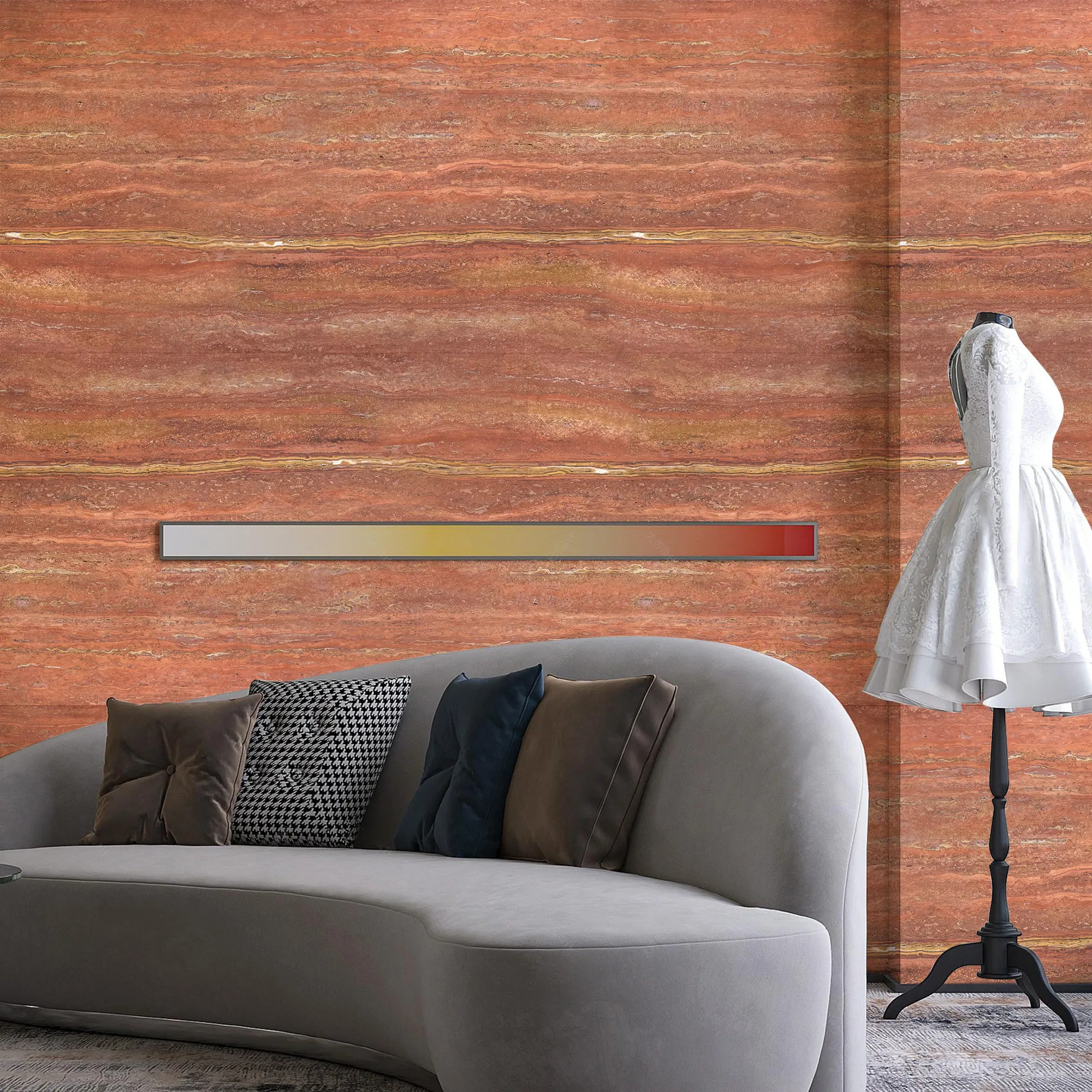
Let's cut to the chase: if you're prioritizing authenticity —the kind of look and feel that makes people double-take and ask, "Is this real stone?"— MCM red travertine is the clear winner. Its use of natural stone particles, molded texture, and organic veining captures the soul of red travertine in a way porcelain simply can't match. Add in its flexibility, lightweight design, and sustainability benefits, and it's hard to beat for projects where design is the star.
That said, porcelain isn't obsolete. If you're working with a tight budget, need a material that can withstand extreme wear (like a commercial kitchen floor), or prefer a more uniform look, porcelain "red travertine look" tiles are still a solid choice. They're reliable, easy to source, and get the job done for spaces where "close enough" is good enough.
But for those who crave the magic of natural stone without the limitations, MCM flexible stone is a game-changer. It's not just an imitation—it's a reimagining of what stone can be: lightweight, adaptable, and authentic down to the last pit and vein.
Final Thought from a Designer: "I've used both porcelain and MCM for red travertine projects," says Mia Chen, an interior designer in Shanghai. "Porcelain is great for a quick, durable fix. But when a client says, 'I want it to feel like we brought a piece of the earth into the room,' I reach for MCM. There's no substitute for that texture, that depth. It's not just mimicking stone—it's honoring it."
At the end of the day, both materials have their place. But if the goal is to mimic the real thing— truly mimic it—MCM red travertine isn't just a contender. It's the new gold standard.
Recommend Products











