
Walk into any thoughtfully designed space—whether it's a sunlit home kitchen, a bustling city café, or a serene boutique hotel—and you'll notice it: the walls, the facades, the surfaces that wrap around you. Cladding isn't just about protection; it's the skin of a building, the first impression that whispers stories of style, personality, and purpose. Today, we're diving into two heavyweights of the cladding world: the ever-reliable porcelain slabs and the ethereal, texture-rich cloud stone. Both promise to transform your space, but which one is *your* space's perfect match? Let's explore their quirks, their strengths, and the magic they bring to walls and beyond.
If cladding materials had a resume, porcelain slabs would list "overachiever" under skills. Born from fine clay and minerals fired at sky-high temperatures, these slabs are built to last—and look good doing it. What makes them a favorite among designers and homeowners alike? Their chameleon-like ability to mimic just about anything. Want the raw, industrial charm of fair-faced concrete without the weight and porosity? Porcelain does it. Crave the veining of marble or the grain of hardwood? Porcelain replicates those too, with a durability that outshines the real thing.
Think of porcelain slabs as the reliable friend who never cancels plans. Spills? Wipe them away. Scratches from rambunctious kids or clumsy baristas? Barely a mark. They stand up to moisture, heat, and even the occasional rogue wine glass, making them a staple in high-traffic areas. But don't mistake their toughness for dullness. Modern porcelain comes in slabs so large (we're talking 10 feet long!) that seams disappear, creating a seamless canvas for bold designs. Imagine a kitchen backsplash in a sleek, matte finish that mirrors fair-faced concrete —cool, contemporary, and effortlessly chic. It's the kind of surface that lets your personality shine through without demanding constant attention.
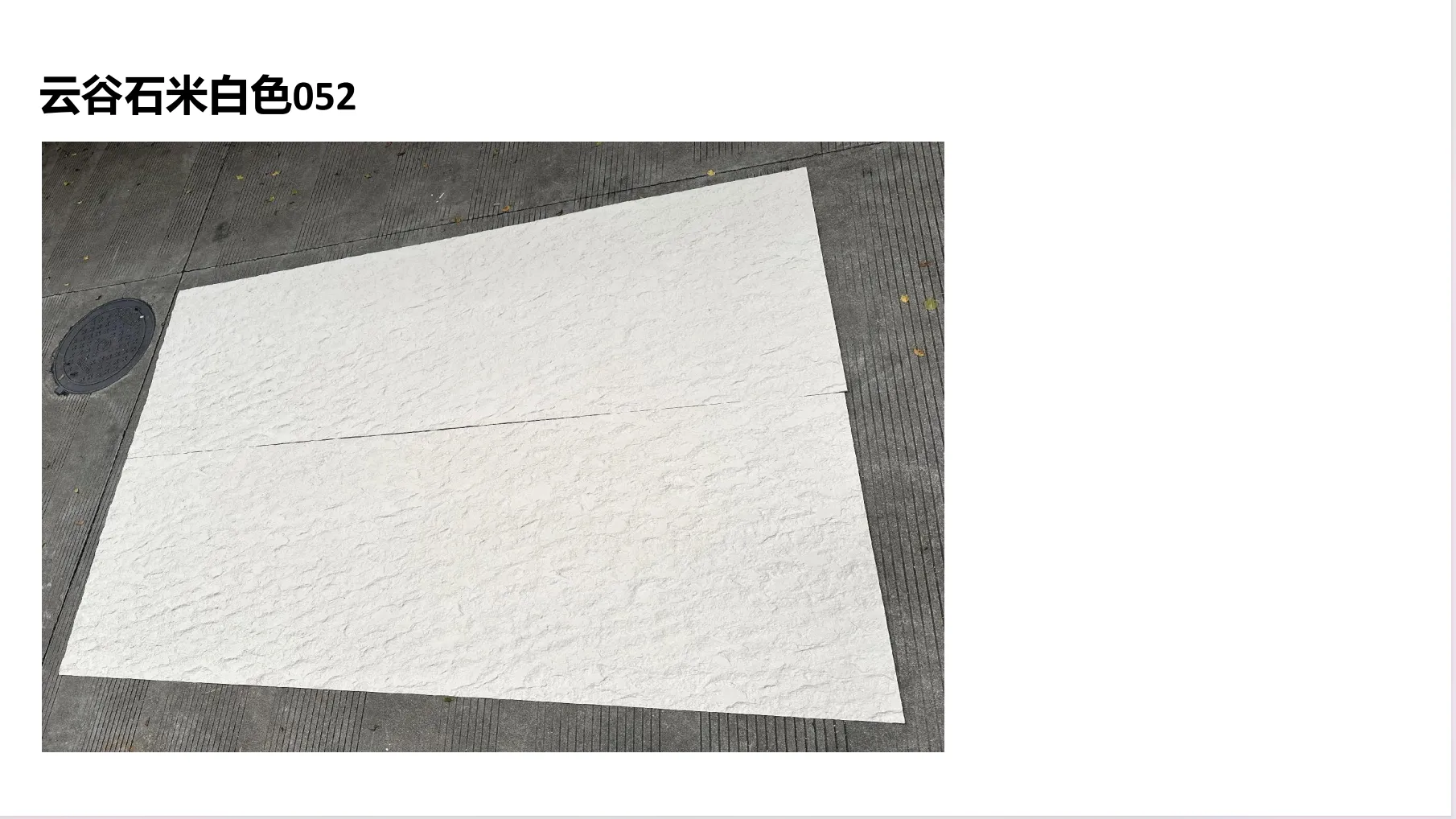
Now, let's talk about cloud stone—the dreamer of the cladding family. If porcelain is the workhorse, cloud stone is the artist, painting walls with texture, depth, and a touch of whimsy. What exactly is cloud stone? Think of it as nature and engineering's love child: a blend of natural aggregates, resins, and pigments that results in a material that's lightweight, flexible, and infinitely customizable. Unlike rigid porcelain, cloud stone bends (yes, bends!) to fit curves, corners, and even ceilings, opening up design possibilities that feel almost limitless.
One of cloud stone's most enchanting traits is its texture. Run your hand over a slab, and you might feel the rough-hewn charm of travertine (starry blue) —a variant dotted with tiny, iridescent flecks that catch the light like a night sky spilled across the wall. Or maybe you prefer the soft, golden glow of lunar peak golden , a hue that shifts from warm amber to honeyed bronze as the sun moves. This isn't just a surface; it's a sensory experience. Cloud stone plays with light and shadow, turning static walls into dynamic landscapes that change with the time of day. And because it's lightweight, it's a game-changer for older buildings or spaces where heavy materials just won't work—think a historic townhouse getting a modern facelift without straining its foundations.
Here's where flexible stone (a star player in the cloud stone family) truly shines: it's not just for exteriors. Imagine a bedroom accent wall wrapped in cloud stone with a rippled texture, or a home office where travertine (starry blue) panels add a calming, celestial vibe during Zoom calls. It's cladding that feels less like a material and more like a mood—one that adapts to the way you live, work, and unwind.
Choosing between porcelain slabs and cloud stone isn't about picking a "winner"—it's about picking what works for *your* space's story. To help you decide, let's break down their differences (and surprising similarities) in the categories that matter most:
| Aspect | Porcelain Slabs | Cloud Stone |
|---|---|---|
| Durability | Almost indestructible: resistant to scratches, stains, moisture, and UV rays. Ideal for high-traffic areas like kitchens and commercial lobbies. | Durable but gentler: Handles daily wear but may need more care in extremely high-traffic spots. Best for walls, accent areas, or low-impact zones. |
| Aesthetics | Sleek, consistent, and versatile. Mimics natural materials (wood, stone, fair-faced concrete ) with precision. Perfect for modern, minimalist, or industrial styles. | Textured, organic, and moody. Features unique patterns (like travertine (starry blue) or lunar peak golden ) that add depth. Great for bohemian, rustic, or eclectic spaces. |
| Installation | Heavy and rigid: Requires professional installation and sturdy substrates. Best for new builds or major renovations. | Lightweight and flexible: Easier to install, even on curved surfaces or existing walls. A favorite for quick updates or retrofits. |
| Cost | Mid-to-high range: Higher upfront cost, but low maintenance makes it cost-effective long-term. | Mid-range: More affordable than premium porcelain, but may need occasional repairs (e.g., replacing a damaged panel). |
| Sustainability | Eco-friendly options available: Many brands use recycled materials, and their longevity reduces replacement waste. | Greener in production: Often made with natural, low-VOC ingredients. Lightweight design also cuts down on transportation emissions. |
Let's step into "Brew & Co.," a bustling café in downtown Portland. The owners wanted a space that felt industrial yet welcoming, with walls that could handle daily splashes of coffee, the scrape of chairs, and the constant hum of customers. Their choice? Porcelain slabs in a fair-faced concrete finish. The large-format slabs (6 feet by 10 feet) create a seamless backdrop behind the espresso bar, their cool gray tones balancing the warmth of wooden tables and amber pendant lights. Even after a year of heavy use, the walls look brand-new—no stains, no chips, just that same raw, urban charm that drew customers in on day one. "We wanted something that could keep up with the chaos," says co-owner Mia. "Porcelain wasn't just a choice; it was peace of mind."
Now, imagine a beach house in Malibu, where the goal is to blur the line between indoors and out. The homeowner, a artist, wanted a living room accent wall that felt like a piece of the ocean—calm, textured, and full of movement. Enter cloud stone in travertine (starry blue) with hints of lunar peak golden for warmth. The flexible panels wrap around a curved wall, their surface rippling like water and catching the afternoon sun to cast blue and gold shadows across the room. "It's not just a wall," the homeowner says. "It's a conversation starter. Guests walk in and immediately touch it—they can't help themselves." And because cloud stone is lightweight, it didn't add extra stress to the home's wooden frame, a crucial detail in a coastal area prone to shifting soil.
Still on the fence? Let's narrow it down. Choose porcelain slabs if…
Choose cloud stone if…
And here's a pro tip: Why not mix them? Imagine a kitchen with porcelain countertops (for durability) and a cloud stone backsplash in travertine (starry blue) (for drama). Or an exterior with porcelain siding on the main facade and foamed aluminium alloy board (vintage silver) accents (lightweight and sleek) paired with cloud stone pillars in lunar peak golden . The best designs often thrive on contrast, and these two materials play surprisingly well together.
Let's be real: No material is perfect, and it's normal to have doubts. For porcelain skeptics worried about a "cold" vibe—fear not. Warm it up with wood accents, soft lighting, or even a living wall. Porcelain's neutrality makes it a blank canvas; you just need to add layers of coziness. As for cloud stone doubters wondering about durability: While it's not as tough as porcelain, it's more resilient than you think. Avoid installing it in areas prone to heavy impacts (like a garage workshop), and opt for sealants to protect against stains. Think of it like a favorite sweater—with a little care, it'll stay beautiful for years.
At the end of the day, cladding is about more than materials—it's about creating a space that feels like *yours*. Porcelain slabs offer reliability and sleekness, a foundation for a life lived boldly. Cloud stone offers artistry and warmth, a reminder that walls can be as expressive as the people who inhabit them. Whether you lean into the industrial cool of fair-faced concrete porcelain or the celestial charm of travertine (starry blue) cloud stone, the right choice is the one that makes you pause, smile, and think, "Yes—this is it." So go ahead, touch the samples, imagine the light, and let your space's story guide you. After all, the best walls are the ones that don't just surround you—they *reflect* you.
Recommend Products












