
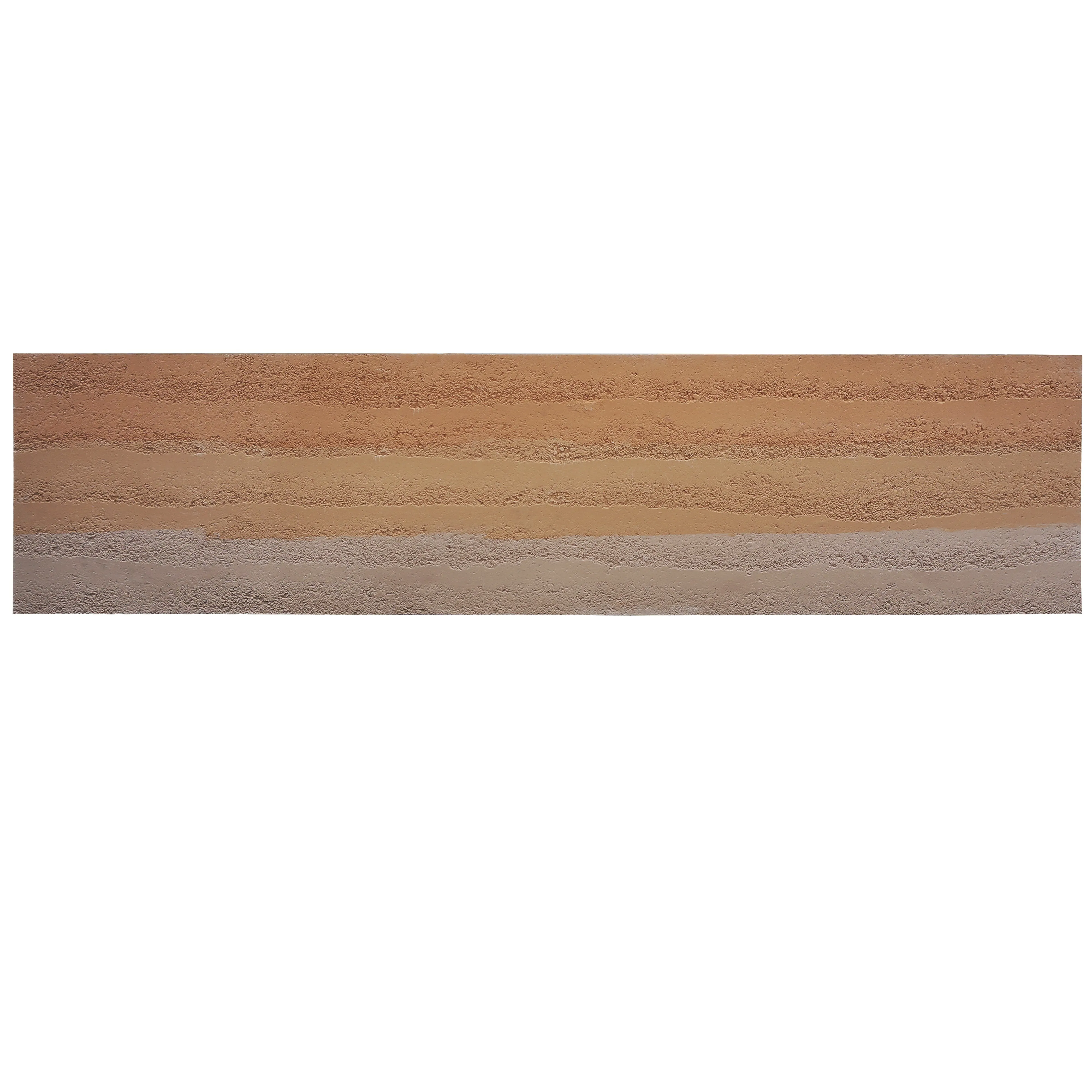
Let's start with the obvious: As a builder, you're always walking a tightrope. On one side, there's the client's dream—spaces that feel alive, unique, and full of character. On the other, there's the budget—numbers that don't always align with those big, beautiful visions. Lately, one material has been turning heads and sparking that classic "Can we afford this?" conversation: the rammed earth board (gradient). With its swirled, natural color transitions—think soft terracottas melting into warm beiges, or muted greens fading into earthy browns—it's no wonder clients are asking for it. But here's the thing: Understanding its cost isn't just about dollars per square foot. It's about knowing what drives the price, how it stacks up against alternatives like fair-faced concrete or flexible stone, and how to make it work for your project without breaking the bank. Let's dive in.
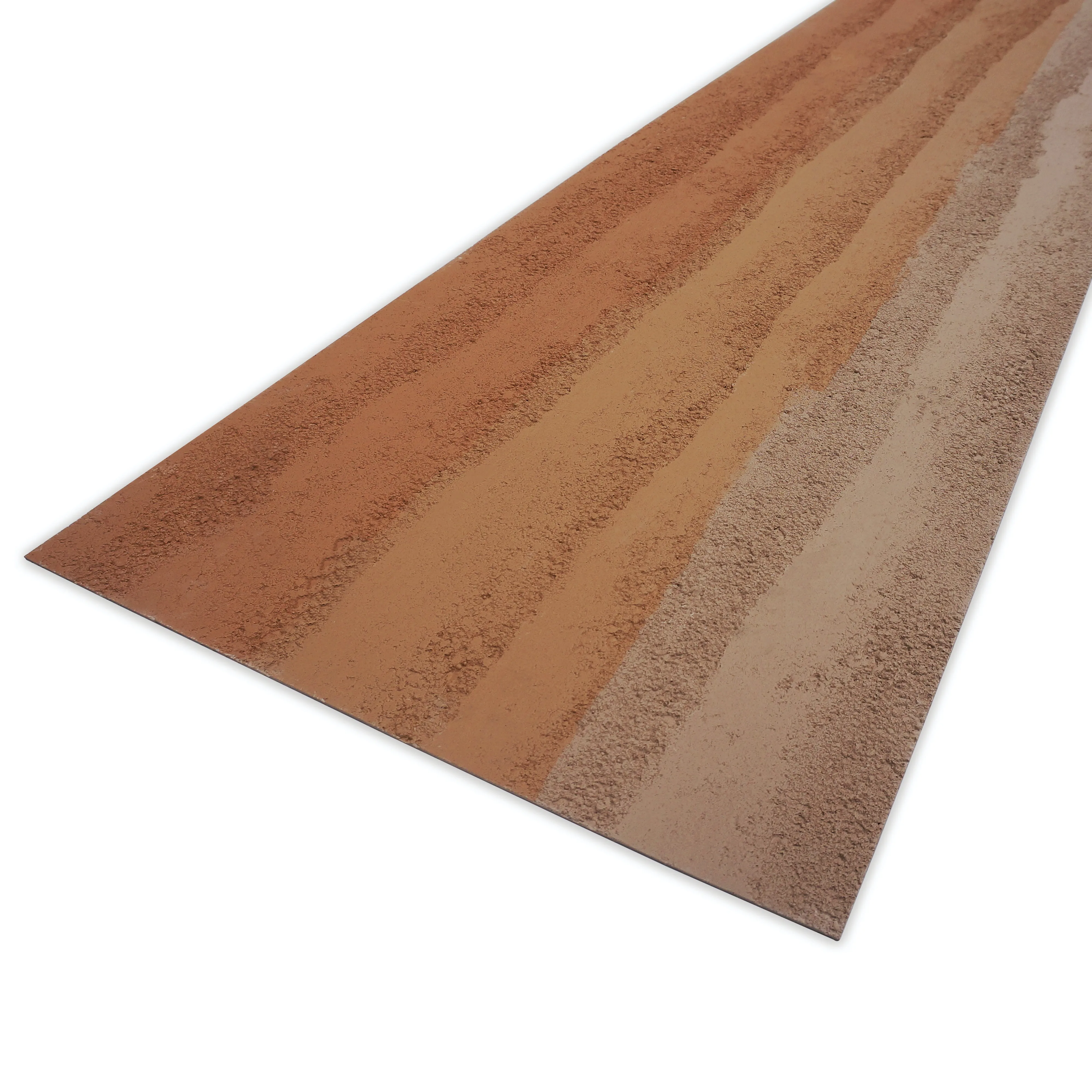
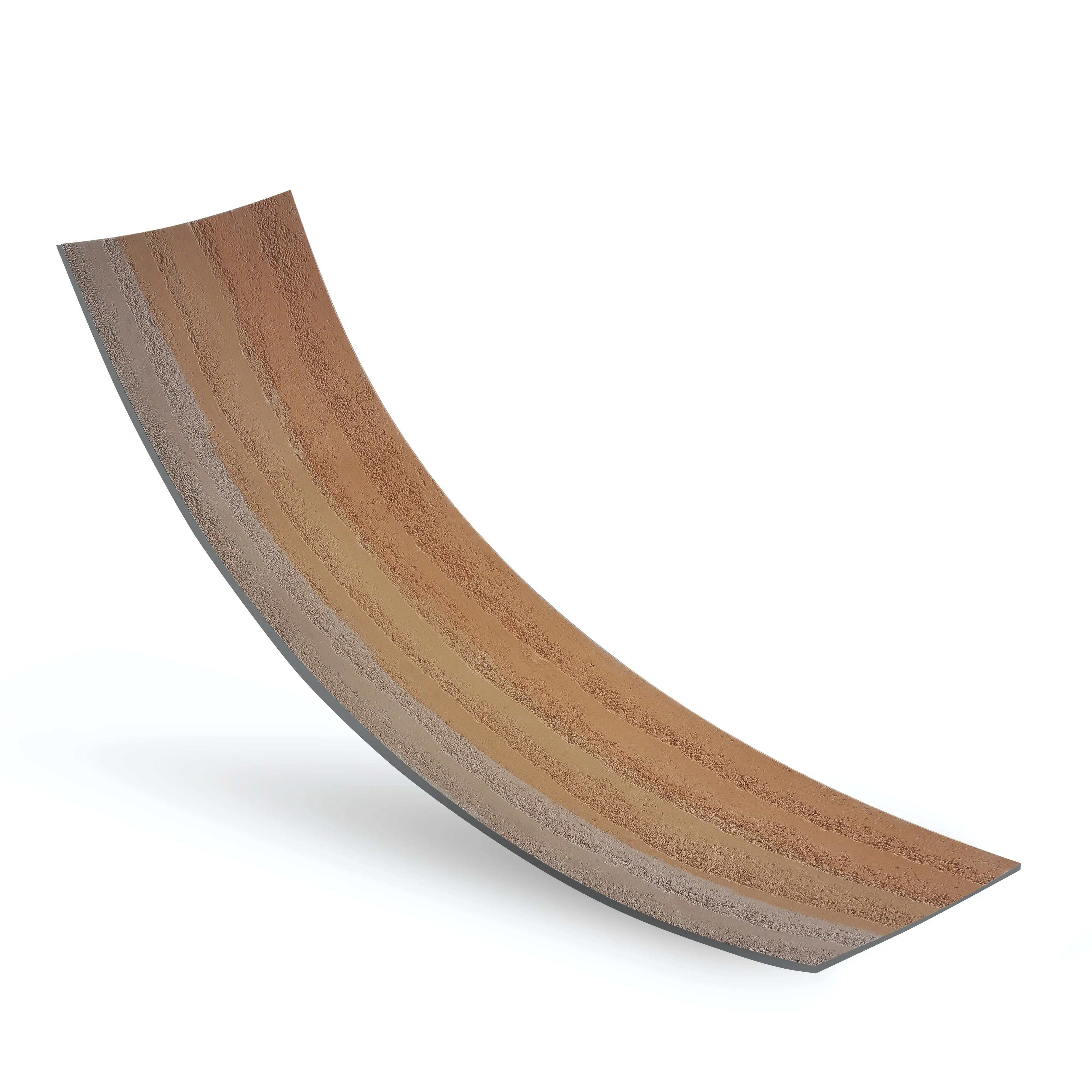
Before we talk costs, let's make sure we're all on the same page. Rammed earth itself is an ancient technique—compacting layers of soil, gravel, and sometimes clay into dense, sturdy walls. But gradient rammed earth boards? They're a modern twist. These are prefabricated panels where layers of colored soil (or pigmented aggregates) are carefully compacted to create a seamless, flowing gradient effect. Imagine (oops, scratch that— think about ) a wall that looks like a sunset frozen in stone, or a hillside's natural color shift captured in a panel. That's the magic here.
The gradient effect isn't just for show, either. Builders and designers love it because it adds depth without relying on busy patterns or harsh contrasts. It's warm, organic, and surprisingly versatile—working in everything from cozy residential homes to sleek commercial spaces. But that artistry? It comes with a price tag. Let's break down why.
Not all gradient rammed earth boards are created equal, and neither are their costs. Here are the big-ticket items that'll make your budget calculator hum:
At its core, rammed earth is about soil—but not just any soil. To get that smooth gradient, manufacturers often use specialized soil blends. Think high-quality clay (for binding), fine sand (for texture), and sometimes even recycled aggregates. Then there are the pigments. Creating a gradient means layering subtle color shifts, which requires precision-matched pigments—no off-the-shelf stuff here. A soft "khaki to terracotta" gradient might need 3-5 pigmented layers, each mixed to exact ratios. And if the client wants bold hues? Think deep reds or blues—those pigments can cost 2-3x more than earth tones.
Example: A standard rammed earth board might use local soil with minimal pigment. A gradient board? It could require imported soil (for consistency) and custom pigments, bumping material costs by 30-40%.
Making a solid-color rammed earth board is straightforward: mix, compact, cure. Gradient boards? They're a production dance. Each color layer has to be applied evenly, compacted to the right density (too loose, and the layers crack; too tight, and the gradient blends muddily), and cured at the perfect temperature. It's labor-intensive—skilled workers spend extra hours monitoring layer transitions, adjusting compaction pressure, and ensuring no color bleeds. A single gradient panel might take 2-3x longer to produce than a solid one, and labor costs add up fast.
Here's a kicker: Waste. If a layer is uneven or the gradient looks off? The whole panel might get scrapped. That's 2-3 hours of work down the drain, and guess who absorbs that cost? (Hint: It's reflected in the final price.)
Gradient boards come in standard sizes (like 4x8 ft), but clients love to customize. A 10x12 ft panel for a feature wall? It's not just more material—it's trickier to handle. Larger panels need sturdier backing (to prevent warping during transport) and specialized equipment to lift and cure. Thickness matters too: A 2-inch panel is standard, but a 4-inch "statement" panel? It'll cost more in materials and shipping (hello, heavier loads).
Ah, client requests. "Can the gradient fade from 'matcha green' to 'sand beige'?" "What if we add a subtle texture in the middle?" Custom color stories, texture variations, or edge details (like rounded corners or chiseled edges) all drive up costs. Some manufacturers charge a "design fee" for custom gradients—especially if it requires R&D to get the color transitions right. And if the client wants samples? Each prototype costs time and materials, which gets rolled into the final price.
Proximity matters. If you're sourcing gradient boards from a local manufacturer, shipping costs are minimal. But if the best gradient panels are made 500 miles away? Suddenly you're paying for freight, handling, and maybe even climate-controlled transport (to prevent cracking in transit). International suppliers? Add customs fees, longer lead times (which can delay your project), and currency fluctuations. A $50/sqm panel from Europe might end up costing $75/sqm once it lands stateside.
To really get a sense of value, let's compare gradient rammed earth boards to three popular alternatives: fair-faced concrete, flexible stone, and MCM big slab board series. We'll use average cost ranges (per square meter) based on current market data—keep in mind these are ballpark figures, not quotes.
| Material | Cost Range (USD/sqm) | Key Cost Drivers | Pros for Builders | Cons for Budget |
|---|---|---|---|---|
| Gradient Rammed Earth Board | $120–$250 | Custom pigments, labor-intensive layering, specialized soil | Unique aesthetic, sustainable, durable (50+ year lifespan) | High upfront cost, limited local suppliers |
| Fair-Faced Concrete | $60–$100 | Formwork, finishing (stamping, sealing) | Low maintenance, widely available, fast installation | Less visual interest; customization (staining, textures) adds cost |
| Flexible Stone | $80–$150 | Stone veneer thickness, adhesive quality | Lightweight, easy to install, mimics natural stone | Less durable (prone to chipping), limited color customization |
| MCM Big Slab Board Series | $90–$180 | Size (big slabs = higher transport costs), surface finish | Large format (fewer seams), modern look, water-resistant | Heavy (requires structural support), limited gradient options |
Takeaway: Gradient rammed earth boards are pricier upfront than fair-faced concrete or flexible stone, but they offer a one-of-a-kind look that's hard to replicate. And compared to high-end MCM slabs, they're often in the same ballpark—with the added bonus of sustainability (no quarrying, minimal waste).
Enough theory—let's look at how this plays out on actual job sites. Here are two examples (inspired by real projects) to show how gradient rammed earth boards fit into a builder's budget.
Project: 2,500 sqft modern home in Colorado, with a gradient rammed earth facade (south-facing wall, ~300 sqft).
Client Vision: A "mountain sunset" gradient—soft pinks fading to terracotta, mimicking the local landscape.
Budget Breakdown:
Challenge: The client initially wanted a 5-color gradient, which would have added $1,500. Solution? Worked with the manufacturer to simplify to 3 colors (pale pink → terracotta → warm brown) without losing the sunset effect. Saved $1,200.
Outcome: The facade became the home's focal point, increasing curb appeal—and the client's satisfaction. As the builder noted: "They were nervous about the cost, but when they saw the first panel go up? They said it was worth every penny."
Project: 1,200 sqft café in Portland, using gradient rammed earth boards for accent walls (2 walls, ~150 sqft total).
Client Vision: A "forest floor" gradient—mossy greens blending into rich browns, to complement the café's "farm-to-table" vibe.
Budget Breakdown:
Win: The builder opted for bulk ordering—buying 20% extra panels to use on a future project. The manufacturer offered a 10% discount for bulk, saving $250. Plus, using local panels cut shipping costs entirely.
Outcome: The gradient walls became a social media hit for the café, drawing in customers. As the builder put it: "It's not just a wall—it's marketing. The client's foot traffic is up 15%, so they see it as an investment, not an expense."
So, you're sold on the look—now how do you keep costs in check? Here are actionable strategies builders swear by:
Not every wall needs a full gradient. Try accent panels: use gradient boards for 20-30% of the wall, and pair them with solid-color rammed earth or even fair-faced concrete. Example: A 10ft wall could have a 3ft gradient strip in the center, flanked by solid beige panels. Cuts material costs by 50% while still making a statement.
Manufacturers love certainty. Ordering 50+ panels at once can net you a 10-15% discount. And if you can lock in the order 3-4 months in advance, you might avoid price hikes (pigment costs fluctuate with market demand). One builder we talked to saved $2,000 on a 100-panel order by booking early.
Shipping a 4x8ft rammed earth panel across the country? That's $50–$100 per panel. But if there's a manufacturer within 200 miles? You'll slash that cost to $10–$20 per panel. Plus, local suppliers are easier to collaborate with on custom gradients—no timezone delays or miscommunications.
Bright, bold gradients are eye-catching, but they often use synthetic pigments that fade faster in UV light. Earth tones (beige, terracotta, soft green) use natural pigments that last longer—and cost less. Explain to clients: "A 'sandy gradient' will still look great in 10 years, while that neon pink might need touch-ups in 5. Long-term, you'll save on maintenance."
Let's talk ROI. Yes, gradient rammed earth boards have a higher upfront cost—but they're built to last. These panels are dense (2-3x stronger than standard drywall), fire-resistant, and require almost no maintenance (just an annual sealant touch-up). Compare that to, say, painted drywall (needs repainting every 3-5 years) or flexible stone (prone to chipping, might need replacement in 10-15 years).
Example: A gradient rammed earth accent wall costs $3,000 upfront. Over 20 years, maintenance is ~$200 (sealant every 5 years). Total: $3,200. A painted drywall wall costs $800 upfront, but needs repainting 4x ($500 per repaint). Total: $800 + $2,000 = $2,800. Wait, that's cheaper? But here's the catch: The drywall wall won't have the same visual impact. If the client values aesthetics (and resale value), the gradient board's "wow factor" might be worth the extra $400.
For commercial projects, the math gets even clearer. A café with gradient walls might charge $1–$2 more per coffee (thanks to ambiance), boosting revenue. As one restaurant owner put it: "The walls aren't just decoration—they're part of the experience. Customers pay for that."
At the end of the day, gradient rammed earth boards aren't for every project. But for clients who crave something unique—something that tells a story—they're hard to beat. As builders, your job is to guide them: explain the costs, find creative workarounds, and help them see the value beyond the invoice.
Remember: You're not just selling panels. You're selling a feeling—a space that feels grounded, alive, and one-of-a-kind. And when a client looks at their gradient wall and says, "I can't believe we built this," that's the moment the cost fades into the background. That's the magic of building with heart—and with gradient rammed earth boards.
Recommend Products












