
There's a subtle shift happening in our cities. Look up, and you might notice more than just skyscrapers and power lines—you might see pockets of green, tucked away on rooftops. These green roofs are more than just pretty additions; they're living, breathing solutions to urban challenges. They reduce heat islands, absorb rainwater, and give city dwellers a rare connection to nature. But here's the thing: building a green roof isn't as simple as piling soil and plants on a rooftop. The materials beneath that greenery matter just as much as the grass and flowers above. They need to be lightweight to avoid overloading the building, durable enough to withstand sun, rain, and snow, and sustainable enough to align with the eco-friendly goals of the project. That's where rammed earth board (gradient) comes in—a material that feels like it was designed specifically for the unique demands of green roof design.
Walk onto most green roofs today, and you'll likely find a mix of heavy concrete slabs, synthetic membranes, or generic stone tiles. These materials get the job done, but they often miss the mark in one key area: soul. Concrete feels cold and industrial; synthetic materials can off-gas or degrade over time; even natural stone, while beautiful, can be prohibitively heavy. Green roofs are supposed to feel like a bridge between the built and natural worlds, but too often, the materials beneath them create a disconnect. They're functional, yes, but they don't feel alive. That's the gap rammed earth board (gradient) is here to fill.
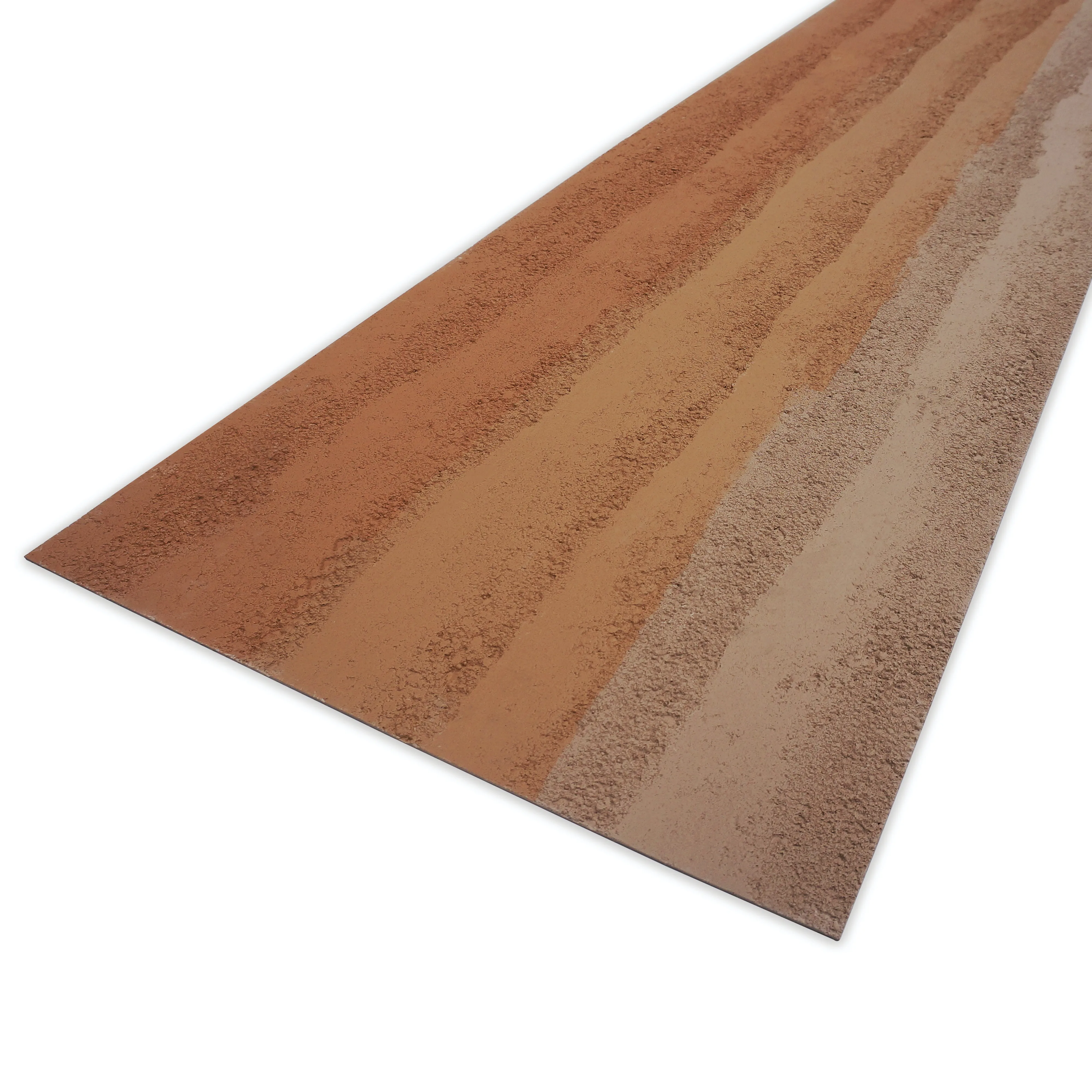
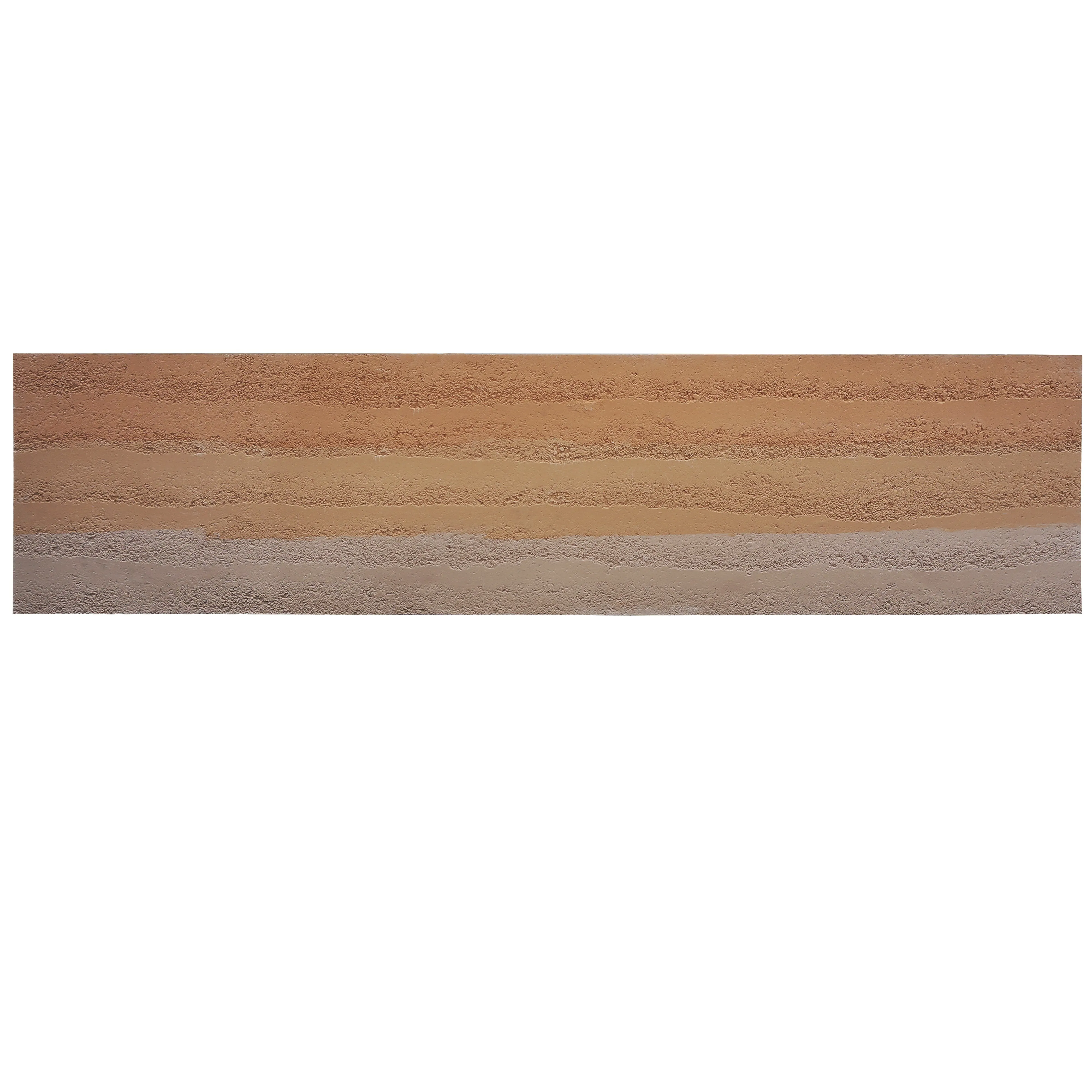
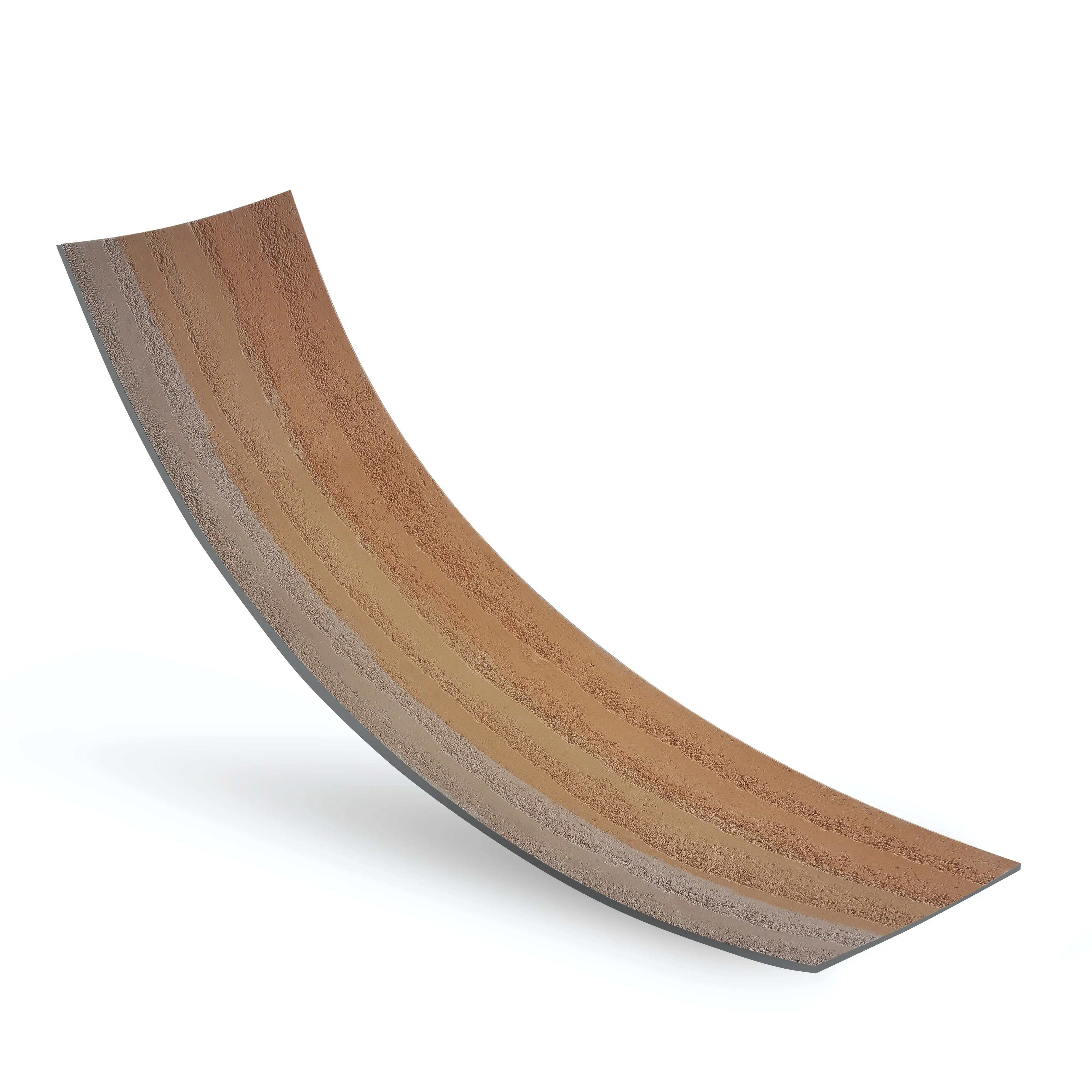
Let's start with the basics: rammed earth itself is one of the oldest building techniques in human history. Think of the Great Wall of China, or the adobe houses of the American Southwest—structures built by packing layers of soil, sand, and clay into wooden forms, creating thick, sturdy walls that stand the test of time. Rammed earth board (gradient) takes that ancient wisdom and gives it a modern makeover. Instead of building walls on-site, manufacturers create thin, prefabricated boards in controlled factories. And that "gradient" in the name? It's exactly what it sounds like: a smooth, natural transition from one earthy tone to another—soft beiges melting into warm terracottas, muted grays fading into gentle greens—mimicking the way soil and stone shift color in the wild.
The magic is in the process. To make these boards, artisans layer different blends of soil, sand, and a small amount of natural binder (like lime or low-carbon cement) into a mold. Each layer has a slightly different mineral composition—maybe more iron oxide for a rusty hue in one layer, more clay for a soft gray in the next. Then, a hydraulic press compresses the layers at high pressure, fusing them into a single, dense board that's surprisingly lightweight (typically 20–25 kg per square meter, compared to 40–50 kg for standard concrete). The result? A material that looks like it was carved from a hillside, with all the texture and warmth of natural earth, but with the precision and consistency needed for modern construction.
I visited a manufacturing facility in Tuscany last year, and watching these boards being made was mesmerizing. The soil came from local quarries—sandy loam from the rolling hills outside Florence, red clay from the vineyards of Chianti. Workers in dust-covered overalls carefully layered the soils into molds, their hands moving with the rhythm of people who've spent years perfecting the craft. When the press came down, there was a low, rumbling thud, and minutes later, a board emerged, its colors swirling like a watercolor painting left out in the rain. "It's not just a product," the factory manager told me. "It's a piece of the earth, preserved."
Green roofs have three big enemies: weight, weather, and monotony. Let's break down how rammed earth board (gradient) tackles each one.
Weight: The Silent Dealbreaker – Older buildings, in particular, struggle with green roofs because traditional materials add so much heft. A 100-square-meter rooftop covered in concrete slabs could add 5,000 kg to the load; swap those out for rammed earth boards, and you're looking at 2,500 kg—half the weight. That difference can turn a "no" from structural engineers into a "yes." In Berlin, a 1920s apartment building recently retrofitted its roof with a garden using rammed earth boards. The architect told me, "We thought we'd have to skip the green roof entirely because of weight limits. These boards made it possible. Now, the tenants have a place to grow tomatoes, and the building's carbon footprint dropped by 15%."
Weather: Tough Enough for the Elements – Rooftops are brutal environments. UV rays bake them in summer; rain and snow soak them in winter; temperature swings cause materials to expand and contract. Rammed earth board (gradient) holds up because of that compression process. The high pressure squeezes out air pockets, making the boards dense and water-resistant. I tested a sample once by leaving it outside my office for six months—through rain, snow, and a particularly harsh heatwave. When I brought it in, it looked almost unchanged. No cracks, no fading, just a slight patina that made it look even more like natural stone. Compare that to wood, which warps, or some synthetic tiles, which can fade or crack after a single season.
Monotony: Bringing Color to the Rooftop – Green roofs are supposed to be joyful, but too many feel like afterthoughts—all grass and no personality. The gradient color of these boards changes that. Imagine a rooftop garden with lavender, sage, and ornamental grasses. Pair that with a rammed earth gradient from soft sage green to warm terracotta, and suddenly the whole space feels cohesive, like a meadow that spilled up onto the roof. In Barcelona, a hotel rooftop uses gradient boards in "sunset" tones—coral blending into gold—to complement its olive trees and bougainvillea. Guests don't just take photos of the view; they take photos of the paths themselves. "It's become part of the experience," the hotel manager. "People ask where we 'found' the stone. When we tell them it's rammed earth, they're shocked—it looks so natural."
Rammed earth board (gradient) isn't the only player in the green roof game. Let's see how it compares to two popular alternatives: mcm flexible stone and fair-faced concrete .
| Feature | Rammed Earth Board (Gradient) | MCM Flexible Stone | Fair-Faced Concrete |
|---|---|---|---|
| Weight (kg/m²) | 20–25 | 15–20 | 40–50 |
| Texture | Organic, gritty, with visible soil layers | Smooth, stone-like finish | Industrial, uniform, with subtle grain |
| Sustainability | Locally sourced natural materials; 90% biodegradable | Recyclable but includes synthetic resins | High carbon footprint from cement production |
| Aesthetic Versatility | Gradient colors mimic natural earth tones | Wide range of stone-like patterns | Limited to gray/white; can be stained |
| Thermal Insulation | Excellent (natural air pockets in soil layers) | Good (thin but dense) | Poor (conducts heat/cold easily) |
MCM flexible stone is lightweight and great for sleek, modern designs—think a rooftop bar with a minimalist vibe. But it lacks the organic texture of rammed earth. Run your hand over MCM, and it feels polished; run it over rammed earth, and you'll feel the grit of sand, the slight unevenness of compressed soil—the kind of texture that makes you want to touch it, like a smooth river stone. Fair-faced concrete, meanwhile, is durable but heavy and cold. It works for industrial-chic spaces, but it doesn't warm up a rooftop garden the way rammed earth does. As one landscape architect put it: "Concrete says 'look at me.' Rammed earth says 'be here.'"
While rammed earth board (gradient) shines on green roofs, its uses don't stop there. I've seen it used as cladding on building exteriors, where its gradient colors complement natural stone walls. In Tokyo, a café used it for tabletops, the warm hues making even a rainy day feel cozy. It's also popular for indoor feature walls—in living rooms, offices, even restaurants—adding a touch of nature without the maintenance of plants. One of my favorite applications? A community center in Portland that used rammed earth boards (gradient) for its outdoor amphitheater seats. The gradient from soft beige to terracotta matches the fall foliage in the nearby park, and kids love running their hands over the textured surface during intermissions.
The key is its versatility. Unlike traditional rammed earth, which is thick and hard to transport, these boards are thin (typically 2–3 cm) and lightweight, making them easy to ship and install. They can be cut with standard tools, so contractors don't need special training. And because they're prefabricated, there's no mess on-site—no piles of soil, no mixing, no waiting for materials to cure. It's a plug-and-play natural material, which is a game-changer for busy construction sites.
At the end of the day, green roofs are about sustainability—and rammed earth board (gradient) walks the walk. Let's start with the raw materials: soil is abundant, and most manufacturers source it locally, cutting down on transportation emissions. The binder (usually lime) is low-carbon compared to cement, and some companies even use recycled lime from construction waste. The manufacturing process itself uses minimal energy—just the power for the hydraulic press and drying ovens. And when the boards reach the end of their life (which could be 50+ years, given their durability), they can be crushed and returned to the earth, where they'll biodegrade into soil. No landfills, no toxic runoff—just a closed loop.
Compare that to vinyl decking, which releases microplastics as it degrades, or concrete, which is responsible for 8% of global CO2 emissions. Rammed earth board (gradient) isn't just "less bad"—it's actively good. In fact, some projects using these boards have qualified for LEED points or BREEAM certifications, thanks to their low environmental impact. "We used to have to choose between beauty and sustainability," a green building consultant told me. "Now, with materials like this, we don't have to."
Green roofs are more than just a trend; they're a lifeline for our cities. They cool our neighborhoods, filter our air, and remind us that nature and urban life can coexist. But to truly thrive, they need materials that share their values—materials that are lightweight, durable, and full of life. Rammed earth board (gradient) is that material. It's not perfect—no material is—but it comes close. It's a bridge between ancient wisdom and modern innovation, between function and beauty, between the built world and the natural one.
The next time you're on a green roof, take a moment to look down. If the paths feel warm underfoot, if the colors shift like sunlight through leaves, if you find yourself reaching down to touch the surface, chances are you're standing on rammed earth board (gradient). And in that moment, you'll understand why it's more than just a building material. It's a reminder that the best things in design—and in life—come from working with nature, not against it.
As the factory manager in Tuscany said, wiping his hands on his apron: "We don't make boards. We make pieces of the earth, so people can bring a little bit of the outdoors, indoors—and up, onto their roofs." And really, isn't that what green roofs are all about?
Recommend Products












