
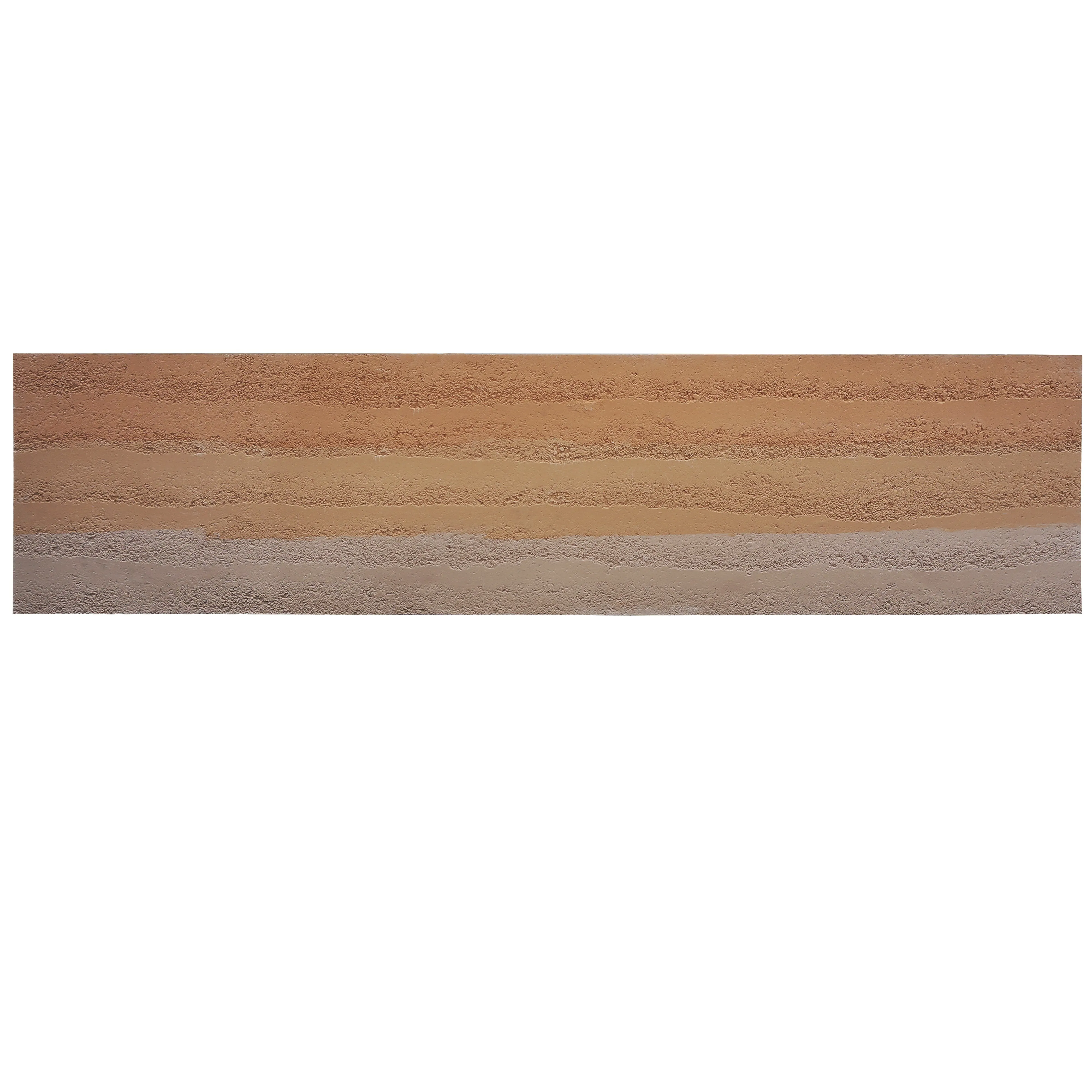
Walk down any street, and buildings whisper stories. Some shout of modernity with sleek glass and steel; others murmur of tradition with weathered brick and wood. But what if a building could sing —not just with shape, but with color? That's the magic of gradient rammed earth board. It's an ancient material reborn, trading monotone simplicity for a symphony of hues that mimic the earth's own artistry: sunsets bleeding into dusk, desert dunes shifting from gold to rose, mountain ranges fading from deep green to snow-capped white. In a world where so much feels mass-produced, gradient rammed earth board is a reminder that buildings, like people, can have soul.
Let's start at the beginning. Rammed earth isn't new. For millennia, civilizations from China to Africa stacked layers of damp soil, gravel, and clay, tamping them down with tools to form thick, sturdy walls. These structures—think the Great Wall of China or the cliff dwellings of the American Southwest—have stood the test of time, a testament to the material's durability. But traditional rammed earth is often a single, earthy tone: terracotta, sand, or gray. Gradient rammed earth board flips the script. By carefully blending natural pigments and layering soil mixtures, artisans create panels where colors flow into one another, like a watercolor painting come to life. It's history meeting innovation, and the result is nothing short of transformative.
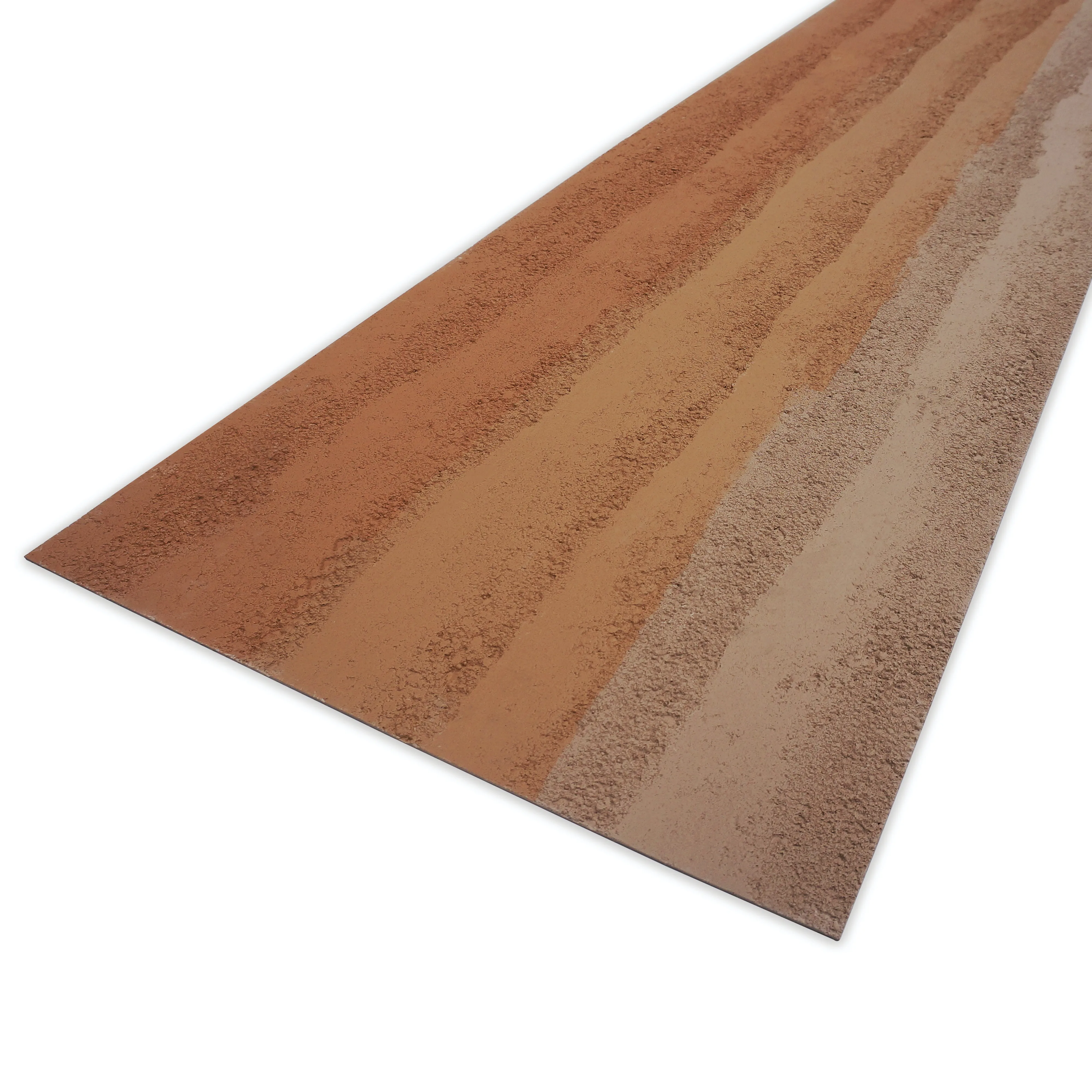
Imagine standing before a building where the walls don't just have color—they move with it. That's the first thing you notice about gradient rammed earth board: its colors aren't static. A single panel might shift from warm terracotta at the bottom, blending into soft amber, then pale gold, and finally a whisper of cream at the top. It's like capturing a desert sunset in stone, or the way sunlight fades across a mountain slope at day's end.
What makes this possible? It starts with the soil itself. Artisans source local clays and sands, each with its own natural hue—rusty reds from iron-rich earth, soft beiges from silt, deep browns from loam. Then, they mix in mineral pigments (think oxides of iron for reds, manganese for purples) in varying concentrations, layering the mixtures by hand in molds. As the earth is tamped down, the colors bleed into one another at the edges, creating that seamless gradient. No two panels are exactly alike; each has tiny variations in tone and saturation, like a fingerprint. It's the opposite of the uniformity of vinyl siding or painted concrete—this is color with character.
And the range? It's staggering. Want a gradient that echoes the ocean, shifting from deep indigo to frothy white? Or one that mimics a forest floor, from mossy green to pine needle brown? Gradient rammed earth board delivers. It even pairs beautifully with other natural materials—like a facade that combines a warm terracotta-to-gold gradient with accents of travertine (starry blue) , its cool, speckled surface popping against the earthy tones. The result? A building that feels rooted in place, yet alive with movement.
Color is only half the story. Run your hand along a gradient rammed earth panel, and you'll feel what truly sets it apart: texture. Unlike smooth, polished stone or flat concrete, this material has a tactile, almost organic quality. There are subtle ridges where the layers of earth meet, tiny indentations from the tamping process, and flecks of gravel or sand that catch the light. It's the kind of texture that invites touch—children (and adults!) can't resist running their fingers over it, tracing the color shifts with their palms.
This texture isn't just for show. It plays with light in ways no flat surface can. At dawn, the rising sun hits the panel at a low angle, casting shadows in the valleys between soil particles, making the colors appear deeper and richer. At noon, direct light highlights the flecks of stone, turning the surface into a mosaic of tiny sparkles. And at dusk, the warm golden light softens the gradients, blending the hues into a honeyed glow. A building wrapped in gradient rammed earth doesn't just look different at different times of day—it feels different, too. It's dynamic, responsive, and utterly alive.
Ancient rammed earth structures have stood for centuries—so why would modern gradient versions be any different? In fact, they're even tougher. Traditional rammed earth relies on the natural cohesion of soil particles, but modern gradient rammed earth board adds stabilizers like lime or cement (in small, eco-friendly amounts) to boost strength. The result? A material with compressive strength comparable to concrete, able to withstand heavy winds, driving rain, and even minor impacts without cracking or chipping.
Think about it: A well-made gradient rammed earth panel can last 50 years or more with minimal maintenance. No repainting, no sealing every few years—just an occasional rinse with water to remove dust. It's resistant to mold (since it's breathable, moisture doesn't get trapped), and pests like termites or rodents have no interest in it. In regions with extreme weather, it holds up: in hot, dry climates, it resists fading from UV rays; in wet areas, its density prevents water penetration. It's not just a pretty face—it's a workhorse.
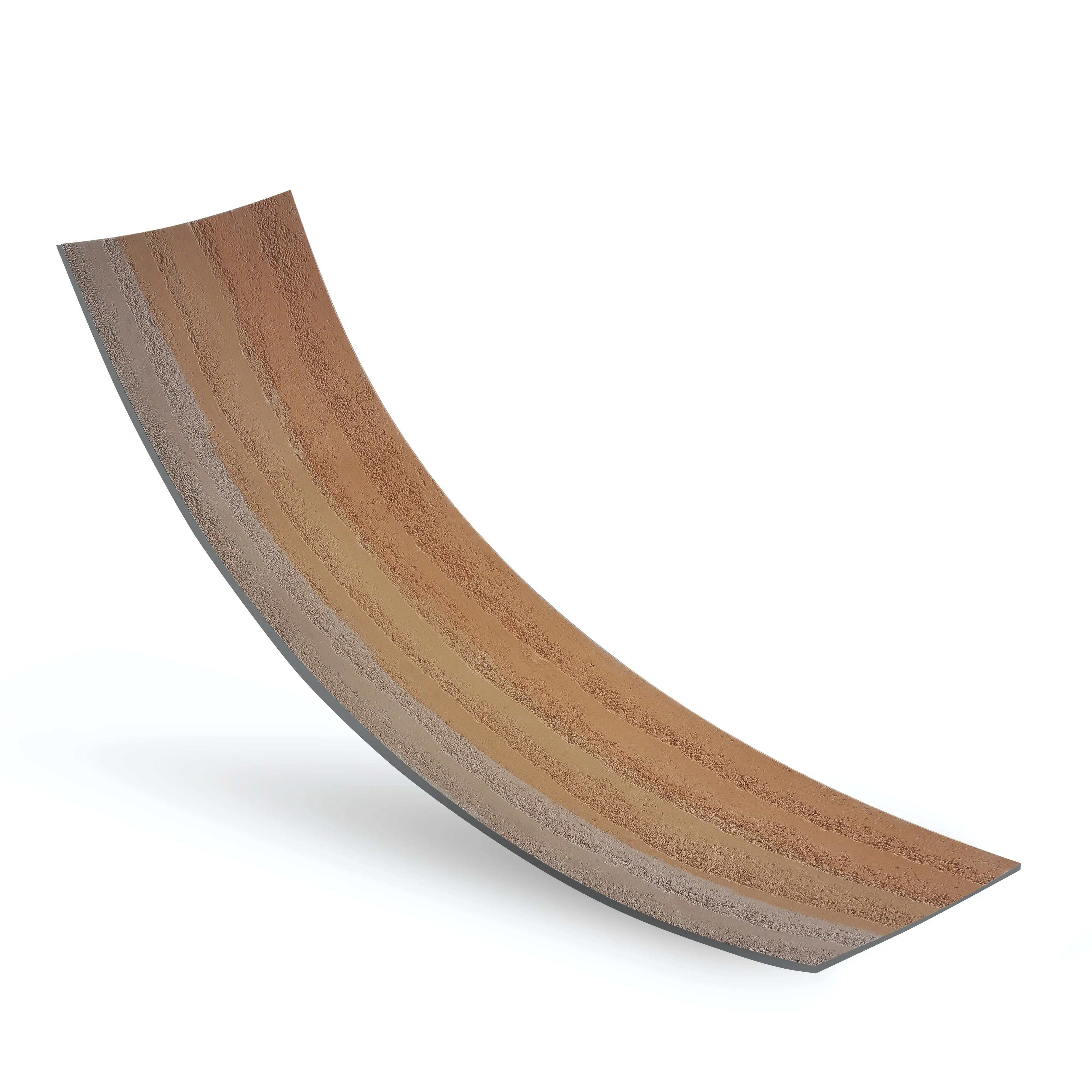
Here's the best part: Despite its ancient roots, gradient rammed earth board is surprisingly flexible for modern construction. Traditional rammed earth is often site-cast, meaning workers build forms on-site and tamp the earth directly into them—a labor-intensive process that limits design options. Gradient rammed earth boards, though, are precast in controlled factories. This allows for precise color matching, consistent quality, and easier transportation. They're lightweight (compared to solid stone, anyway), so they don't require extra structural support, and they can be cut to size, drilled, or even curved for rounded walls or arches.
This flexibility opens up endless design possibilities. Want a feature wall in your living room with a gradient from soft gray to charcoal? Easy—just order custom-cut panels. Building a boutique hotel with a curved facade that shifts from blush pink to ivory? Gradient rammed earth boards can bend to the curve. They even pair seamlessly with other modern materials, like fair-faced concrete for a minimalist contrast, or mcm flexible stone for areas that need extra bendability (like ceiling panels or curved countertops). It's an ancient material that plays well with the new—and that's a rare thing.
Let's be honest: We spend most of our lives surrounded by buildings, so why shouldn't they inspire us? Gradient rammed earth board doesn't just cover walls—it creates moods . A home with a gradient from warm terracotta to golden yellow feels cozy and inviting, like a hug from the desert. A restaurant with a deep brown-to-olive gradient feels grounded and earthy, perfect for slow, mindful meals. Even a corporate office with a subtle gray-to-silver gradient (paired with lunar peak silvery accents) feels less sterile, more human.
Architects love it for its ability to blend in or stand out. In rural areas, a gradient that mirrors local soil colors helps a building feel like it belongs, not just plopped down. In urban settings, a bold gradient (think rusty red to charcoal) can turn a plain office building into a neighborhood landmark. It's versatile, too—works with modern, rustic, bohemian, or minimalist styles. No matter the design vision, gradient rammed earth board adds that "wow" factor that makes people stop and say, "What is that made of?"
In a world where "green building" is more than a trend—it's a necessity—gradient rammed earth board shines. Let's start with the materials: It uses locally sourced soil, which reduces transportation emissions (no shipping stone from quarries thousands of miles away). The pigments are natural minerals, not synthetic dyes, and the stabilizers (lime or cement) are used in small quantities, minimizing environmental impact. Even the manufacturing process is low-energy: no high-temperature firing (like brick or tile) or toxic chemicals—just water, earth, and human effort.
But the sustainability doesn't stop there. Rammed earth has thermal mass —it absorbs heat during the day and releases it at night, which stabilizes indoor temperatures. That means less reliance on heating and cooling systems, slashing energy bills and carbon footprints. It's also breathable, so it regulates humidity naturally, reducing the need for dehumidifiers or air conditioners. And when a building eventually reaches the end of its life, gradient rammed earth boards can be crushed and reused as fill or landscaping material—no landfill waste. It's a closed-loop material, from cradle to grave.
Beauty is great, but a building material needs to perform, too. Gradient rammed earth board delivers on function in spades. Let's start with sound insulation: The dense, porous structure of the earth absorbs sound waves, making it ideal for noisy urban areas or busy homes. A gradient rammed earth wall between your bedroom and the street? Say goodbye to traffic noise. A home theater with gradient rammed earth panels? Crisp, clear sound with minimal echo.
Then there's fire resistance. Unlike wood or vinyl, rammed earth is non-combustible—it won't catch fire or release toxic fumes. In wildfire-prone areas, that's a lifesaver. And remember that thermal mass we mentioned? It doesn't just save energy—it makes indoor spaces more comfortable. No more drafty rooms or hot spots; just steady, even temperatures year-round. It's the kind of comfort that makes a house feel like a home, not just a box.
Architects and designers often complain about materials limiting their creativity—not with gradient rammed earth board. Want a 20-foot-tall feature wall with a gradient that mimics the Northern Lights (think deep purple to pale green)? Possible. Dream of a kitchen backsplash with a subtle gradient from cream to coffee, paired with wood grain board cabinets? Doable. Even outdoor spaces—patios, garden walls, pool surrounds—benefit from its durability and beauty. It's a material that says "yes" to your wildest design ideas.
And because it's precast, you can experiment with patterns, too. Mix gradient panels with solid-colored ones for a checkerboard effect, or arrange them in a herringbone pattern to add movement. Some designers even use gradient rammed earth as art—creating murals by arranging panels with varying color shifts to form landscapes or abstract designs. When a material can be both a building block and a canvas, the possibilities are endless.
| Material | Color Range | Texture | Sustainability | Best For |
|---|---|---|---|---|
| Gradient Rammed Earth Board | Seamless gradients, natural earth tones + custom pigments | Tactile, organic, with visible layers and flecks | High—local materials, low energy, recyclable | Organic, warm designs; eco-friendly homes/offices |
| Fair-Faced Concrete | Stark grays, whites; limited color options | Smooth or lightly textured; industrial feel | Medium—high embodied energy, but durable | Minimalist, modern designs; urban settings |
| MCM Flexible Stone | Wide range, including stone replicas (marble, granite) | Smooth to moderately textured; uniform | Medium—synthetic components, but lightweight (reduces transport emissions) | Curved surfaces, high-flexibility needs |
| Lunar Peak Silvery | Metallic silver, sleek and reflective | Smooth, polished; modern, futuristic feel | Medium—metal alloy, but durable and recyclable | Accent panels, high-end modern designs |
At the end of the day, gradient rammed earth board isn't just about building walls. It's about building stories. It's about a home that feels like it grew from the land it sits on, a café that wraps customers in warmth, a school that teaches kids about sustainability just by existing. It's a material that honors the past—those ancient builders who tamped earth into walls with their hands—while embracing the future, where design and sustainability go hand in hand.
So the next time you walk past a building and find yourself pausing, drawn in by the way the walls seem to glow or shift color in the light, take a closer look. It might just be gradient rammed earth board—ancient earth, reimagined. And in that moment, you'll understand: great buildings don't just stand—they breathe . And gradient rammed earth board is the breath that gives them life.
Recommend Products












