
Architecture is more than just walls and roofs—it's a language. The materials we choose whisper stories of heritage, innovation, and emotion, shaping how we experience a space. In recent years, two materials have stood out for their ability to blend tradition with modernity: rammed earth board (gradient) and brick cladding. One is an ancient technique reimagined with color gradients, the other a timeless classic adapted for contemporary design. But when it comes to design flexibility—how well they adapt to creative visions, functional needs, and aesthetic goals—how do they stack up? Let's dive in.
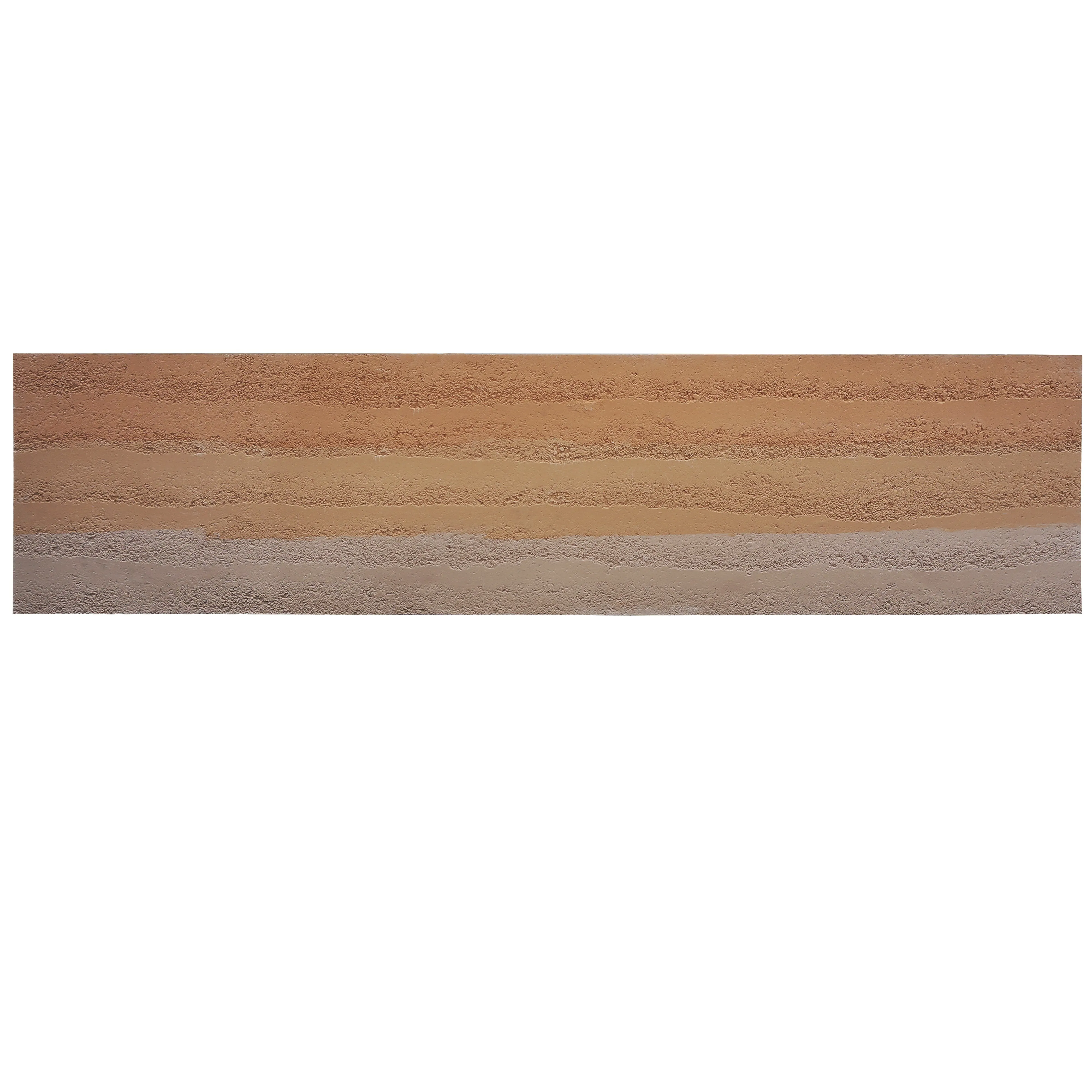
Rammed earth isn't new. For centuries, civilizations from China to Africa built homes and fortresses by compressing layers of soil, gravel, and clay into solid walls. But today's rammed earth board (gradient) —often part of MCM (Modified Composite Material) product lines—is a revolution in disguise. It retains the raw, earthy charm of traditional rammed earth but swaps heaviness for lightness, rigidity for flexibility, and monotony for color magic.
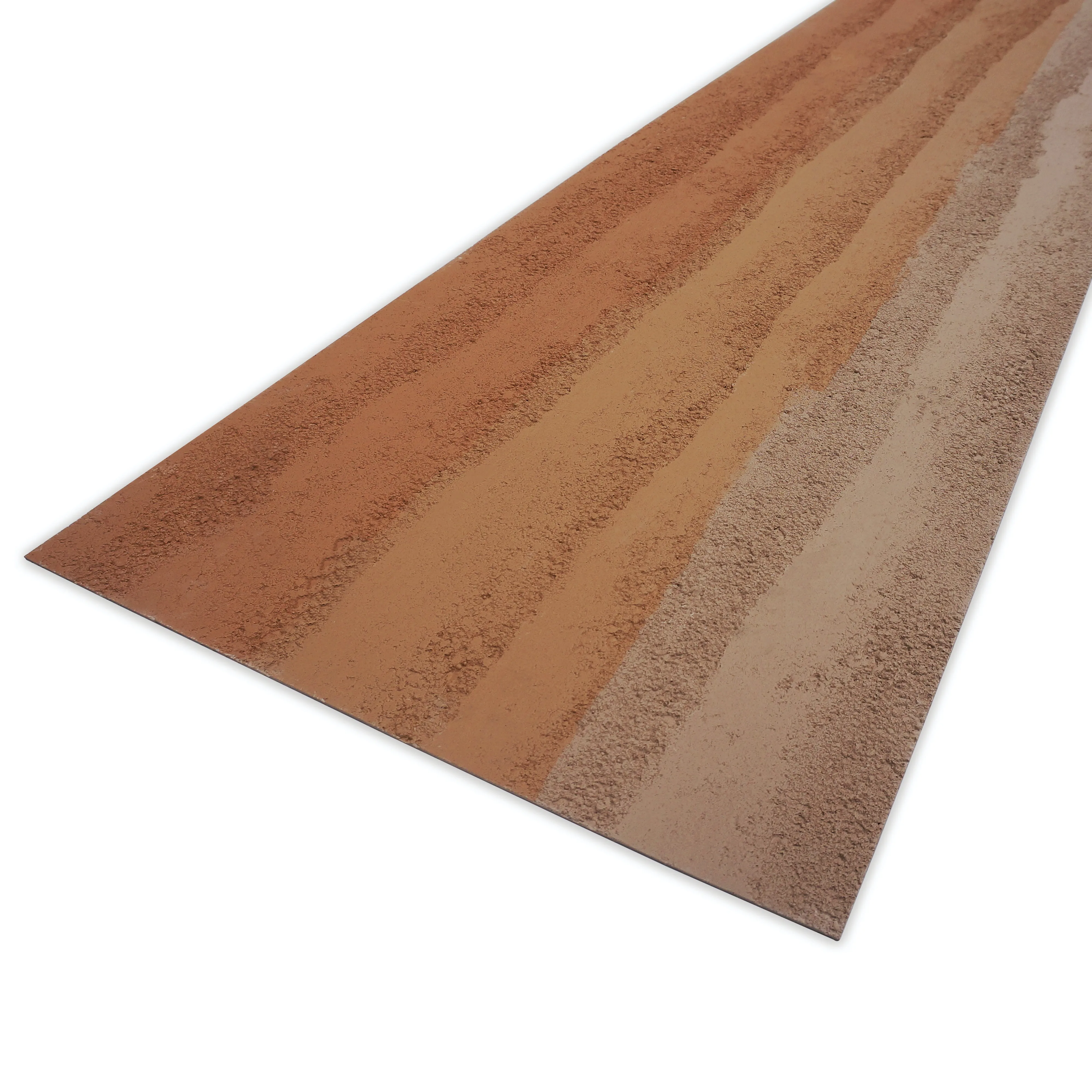
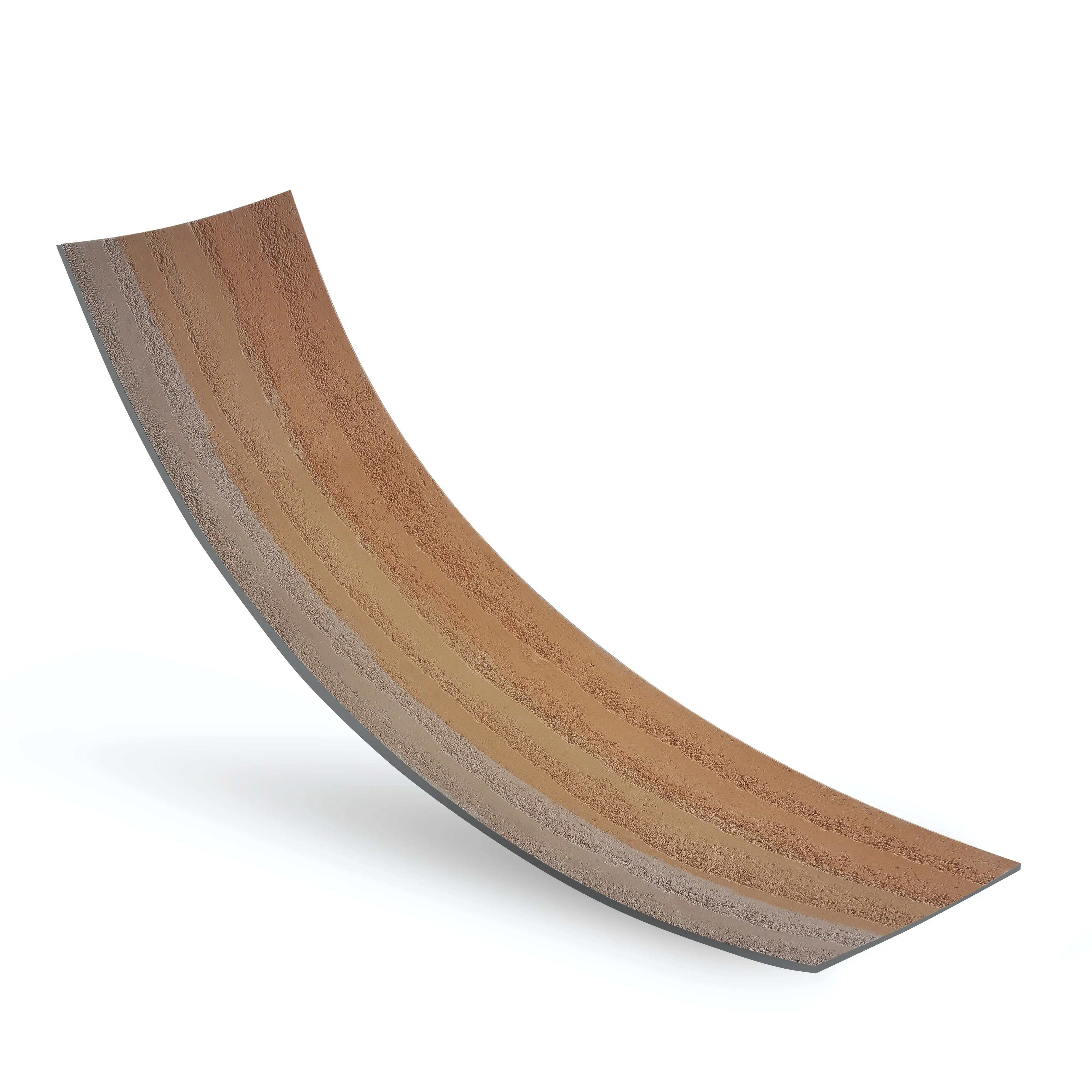
Imagine (oops, scratch that—picture) a wall that shifts from soft terracotta at the base to pale sand at the top, or from deep matcha green to creamy white, like sunlight filtering through a forest canopy. That's the gradient effect: achieved by layering pigmented earth mixtures during manufacturing, sometimes using 3D printing techniques from MCM's 3D printing series to precision-control color transitions. And because it's made with flexible stone technology, these boards can bend slightly, hugging curves or wrapping around architectural details that rigid traditional rammed earth would crack against.
It's not just about looks, though. These boards are thin (often 4-6mm), lightweight, and easy to install—no need for massive structural support. They're also durable, resistant to moisture, and fireproof, making them suitable for both interior accent walls and exterior facades. Think of it as earth's palette, but with a modern artist's brush.
Brick cladding, on the other hand, is comfort food for the eyes. We've grown up with brick: red-brick cottages, industrial lofts with exposed brick walls, historic town squares lined with weathered brick facades. Modern brick cladding takes the essence of traditional brick—its texture, warmth, and familiarity—and packages it into thin, lightweight panels. These aren't the heavy, mortar-laden bricks of old; they're often 1-2 inches thick, designed to be glued or mechanically fastened to backer boards, saving on structural costs.
Brick cladding comes in classic hues—deep reds, warm browns, soft beiges—and textures ranging from smooth to rough-hewn. Some manufacturers even mimic aged brick, with chipped edges or uneven surfaces that evoke a sense of history. It's reliable, time-tested, and instantly recognizable. But does that reliability come with limits?
Design flexibility isn't just about "can it look nice?" It's about "can it adapt to my wildest ideas?" Let's break it down into key categories.
Here's where rammed earth board (gradient) shines brightest. Traditional rammed earth has a beautiful, earthy palette—think tans, browns, and grays—but it's mostly single-toned. The gradient version? It's a color story. Want a wall that mimics a desert sunset, shifting from burnt orange to pale pink? Done. A lobby that feels like a mountain range, blending lunar peak silvery at the top with lunar peak golden at the bottom? Consider it painted. The gradients are seamless, no harsh lines—just a smooth flow that feels organic, like nature itself.
Texture-wise, it's all about depth. Run your hand over a rammed earth gradient panel, and you'll feel the subtle ridges of compressed layers, tiny flecks of stone, and the matte finish that softens light rather than reflecting it. It's tactile, inviting—like touching a cliff face that's been polished by wind and rain.
Brick cladding, by contrast, plays in a smaller sandbox. Colors are mostly limited to traditional brick tones: red, brown, beige, or gray (with occasional "modern" blacks or whites). Textures are uniform too—most have the classic "brick" look: rectangular units with slight indentations (called "frogs") and mortar-like grout lines. You can get weathered or "distressed" brick cladding for a rustic vibe, but even then, the color range is narrow. It's like choosing between 10 shades of red vs. a whole rainbow.
For example, if you're designing a boutique hotel and want a feature wall that complements travertine (starry green) accents (with their subtle, star-like mineral deposits), brick cladding in red or brown might clash. But a rammed earth gradient in soft greens and creams would harmonize, creating a space that feels both grounded and ethereal.
Architecture isn't always straight lines. Modern designs love curves, cantilevers, and unconventional shapes. Here's where flexible stone technology gives rammed earth gradient a leg up. These boards can bend up to 90 degrees (depending on thickness) without cracking, making them perfect for curved walls, rounded columns, or even ceiling panels that flow from wall to overhead. Imagine a yoga studio with a semicircular wall clad in gradient earth tones, wrapping around practitioners like a warm embrace—that's the flexibility we're talking about.
Brick cladding? It's a rule-follower. Traditional bricks are rigid, and even modern thin brick cladding panels are stiff. They work best on flat or slightly angled surfaces—think straight walls, gables, or simple facades. Try to bend them around a curve, and you'll end up with unsightly gaps or cracked units. It's like trying to wrap a brick around a basketball—possible, but messy and unconvincing.
Installation matters too. Rammed earth gradient boards are lightweight, so they don't require heavy structural support. You can install them on wood, metal, or even fair-faced concrete substrates with basic adhesives or screws. Brick cladding, while thinner than traditional brick, is still denser; it often needs a metal frame or cement backer board, adding time and cost to installation. For tight deadlines or projects with weight restrictions (like retrofitting an old building), rammed earth gradient is the clear winner.
Today's designers don't just care about how a material looks—they care about its carbon footprint. Both materials have green credentials, but they take different paths.
Rammed earth gradient boards are eco-stars. They're made from natural materials: soil, stone dust, and minimal synthetic binders. The manufacturing process uses little energy (no high-temperature firing like brick), and the gradient effect requires no toxic paints—just natural pigments. Plus, since they're lightweight, transporting them emits less CO2 than hauling heavy bricks. And because they're part of MCM's flexible stone lineup, they generate less waste during installation—no cutting massive blocks, just trimming thin panels to size.
Brick cladding, while not "un-green," has a heavier impact. Traditional bricks are fired in kilns at 1,000°C or higher, guzzling energy and releasing CO2. Even "thin" brick cladding still requires firing, and the clay used often comes from mining, which disrupts ecosystems. Some manufacturers use recycled materials, but it's not yet mainstream. If sustainability is a top priority—and for many clients, it is—rammed earth gradient has a clear edge.
Great design isn't just visual—it's emotional. How do these materials make us feel?
Rammed earth gradient is a storyteller. Its earthy tones and flowing gradients connect us to nature, evoking calm, groundedness, and wonder. A restaurant clad in gradient rammed earth feels like dining in a canyon at sunset; a home office with gradient panels becomes a space that sparks creativity, not stress. It also bridges past and present: the historical pathfinders stone aesthetic (think ancient masonry textures) can be paired with gradient colors to create walls that feel both timeless and futuristic—like a cave painting updated for the 21st century.
Brick cladding, on the other hand, is a nostalgia trigger. It makes us think of childhood homes, cozy fireplaces, and historic neighborhoods. It feels safe, familiar, and warm. A brick-clad café might remind you of your grandma's kitchen; a brick office building exudes reliability and trust. But nostalgia has limits—it's hard to make brick feel "innovative" or "cutting-edge" without straying into novelty (like neon-colored bricks, which often feel gimmicky).
Let's look at two hypothetical projects to see how these materials perform in action.
The goal: Create a "luxury eco-retreat" that blends Balinese heritage with modern luxury. The designer wants the lobby to feel like a "sacred forest," with walls that mimic the island's misty mountains and sunsets.
With Rammed Earth Gradient: The lobby wall is clad in gradient panels shifting from lunar peak black (mimicking mountain shadows) at the base to lunar peak silvery (like mist) at the ceiling. Accent panels of travertine (starry green) —with its subtle, star-like mineral deposits—are embedded in the gradient wall, evoking forest glimmers. The flexible panels wrap around the curved reception desk, creating a seamless flow. Guests enter and feel transported to a mountain forest at dawn—calm, awe-struck, and connected to nature.
With Brick Cladding: The designer opts for "natural" red brick cladding to evoke Balinese village homes. But the red feels harsh against the tropical greenery outside, and the rigid panels can't curve around the reception desk, leaving awkward gaps. The lobby feels "nice," but not "sacred"—more like a suburban bank than a retreat. The brick's nostalgia clashes with the desire for modern luxury, creating a disjointed vibe.
The goal: Design a space that feels "welcoming and timeless," honoring the neighborhood's industrial past while embracing modern community needs. The exterior should stand out but not feel out of place among historic brick row houses.
With Brick Cladding: The designer chooses weathered gray brick cladding, matching the tone of nearby 19th-century factories. The uniform texture and color blend in nicely, and the brick's familiarity makes the library feel approachable—like a "community hub" that belongs. Inside, a feature wall of exposed brick cladding adds warmth, reminding visitors of the neighborhood's history. It's not flashy, but it works.
With Rammed Earth Gradient: The designer tries a gradient from rusty red (echoing old brick) to fair-faced concrete gray (evoking industrial concrete). While the gradient is visually striking, it feels too "modern" next to the historic brick homes. Neighbors complain it looks "unfinished" or "too artsy." Inside, the gradient wall is beautiful, but the bold colors distract from the books, making the space feel more like a gallery than a library. Sometimes, nostalgia wins.
So, which is more flexible? Rammed earth board (gradient) takes the crown for creative freedom—color gradients, texture depth, curved applications, and eco-friendliness make it a dream for designers pushing boundaries. It's perfect for projects that want to feel innovative, nature-inspired, or emotionally immersive.
But brick cladding isn't out of the game. Its reliability, nostalgia, and affordability make it ideal for projects that prioritize tradition, community, or budget. It's the "comfort food" of materials—familiar, satisfying, and always in style.
At the end of the day, the best material depends on the story you want your space to tell. Do you want to whisper of ancient earth and future skies? Go gradient. Do you want to shout "we belong here, and we've been here"? Go brick. Either way, with the right vision, both can turn walls into works of art.
| Feature | Rammed Earth Board (Gradient) | Brick Cladding |
|---|---|---|
| Color Range | Wide (seamless gradients, earth tones, custom hues) | Narrow (traditional brick tones: red, brown, beige, gray) |
| Texture | Organic, layered, matte, tactile (ridges, stone flecks) | Uniform, classic brick texture (rectangular units, grout lines) |
| Form Adaptability | Flexible (bends around curves, wraps details) | Rigid (best for flat/angled surfaces) |
| Sustainability | High (natural materials, low energy, lightweight) | Moderate (firing requires energy, but durable) |
| Emotional Vibe | Innovative, nature-inspired, immersive | Nostalgic, reliable, community-focused |
Recommend Products












