
In a world where the phrase "sustainable living" has shifted from a buzzword to a urgent necessity, the choices we make about the materials that shape our buildings—our homes, offices, schools, and community spaces—have never mattered more. Every brick, panel, and slab carries a story: of where it came from, how it was made, and the footprint it leaves on our planet. At Cloud Stone, this story is one of intentionality. For years, the brand has prioritized raw materials that don't just meet the highest standards of durability and design, but also honor the earth we call home. Today, we're diving into the eco-friendly components that make Cloud Stone's offerings stand out—materials that prove sustainability and beauty can coexist, and even thrive, in the world of construction.
From flexible stones that reduce waste to recycled metals that breathe new life into old resources, these raw materials are more than just building blocks. They're a promise: that progress doesn't have to come at the expense of the environment. Let's take a closer look at some of the stars of Cloud Stone's eco-friendly lineup, and discover how they're helping build a greener future—one project at a time.
Before we jump into the specifics, let's pause to consider why raw materials are the unsung heroes of sustainable construction. Traditional building materials often come with hidden costs: quarries that strip natural landscapes, manufacturing processes that guzzle energy and spew emissions, and products that degrade quickly, leading to endless cycles of replacement and waste. According to the United Nations Environment Programme, the construction industry is responsible for nearly 40% of global carbon emissions—and a large chunk of that comes from the extraction and production of raw materials. That's where Cloud Stone's approach flips the script. By choosing materials that are designed with the planet in mind from the start, they're not just creating products—they're reimagining what it means to build responsibly.
So, what makes a raw material "eco-friendly"? It's a mix of factors: How much energy is used to make it? Does it contain recycled content? Is it sourced from renewable or responsibly managed resources? Can it be recycled or repurposed at the end of its life? And perhaps most importantly, does it last? A durable material that stands the test of time reduces the need for frequent replacements, cutting down on waste and the carbon emissions that come with manufacturing new products. With that in mind, let's explore four of Cloud Stone's standout raw materials that check all these boxes—and then some.
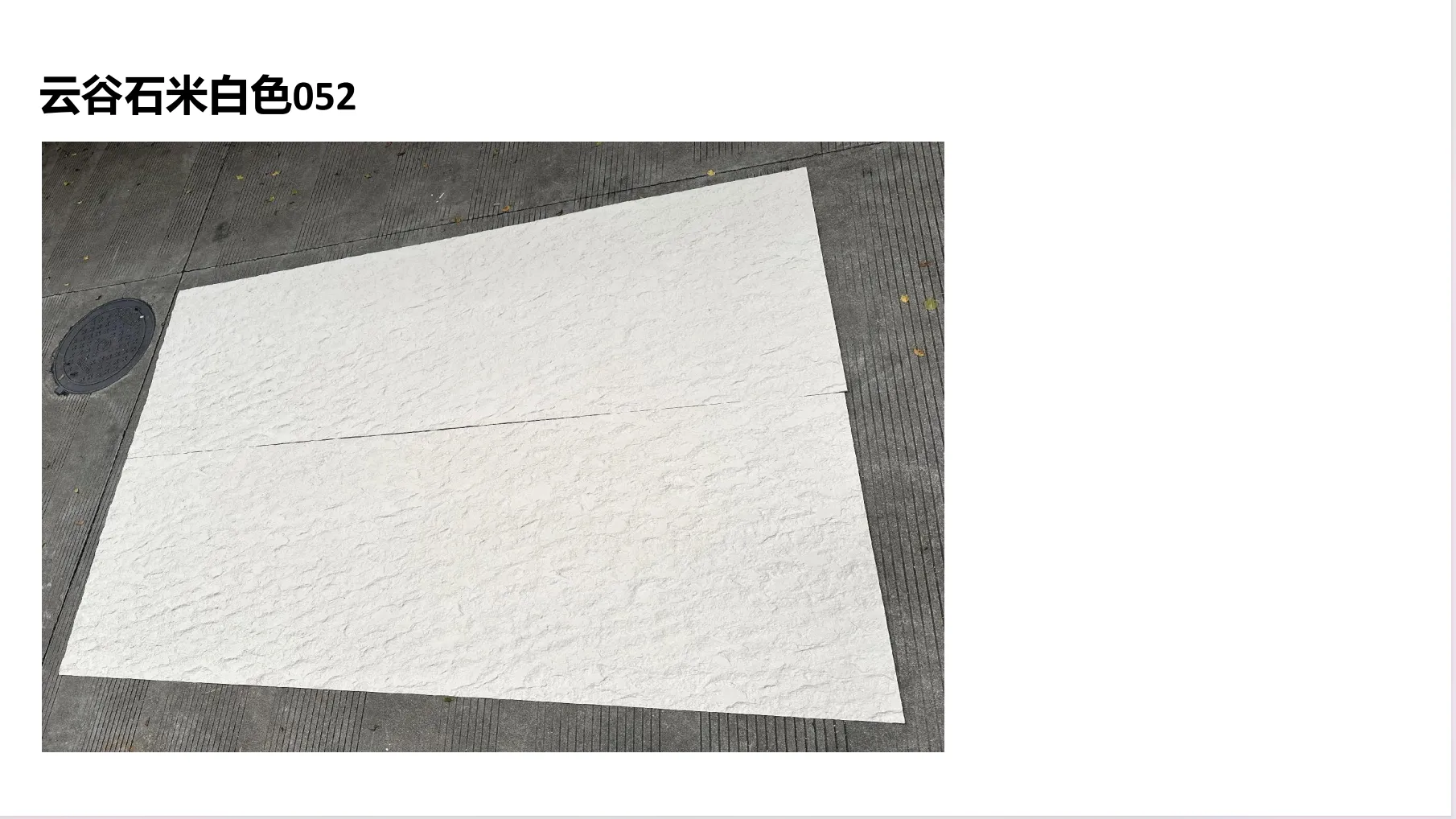
If you've ever walked through a modern office building or a trendy café and admired the sleek, natural stone walls, there's a good chance you were looking at MCM Flexible Stone—though you might not have realized just how eco-friendly it is. MCM, which stands for Modified Composite Material, is a game-changer in the world of sustainable construction. Unlike traditional natural stone, which is heavy, requires intensive quarrying, and often results in significant waste during cutting and installation, MCM Flexible Stone is engineered to be lightweight, flexible, and incredibly efficient—all while mimicking the look and feel of real stone.
So, what makes it so sustainable? Let's start with the manufacturing process. MCM Flexible Stone is made by combining a high percentage of recycled stone powder (leftover from traditional stone processing, which would otherwise end up in landfills) with a polymer binder. This not only reduces waste but also cuts down on the need to extract new raw materials from the earth. The production process itself is low-energy compared to quarrying and cutting natural stone, with a carbon footprint that's up to 60% lower, according to industry studies. And because it's lightweight—about 70% lighter than traditional stone panels—transporting MCM Flexible Stone requires less fuel, further reducing emissions.
Durability is another key eco-friendly feature. MCM Flexible Stone is resistant to scratches, water, and UV rays, meaning it won't fade or degrade quickly. This longevity translates to fewer replacements over time, which is a big win for the environment. Imagine a school built with MCM panels in 2010—today, those panels still look as good as new, so the school doesn't need to invest in costly repairs or replacements. That's less waste going to landfills and fewer resources used to make new materials. Plus, when the time does come to replace them (decades down the line), MCM Flexible Stone is fully recyclable—the stone powder can be reclaimed and used in new panels, closing the loop on the material's lifecycle.
But don't just take our word for it. Maria Gonzalez, a sustainable architect based in Barcelona, has used MCM Flexible Stone in over a dozen projects, including a community center in the city's El Raval neighborhood. "When we were designing the center, we wanted materials that felt warm and natural but didn't come with a heavy environmental cost," she says. "MCM Flexible Stone was perfect. It looks like real travertine, but we were able to install it without the need for heavy machinery—since it's so lightweight, our team could handle the panels manually, which also reduced our construction time and labor costs. And the best part? Five years later, the walls still look brand-new. The community loves how it feels like a space built with nature in mind, and we love that we're doing our part to keep that nature intact."
From residential facades to commercial interiors, MCM Flexible Stone proves that you don't have to sacrifice aesthetics for sustainability. It's a material that works with the planet, not against it—and that's a foundation worth building on.
When you think of aluminium, you might picture soda cans or airplane parts—but Cloud Stone's Foamed Aluminium Alloy Board (Vintage Silver) is redefining what this versatile metal can do in construction. With its sleek, modern finish and subtle vintage silver hue, it's a favorite among designers aiming for a blend of industrial chic and sustainability. But beyond its good looks, this material is a sustainability powerhouse, thanks to its high recycled content and energy-efficient production.
Aluminium is one of the most recyclable materials on the planet—and Cloud Stone leans into that. Their Foamed Aluminium Alloy Board is made with at least 85% recycled aluminium, sourced from post-consumer waste like old window frames, car parts, and even discarded electronics. Recycling aluminium uses just 5% of the energy required to produce new aluminium from bauxite ore, according to the Aluminium Association. That's a staggering reduction in carbon emissions—imagine the energy saved by recycling enough aluminium to build a skyscraper's facade! By prioritizing recycled content, Cloud Stone is not only diverting waste from landfills but also drastically cutting down on the environmental impact of their raw materials.
But the sustainability story doesn't end there. The "foamed" part of the name refers to the material's unique structure: tiny air bubbles are incorporated into the aluminium alloy during production, making it lightweight (about 30% lighter than solid aluminium) while maintaining strength and durability. This lightweight nature has a ripple effect on sustainability: lighter materials mean easier transportation (lower fuel use), simpler installation (reduced labor and machinery needs), and even less structural support required in buildings, which can lead to using fewer materials overall in construction. For example, a restaurant in Seattle recently used Cloud Stone's Foamed Aluminium Alloy Board for its exterior cladding. The contractor noted that because the panels were so light, they could be installed without reinforcing the building's frame—a change that saved both time and materials, including steel and concrete, which have their own environmental costs.
Durability is another feather in its cap. Aluminium is naturally resistant to corrosion, so Foamed Aluminium Alloy Board holds up well in harsh weather conditions—rain, snow, salt air—without needing frequent repainting or treatments. This means less maintenance over time, which translates to fewer chemicals (like paint) being used and less waste from repairs. And when the material does reach the end of its life (which, with proper care, could be 50 years or more), it's 100% recyclable—right back into new aluminium products, creating a closed-loop system that minimizes waste.
John Lee, a sustainability consultant who worked on the Seattle restaurant project, puts it this way: "Clients often think sustainable materials mean compromising on style or performance, but Foamed Aluminium Alloy Board proves that's not the case. The vintage silver finish gives the restaurant a warm, industrial vibe that customers love, and knowing that it's made from recycled materials and will last for decades? That's a selling point for both the business owner and the community. It's a material that shows you can have luxury and sustainability hand in hand."
Concrete has a bit of a bad rap in sustainability circles—and for good reason. Traditional concrete production is a major source of carbon dioxide emissions, thanks to the cement that binds it (cement manufacturing alone accounts for about 8% of global CO2 emissions). But Cloud Stone's Fair-Faced Concrete is here to rewrite that narrative. Also known as "architectural concrete," Fair-Faced Concrete is poured and finished in such a way that its natural, uncoated surface becomes part of the design—no paint, no cladding, just the raw beauty of the material itself. And when produced with sustainability in mind, it becomes one of the most eco-friendly options in construction.
So, what makes Cloud Stone's Fair-Faced Concrete different? It starts with the mix. Instead of using traditional Portland cement, which is carbon-intensive to produce, Cloud Stone incorporates supplementary cementitious materials (SCMs) like fly ash (a byproduct of coal power plants) and slag (a byproduct of steel production). These materials replace up to 50% of the cement in the mix, drastically reducing the carbon footprint. Fly ash and slag would otherwise be waste products, so using them not only cuts down on cement use but also diverts industrial waste from landfills. A study by the World Green Building Council found that replacing 30% of cement with fly ash can reduce concrete's carbon emissions by up to 25%—a significant impact for a material used in so many construction projects.
The "fair-faced" aspect is also key to its sustainability. Because the concrete is left exposed, there's no need for additional finishing materials like paint, tiles, or cladding. That means fewer resources used overall—no manufacturing paint, no mining for tile materials, no transportation of extra products to the construction site. It also reduces waste: traditional finishing often results in leftover materials or off-cuts that end up in landfills. With Fair-Faced Concrete, what you pour is what you get—minimal waste, maximum efficiency.
Durability is another strong suit. Concrete is already known for its strength and longevity, but Fair-Faced Concrete, when properly mixed and cured, can last for centuries. Think of ancient Roman concrete structures that are still standing today—though modern mixes are even more resilient. This longevity means that buildings built with Fair-Faced Concrete won't need major overhauls or material replacements for generations, reducing the lifecycle environmental impact. Take the Green Horizon School in Portland, Oregon, which opened in 2018 with Fair-Faced Concrete walls. The design team chose the material not just for its aesthetic (the soft gray tones create a calm, natural learning environment) but also for its durability. "We wanted a building that would serve the community for 100 years," says principal architect Lisa Wong. "Fair-Faced Concrete was the obvious choice. It's low-maintenance, so we won't be repainting or re-cladding every decade, and the use of fly ash in the mix aligns with our commitment to reducing the school's carbon footprint. The kids even love it—they call the walls 'nature's canvas' because of the subtle textures and patterns."
And let's not forget about thermal mass. Concrete has excellent thermal mass properties, meaning it absorbs heat during the day and releases it at night, helping to regulate indoor temperatures. This can reduce the need for heating and cooling systems, cutting down on energy use and associated carbon emissions. For the Green Horizon School, this has translated to lower utility bills and a more comfortable learning environment—proof that sustainability and functionality go hand in hand.
Natural stone has long been prized for its timeless beauty, but its sustainability depends largely on how it's sourced and processed. Cloud Stone's Travertine (Starry Green) is a prime example of how natural stone can be both stunning and eco-friendly—thanks to responsible mining practices, efficient processing, and a focus on durability. Travertine is a type of limestone formed by mineral-rich hot springs, and the "Starry Green" variety gets its name from the subtle, star-like veining and soft green hue that make it a favorite for both interior and exterior applications.
Responsible sourcing is the foundation of Travertine (Starry Green)'s sustainability story. Cloud Stone partners with quarries in Italy and Turkey that adhere to strict environmental standards, including the Extractive Industries Transparency Initiative (EITI) and the Global Reporting Initiative (GRI). These quarries prioritize minimizing their impact on local ecosystems: they use water recycling systems to reduce freshwater use, replant native vegetation in areas that have been mined, and limit blasting to avoid disturbing wildlife habitats. In one quarry in Tuscany, Italy, the team has even created a small nature reserve around the mining site, home to endangered bird species—a far cry from the image of strip-mining that often comes to mind with natural stone extraction.
Processing is another area where sustainability shines. Traditional stone processing can be water-intensive and generate a lot of waste, but Cloud Stone's partners use advanced water recycling systems that reuse up to 95% of the water used in cutting and polishing. The stone dust and off-cuts from processing aren't wasted either—they're collected and sold to companies that use them in products like cement, tile adhesives, and even fertilizers, closing the loop on waste. This means that nearly every part of the travertine block is used, minimizing the environmental impact of extraction.
Durability is, of course, a given with natural stone. Travertine is incredibly hard-wearing, resistant to scratches, heat, and weathering. A Starry Green travertine floor or wall can last for 100 years or more with minimal maintenance—no need for replacement, no waste from frequent repairs. This longevity is a key sustainability feature, as it reduces the need for new materials over time. Imagine a historic town hall in Prague that was renovated in 2010 with Starry Green travertine cladding; today, the stone looks as beautiful as it did a decade ago, and architects estimate it will last another 80 years without needing to be replaced. That's decades of avoiding the carbon emissions and waste associated with manufacturing and installing new cladding materials.
Elena Petrova, an interior designer who used Starry Green travertine in a luxury hotel project in Dubrovnik, Croatia, says, "Clients often ask for natural stone because they want that connection to nature, but they're also increasingly concerned about where it comes from. With Cloud Stone's Starry Green travertine, I can tell them the whole story—responsible quarries, water recycling, zero waste processing—and they love it. The stone itself is breathtaking, with those green veins that catch the light like stars, but knowing it's been sourced and processed with care makes it even more special. It's natural beauty with a clear conscience."
| Material | Key Sustainable Attributes | Main Applications | Carbon Footprint Benefit |
|---|---|---|---|
| MCM Flexible Stone | High recycled stone powder content; lightweight (reduces transport emissions); 100% recyclable | Wall cladding, facades, interior accent walls | Up to 60% lower than traditional natural stone |
| Foamed Aluminium Alloy Board (Vintage Silver) | 85% recycled aluminium; lightweight; 100% recyclable; corrosion-resistant | Exterior cladding, interior design elements, signage | 95% less energy used than new aluminium production |
| Fair-Faced Concrete | SCMs replace 30-50% of cement; no additional finishing materials; high thermal mass | Floors, walls, structural elements, facades | Up to 25% lower emissions than traditional concrete |
| Travertine (Starry Green) | Responsible quarrying; 95% water recycling in processing; zero waste from off-cuts | Flooring, wall cladding, countertops, outdoor patios | Reduced emissions from waste recycling and longevity |
When we talk about sustainability in construction, it's easy to get caught up in big-picture goals like net-zero buildings or renewable energy. But the truth is, the foundation of a greener built environment lies in the raw materials we choose. Cloud Stone's MCM Flexible Stone, Foamed Aluminium Alloy Board (Vintage Silver), Fair-Faced Concrete, and Travertine (Starry Green) are more than just products—they're proof that sustainability can be woven into every step of the construction process, from extraction to installation to end-of-life recycling.
These materials don't just reduce carbon footprints or minimize waste—they also create spaces that feel human, that connect us to nature, and that stand the test of time. A community center with MCM Flexible Stone walls that bring warmth to gatherings, a school with Fair-Faced Concrete floors that kids will run across for decades, a hotel with Starry Green travertine that tells a story of responsible sourcing—these are the spaces that make sustainability tangible. They remind us that building green isn't just about the planet; it's about building better lives for the people who use these spaces every day.
As architects, builders, and homeowners, we have the power to shape the future with the materials we choose. By opting for eco-friendly options like those from Cloud Stone, we're not just making a choice for today—we're investing in a world where buildings enhance the environment, rather than harm it. It's a small change, perhaps, but one that adds up—one stone, one panel, one concrete pour at a time.
So, the next time you walk into a building and pause to admire the walls or floors, take a moment to think about the raw materials behind them. They might just be telling a story of sustainability—and that's a story worth celebrating.
Recommend Products












