
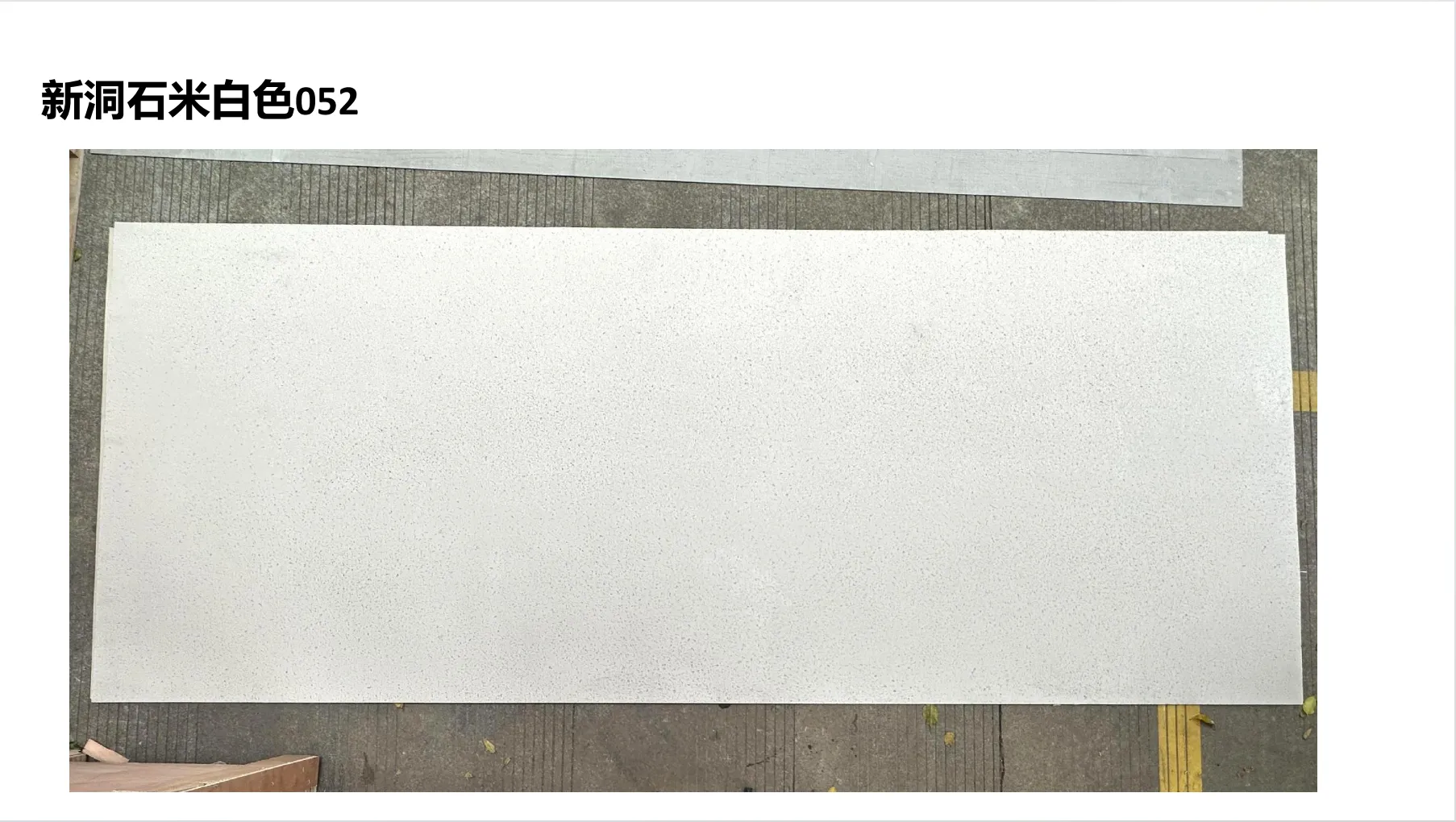
Let's start with a story. Last year, I sat down with Mia, an interior designer in Portland, who was recounting a project that almost derailed her career. Her client, a retired architect, had fallen in love with the look of travertine after a trip to Tuscany. He wanted it everywhere: kitchen countertops, bathroom walls, even the fireplace surround. But there was a catch: his 1920s home had plaster walls that couldn't support the weight of natural travertine slabs. "We're talking 30 pounds per square foot," Mia sighed. "The engineer said we'd need to reinforce every wall, which would have added $15,000 to the budget. The client was devastated—he thought his dream of bringing that Italian villa vibe home was dead."
That's when Mia stumbled on a sample pack from the MS Travertino line. She pulled out a sheet labeled travertine (vintage gold) , and the client's eyes lit up. "It looked exactly like the travertine he'd seen in Italy—the warm, sunlit tones, the subtle pits and veins that make the stone feel alive," she told me. "But when I lifted the sample, he laughed. 'That can't be stone,' he said. 'It's lighter than a piece of plywood!'"
It wasn't plywood, of course. It was mcm flexible stone —a material engineered to capture the soul of natural travertine without the headaches. And in that moment, Mia didn't just save a project; she rediscovered why she loved design: the thrill of solving problems with materials that don't just meet expectations, but exceed them. Today, we're diving into the world of MS Travertino—what it is, why it matters, and how it's changing the game for designers, contractors, and homeowners alike.
First, let's talk about the star of the show: travertine. For centuries, this stone has been the gold standard of luxury. Think of the Colosseum's pillars, the floors of ancient Roman baths, or the sun-drenched patios of Tuscan villas. Its beauty lies in its imperfection—the tiny holes (called vesicles) formed by gas bubbles trapped in mineral-rich hot springs, the soft, earthy tones that range from ivory to amber, and the way light dances across its surface, making even a plain wall feel dynamic.
But here's the dirty secret about natural travertine: it's a diva. It's heavy—so heavy that installing it on upper floors or over drywall often requires structural reinforcements. It's porous, meaning it stains easily (red wine? Coffee? Forget about it unless you seal it every six months). And it's fragile: a dropped tool or a misstep during installation can chip a slab beyond repair. "I once had a crew crack a $2,000 travertine countertop slab while moving it," Mia said. "The client cried. I wanted to cry. It was a disaster."
And then there's the cost. Sourcing natural travertine means quarrying stone from places like Italy, Turkey, or Iran, shipping it across oceans, and cutting it to size—all of which adds up. A single square foot of high-quality natural travertine can run $25 to $50, not including installation. For a full kitchen backsplash, that's easily $3,000 to $6,000. For a whole house? You're looking at five figures.
So, what's the alternative? For years, designers turned to ceramic or porcelain tiles that mimic travertine, but they always felt… off. The texture was flat, the color too uniform, like a bad Photoshop filter. "Clients would say, 'It looks fake,'" Mia recalled. "And they were right. It was fake. You could see the difference the second you ran your hand over it."
MS Travertino isn't just another "fake stone" product. It's a mcm flexible stone —a blend of natural minerals, polymers, and advanced engineering that replicates the look, feel, and even the weight (or lack thereof) of real travertine. Let's break that down.
First, the aesthetics. MS Travertino starts with high-resolution scans of natural travertine slabs. These scans capture every detail: the size of the vesicles, the direction of the veins, the subtle color variations that make each piece unique. Then, using 3D printing technology, the team at MS recreates those details on a flexible, lightweight substrate. The result? A material that looks so much like natural travertine, even seasoned stone masons do a double-take when they first touch it.
Take travertine (vintage silver) , for example. It's a cooler-toned variation, with soft gray undertones that lean into modern minimalism. The vesicles are filled with a subtle silver-gray resin that catches the light, giving the stone a sleek, almost metallic sheen without feeling industrial. Then there's travertine (vintage gold) —warm, honeyed, and rich, like liquid sunlight trapped in stone. It's the kind of material that turns a plain bathroom into a spa retreat, or a kitchen backsplash into a focal point that guests can't stop talking about.
But the real magic is in the flexibility and weight. Traditional travertine weighs 25–30 lbs per square foot; MS Travertino? Just 7–9 lbs. That's a game-changer for older homes, high-rise apartments, or any space where structural limits are a concern. "We installed vintage gold travertine on the second floor of a 1950s ranch house last month," said Jake, a contractor friend of mine. "No wall reinforcements, no extra crew—two guys, one day. The homeowner kept asking, 'Are you sure this is stone?'"
Flexibility matters, too. Unlike natural travertine, which is brittle and prone to cracking, MS Travertino can bend up to 5 degrees without breaking. That means it can be used on curved surfaces—think accent walls, archways, or even ceiling details—that would be impossible with traditional stone. "I did a restaurant project last year with a curved bar front," Mia told me. "We used vintage silver travertine panels, and they wrapped around the curve like paper. The architect said it was the most seamless curved stone installation he'd ever seen."
Let's be honest: beauty only gets you so far. A material that looks great but chips, stains, or fades after a year is just a pretty face. MS Travertino, though, is built to last. The top layer is coated with a UV-resistant sealant that prevents fading, even in direct sunlight (goodbye, sun-bleached outdoor patios). It's also water-resistant—no more panicking when someone spills wine on the kitchen counter. And because it's non-porous (unlike natural travertine), it doesn't harbor mold or mildew, making it ideal for bathrooms and kitchens.
Jake shared a story about a client who installed travertine (vintage gold) in her mudroom—you know, the room where kids track in dirt, dogs shake off rain, and boots scrape against the walls. "Six months later, I checked in, and the walls looked brand new," he said. "No scratches, no stains, no signs of wear. The client said she'd even scrubbed it with a magic eraser once, and it didn't budge. That's the kind of durability you don't get with natural stone."
To really understand why MS Travertino stands out, let's compare it to two popular alternatives: natural travertine and boulder slab (vintage black) (another MS product, but with a different aesthetic).
| Feature | MS Travertino (Vintage Silver/Gold) | Natural Travertine | Boulder Slab (Vintage Black) |
|---|---|---|---|
| Weight (per sq ft) | 7–9 lbs | 25–30 lbs | 12–15 lbs |
| Flexibility | Bends up to 5 degrees | Brittle (no flexibility) | Limited flexibility (up to 2 degrees) |
| Installation Time | 1–2 days (standard room) | 3–4 days (requires reinforcement) | 2–3 days (heavier than MS Travertino) |
| Cost (per sq ft) | $12–$18 | $25–$50 | $15–$22 |
| Durability | Scratch-resistant, water-resistant, UV-resistant | Porous (stains easily), prone to chipping | Durable but heavier; more prone to cracking on uneven surfaces |
| Design Versatility | Curved surfaces, walls, ceilings, exteriors, interiors | Flat surfaces only; limited to low-weight areas | Great for modern, industrial looks; less flexible for curves |
As you can see, MS Travertino outperforms natural travertine in almost every category—cost, installation time, durability, and design versatility. And while boulder slab (vintage black) is a strong contender (it's bold, dramatic, and perfect for industrial or minimalist spaces), it can't match the flexibility or lightweight nature of MS Travertino. For designers who want the look of stone without compromise, MS Travertino is the clear winner.
Let's talk about how people are actually using this material. It's not just for high-end homes, either—MS Travertino is popping up in restaurants, hotels, offices, and even retail spaces. Here are a few standout examples:
Last summer, a café in Seattle called "The Silver Spoon" wanted to create a modern, airy space that still felt warm and inviting. The designer, Lila, chose travertine (vintage silver) for the countertops and backsplash. "We paired it with white shaker cabinets and brass hardware," she told me. "The vintage silver travertine adds texture without overwhelming the space, and it's held up amazingly well to coffee spills and constant use. Plus, the light reflects off the silver undertones, making the café feel brighter and more spacious—even on rainy Seattle days."
A luxury hotel in Aspen used travertine (vintage gold) in their spa bathrooms. "Guests come to Aspen to relax, and we wanted the bathrooms to feel like a sanctuary," said the hotel's design director, Mark. "The vintage gold travertine wraps around the shower walls and covers the vanity tops. It's warm, it's luxurious, and it pairs beautifully with the natural wood accents and soft lighting. We were worried about moisture, but after a year, there's zero mold or mildew—even in the steam showers. It's been a game-changer for maintenance, too; housekeeping says it cleans up in minutes."
Remember Mia, the designer from Portland? She used mcm flexible stone (in a custom blend of vintage gold and vintage silver) for a curved fireplace in her client's living room. "The client wanted a focal point that felt organic, like the stone was flowing up the wall," she said. "With natural travertine, that would have required custom-cutting dozens of small pieces and grouting them together, which would have looked clunky. With MS Travertino, we used large, flexible panels that curved seamlessly. The result? A fireplace that looks like it was carved from a single piece of stone. The client calls it 'the heart of the home'—and honestly, I can't blame him."
I reached out to a few industry experts to get their take on MS Travertino. Here's what they had to say:
MS Travertino isn't just a product—it's a glimpse into the future of building materials. As designers and homeowners demand more from their spaces—more beauty, more durability, more flexibility—manufacturers are rising to the challenge. mcm flexible stone technology is leading the way, proving that you don't have to sacrifice aesthetics for practicality, or vice versa.
And it's not stopping at travertine. MS has already expanded into other stone looks, from marble to granite, and they're constantly experimenting with new colors and textures. "We're working on a 'starry night' travertine right now," a product developer at MS told me. "It will have tiny, iridescent flecks that glow under low light—like bringing the night sky indoors."
But for now, MS Travertino remains the crown jewel. It's a material that honors the past (the timeless beauty of natural travertine) while embracing the future (lightweight, flexible, sustainable design). It's for the dreamers—the homeowners who want to bring a piece of Tuscany to their urban apartment, the designers who refuse to let structural limits kill their vision, and the contractors who want to build better, faster, and smarter.
At the end of the day, building materials are about more than just function—they're about storytelling. Every material we choose tells a story about who we are, what we value, and how we want to live. Natural travertine tells a story of tradition, of ancient landscapes and craftsmanship passed down through generations. But for many of us, that story comes with a price—literally and figuratively.
MS Travertino tells a new story: one of innovation, of blending the best of the past with the possibilities of the future. It's a story where beauty and practicality coexist, where a 1920s home can have the travertine of its dreams without the structural nightmares, and where a designer's vision isn't limited by the weight of stone.
So, if you're a designer, contractor, or homeowner who's been eyeing travertine but held back by the downsides, do yourself a favor: check out MS Travertino. Order a sample of travertine (vintage silver) or travertine (vintage gold) . Run your hand over it. Hold it up to the light. You'll see—and feel—the difference.
And who knows? Maybe you'll be the next Mia, the next Jake, or the next homeowner with a story to tell about how a single material transformed their space from ordinary to extraordinary.
Recommend Products












