

Ask any contractor, architect, or project manager about the biggest headaches in construction, and you'll likely hear the same frustrations: tight deadlines, unexpected delays, and materials that promise beauty but deliver logistical nightmares. Now, imagine adding a material as striking as red travertine to the mix—its warm, earthy tones and unique veining can transform a space, but traditionally, working with it has meant wrestling with heavy slabs, complicated cutting processes, and installation timelines that stretch far beyond what's feasible. That is, until now.
Enter Red Travertine MCM (Modified Composite Material) Custom Installation Systems—a game-changer that marries the timeless appeal of red travertine with the practicality of modern construction technology. In this article, we'll dive into how these systems are revolutionizing project timelines, why they're becoming a go-to for professionals across the industry, and how key innovations like MCM flexible stone, big slab board series, and prefabricated panel systems are making the once-daunting task of installing red travertine faster, smarter, and more customizable than ever before.
Red travertine has long been a favorite in high-end construction and design. Its rich, rusty hues—reminiscent of desert sunsets and ancient architecture—add depth and character to everything from hotel lobbies to residential facades. But for all its aesthetic appeal, traditional red travertine comes with a host of challenges that can derail even the most carefully planned projects.
First, there's weight. Natural red travertine slabs are dense and heavy, often weighing 20–30 kg per square meter. This isn't just a hassle for transportation; it means crews need specialized equipment—like cranes or forklifts—to move and position each slab. On tight job sites or high-rise buildings, this can slow progress to a crawl. Then there's installation complexity. Natural stone requires precise cutting on-site, which not only eats up time but also generates significant waste. Even small miscalculations can lead to cracked slabs or misaligned patterns, forcing teams to reorder materials and push deadlines.
Customization is another pain point. Clients today want unique designs—think curved walls, intricate patterns, or mixed-material accents with series like Lunar Peak. Traditional red travertine, with its rigid structure, struggles to adapt. Cutting curves or matching specific color gradients often results in uneven edges or inconsistent finishes, leaving architects and contractors stuck between client expectations and material limitations.
Worst of all? The timeline. A typical 500-square-meter installation of traditional red travertine might take 4–6 weeks, factoring in material delivery, on-site cutting, and labor-intensive mounting. When you're working on a project with overlapping phases—electrical, plumbing, finishing—those weeks can turn into months of delays, driving up costs and frustrating stakeholders.
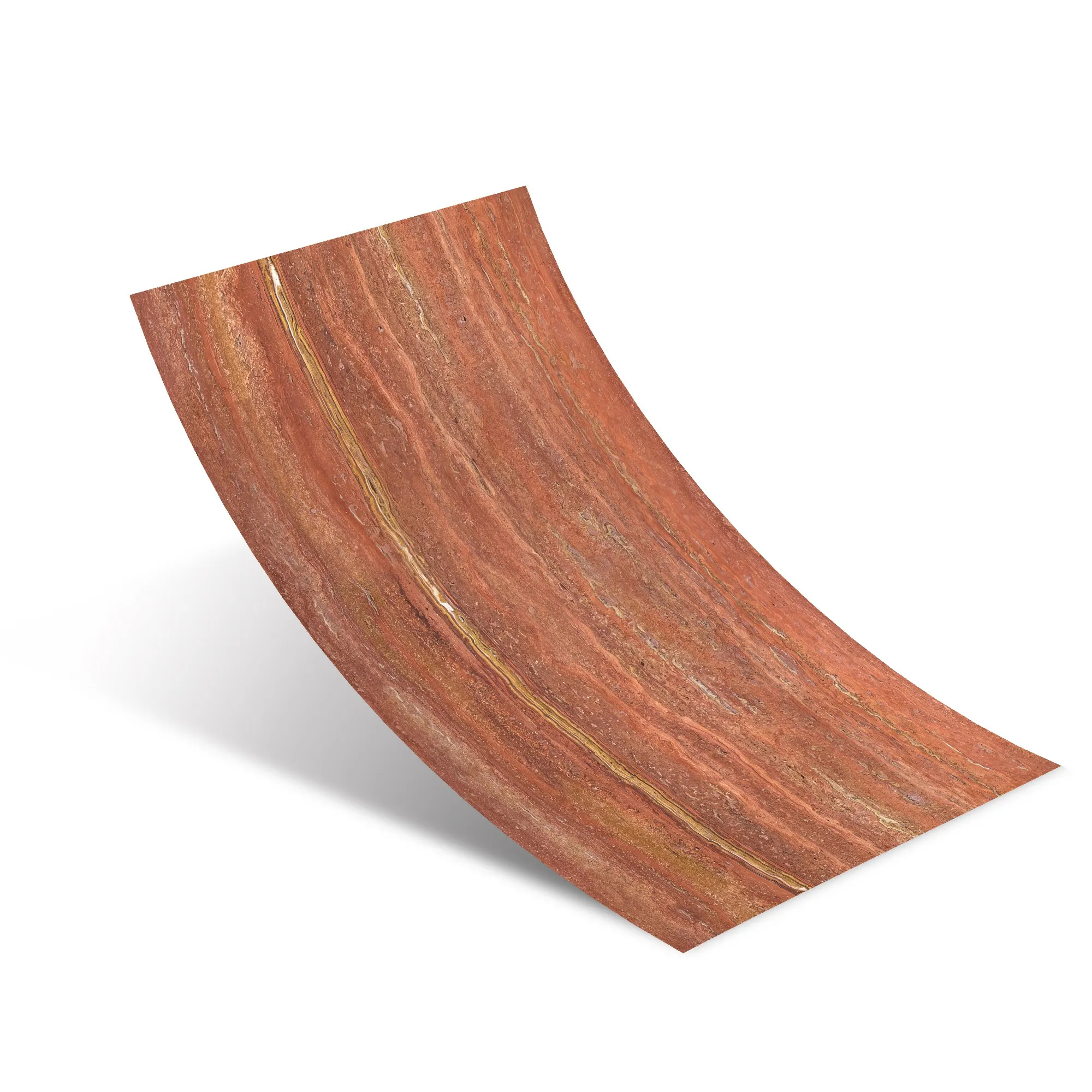
MCM technology wasn't just designed to fix these problems—it was built to reimagine what red travertine could be. At its core, MCM (Modified Composite Material) combines natural stone aggregates (including real red travertine particles) with a lightweight, flexible polymer matrix. The result? A material that looks and feels like natural stone but behaves nothing like it. Let's break down the innovations that make this possible.
The star of the show is MCM flexible stone. Unlike traditional stone, which is brittle and prone to cracking, MCM flexible stone bends without breaking. Imagine rolling a sheet of red travertine-like material into a cylinder for transportation—something unthinkable with natural slabs. This flexibility isn't just for show; it means the material can conform to curved surfaces, archways, or custom geometries with ease. Architects no longer have to limit designs to flat walls or straight edges; they can let creativity lead, knowing the material will keep up.
But flexibility doesn't mean sacrificing durability. MCM flexible stone is engineered to withstand harsh weather, UV rays, and everyday wear and tear. Testing shows it resists fading, chipping, and water absorption better than many natural stones—making it ideal for both interior and exterior use. For projects in regions with extreme temperatures or high humidity, this durability translates to lower maintenance costs and longer-lasting beauty.
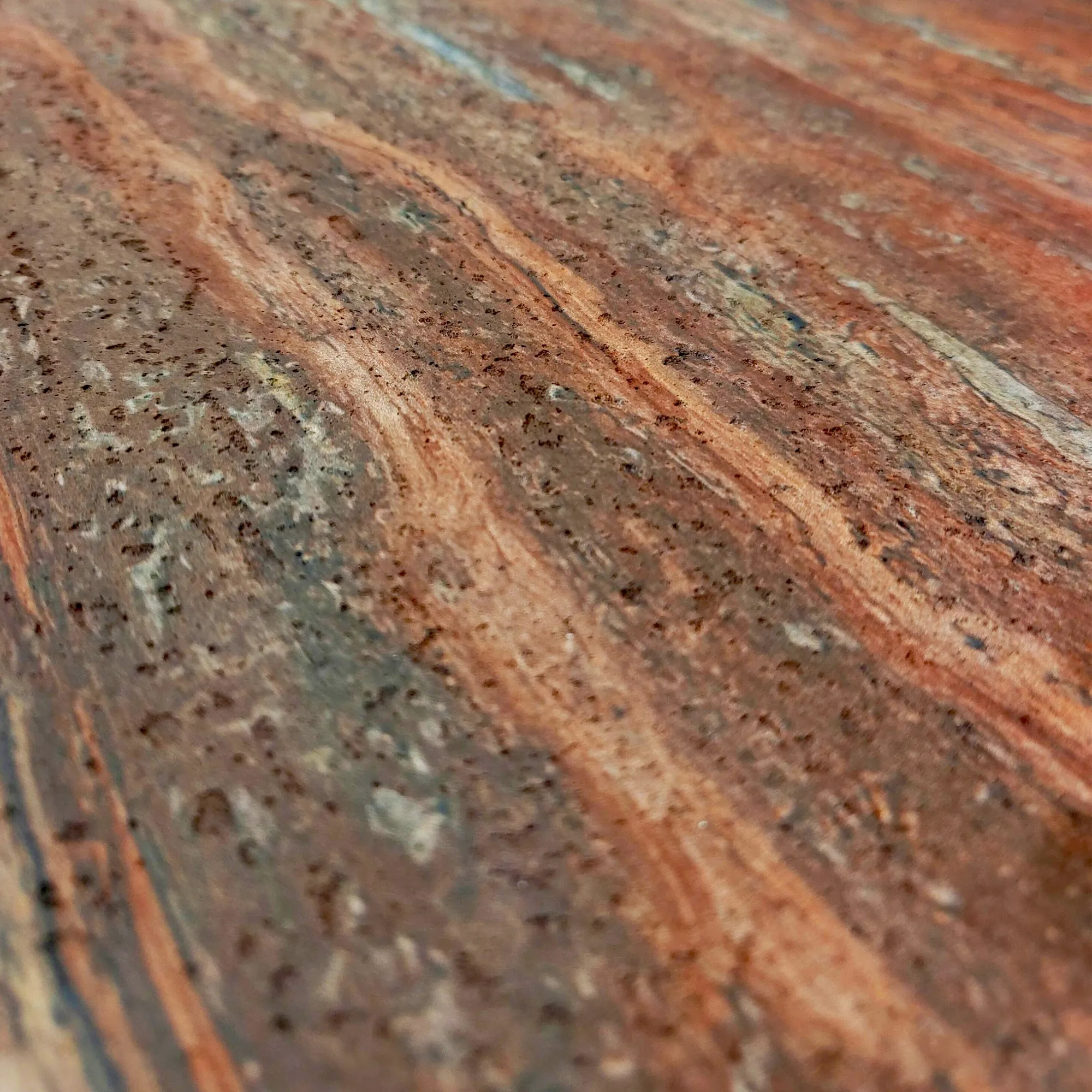
Another key innovation is the MCM big slab board series. These slabs are large—up to 1200x2400 mm—but lightweight, weighing in at just 5–8 kg per square meter. That's a fraction of the weight of natural red travertine, which means no more cranes or heavy lifting. A single worker can carry and position a big slab board with ease, cutting down on labor needs and speeding up installation.
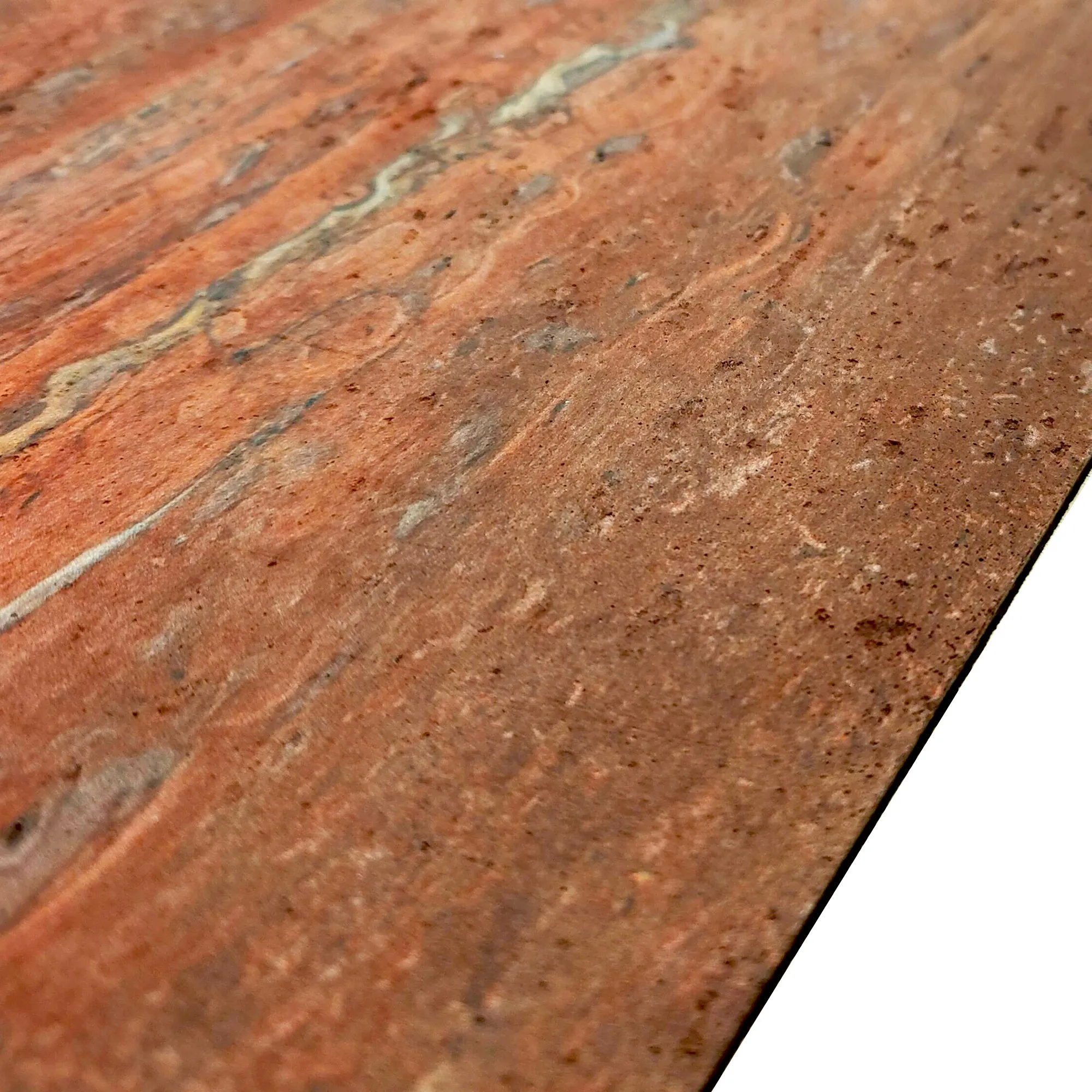
But the benefits go beyond weight. The MCM big slab board series minimizes seams, creating a seamless, high-end look that's hard to achieve with smaller natural stone tiles. Fewer seams mean less grout, less maintenance, and a cleaner aesthetic—something clients notice and appreciate. Plus, these slabs are manufactured with precision in controlled factory settings, so each piece matches perfectly in color and pattern. No more on-site sorting through batches to find matching veining; what you see in the sample is exactly what arrives on-site.
Even the best materials fall flat without a smart installation process. That's where Red Travertine MCM Custom Installation Systems shine. These systems are designed to simplify every step of the process, from delivery to final inspection. Let's break down the key components that make installation faster, easier, and more reliable.
Prefabricated MCM panel systems are a game-changer for project timelines. Here's how they work: instead of cutting and fitting each piece on-site, panels are pre-cut, pre-finished, and pre-drilled in the factory according to the project's exact specifications. Want a red travertine accent wall with Lunar Peak Silvery trim? The panels arrive with the Lunar Peak sections already integrated, no on-site mixing required. Need a specific pattern or logo embedded in the design? It's all done in the factory, with computer precision.
This prefabrication cuts installation time dramatically. On-site crews don't need to measure, cut, or adjust panels—they simply align them using the system's interlocking edges and secure them to the substrate. For a 500-square-meter project, this can reduce installation time from 4–6 weeks to just 1–2 weeks. That's a 70% time savings, freeing up crews to focus on other tasks and keeping the project on track.
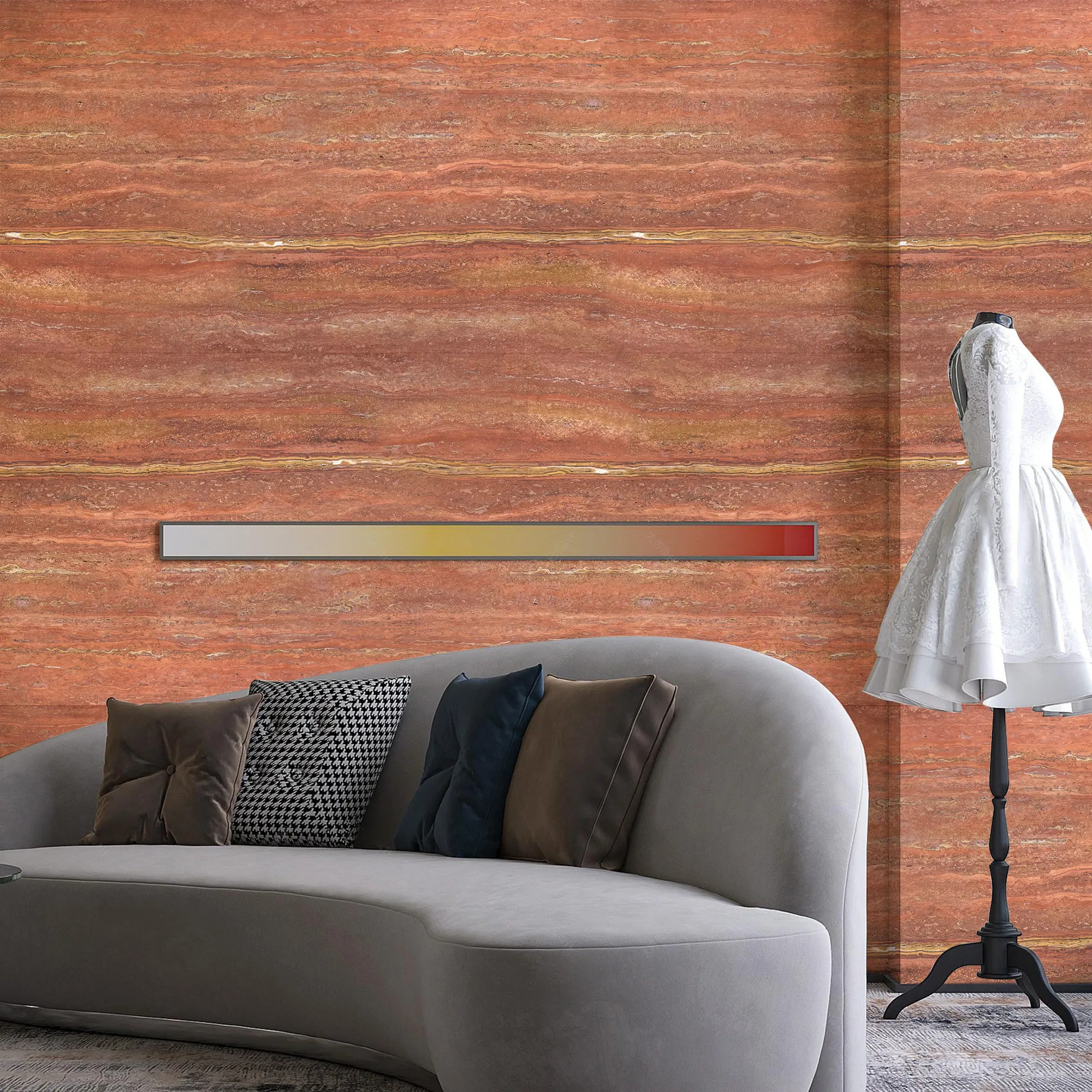
The custom installation systems are modular, meaning panels can be mixed and matched with other MCM series like Lunar Peak (silvery, golden, or black) or even foamed aluminium alloy boards for a modern-industrial look. This modularity gives designers endless possibilities. For example, a restaurant might pair red travertine MCM panels with Lunar Peak Golden accents for a warm, inviting exterior, while a corporate office could mix red travertine with fair-faced concrete panels for a sleek, professional vibe.
Modularity also simplifies repairs. If a panel gets damaged (say, during construction or years later), it can be replaced individually without removing entire sections. This is a huge advantage over traditional stone, where a single cracked slab might require redoing an entire wall. For building owners, this means lower repair costs and less disruption to daily operations.
We can't overstate the impact of lightweight materials on labor. A 1200x2400 mm MCM big slab board weighs around 15 kg—light enough for one person to carry. Compare that to a natural red travertine slab of the same size, which could weigh 60 kg or more and require two people and a dolly. This reduces the number of workers needed for installation, cuts down on fatigue, and lowers the risk of on-site injuries.
The lightweight nature also opens up new possibilities for installation locations. MCM red travertine can be installed on drywall, plywood, or even existing tile substrates without the need for heavy-duty reinforcement. For renovation projects, this is a lifesaver—contractors don't have to tear out existing structures to support the new material, saving time and reducing dust and debris.
To truly understand the impact of Red Travertine MCM Custom Installation Systems, let's put the numbers side by side. The table below compares a 500-square-meter installation using traditional red travertine versus MCM red travertine with custom installation systems.
| Aspect | Traditional Red Travertine Installation | Red Travertine MCM Custom Installation |
|---|---|---|
| Material Weight (per sqm) | 25–30 kg | 5–8 kg |
| Installation Time | 4–6 weeks | 1–2 weeks |
| Labor Required (daily crew size) | 4–5 workers + equipment operator | 2–3 workers (no equipment needed) |
| On-Site Cutting/Waste | High (15–20% material waste) | Low (2–3% waste, pre-cut to size) |
| Customization Flexibility | Limited (rigid, hard to curve or pattern) | High (curves, mixed materials, logos) |
| Weather Delays | High (sensitive to moisture during installation) | Low (water-resistant, can be installed in light rain) |
The numbers speak for themselves. MCM installation cuts timeline by 70%, reduces labor needs by half, and minimizes waste—all while offering more design flexibility. For project managers, this isn't just about saving time; it's about reducing costs, improving safety, and delivering a better product to clients.
Let's look at a real-world example (names changed for privacy) to see how these systems work in practice. The Azure Hotel, a 150-room boutique property in Dubai, wanted to revamp its exterior with a striking red travertine facade to stand out in the city's skyline. The original plan called for traditional red travertine, with an estimated installation timeline of 5 weeks. However, with the hotel's grand opening just 8 weeks away, the construction team needed a faster solution.
After consulting with MCM specialists, the team switched to Red Travertine MCM with custom installation systems, including big slab boards and prefabricated panels. Here's what happened:
The result? The Azure Hotel opened on time, with a facade that exceeded the client's expectations—vibrant red travertine veining, seamless Lunar Peak accents, and zero delays. The project manager later noted, "We thought we'd have to compromise on design to meet the deadline, but MCM let us have both. It was a game-changer for our team."
In today's construction landscape, sustainability isn't just a buzzword—it's a requirement. Clients, regulators, and communities increasingly demand materials that minimize environmental impact, and Red Travertine MCM Custom Installation Systems deliver here, too.
First, the lightweight design reduces transportation emissions. Since MCM panels weigh 1/4 to 1/5 of natural stone, fewer trucks are needed to transport the same amount of material. For the Azure Hotel project, this meant 7 fewer truck deliveries compared to traditional stone—cutting carbon emissions by an estimated 30% for the material phase alone.
Then there's waste reduction. Traditional stone installation generates 15–20% waste from on-site cutting; MCM, with its prefabricated panels, cuts that to 2–3%. This not only saves materials but also reduces the amount of debris sent to landfills. Additionally, MCM is often made with recycled stone aggregates, giving new life to waste from natural stone quarries.
Durability plays a role, too. MCM red travertine's resistance to fading and wear means buildings need fewer repairs and replacements over time. This longevity reduces the demand for new materials, lowering the project's overall carbon footprint. For developers aiming for green building certifications like LEED or BREEAM, these sustainability benefits can make the difference between meeting and exceeding requirements.
At the end of the day, the decision to switch to MCM red travertine comes down to one thing: reliability. Architects want to know their designs will be executed as envisioned, contractors need materials that keep projects on track, and clients demand beauty without the stress of delays. Red Travertine MCM Custom Installation Systems deliver on all three.
For architects, the systems offer design freedom. No longer limited by the constraints of natural stone, they can explore bold shapes, mixed materials, and custom patterns. One architect specializing in hospitality design put it this way: "With MCM, I can finally say 'yes' to clients who want curved red travertine walls or intricate mosaic patterns. The material doesn't fight the design—it elevates it."
For contractors, it's about predictability. Traditional stone installations are full of unknowns—will the slabs arrive on time? Will they crack during cutting? With MCM, panels are delivered pre-inspected, pre-cut, and ready to install. Schedules become reliable, and change orders (the bane of every contractor's existence) are minimized.
And for clients? It's the peace of mind that comes with knowing their project will be delivered on time, on budget, and with the stunning aesthetic they imagined. When the Azure Hotel's owner saw the finished facade, they commented, "We expected beauty, but we didn't expect it to be this easy. MCM turned what could have been a headache into our favorite part of the project."
Red Travertine MCM Custom Installation Systems aren't just a trend—they're a glimpse into the future of construction. As projects grow more complex and timelines tighter, the industry is moving toward materials that are smarter, lighter, and more adaptable. MCM fits that vision perfectly, blending the best of natural beauty with cutting-edge technology.
Looking ahead, we can expect even more innovations: smarter prefabrication with 3D modeling, integration with IoT tools for real-time installation tracking, and new colorways and textures that push the boundaries of what MCM can do. But for now, the message is clear: if you're working with red travertine, there's no reason to let traditional materials slow you down.
So, the next time you're planning a project—whether it's a hotel, a retail space, or a residential complex—ask yourself: Why settle for delays, heavy lifting, and limited design when you could have beauty, speed, and flexibility? Red Travertine MCM Custom Installation Systems don't just simplify project timelines; they transform what's possible. And in construction, that's the ultimate game-changer.
Recommend Products











