Walk into any contemporary art space these days, and you'll likely find yourself drawn to a piece that seems to defy the laws of traditional materials. Maybe it's a sweeping red sculpture that curves like a wave, or an installation that wraps around a wall with the weightlessness of fabric—yet up close, it breathes the earthy warmth of natural stone. Chances are, that piece is crafted from something revolutionary: mcm flexible stone. And if the color catches your eye like a sunset frozen in time, it's probably Red Travertine, a material that's quickly becoming the darling of artists and designers who refuse to choose between beauty and possibility.
Let's start with the basics. MCM stands for Modified Composite Material, a category of building and design materials that blend the best of natural elements with cutting-edge engineering. At its core, mcm flexible stone is a celebration of innovation: it takes the aesthetic richness of stone—think the veining of marble, the texture of travertine—and reimagines it as something lightweight, bendable, and surprisingly durable. Unlike traditional stone slabs, which are heavy, brittle, and limited by their rigidity, MCM flexible stone feels almost like a high-end fabric in your hands. It bends, it curves, it can be cut into intricate shapes without cracking, and yet it retains that timeless, organic quality that makes stone so beloved.
For artists, this is a game-changer. For decades, sculptors and installation artists have wrestled with materials that either lacked soul (looking at you, generic plastics) or came with too many constraints (hello, 500-pound marble blocks that require cranes to move). MCM flexible stone flips that script. It's a material that listens to creativity, not just gravity. And within this family, Red Travertine stands out as a star—literally, in some cases.
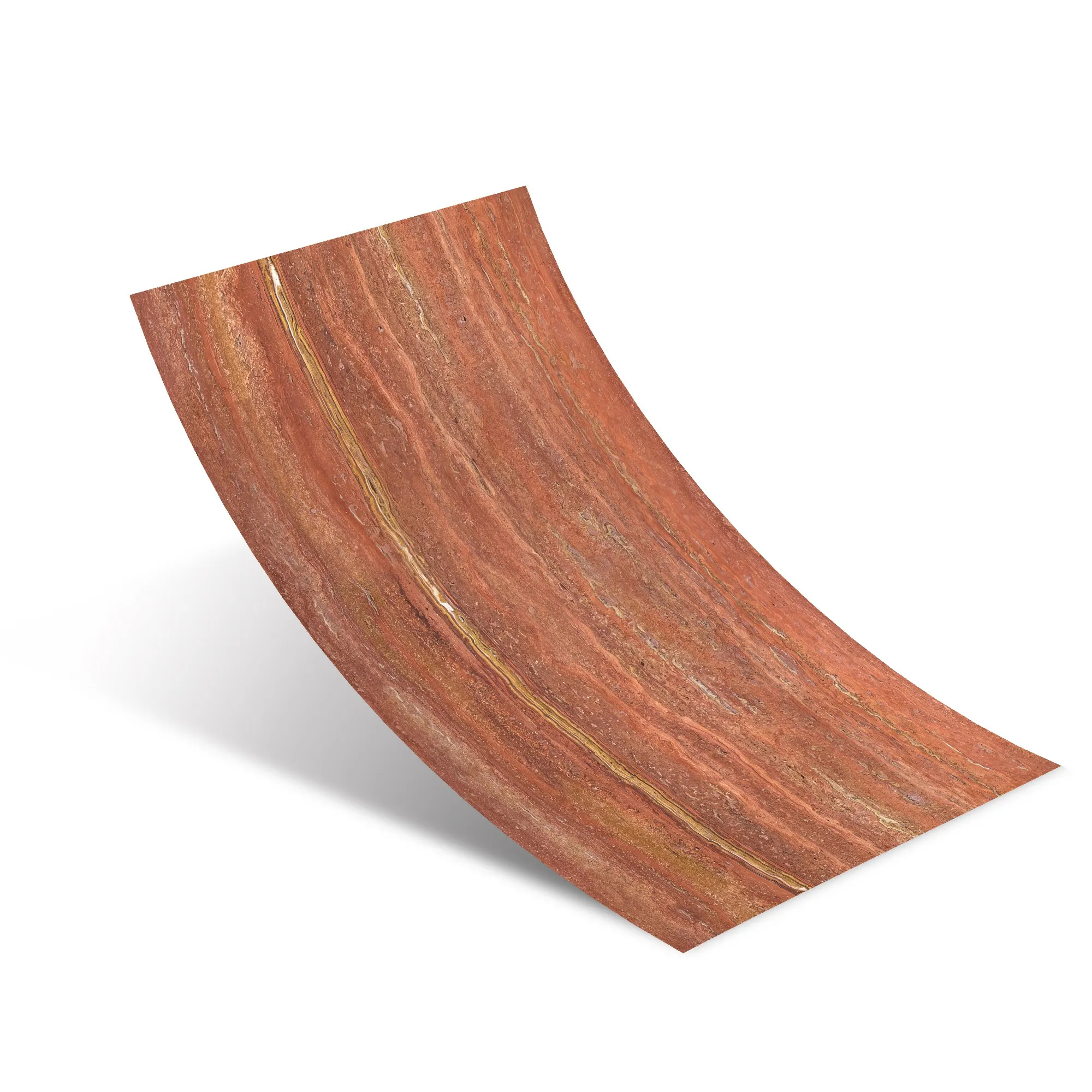 When we talk about Red Travertine in the context of mcm flexible stone, we're not just talking about a hue. We're talking about a spectrum of stories. There's the deep, earthy Red Travertine that evokes the rust-red cliffs of canyon country, rich and grounding. Then there are variants like travertine (starry red)—a finish that scatters tiny, iridescent flecks across the surface, as if someone sprinkled stardust over a red horizon. It's not just stone; it's stone with personality.
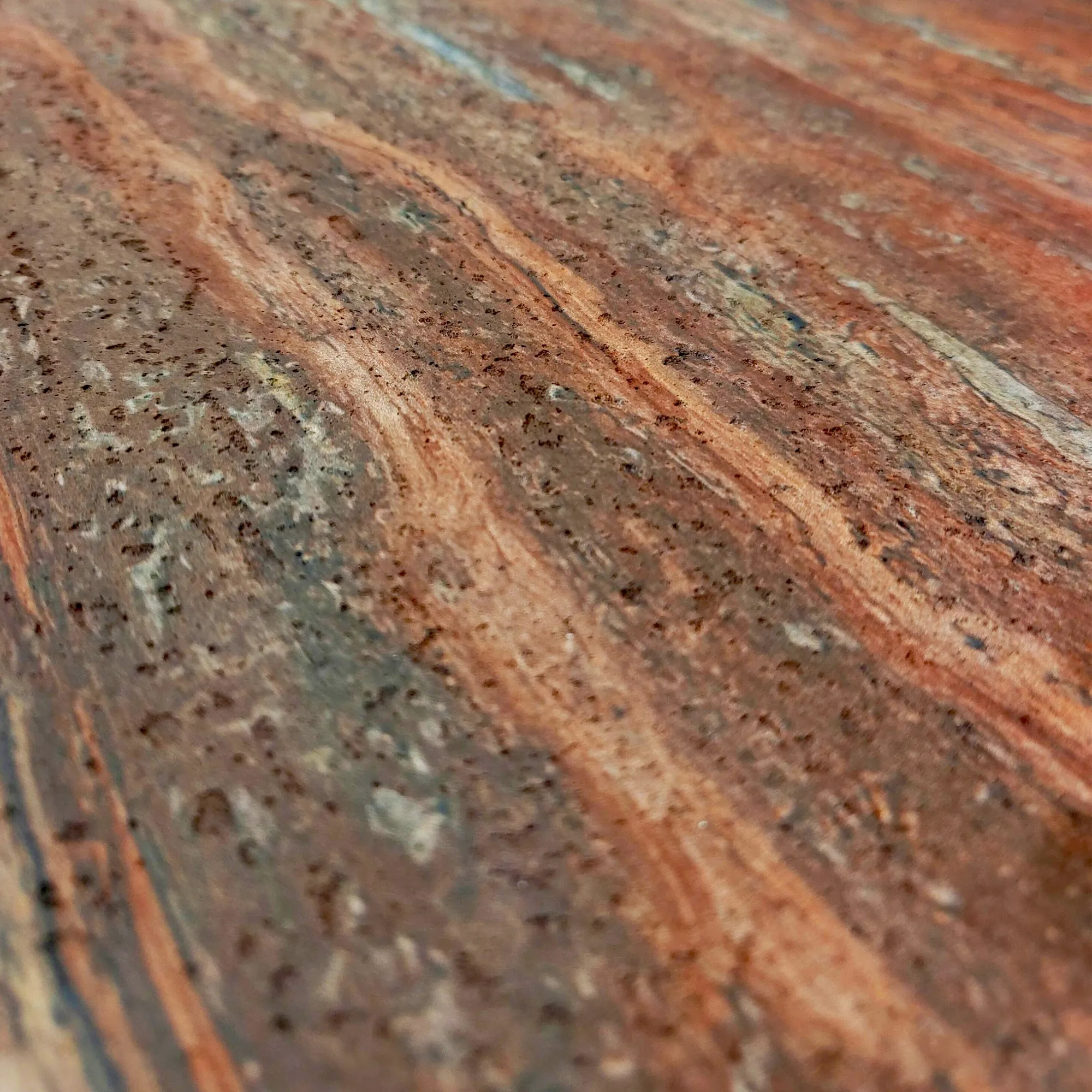
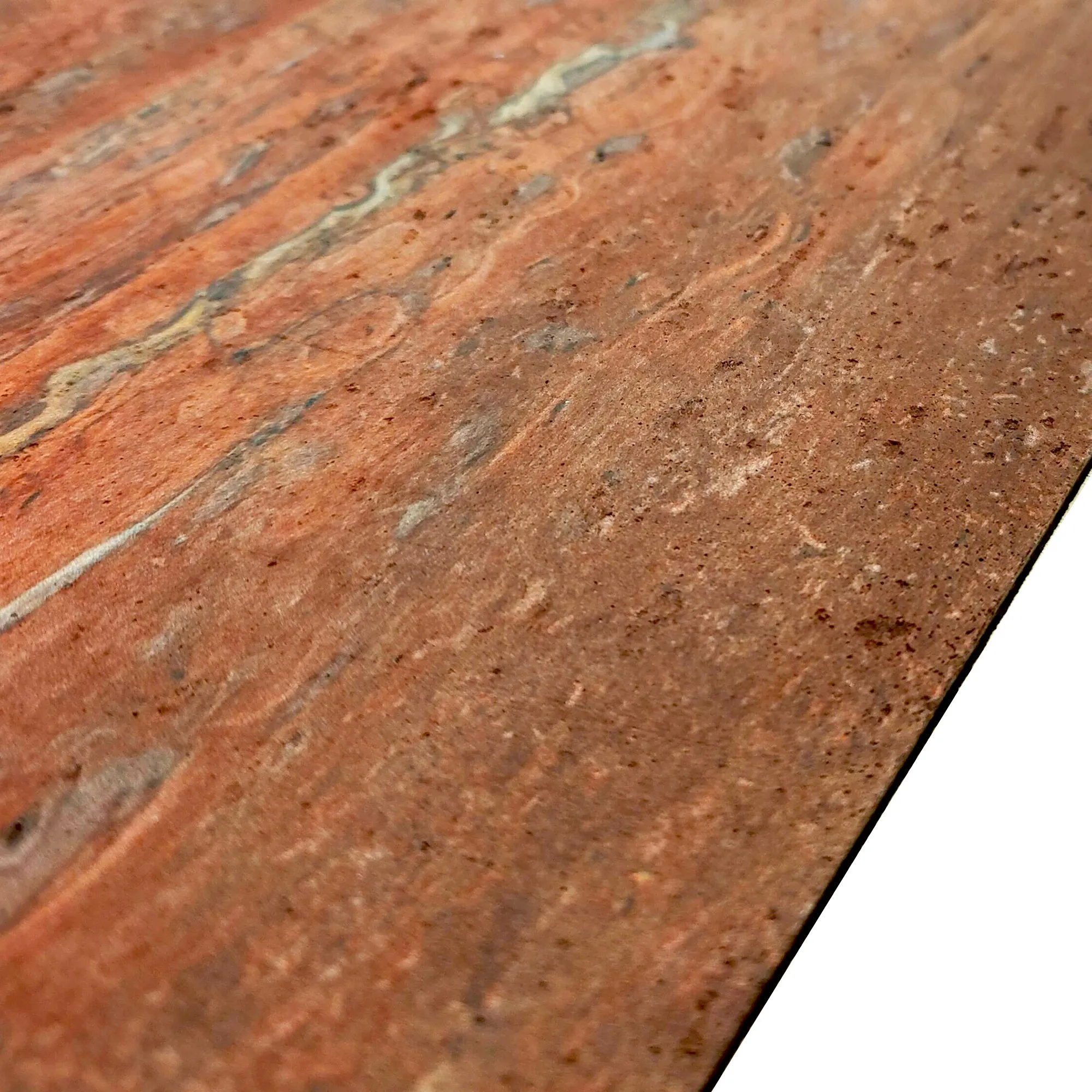
What makes Red Travertine so special for art? Let's break it down. First, the color itself is emotionally charged. Red is the color of passion, of energy, of lifeblood. It commands attention without being overwhelming, making it perfect for pieces that aim to stir something in the viewer. But beyond that, the texture of Red Travertine MCM is a tactile delight. Run your hand over it, and you'll feel the subtle pits and grooves that mimic natural travertine—those tiny, weathered pockets that tell a story of time. Yet, unlike natural travertine, which can be porous and high-maintenance, this modified version is sealed, stain-resistant, and built to last, even in high-traffic public spaces.
Imagine an artist who wants to create a large-scale installation for a bustling city square. Traditional Red Travertine would require massive support structures, limiting the design to static, blocky forms. With mcm flexible stone, that same artist can dream up a piece that arcs overhead, dips down to brush the ground, and wraps around existing architecture—all without worrying about structural strain. It's the difference between painting with a rigid brush and a flowing watercolor: suddenly, the canvas becomes endless.
Sculptural Designs: When Stone Becomes Fluid
Sculptors have long chased the idea of movement in static materials. Michelangelo once said, "Every block of stone has a statue inside it, and it is the task of the sculptor to discover it." But what if the block itself could
move
? That's the freedom Red Travertine MCM flexible stone offers. Let's take a hypothetical example: a sculptor named Elara, who wants to create a piece about resilience. She envisions a figure emerging from a wave of red stone, the form twisting and rising as if breaking through water. With traditional stone, she'd be limited to sharp angles and thick, supportive bases. With Red Travertine MCM, she can thin the material to paper-thin edges that catch the light, curve the "wave" into a seamless spiral, and even hollow out parts of the sculpture to create negative space—all while keeping the piece lightweight enough to install with minimal fuss.
The secret here is flexibility, but not the flimsy kind. MCM flexible stone has a tensile strength that surprises even seasoned artists. It can be bent into a radius as tight as 30cm without cracking, making it ideal for organic, flowing forms. And because it's so lightweight (about 1/5 the weight of natural stone), sculptors can build taller, more ambitious pieces without compromising on stability. Think of a 10-foot-tall Red Travertine sculpture that leans forward, defying gravity—something that would be unthinkable with traditional stone, but entirely possible with MCM.
"Working with Red Travertine MCM is like collaborating with a material that understands my vision," says Elara, the sculptor we imagined earlier. "I used to spend hours calculating how much support a stone piece would need—now, I spend that time experimenting. Last month, I created a series of Red Travertine 'petals' that hang from the ceiling and sway gently with air currents. They look like they're made of silk, but they're stone. Visitors reach out to touch them, half-expecting them to be soft, and then their eyes widen when they realize what they're feeling. That moment of wonder? That's why I became an artist."
Art Installations: Wrapping Spaces in Story
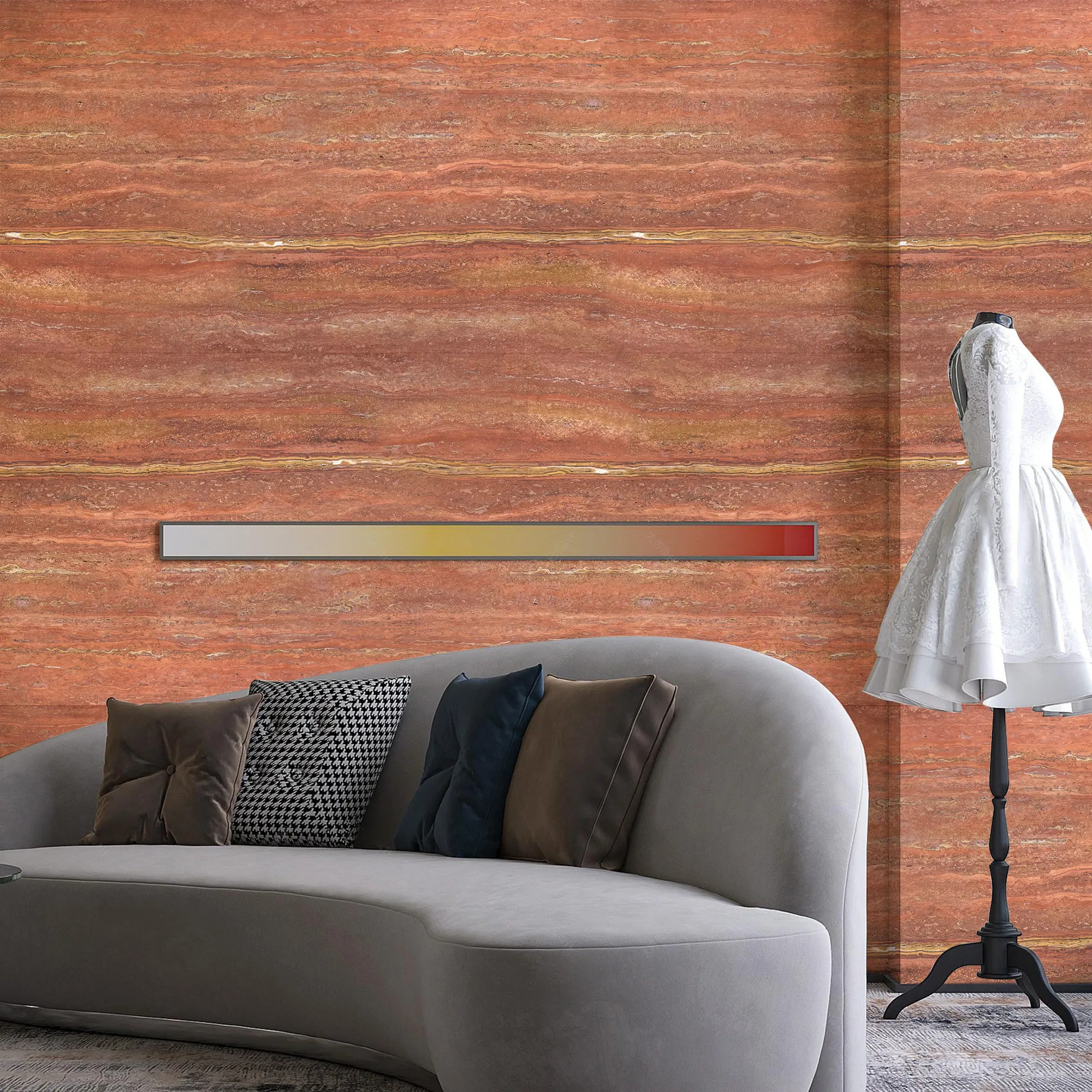
If sculptural designs push the boundaries of form, art installations using Red Travertine MCM redefine how we interact with space. Imagine walking into a gallery where the walls are covered in a mosaic of Red Travertine panels, each etched with patterns that tell a story. Or a public square where a 20-meter-long Red Travertine "river" flows across the ground, guiding visitors through a narrative of movement and connection. These aren't just installations—they're experiences, and mcm flexible stone makes them possible.
One of the most exciting aspects of using Red Travertine MCM in installations is its versatility in size and application. Unlike natural stone, which comes in fixed slab sizes, MCM panels can be produced in large, continuous sheets (up to 3 meters long) with minimal seams. This means artists can create expansive, uninterrupted surfaces that feel cohesive and immersive. For example, a recent installation at a cultural center in Barcelona used travertine (starry red) panels to cover an entire wall, creating the illusion of a starry night sky bleeding into a red horizon. The panels were so large and seamless that visitors felt like they were stepping into a dream.
And let's not forget about customization. MCM flexible stone can be printed with custom patterns, textures, or even integrated with other materials like foamed aluminium alloy board for contrast. Imagine a piece where Red Travertine waves are interspersed with sleek, metallic accents of foamed aluminium alloy board (vintage gold)—the warmth of the stone balancing the coolness of the metal, creating a dynamic visual dialogue. The possibilities are limited only by the artist's imagination.
How Red Travertine MCM Stacks Up Against Traditional Materials
To truly appreciate why
Red Travertine MCM is revolutionizing art and design, let's compare it side by side with traditional stone and other common sculptural materials:
|
Feature
|
Red Travertine MCM Flexible Stone
|
Natural Red Travertine
|
Foamed Aluminium Alloy Board
|
|
Weight
|
Lightweight (5-8 kg/m²)
|
Heavy (25-30 kg/m²)
|
Moderate (8-10 kg/m²)
|
|
Flexibility
|
Highly flexible (bends to 30cm radius)
|
Rigid (brittle, prone to cracking)
|
Moderately flexible (limited bending)
|
|
Aesthetic
|
Natural stone texture with consistent color; variants like travertine (starry red)
|
Organic, unique veining but inconsistent color/pattern
|
Sleek, metallic finish; modern but less organic
|
|
Durability
|
Weather-resistant, stain-proof, UV-stable
|
Porous, requires sealing; prone to chipping
|
Corrosion-resistant but prone to scratches
|
|
Installation
|
Easy (can be cut, glued, or nailed; no heavy machinery needed)
|
Complex (requires cranes, structural support)
|
Moderate (needs specialized tools for shaping)
|
Complementing with MCM's 3D Printing Series
As if Red Travertine MCM wasn't innovative enough, it plays beautifully with another groundbreaking line from the MCM family: the 3d printing series. Imagine an artist designing a sculptural piece where Red Travertine panels form the "skin," while 3D-printed MCM elements add intricate, geometric details—think interlocking gears, delicate filigree, or even hollow, lattice-like structures that light passes through. The 3D printing series allows for precision that's impossible with traditional stone carving, and when paired with Red Travertine's organic texture, the result is a stunning blend of nature and technology.
For example, a recent installation at a tech museum combined Red Travertine MCM panels with 3D-printed mcm flexible stone "branches" that sprouted from the walls, creating a forest of red and metallic gray. The 3D-printed parts were lightweight enough to extend 2 meters from the wall without support, while the Red Travertine panels anchored the piece in warmth. It was a visual metaphor for how innovation (3D printing) grows from nature (stone)—and it would have been unthinkable without MCM's versatile product lines working in harmony.
Sustainability: Art That Respects the Planet
In an era where artists are increasingly mindful of their environmental impact, mcm flexible stone checks another crucial box: sustainability. Traditional stone quarrying is resource-intensive, often leaving behind scarred landscapes and consuming massive amounts of energy. MCM flexible stone, by contrast, is made with recycled stone aggregates and eco-friendly binders, reducing waste and carbon footprint. It's also 100% recyclable at the end of its life, making it a choice that aligns with the values of artists who want their work to leave a positive legacy.
Red Travertine MCM takes this a step further. Its lightweight nature means less fuel is used during transportation, and its durability ensures that installations and sculptures last for decades, reducing the need for frequent replacements. For artists creating public art—pieces meant to endure the test of time—this longevity is a huge plus. Imagine a Red Travertine installation in a city park that still looks vibrant 50 years from now, telling its story to generations of visitors. That's sustainability in action.
Why Red? The Emotional Resonance of Color
We've talked a lot about the technical benefits of Red Travertine, but let's circle back to the obvious: that striking, unforgettable color. Red has a unique way of connecting with people on a primal level. It's the color of life (blood), of passion (a beating heart), of courage (a red flag raised high). In art, red can evoke joy, anger, love, or longing—sometimes all at once. When paired with the earthy texture of travertine, it becomes something even more powerful: a color that feels both ancient and alive.
Travertine (starry red), with its subtle, glittering flecks, adds another layer of emotion. It's red with depth—like looking into a campfire and seeing sparks rise, or at a red rock canyon at dusk, where the light catches mineral deposits and makes the stone glow. Artists often describe it as "red with a story," and that story resonates with viewers. A sculpture in travertine (starry red) isn't just an object—it's a conversation starter, a memory trigger, a moment of connection between the artist, the material, and the audience.
The Future of Art and Design: Where Red Travertine Leads
As artists and designers continue to push the limits of what's possible, materials like Red Travertine mcm flexible stone are leading the charge. We're already seeing collaborations between MCM manufacturers and artists to create custom finishes and textures—think Red Travertine infused with glow-in-the-dark pigments, or panels that change hue with temperature. The 3d printing series is evolving too, with larger printers and more complex designs on the horizon, opening up even more possibilities for hybrid pieces that blend Red Travertine with 3D-printed elements.
But perhaps the most exciting part is how accessible this material is becoming. MCM flexible stone was once a niche product, but as demand grows, it's becoming more widely available, even for independent artists and small-scale projects. That means more voices, more stories, and more red-hued wonders gracing our galleries, parks, and public spaces.
Final Thoughts: A Material That Inspires
At the end of the day, art is about connection—between the artist and their vision, between the viewer and the piece, between the material and the message. Red Travertine mcm flexible stone excels at fostering these connections because it's a material that doesn't just serve art; it
participates
in it. It bends to the artist's will, it speaks to the viewer's senses, and it honors the planet in the process.
So the next time you encounter a red sculpture that seems to dance, or an installation that wraps around you like a hug, take a closer look. Chances are, you're looking at Red Travertine MCM flexible stone—a material that's not just changing art and design, but redefining what's possible when creativity and innovation meet. And who knows? Maybe it'll inspire you to see stone—not as something hard and unyielding—but as something soft, something flowing, something alive. After all, that's the magic of art: it makes us see the world differently. And with Red Travertine MCM, the world just got a little more colorful, a little more flexible, and a whole lot more full of wonder.













