

Construction has always been a balancing act between beauty and practicality. Architects dream of materials that turn spaces into stories, while contractors grapple with the realities of weight, time, and labor. When it comes to stone cladding, few materials spark as much passion as red travertine—with its warm, earthy hues and organic veining, it's a timeless choice. But for years, its natural heft has been a silent roadblock, slowing projects and inflating costs. Enter MCM flexible stone, a modern composite that promises to rewrite the rules. Today, we're putting these two head-to-head, focusing on the metrics that matter most on the job site: weight and installation ease. Let's dive in.
Red travertine isn't just a stone—it's a statement. Quarried from ancient deposits, its rich red and terracotta tones, swirled with cream and gold veins, evoke warmth and history. Walk into a luxury hotel lobby or a high-end residential home, and chances are you've admired its depth: the way light plays off its pitted surface, the unique patterns that no two slabs share. It's easy to see why designers and homeowners fall for it; natural stone carries a prestige that synthetic materials often struggle to match.
But here's the catch: that beauty comes with significant "baggage"—literally. Natural red travertine is dense, heavy, and unforgiving. A standard 20mm-thick slab weighs in at around 28 kilograms per square meter. To put that in perspective, imagine a small team of workers trying to maneuver a 10-square-meter section; that's 280 kilograms of stone to lift, align, and secure. On high-rise projects, this means relying on cranes and heavy machinery, adding layers of complexity (and cost) to the timeline.
Structural concerns pile on too. Older buildings or lightweight frames often can't support the load of natural travertine cladding, limiting where it can be used. Even new constructions require reinforced framing and careful engineering to prevent sagging or stress cracks over time. And let's not forget installation day: cutting natural stone demands specialized tools, and a single wrong move can crack a slab, turning an expensive material into waste. For contractors, it's a high-stakes, labor-intensive process that rarely stays on schedule.
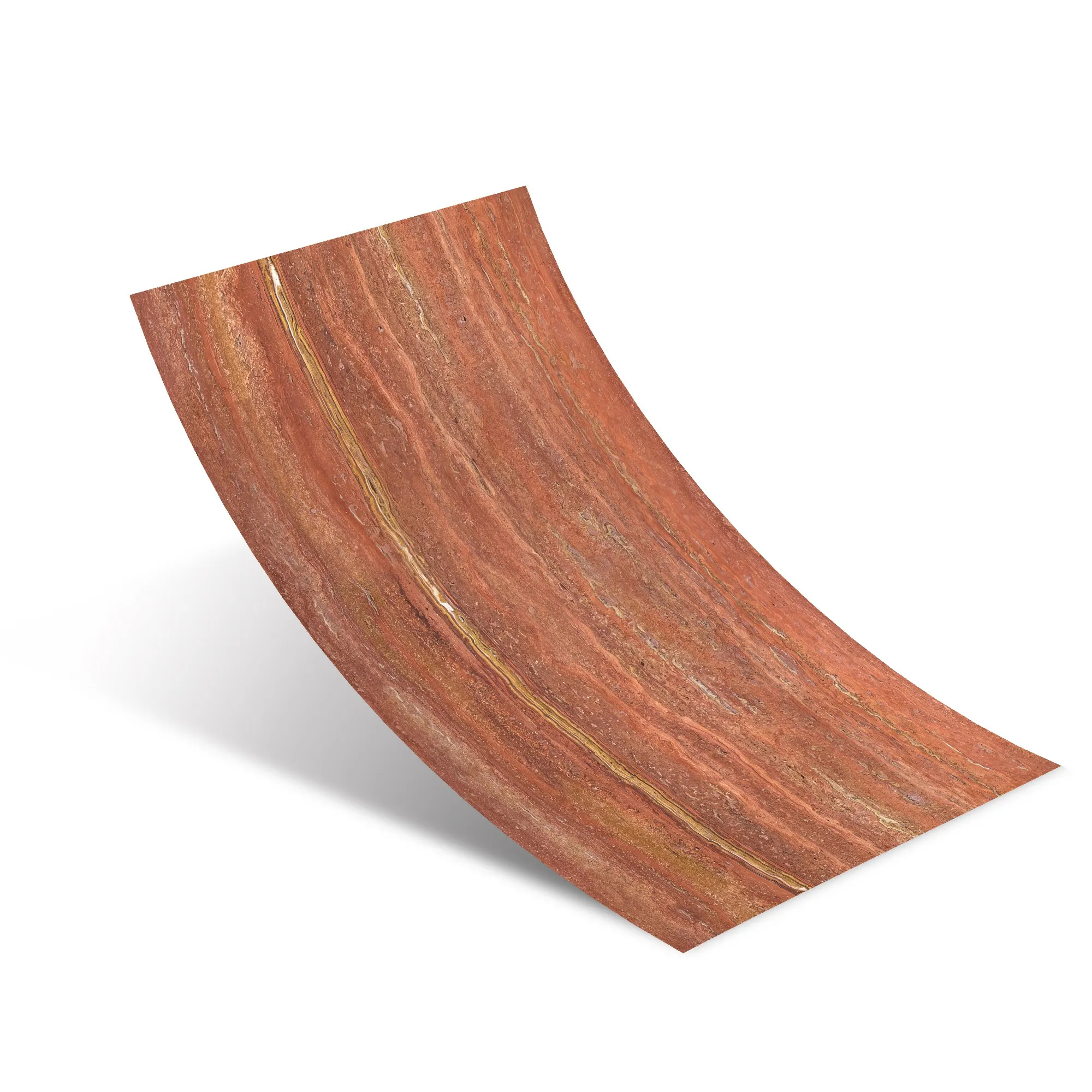
If natural red travertine is the grandparent of cladding materials—wise, beautiful, but set in its ways—MCM flexible stone is the innovative younger cousin. Short for Modified Composite Material, MCM is exactly what its name suggests: a blend of natural stone particles (think crushed red travertine aggregates) and high-performance polymer resins, engineered to be thin, lightweight, and surprisingly tough. It's part of a new generation of building materials designed to solve the very problems that make natural stone a headache.
What makes MCM stand out? Its flexibility. Unlike rigid natural stone slabs, MCM panels bend slightly, conforming to curved surfaces or uneven walls without cracking. And when it comes to weight? We're talking a mere 4–5 kilograms per square meter—less than 20% of natural travertine's heft. That's a game-changer for anyone who's ever strained a muscle lifting stone or waited for a crane to free up.
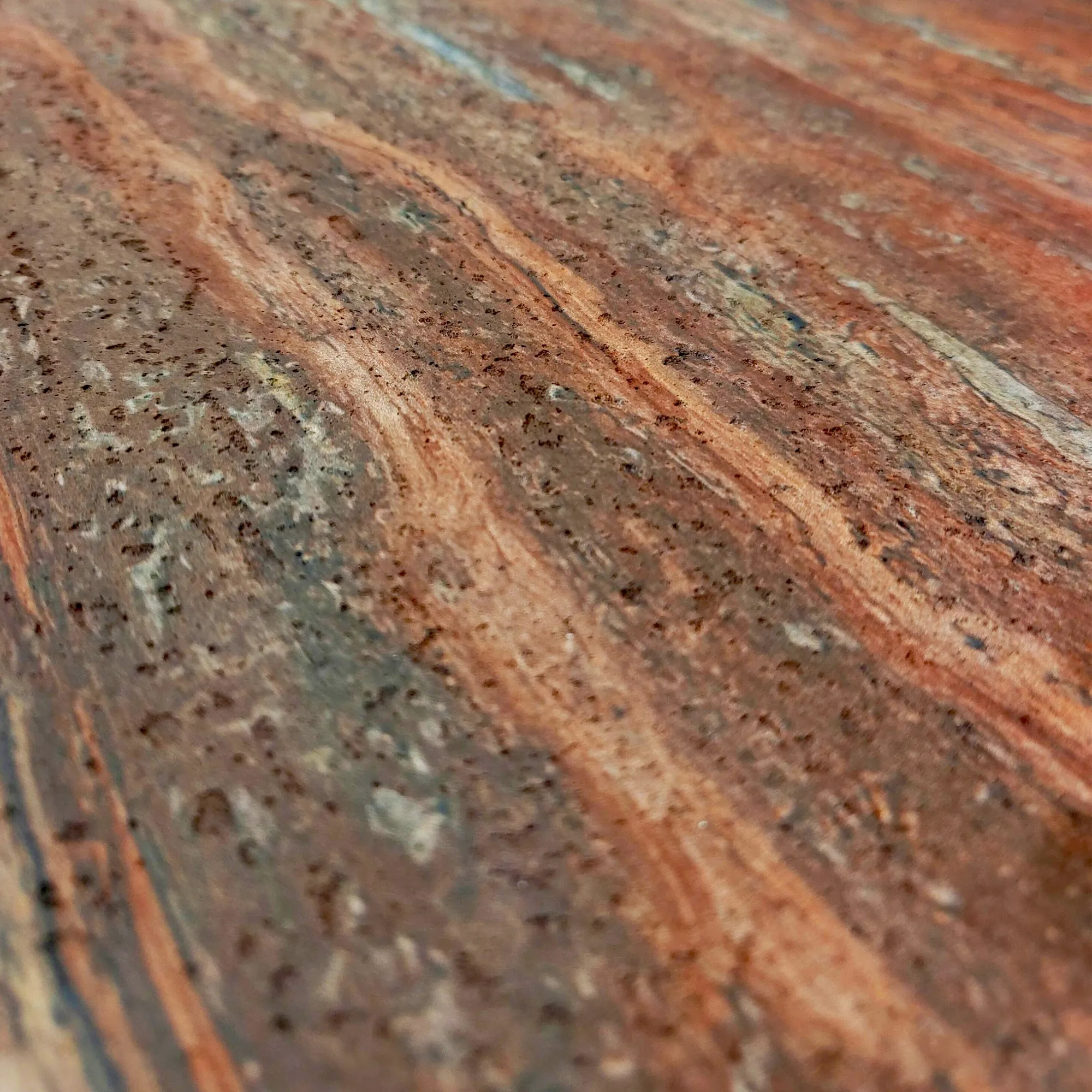
The MCM big slab board series takes this innovation further, offering larger-format panels (up to 1200x2400mm) that reduce seams and speed up installation even more. These aren't just small tiles; they're substantial sheets that mimic the grandeur of natural stone slabs but handle like a thick poster. And because they're made with real red travertine particles on the surface, they retain that coveted natural texture—the cool, slightly porous feel under your hand, the way light catches the edges of each tiny stone fragment.
| Metric | Natural Red Travertine | MCM Flexible Red Travertine |
|---|---|---|
| Weight per Square Meter | 25–30 kg | 4–5 kg |
| Thickness | 15–20 mm | 3–5 mm |
| Transport Efficiency (Slabs per Truck) | ~50 slabs | ~500 panels |
| Structural Load Requirement | Reinforced framing or steel support | Standard drywall or masonry (no extra support) |
Let's parse those numbers. At 4kg per square meter, MCM flexible stone is light enough for two workers to carry a large panel with ease—no crane, no forklift, no back strain. This isn't just about convenience; it's about cost. Fewer heavy machinery rentals, fewer labor hours spent on lifting, and fewer delays when weather or logistics throw a wrench in the schedule. For high-rise projects, where every kilogram adds up, MCM's low weight means architects can use it on upper floors without redesigning the building's structural core—a freedom natural stone rarely allows.
If weight is the first hurdle, installation is the second. Natural red travertine installation reads like a to-do list of frustrations: you need specialized cutting tools (diamond blades, wet saws) to avoid shattering the stone, a team of 3–4 people per slab to position it, and hours of careful grouting to fill gaps. Even small mistakes—like a slightly uneven wall—can lead to visible lippage (slabs sticking up at different heights), ruining the seamless look.
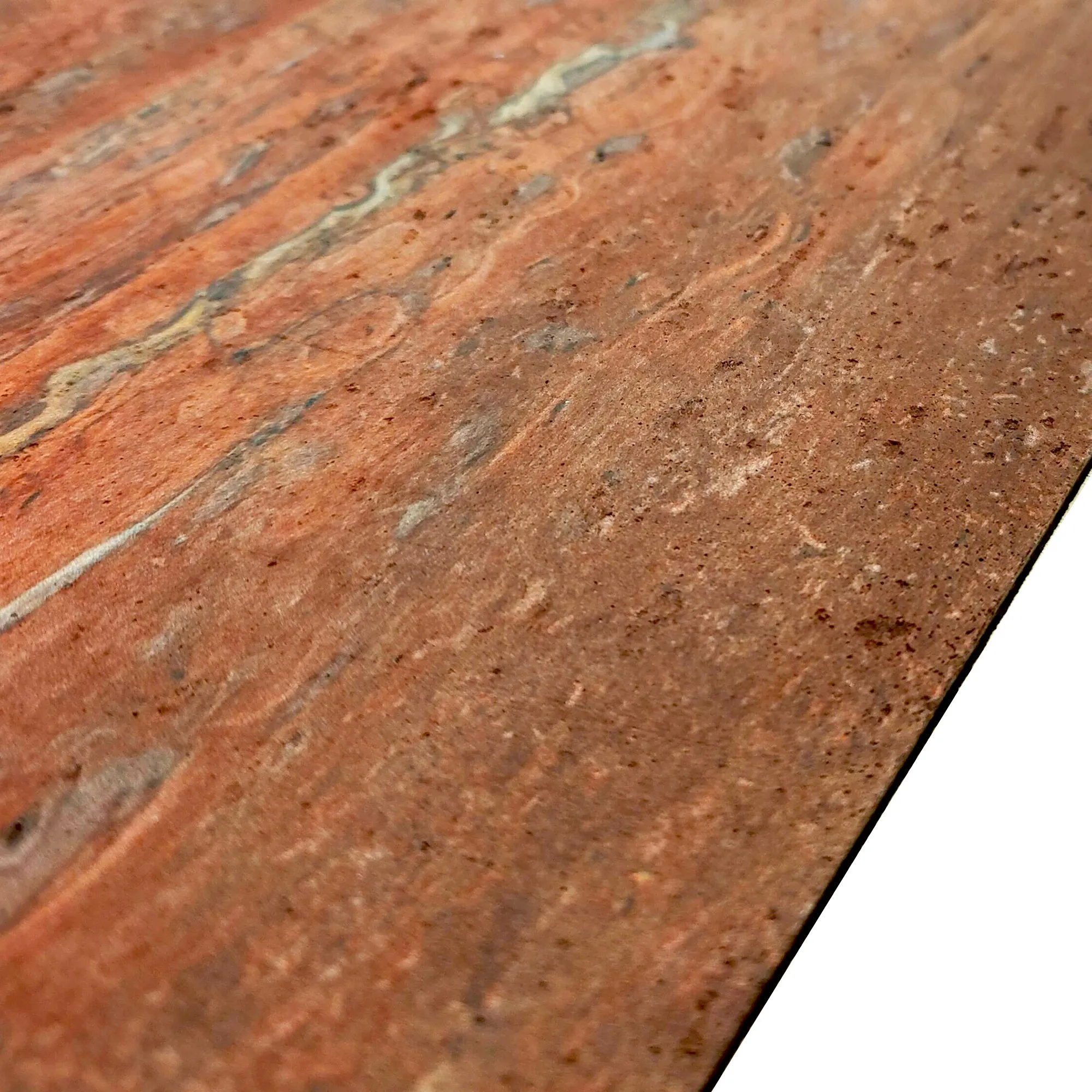
MCM flexible stone? It's a different story. These panels cut like butter with standard utility knives or tin snips—no need for expensive equipment. They attach with simple adhesives or mechanical fasteners, and because they're flexible, they adapt to minor wall imperfections without cracking. A single worker can install 10–15 square meters in a day, compared to 2–3 square meters with natural travertine. That's a 5x speed boost on the job site—music to the ears of project managers watching deadlines.
Waste is another win. Natural stone often breaks during transport or cutting, leading to 10–15% material waste. MCM panels are durable and lightweight, so breakage is rare—waste drops to under 2%. And because they're lighter, there's less risk of on-site injuries from heavy lifting, a huge plus for safety compliance.
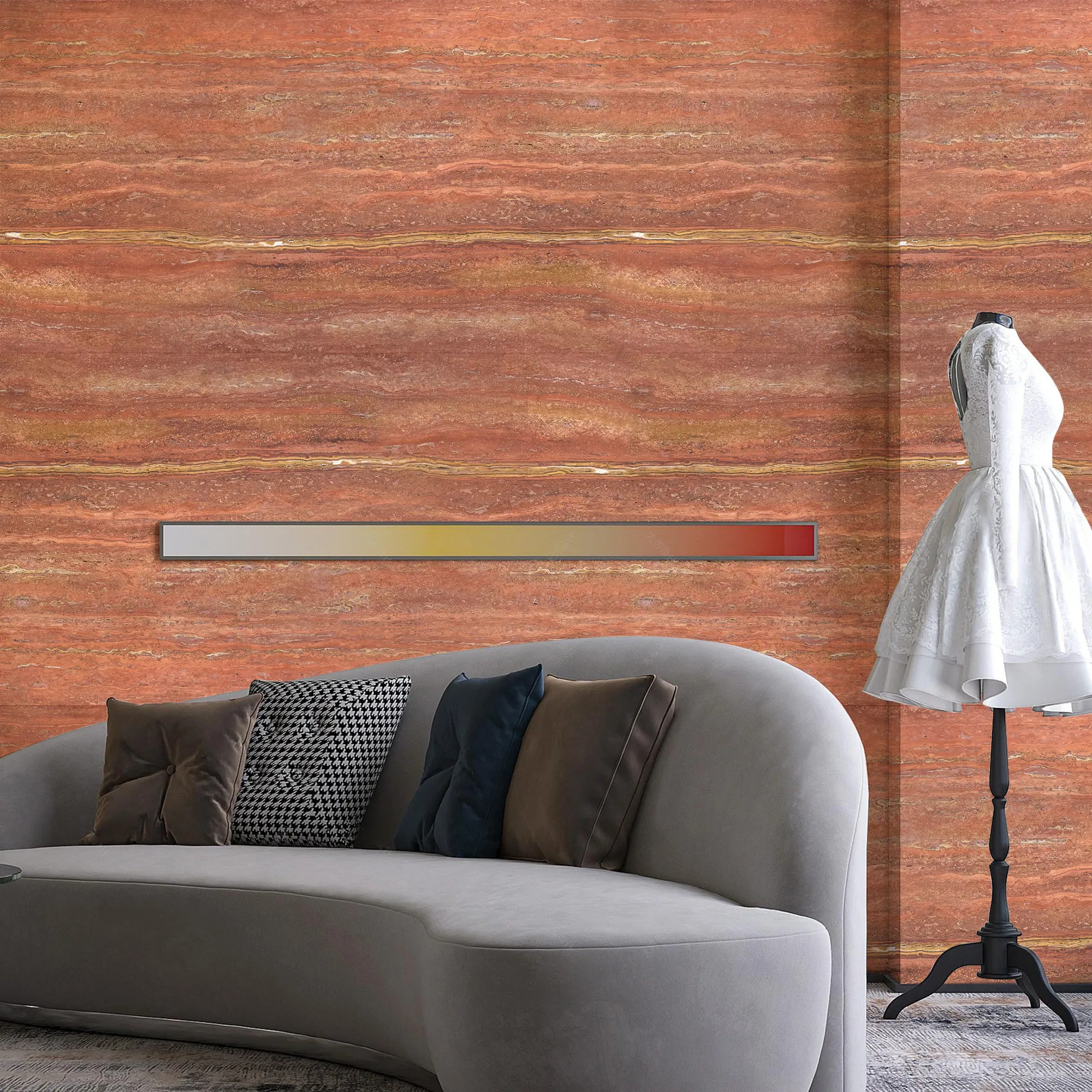
Here's the elephant in the room: Does a lightweight, flexible panel really look like natural red travertine? Skepticism is understandable—we've all seen "faux stone" products that scream "plastic." But MCM flexible stone is a different beast. The top layer is made from crushed natural red travertine, so the color, texture, and even the subtle pits and veins are authentic. Run your hand over it, and you'll feel the same granular surface as the real thing.
Advancements in MCM 3D printing series have taken this a step further. Manufacturers now use 3D scanning and printing to replicate the unique veining patterns of premium red travertine slabs, ensuring no two panels look identical. The result? Walls that have the organic, one-of-a-kind character of natural stone, without the logistical headaches. Architects rave about it: finally, a material that lets them design bold, stone-clad exteriors without worrying about weight limits or installation delays.
Natural red travertine still has its place, of course. For low-rise buildings with strong structural support—think luxury villas or heritage projects where authenticity is non-negotiable—it remains a stunning choice. But for most modern construction, MCM flexible stone is stealing the spotlight.
Take high-rise exteriors, for example. In cities like Dubai or Singapore, where buildings climb 50+ stories, MCM's low weight is a lifesaver. It reduces the building's overall load, cutting foundation costs, and makes installation feasible with standard scaffolding. Renovation projects love it too: older buildings with wooden or masonry walls can't handle natural stone, but MCM panels stick right on, transforming interiors without structural overhauls.
Commercial spaces—malls, hotels, offices—also benefit from MCM's speed. When you need to open a new store in 6 weeks, waiting for natural stone installation isn't an option. MCM panels go up fast, letting businesses start welcoming customers sooner. Even interior designers are using them for accent walls, fireplaces, and backsplashes—places where the beauty of red travertine is wanted, but the weight and installation fuss isn't.
Red travertine will always hold a special place in design history—it's a material that tells a story of time and nature. But in a world where construction projects demand speed, safety, and flexibility, MCM flexible stone is redefining what's possible. It's not about replacing natural stone; it's about offering a smarter alternative that honors the beauty of red travertine while solving the practical problems that have held it back.
For contractors, it means fewer aches, faster projects, and lower costs. For architects, it means more creative freedom, unshackled by weight limits. For homeowners and businesses, it means bringing the warmth of red travertine into spaces that never could have handled it before. In the end, MCM flexible stone isn't just a material—it's a bridge between tradition and innovation, proving that sometimes, progress doesn't have to sacrifice beauty.
So the next time you walk past a building with stunning red stone cladding, take a closer look. It might just be MCM flexible stone—quietly revolutionizing construction, one lightweight panel at a time.
Recommend Products











