

Imagine standing before a building that seems to glow from within, its facade catching the last rays of the afternoon sun like a living thing. The walls aren't just surfaces—they're stories, told through color, texture, and light. That's the magic of red travertine, a natural stone that has captivated architects and designers for centuries. More than just a material, it's a medium of expression, a way to infuse spaces with warmth, character, and a touch of the earth's own history. In this article, we'll dive deep into the texture of red travertine, exploring how its unique patterns, hues, and tactile qualities elevate architectural design, and how it harmonizes with complementary materials like mcm flexible stone and fair-faced concrete to create spaces that feel both timeless and alive.
Before we zoom in on red travertine, let's take a moment to appreciate travertine itself. A type of limestone formed by the precipitation of calcium carbonate from mineral-rich hot springs, travertine is nature's art project—layered, porous, and infinitely varied. Unlike marble or granite, which often feel polished to perfection, travertine wears its history on its sleeve: tiny pits, subtle veining, and irregularities that speak to its formation in rushing waters and mineral deposits. It's a stone that feels "lived-in," even when brand-new, making it a favorite for spaces that aim to balance luxury with authenticity.
Travertine comes in a spectrum of colors, from soft beiges and creams to deep grays and golds, but red travertine stands apart. Its hue—ranging from terracotta to brick-red, with undertones of rust, amber, or even burgundy—evokes warmth, energy, and a connection to the earth. It's a color that feels both ancient and modern, equally at home in a rustic villa in Tuscany and a sleek downtown high-rise in Tokyo. But what truly sets red travertine apart is its texture—a complex interplay of surface patterns, depth, and light responsiveness that turns any application into a sensory experience.
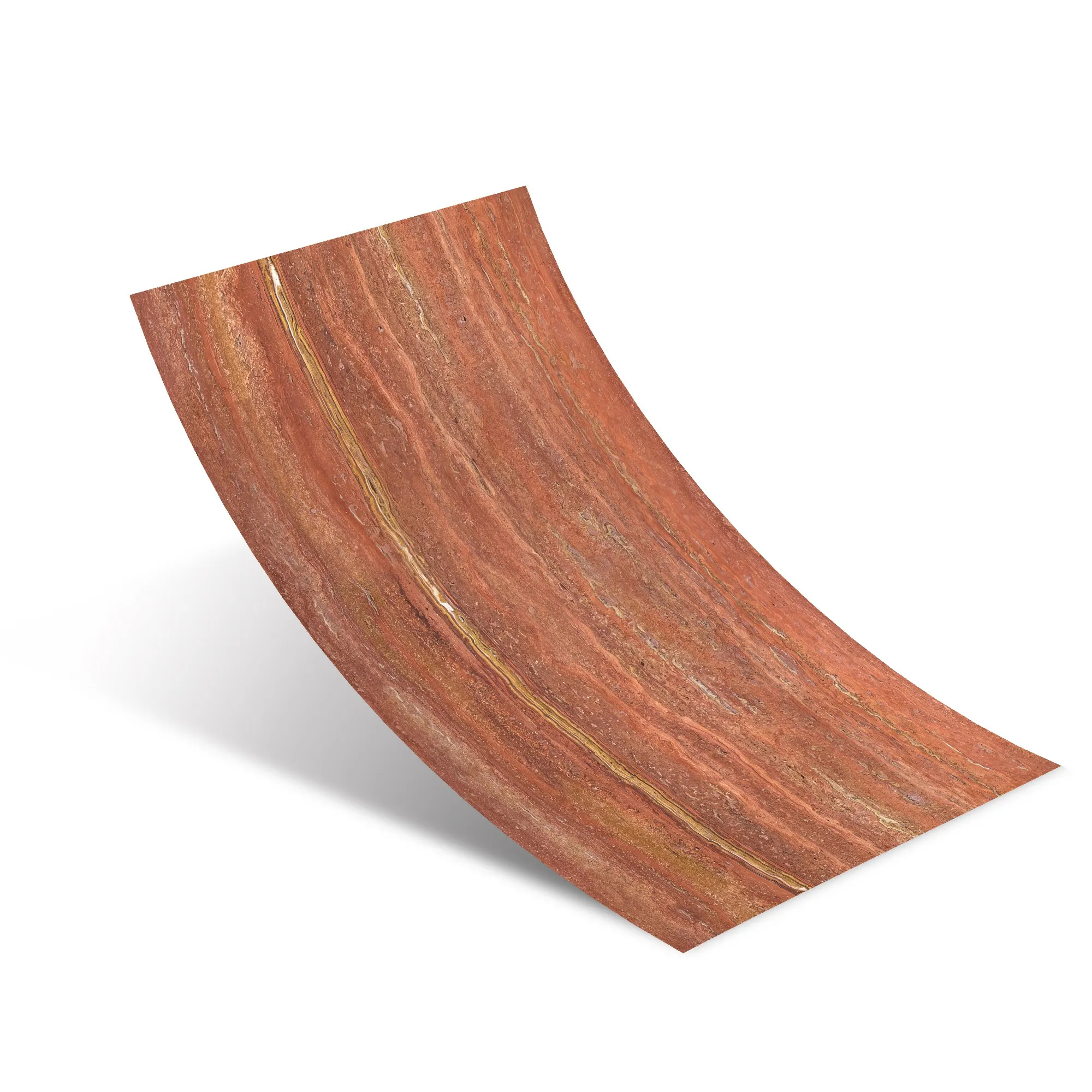
To understand how red travertine enhances architectural aesthetics, we first need to dissect its texture. Texture, in design, is a language—it communicates mood, scale, and purpose without a single word. Red travertine's texture is a symphony of three elements: color variation, veining, and surface finish. Let's break them down.
Red travertine isn't a single shade—it's a gradient of emotion. Quarried from regions like Turkey, Iran, and parts of Italy, each slab tells a story of the soil and minerals it formed in. Some pieces lean toward warm terracotta, reminiscent of sunbaked clay in a Mediterranean village; others deepen into rich burgundy, evoking the depth of a forest at dusk. What's striking is how these colors shift with light: in the morning, a red travertine wall might glow soft and peachy; by afternoon, it could take on a coppery intensity; and at sunset, it might blaze like embers. This chameleon-like quality makes it a dynamic choice for exteriors, where it interacts with the sky and seasons, and interiors, where it responds to artificial lighting to set the mood.
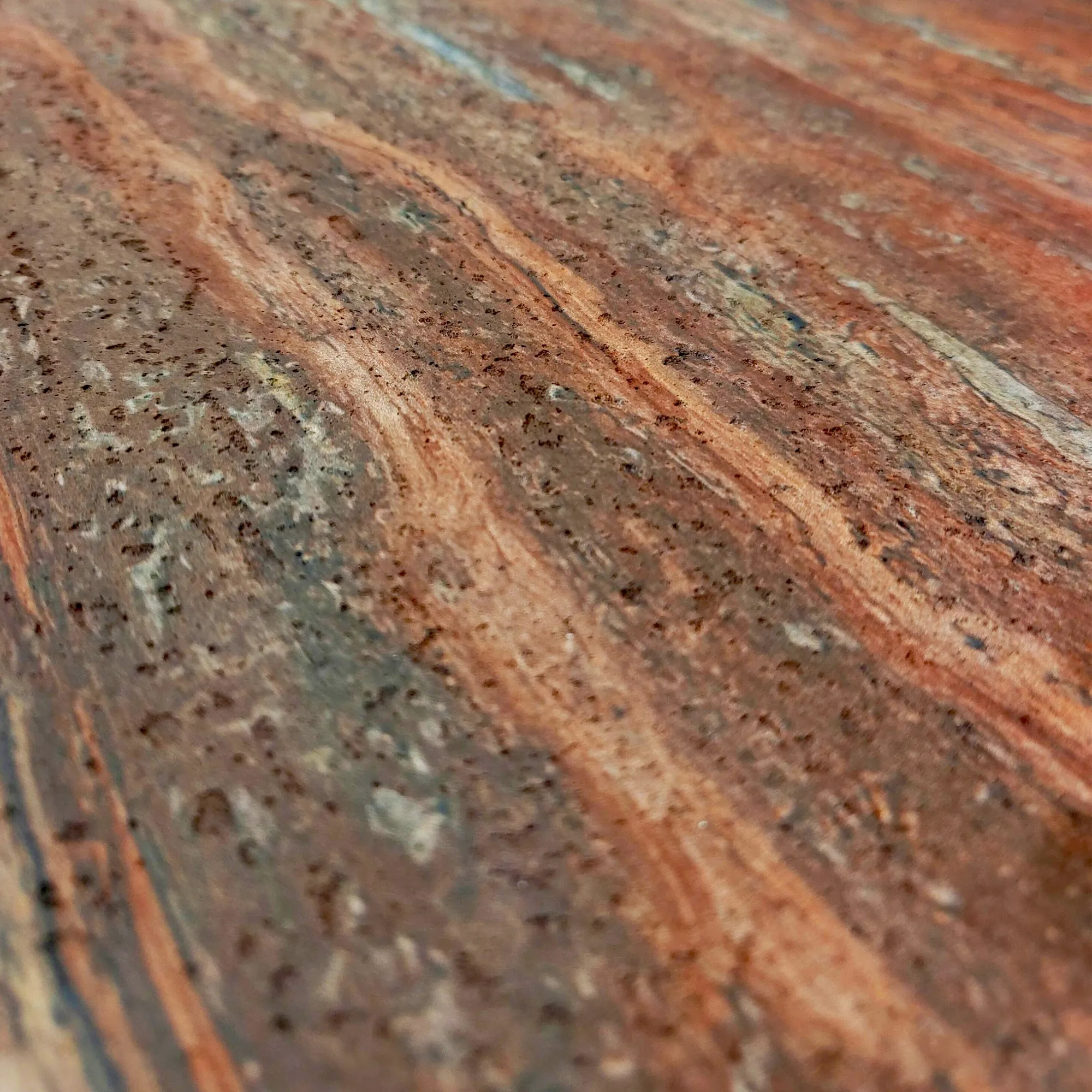
Take, for example, travertine (starry red) —a rare variation dotted with tiny, iridescent flecks that catch the light like distant stars. These "stars" aren't just decorative; they add depth to the texture, making the stone feel less like a flat surface and more like a window into a mineral-rich universe. Run your hand over it, and you'll notice the subtle bumps where these flecks rise slightly above the surface—a tactile reminder that nature doesn't do "perfect."
If color is red travertine's voice, veining is its accent. Unlike marble, which often features bold, contrasting veins, red travertine's veining is more understated—think delicate threads of cream, gold, or even soft gray that wind through the red base like rivers on a map. These veins aren't uniform; some are thin and wispy, others thicker and more pronounced, creating patterns that feel organic and unrepeatable. In a large slab, they might form a gentle wave; in a smaller tile, a subtle zigzag. This randomness is key to red travertine's charm: no two pieces are identical, so every wall or floor becomes a one-of-a-kind artwork.
Architects often use these veins to guide the eye. A wall clad in red travertine with horizontal veining can make a space feel wider, while vertical veining adds height. In a lobby, a slab with particularly striking veining might be placed as a focal point, drawing visitors in and encouraging them to pause and appreciate the stone's natural beauty. It's a texture that invites contemplation—you might find yourself tracing the veins with your eyes, imagining the ancient waters that carved them.
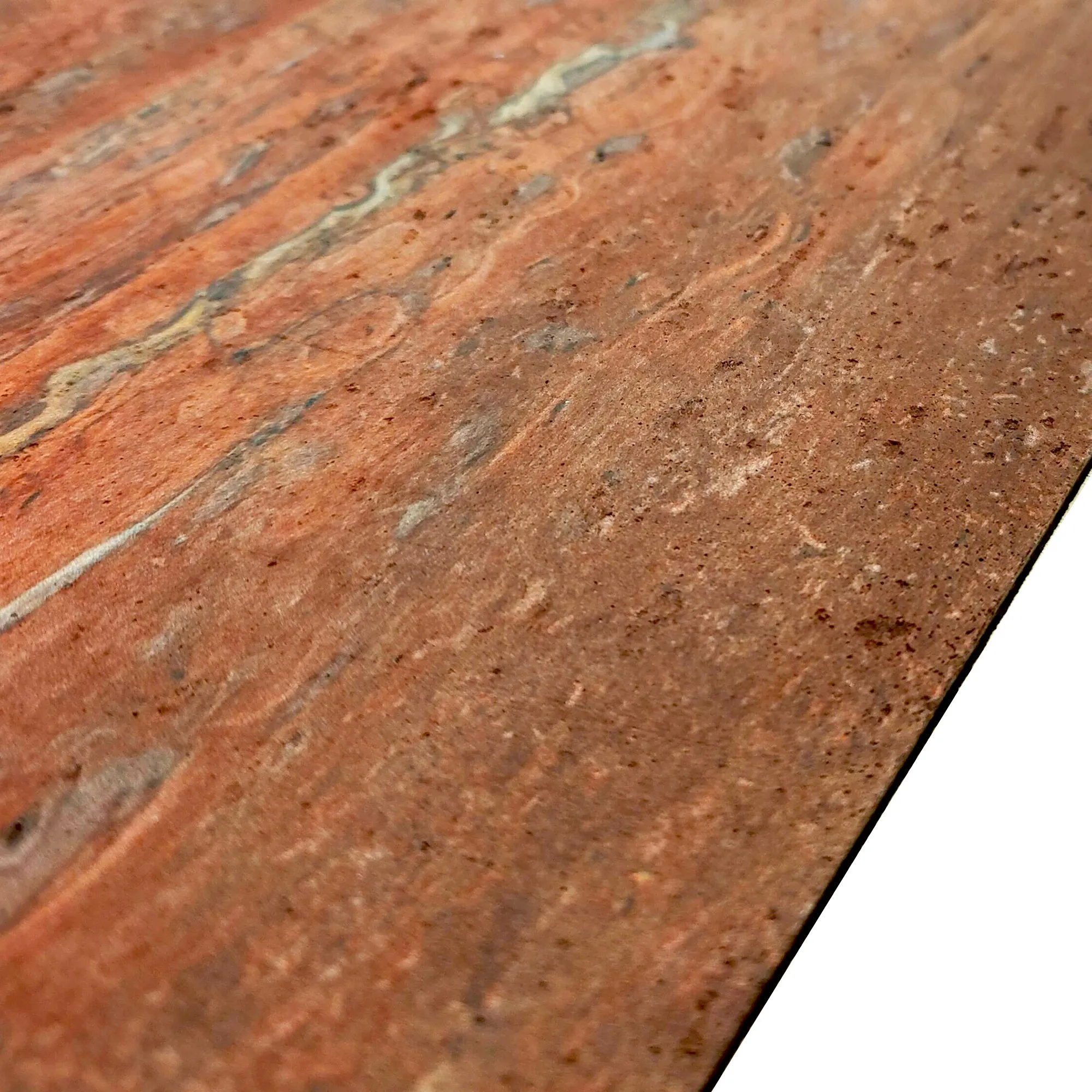
The finish of red travertine is where texture truly comes to life. Unlike polished marble, which reflects light like a mirror, red travertine is often left with a honed, brushed, or tumbled finish—treatments that enhance its natural porosity and tactile appeal. A honed finish smooths the surface slightly but leaves the pits and ridges intact, creating a soft, matte look that absorbs light rather than reflecting it. Run your palm over it, and you'll feel the subtle (unevenness)—not enough to be rough, but enough to feel "real." A brushed finish takes this further, adding fine grooves that catch light and shadow, making the texture even more dynamic. And a tumbled finish, achieved by tumbling the stone in a drum with abrasives, gives it a weathered, antique look, as if it's been shaped by wind and rain over centuries.
These finishes aren't just about aesthetics—they're functional, too. A honed red travertine floor, for example, offers better traction than polished stone, making it ideal for high-traffic areas like hotel lobbies or restaurant floors. A brushed exterior wall, meanwhile, stands up to rain and wind, its texture resisting stains and wear while maintaining its visual appeal. It's a stone that works as hard as it looks good—a rare combination in the world of design.
Now that we've analyzed the components of red travertine's texture, let's explore how architects use this to enhance aesthetics. Texture in architecture isn't just about looks—it's about emotion. A rough, porous surface might make a space feel grounded and secure; a smooth, polished one might evoke luxury or calm. Red travertine, with its mix of warmth, irregularity, and depth, does something even more powerful: it makes spaces feel "human." It doesn't demand perfection; it celebrates imperfection, creating environments that feel welcoming, not intimidating.
On exteriors, red travertine transforms buildings from static structures into living, breathing entities. Imagine a boutique hotel with a red travertine facade, its texture catching the light and casting soft shadows as the sun moves. From a distance, the building reads as a warm, unified mass; up close, the individual slabs reveal their unique patterns, inviting passersby to slow down and look closer. It's a texture that changes with the weather, too: after rain, the stone darkens, its reds deepening and its pits filling with water, creating a glistening, jewel-like effect. In winter, a dusting of snow settles in the crevices, highlighting the texture and turning the facade into a winter wonderland.
Red travertine also plays well with other materials, adding contrast and balance. Pair it with fair-faced concrete , for example—a material prized for its raw, industrial aesthetic—and you get a striking juxtaposition: the warm, organic texture of the stone against the cool, uniform smoothness of the concrete. This contrast creates visual tension, making the building feel dynamic and modern while grounding it in nature. A recent project in Barcelona, for instance, uses red travertine for the lower levels of a residential tower, its porous texture softening the building's base, while the upper floors are clad in fair-faced concrete, giving it a sleek, contemporary edge. The result? A building that feels rooted in the earth but reaching for the sky.
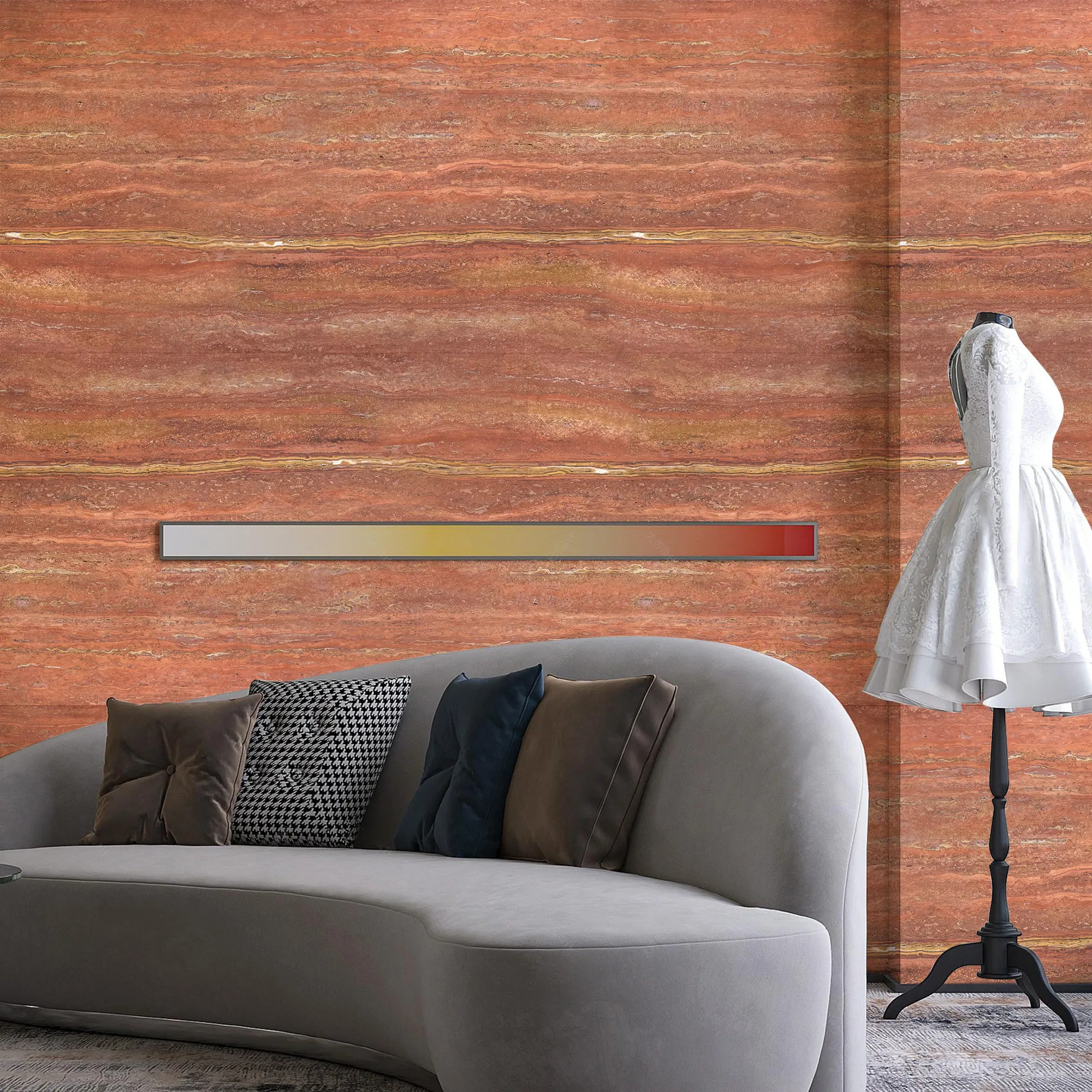
Inside, red travertine turns ordinary rooms into extraordinary experiences. A living room with a red travertine feature wall isn't just a room—it's a sanctuary. The stone's texture absorbs sound, softening echoes and creating a cozy, intimate atmosphere. Its warm color palette, meanwhile, pairs beautifully with wood, leather, and textiles, making the space feel layered and inviting. Imagine curling up on a sofa in front of a red travertine fireplace, the firelight dancing over the stone's pits and veins, casting shadows that flicker like old memories. It's a texture that engages all the senses—not just sight, but touch and sound, too.
In commercial spaces, red travertine adds a touch of luxury without feeling cold. A restaurant with red travertine tabletops, for example, feels upscale but not pretentious—guests can run their fingers over the stone's surface as they dine, connecting with something natural in the midst of a busy city. A spa with red travertine walls, paired with lunar peak golden accents, creates a sense of calm and warmth, making clients feel pampered and grounded. It's a texture that works in both high-end and casual settings, adapting to the mood of the space.
One of red travertine's greatest strengths is its ability to harmonize with other materials, creating textural symphonies that enhance the overall design. Let's take a closer look at how it pairs with two popular materials: mcm flexible stone and fair-faced concrete .
| Material | Texture Profile | Color Palette | How It Enhances Red Travertine | Best Applications |
|---|---|---|---|---|
| Red Travertine | Porous, pitted, with subtle veining; honed, brushed, or tumbled finish | Terracotta, rust, amber, burgundy with cream/gold veins | N/A (Base material) | Facades, feature walls, floors, fireplaces |
| mcm flexible stone | Thin, lightweight, flexible with a range of textures (e.g., wood grain, stone-like) | Neutrals (beige, gray, white) or bold accents (blue, green) | Adds flexibility and versatility; can be curved or shaped to complement red travertine's rigidity | Accent walls, ceilings, furniture panels |
| Fair-faced concrete | Smooth, uniform, with subtle aggregate exposure; matte finish | Gray, off-white, with hints of stone or sand | Creates contrast with red travertine's warmth; adds modern, industrial edge | Exterior cladding, interior walls, countertops |
| Lunar Peak Golden | Metallic, slightly textured with a shimmering finish | Warm gold, bronze, or copper | Accents red travertine's amber undertones; adds luxury and light reflection | Trim, fixtures, decorative panels |
Mcm flexible stone , for example, is a game-changer for designers working with red travertine. Unlike rigid natural stone, mcm flexible stone is thin, lightweight, and bendable, making it ideal for curved surfaces or intricate designs. Imagine a red travertine feature wall in a lobby, flanked by mcm flexible stone panels printed with a wood grain texture. The contrast between the stone's porosity and the wood's linear pattern creates visual interest, while the flexibility of the mcm panels allows for custom shapes that complement the travertine's straight edges. It's a pairing that marries nature and innovation, creating spaces that feel both organic and cutting-edge.
Fair-faced concrete , on the other hand, offers a cool, minimalist counterpoint to red travertine's warmth. In a modern home, for example, a red travertine fireplace could be surrounded by fair-faced concrete walls, the stone's rich texture balancing the concrete's smooth, neutral surface. The combination feels both earthy and contemporary, as if the past and present are coexisting in harmony. Similarly, a restaurant with a red travertine floor and fair-faced concrete ceilings creates a sense of balance—grounded below, open above—making diners feel comfortable and inspired.
To truly understand the impact of red travertine's texture, let's step into the "Red Haven," a boutique hotel in Lisbon designed by award-winning architect Maria Silva. Silva chose red travertine as the star of the hotel's design, using it in everything from the facade to the guest room walls, and paired it with mcm flexible stone and fair-faced concrete to create a space that feels both luxurious and homey.
The hotel's exterior is a masterpiece of texture: a red travertine facade with a brushed finish, its pits and veins catching the Atlantic light and casting soft shadows. Silva opted for large, irregularly shaped slabs, avoiding the uniformity of standard tiles, to emphasize the stone's natural character. "I wanted the building to look like it had grown out of the earth," she explains. "Red travertine does that—it feels rooted, permanent, but also alive."
Inside, the lobby features a sweeping red travertine staircase, its treads honed to a smooth finish for safety but its risers left with a tumbled texture for visual interest. The walls are clad in fair-faced concrete, their cool gray tone making the red travertine pop, while mcm flexible stone panels with a subtle linen texture line the ceiling, softening the space and absorbing sound. The result? A lobby that feels grand yet intimate, where guests are drawn to touch the stone, run their hands along the concrete, and marvel at the interplay of textures.
In the guest rooms, Silva took a more restrained approach, using red travertine for the headboards and bathroom walls. "In smaller spaces, you don't want to overwhelm," she says. "A little red travertine goes a long way—it adds warmth without dominating." Paired with lunar peak golden fixtures and soft, neutral linens, the rooms feel cozy and sophisticated, a retreat from the bustle of the city outside.
In a world of sleek glass and steel, why does red travertine endure? Because texture matters. In an age where so much of our lives is digital and virtual, we crave tactile experiences—surfaces that feel real, materials that tell stories, spaces that engage our senses. Red travertine delivers that in spades. Its texture isn't just a design choice; it's a reminder of our connection to the natural world, a way to bring a piece of the earth into our built environments.
Red travertine also ages beautifully. Unlike synthetic materials that fade or wear poorly over time, red travertine develops a patina—a softening of its color and texture—that makes it even more charming. A red travertine floor in a 100-year-old home, for example, might have scratches, stains, and worn spots, but these aren't flaws—they're memories, marks of the people who've walked on it, the life that's been lived there. It's a stone that grows more characterful with age, making it a sustainable choice for buildings designed to stand the test of time.
Red travertine is more than a building material; it's a language of emotion. Its texture—with its warm colors, subtle veining, and tactile porosity—speaks to us on a primal level, evoking feelings of warmth, security, and connection to the earth. It enhances architectural aesthetics not by demanding attention, but by inviting it—encouraging us to slow down, touch, look, and feel. Whether paired with mcm flexible stone for innovation, fair-faced concrete for contrast, or lunar peak golden for luxury, red travertine creates spaces that are not just beautiful, but meaningful.
As architects and designers continue to push the boundaries of what's possible, red travertine remains a timeless ally—a stone that reminds us that the most powerful designs are those that honor nature's imperfections, celebrate texture, and speak to the human need for connection. So the next time you pass a building with a red travertine facade, take a moment to stop and look. Run your hand over its surface. Let its texture tell you a story. You might just find yourself falling in love with a stone that's been captivating us for centuries—and will continue to do so for centuries to come.
Recommend Products











