
| Material | Characteristics | Role in Religious Spaces |
|---|---|---|
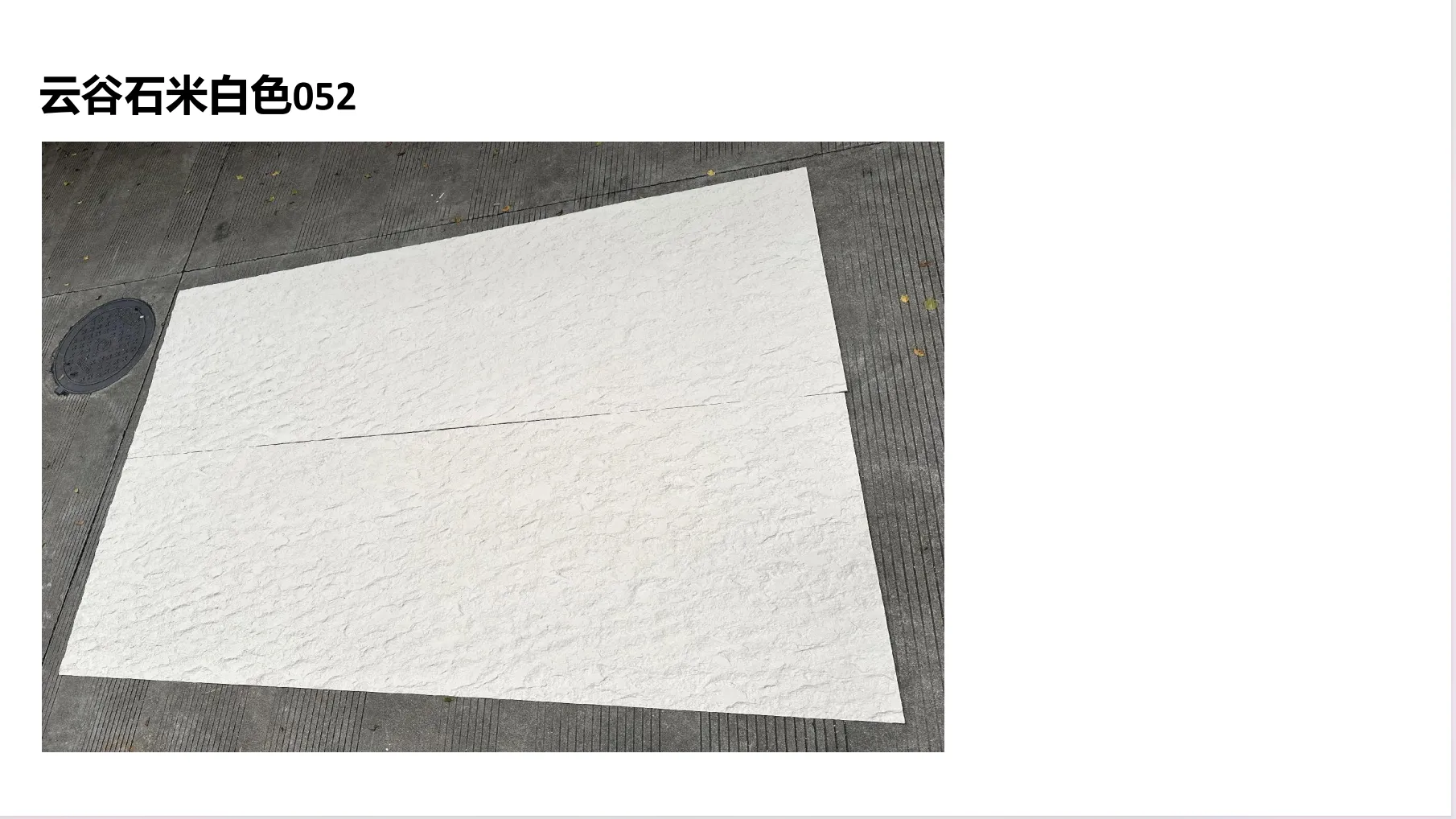
| Cloud Stone | Soft veining, diffused color, smooth yet textured surface; mimics sky and clouds. | Creates a sense of serenity and transcendence; ideal for walls, altars, and floors where light interaction is key. |
| MCM Flexible Stone | Lightweight, durable, and highly moldable; retains the look and feel of natural stone. | Perfect for intricate carvings, curved walls, or decorative elements (e.g., temple friezes, church reredos) where flexibility is needed without sacrificing authenticity. |
| Fair-Faced Concrete | Raw, unpolished finish with visible aggregates; industrial yet organic. | Adds a sense of humility and groundedness; pairs beautifully with cloud stone to balance ethereality with earthiness (e.g., monastery cloisters, modern chapels). |
| Travertine (Starry Blue) | Deep blue base with flecks of gold and silver, resembling a night sky; porous texture. | Evokes mystery and wonder; used in accent walls or prayer niches to create a focal point that draws the eye upward, toward the divine. |
| Lunar Peak Silvery | Metallic sheen with a cool, silvery-gray hue; smooth, reflective surface. | Enhances light reflection, creating a sense of spaciousness; ideal for ceilings or dome interiors, where it mimics moonlight or starlight. |
Nestled in the Himalayas, the Tashi Lhunpo Monastery's new meditation hall was designed to honor tradition while embracing modern materials. The hall's walls are lined with cloud stone, quarried locally, its pale gray surface streaked with white that mimics the snow-capped peaks outside. Above, the ceiling is clad in lunar peak silvery panels, their metallic sheen reflecting the soft light from skylights. When the sun rises, the cloud stone walls glow, and the lunar peak ceiling shimmers, creating the illusion of sitting beneath a sky filled with stars. Monks describe the space as "a cave of light"—a place where the boundary between the monastery and the mountain, between the body and the spirit, dissolves.
On the shores of the Mediterranean, a mosque stands as a testament to the beauty of contrast. Its main prayer hall features walls of cloud stone, their light color keeping the space cool in the hot sun. Behind the mihrab, the niche that indicates the direction of Mecca, is a panel of travertine (starry blue), its deep blue surface flecked with gold and silver like a night sky over the sea. As worshippers bow in prayer, their eyes are drawn to the starry blue panel, a reminder of Allah's vastness and the beauty of His creation. The cloud stone, with its soft veining, acts as a backdrop, allowing the starry blue to shine without overwhelming the space. It is a balance of calm and awe—a reflection of the mosque's role as a place of both peace and devotion.
In the heart of a bustling city, a synagogue seeks to be a sanctuary from the chaos outside. Its exterior is a bold statement: fair-faced concrete, rough and unyielding, a symbol of the Jewish people's resilience through history. Inside, however, the space is a revelation. The walls are cloud stone, their smooth surface and soft color creating a sense of warmth and intimacy. The ark, which holds the Torah, is made of cloud stone, its lid carved with a menorah in mcm flexible stone, the material's flexibility allowing for intricate detailing. The contrast between the harsh concrete exterior and the gentle cloud stone interior is intentional: it speaks to the synagogue's mission to be a "house of peace" (beit shalom) in a world often marked by strife. Worshippers say entering the space feels like "stepping from a storm into a quiet room"—a feeling made possible, in no small part, by the cloud stone that wraps around them.
Recommend Products












