
There's a quiet frustration many homeowners share: the basement. It starts with good intentions—"We'll finish it next year!"—but then reality hits. That musty smell that lingers no matter how many candles you burn. The water stains creeping up the walls after a heavy rain. The patch of greenish-black mold behind the old storage shelves. Basements are supposed to be extra living space, but too often, they become forgotten corners, avoided because of moisture, mold, and that persistent feeling that they're "less than" the rest of the house. But what if the solution wasn't just about waterproofing paint or dehumidifiers? What if the material itself could change everything?
Let's start with the basics: basements are tough environments. They're below ground, so they're cooler than the rest of the house, which means condensation loves to form on walls. Groundwater can seep through foundation cracks, and even the most well-sealed basement can't escape the humidity that rises from the soil. For decades, we've relied on materials that weren't designed for this battle. Drywall, for example, is the go-to for interior walls, but it's a sponge for moisture. Once it gets damp, it warps, swells, and becomes a feast for mold spores. Paint might cover the problem temporarily, but it's just a Band-Aid—sooner or later, the mold comes back, darker and more stubborn than before.
Traditional concrete blocks are durable, sure, but they're porous. Water soaks in, and without proper sealing, they become breeding grounds for mold. Even fair-faced concrete, with its sleek, industrial look, can't always stand up to the relentless moisture in a basement. It might resist water better than drywall, but over time, hairline cracks form, and that's all the moisture needs to start causing trouble. And let's not forget aesthetics—no one wants their dream basement to look like a cold, gray utility room.
Enter MS cement board—a material that's been quietly revolutionizing basement design for years, but still feels like a best-kept secret. Unlike drywall or even traditional cement boards, MS cement board is a modified composite material panel , engineered specifically to tackle the unique challenges of below-grade spaces. It's not just "water-resistant"—it's built to thrive where moisture is the norm, not the exception.
Let's break it down. At its core, MS cement board is a blend of Portland cement, fiberglass mesh, and polymer additives. That fiberglass mesh isn't just for show—it adds tensile strength, so the board won't crack or warp under pressure. The polymer additives? They make the material denser, closing off the tiny pores that let moisture seep into traditional concrete. The result? A board that laughs in the face of dampness. Unlike drywall, which turns soft and crumbly when wet, MS cement board stays rigid. And because it's inorganic, mold can't feed on it. Mold spores might land on the surface, but without organic material to grow on, they die off. That's not just a claim—independent lab tests show MS cement board resists mold growth even after 96 hours of continuous exposure to moisture.
But here's the kicker: it's not just functional—it's flexible. MS cement board comes in a range of thicknesses (from 6mm to 20mm) and can be cut, drilled, and shaped to fit any space. Want a curved wall for a cozy reading nook? No problem. Need to run electrical wires or plumbing through the walls? Just cut a channel, install the utilities, and patch with cement board adhesive. And unlike some building materials that leave a rough, unfinished edge, MS cement board cuts cleanly, so you get tight seams that are easy to seal.
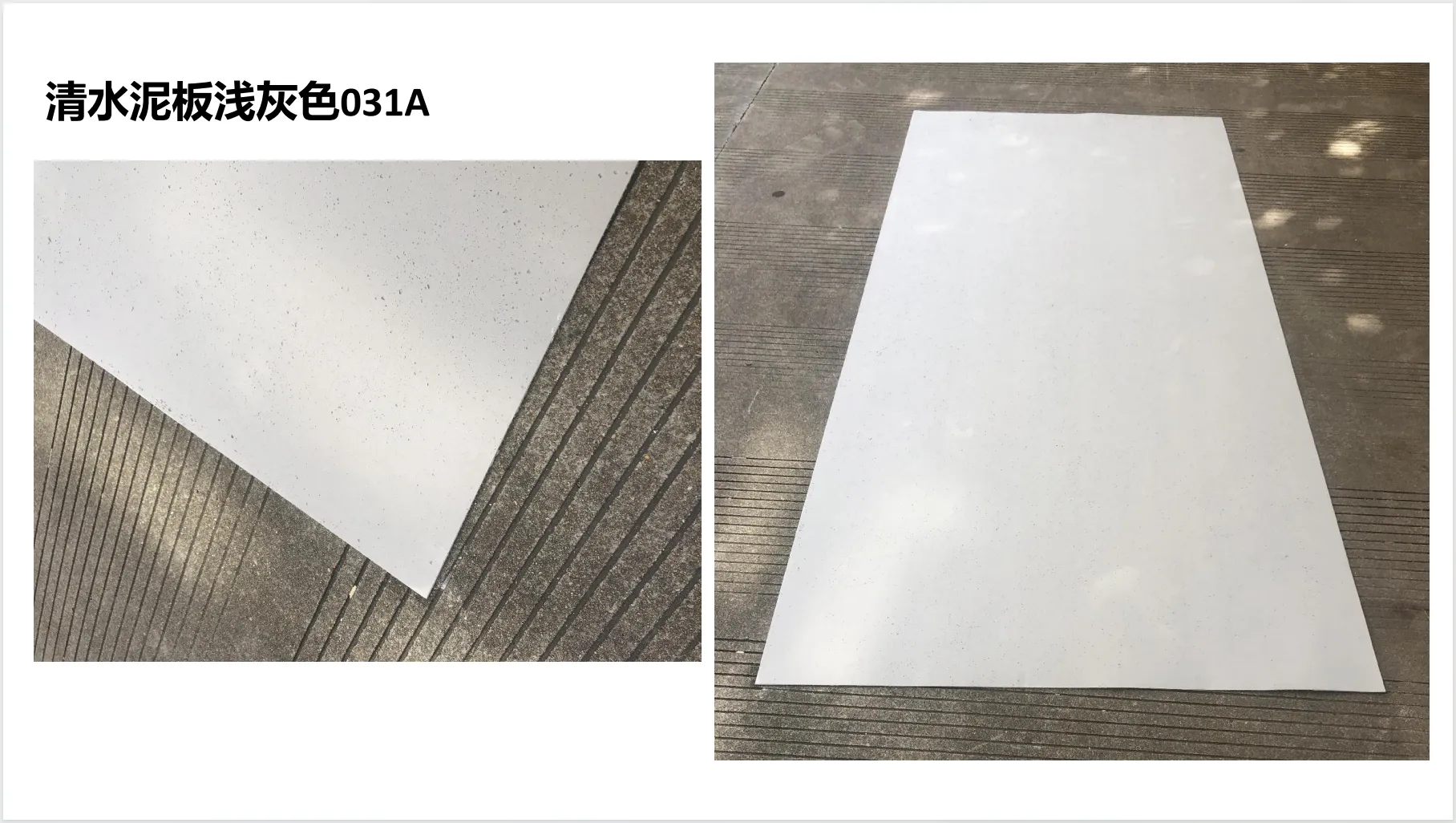
Let's talk about the "real photos" part—because what good is a mold-resistant wall if it looks like a prison cell? MS cement board surprises most people with its versatility. Sure, you can paint it any color (latex or acrylic paints work best), but that's just the start. Some manufacturers offer pre-finished options that mimic natural materials, from the warm texture of wood grain board to the earthy tones of travertine. Imagine a basement with walls that look like they're clad in rustic stone, but without the weight or water absorption of real stone. Or a sleek, modern space with smooth, white MS cement board walls that bounce light around, making the room feel larger and brighter.
Designers are getting creative, too. MS cement board can be textured with stamps to create patterns—think subtle waves, geometric grids, or even a faux brick finish. It can be left raw for an industrial vibe, pairing perfectly with metal accents and pendant lights. Or, for a softer look, add a layer of thin-set mortar and tile directly over it (yes, it's strong enough to support tile!). The possibilities feel endless, and that's before you even consider combining it with other materials like foamed aluminium alloy board for a mixed-media accent wall.
Still on the fence? Let's put MS cement board head-to-head with other common basement wall materials. The table below breaks down key factors like mold resistance, cost, and maintenance—so you can see exactly why more homeowners are making the switch.
| Material | Mold Resistance | Moisture Handling | Aesthetic Options | Installation Difficulty | Long-Term Maintenance | Cost (Per Sq Ft, Installed) |
|---|---|---|---|---|---|---|
| Drywall (with mold-resistant paint) | Poor—mold grows on paper backing when wet | Absorbs moisture; warps and swells | Limited—smooth surface, paint only | Easy (DIY-friendly) | High—repaint every 1–2 years; replace damaged panels | $2–$4 |
| Traditional Concrete Blocks | Fair—porous; mold grows in cracks | Absorbs water; requires frequent sealing | Basic—gray, industrial look; hard to finish | Difficult (requires masonry skills) | Medium—seal every 3–5 years; repair cracks | $8–$12 |
| Fair-Faced Concrete | Good—dense, but still porous | Resists water but can stain | Sleek, modern; limited color options | Very difficult (needs professional finishing) | Medium—seal annually; clean stains promptly | $10–$15 |
| MS Cement Board | Excellent—inorganic core resists mold growth | Waterproof; does not absorb or warp | High—paint, tile, texture, or faux finishes | Moderate (DIY possible with basic tools) | Low—occasional cleaning; no sealing required | $5–$8 |
Notice that MS cement board hits the sweet spot: better mold resistance than concrete, more affordable than fair-faced concrete, and infinitely more versatile than drywall. And while it's slightly more expensive upfront than drywall, consider this: the average homeowner spends $500–$1,000 every 3–5 years replacing moldy drywall. MS cement board? It's warrantied for 25 years, and many installers report it lasting decades with zero maintenance beyond an occasional wipe-down.
Numbers are great, but nothing beats seeing MS cement board in real basements. Let's dive into a few stories from homeowners who took the plunge—and never looked back.
Mark, a software developer in Chicago, needed a dedicated workspace away from his busy family. His basement was the only option, but it had a history of mold. "I'd tried everything—dehumidifiers, fans, even a sump pump. The walls still felt damp, and I didn't want to risk my expensive equipment near mold," he says. After researching options, he chose MS cement board in a smooth, light gray finish. "Installation took a weekend with a friend—we cut the boards with a circular saw, screwed them to the studs, and sealed the seams with waterproof caulk. Now, two years later, the walls are bone dry. I painted them with a warm white, added floating shelves, and it feels like a high-end office, not a basement. My can't believe it's the same space!"
For Maria and her two kids in Atlanta, the basement was supposed to be a playroom, but mold kept turning it into a no-go zone. "My youngest has asthma, so mold wasn't just gross—it was dangerous," she explains. "We installed MS cement board and chose a textured finish that looks like travertine (starry beige)—it hides fingerprints and scuffs, which is perfect with kids. Now the kids play down there daily, and I don't panic if a juice box spills on the floor. The walls wipe clean with a damp cloth, and there's zero mold. It's been a game-changer for our family."
Jim and Lisa wanted their basement to feel like a cozy cabin getaway, complete with a home theater and bar. They opted for MS cement board with a wood grain board texture, stained in a rich walnut color. "We were worried it would look fake, but the texture is so realistic—guests swear it's real wood until we tell them," Lisa laughs. "And unlike real wood, we don't have to worry about warping or termites. The basement stays cool in summer, warm in winter, and the wood-look walls make it feel so inviting. We spend more time down there than in the living room now!"
You're convinced—now what? Installing MS cement board isn't rocket science, but it does require a few key steps to get it right. Here's a quick guide to what you'll need (and what to avoid).
First, prep the walls: Remove any existing drywall or paneling, and inspect the studs for mold or rot. Treat any issues with a mold-killing solution before proceeding. Next, leave a 1/4-inch gap between the bottom of the boards and the floor—this prevents water from wicking up if there's a flood. Screw the boards to the studs every 8–12 inches along the edges and every 16 inches in the field (the middle of the board). Don't overdrive the screws—you want them flush with the surface, not sunken. Finally, seal all seams with waterproof caulk or mesh tape and thin-set mortar for extra protection.
Pro tip: If you're installing tile over MS cement board, use a latex-modified thin-set mortar—it bonds better than traditional mortar. And if you're painting, prime the board first with a masonry primer to ensure the paint adheres evenly.
At the end of the day, every basement is different. But if you're dealing with moisture, mold, or just want a low-maintenance, durable wall material that looks great, MS cement board is worth serious consideration. It's not just for "problem basements"—it's for anyone who wants their below-grade space to feel like an extension of their home, not an afterthought.
Think about it: Your basement has the potential to be more than storage or a forgotten room. It could be your home office, your kid's playroom, your man cave, or your family's new favorite hangout spot. With MS cement board, you're not just building walls—you're building a space that works for your life, today and for years to come. And isn't that what every homeowner wants?
Basements don't have to be damp, dark, or moldy. With MS cement board, you're choosing a material that's built to last, designed to look great, and engineered to handle whatever your basement throws at it. It's an investment in your home's value, your family's health, and your peace of mind. So why wait? Stop fighting mold and start designing the basement you've always wanted. MS cement board isn't just a solution—it's the start of something better.
Recommend Products












