
Every home has a story, but sometimes, that story starts to feel stuck—like a book with dog-eared pages and a cover that's lost its shine. For Mark and Lisa Bennett, that's exactly how their 1990s suburban home felt by 2023. Its exterior, once a point of pride, had devolved into a patchwork of faded fair-faced concrete, chipped paint, and a general sense of "meh." "We'd pull into the driveway after work and just… sigh," Lisa recalls. "It didn't feel like our home anymore. It felt like a house we were renting, not a place we'd raised our kids." That's when they decided: no more sighs. It was time for a makeover—one that would turn their tired exterior into something that made them smile before they even unlocked the door.
Let's set the scene: The Bennetts' home sits on a quiet cul-de-sac in Portland, Oregon, surrounded by maple trees and neighborly front yards. But while the landscaping had matured beautifully over the years, the house itself looked like it was stuck in a time warp. The original exterior was clad in fair-faced concrete—a popular choice in the '90s for its "modern industrial" vibe—but time had not been kind. Cracks spiderwebbed across the panels, stains from years of rain and mildew marred the gray surface, and the once-sleek lines had dulled into a monotonous blur.
"We tried everything to spruce it up," Mark says. "Power washing only revealed more discoloration. Painting? The concrete soaked it up unevenly, leaving splotchy patches. We even considered siding, but the thought of covering up the entire structure with something generic made us cringe. We wanted character, not conformity." The breaking point came during a summer barbecue when a friend joked, "Is this the house from The Amityville Horror ? It looks like it's frowning." Lisa laughs now, but at the time, it stung. "That's when we knew: this wasn't just about fixing cracks. It was about giving our home a personality again."
The "before" photos (which the Bennetts still joke about hiding from guests) tell the tale: a cool, almost clinical gray facade that clashed with the warm greens of the maple trees and the vibrant flowers Lisa loved planting. The concrete absorbed heat in the summer, making the porch uncomfortably hot, and in winter, it held onto moisture, leading to even more cracks. "It was functional, sure, but it had zero soul," Mark says. "We wanted something that felt alive—like it belonged in our neighborhood, not a warehouse district."
The search for a solution led the Bennetts to a local design studio, where they met with Sarah Chen, an exterior specialist with a knack for blending durability and beauty. "They walked in saying, 'We hate our house,'" Sarah remembers. "But after talking, it was clear they didn't hate the house—they hated how it made them feel. They wanted warmth, texture, and something that would age gracefully." Sarah's first suggestion? MCM flexible stone. "I'd worked with it on commercial projects, but residential clients often overlook it because they think 'flexible' means 'flimsy.' Not with MCM. It's a modified composite material that mimics natural stone but is lighter, easier to install, and way more durable than traditional options."
From Skepticism to "Yes, This Is It"
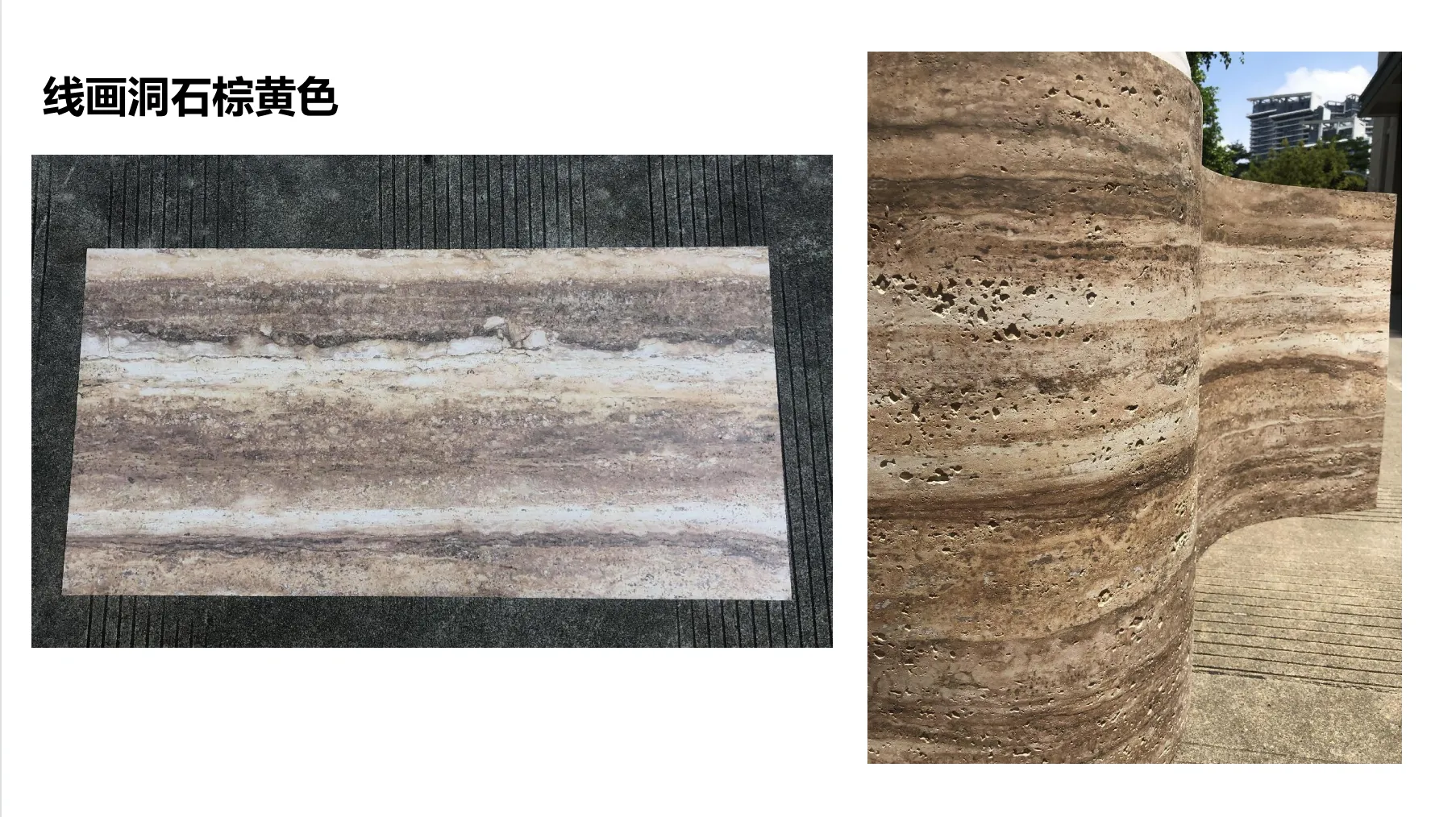
Mark, ever the engineer, was skeptical. "Natural stone is heavy, expensive, and hard to install. How could something 'flexible' compete?" Sarah brought samples: small panels of various MCM finishes, including large size linear travertine in claybank, travertine (starry blue), and dolomitic travertine (dark grey). "The moment Lisa ran her hand over the linear travertine sample, I saw her eyes light up," Sarah says. The claybank hue—a warm, earthy tone that shifted from soft terracotta to golden sand depending on the light—felt like a hug. "It matched the fall foliage, the bricks in our chimney, even the color of our front door," Lisa says. "And the texture? It wasn't flat like the concrete. It had depth—little ridges and valleys that looked like they'd been shaped by time, not a machine."
They toyed with bolder options, like the starry blue travertine ("Gorgeous, but maybe too much for a suburban home," Lisa admits) and dolomitic travertine ("Too moody for our sunny yard," Mark adds). Linear travertine (claybank) kept rising to the top. "It's versatile," Sarah explained. "It can lean rustic with the right landscaping or modern with sleek fixtures. And because it's large size—up to 4x8 feet panels—it minimizes seams, so the exterior looks cohesive, not patchy."
The Bennetts also loved that MCM flexible stone is eco-friendly. "Traditional stone mining is hard on the planet, and transporting heavy slabs leaves a huge carbon footprint," Mark notes. "MCM uses recycled materials, is lightweight (so less fuel for delivery), and. That mattered to us—we wanted to do right by our home and the environment."
The installation process began in early spring, when Portland's rain finally let up. The first step? Tearing off the old fair-faced concrete. "Watching the crew peel those panels away felt like shedding a heavy coat," Lisa says. "It was messy, but there was something cathartic about it." Underneath, the structure was sound—a relief—and the team prepped the surface with a primer to ensure the MCM panels would adhere properly.
Then came the linear travertine (claybank) panels. "I was nervous they'd look fake," Mark admits. "But when the first panel went up, I shut up fast." The large size panels meant fewer cuts and seams, creating a smooth, flowing look across the front of the house. The installers, veterans of stone and siding projects, were impressed too. "We usually struggle with natural stone because it's so brittle," one crew member told the Bennetts. "This stuff bends a little, so we can fit it around corners without chipping. It's a game-changer."
Over two weeks, the house transformed. The west-facing wall, which had baked in the sun for decades, now wore the claybank travertine like a well-tailored suit. The texture caught the light, creating shadows that made the house look taller, more dynamic. "At sunset, it glows," Lisa says. "Not in a gaudy way—in a 'sit on the porch with a glass of wine and watch the day end' way." They added subtle accents: a strip of travertine (starry blue) around the front door to tie in the blue of their shutters, and black metal light fixtures that popped against the warm claybank.
The reveal day was emotional. "We'd been staying with my parents during the install, so when we drove up, we had no idea what to expect," Mark says. "Lisa grabbed my arm and said, 'Is that… our house?'" The fair-faced concrete was gone, replaced by a facade that looked like it had been there for a century—worn in the best way, full of character, but fresh and strong. The linear travertine's texture invited touch; neighbors walking by would pause to run their hands over it, commenting on how "real" it felt.
"I used to avoid having people over because I was embarrassed by the exterior. Now? I host book club, neighborhood potlucks, even my sister's baby shower—all on the front porch. The house doesn't just look good; it makes people want to linger." — Lisa Bennett
Practical perks emerged too. The MCM flexible stone was cooler to the touch than the concrete, making the porch usable even on hot days. It repelled rain, so no more mildew stains. And maintenance? "We hose it down once a season," Mark says. "No power washing, no painting, no patching. It's like the house finally started taking care of us , instead of the other way around."
The Bennetts' neighbors took notice. "Our next-door neighbor, who's lived here 30 years, said, 'You've single-handedly raised property values on the block,'" Mark laughs. "We didn't do it for the resale value, but it's a nice bonus. More importantly, we did it for ourselves. This house is where our kids learned to ride bikes, where we celebrated birthdays, where we weathered tough times. Now, it looks like a place that holds those memories—warm, lived-in, and full of love."
| Feature | Before (Fair-Faced Concrete) | After (Large Size Linear Travertine – Claybank) |
|---|---|---|
| Color & Vibe | Dull gray, cold, industrial. Clashed with landscaping. | Warm claybank, earthy, inviting. Blends with trees, flowers, and neighborhood character. |
| Texture | Flat, smooth, no depth. Felt lifeless. | Natural travertine ridges and valleys. Creates shadows and dimension; invites touch. |
| Durability | Prone to cracks, moisture damage, and staining. | MCM flexible stone resists cracks, repels water, and withstands temperature extremes. |
| Maintenance | Monthly power washing, annual painting/patching. Time-consuming and costly. | Quarterly hose-down. No painting, sealing, or repairs needed. |
| Emotional Impact | Embarrassment, apathy, "this isn't my home." | Pride, joy, "I love coming home." A space that connects with family and community. |
For homeowners considering an exterior makeover, the Bennetts' story offers clear lessons. MCM flexible stone isn't just a trend—it's a solution for those who want the beauty of natural stone without the hassle. Large size linear travertine, in particular, is a standout choice for its versatility: it works on modern homes, craftsman styles, even cottages. The claybank hue, with its earthy warmth, appeals to a wide range of tastes, while options like travertine (starry blue) or dolomitic travertine (dark grey) cater to bolder design visions.
"It's not just about the material—it's about how it makes you feel," Sarah Chen says. "Homes are emotional spaces. When your exterior reflects who you are, every time you pull into the driveway, you're reminded of why you chose this place. The Bennetts didn't just renovate their house—they reconnected with it."
As for Mark and Lisa? They're already planning their next project: the backyard patio, using the same linear travertine (claybank) to create a seamless flow from exterior to outdoor living space. "Why mess with perfection?" Lisa says, grinning. "This house finally feels like it's ours. And honestly? It was worth every penny."
Recommend Products












