
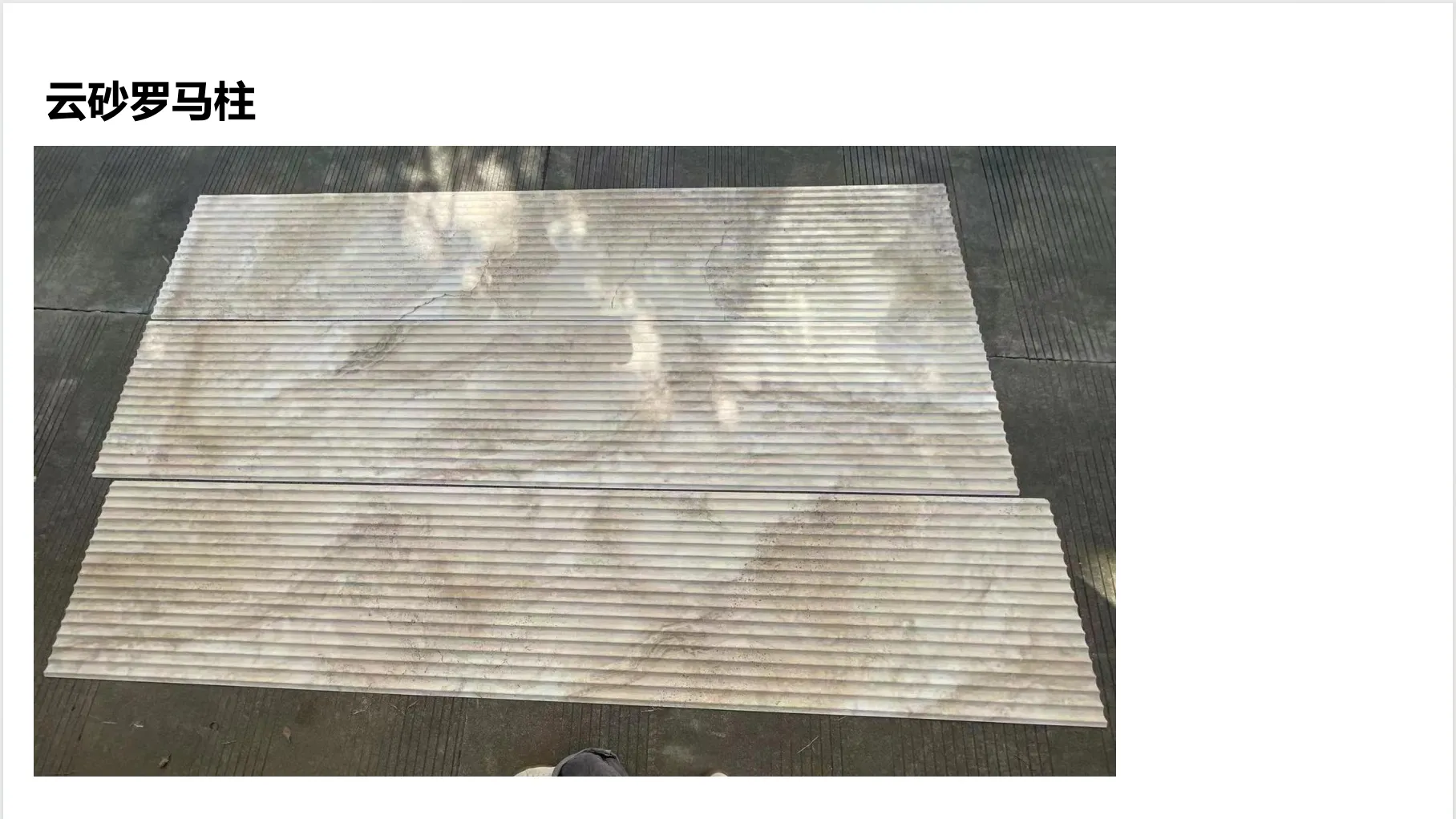
There's something almost magical about the first impression a home makes. Picture this: you're driving through a neighborhood, and one house stops you in your tracks. It's not just the landscaping or the paint color—though those help. It's the way the entryway stands tall, anchored by elegant, timeless pillars that seem to whisper, "This home is cared for, and it has character." That's curb appeal in action, and in 2025, homeowners are leaning into details that turn "nice house" into "unforgettable home." And if there's one element that's stealing the spotlight in residential exterior design right now, it's the marble pillar—especially when paired with the right complementary materials. Today, we're diving into what real photos of these pillars reveal, how they enhance curb appeal, and why materials like travertine (beige), fair-faced concrete, and wood grain board are the perfect sidekicks to make your home's exterior shine.
Before we get into the beauty of marble pillars, let's talk about why curb appeal is worth investing in. It's not just about impressing the neighbors (though that's a nice bonus). Studies show that a well-designed exterior can boost your home's value by up to 7%, according to the National Association of Realtors. But beyond dollars and cents, it's about pride. Your home is an extension of you—your style, your taste, the things that make you feel "at home." When you pull into the driveway and see a space that feels intentional and inviting, it sets a positive tone for everything that happens inside.
And here's the thing: curb appeal isn't just about big, expensive overhauls. Sometimes, it's the smaller, strategic choices that make the biggest impact. That's where marble pillars come in. They're not just structural—they're a statement. A "welcome home" that feels both grand and personal. But don't just take my word for it. Let's look at what real photos of residential marble pillars can teach us about design, texture, and the art of creating an exterior that turns heads.
Marble has been a symbol of luxury for centuries—think ancient Greek temples, Renaissance palaces, and stately manors. But in today's homes, it's not about being "old-fashioned." Modern marble pillars blend that timeless elegance with contemporary sensibilities, making them perfect for everything from sleek, minimalist houses to cozy, cottage-style homes. And real photos? They're the key to seeing how versatile marble can be.
Take, for example, a real photo of a mid-century modern home in Portland. The exterior is clad in warm, earthy tones, with large windows that let in natural light. Flanking the front door are two marble pillars—sleek, unadorned, with a honed (matte) finish that softens their look. The marble here isn't (pure white) but a creamy off-white with subtle gray veining, which ties into the home's neutral color palette. The photo captures how the pillars ground the entryway, making it feel both open and secure. There's no excess ornamentation—just clean lines and the natural beauty of the stone. It's a masterclass in "less is more," proving that marble doesn't have to be ostentatious to make an impact.
Then there's the colonial-style home in upstate New York, featured in a popular home design magazine. Its exterior is painted a soft sage green, with black shutters and a classic gabled roof. The marble pillars here are more traditional—fluted (with vertical grooves) and topped with simple capitals. The marble is a bright white with bold, dramatic gray veins, which pops against the green siding. In the real photo, the morning sunlight hits the pillars, making the veins glow and creating shadows that add depth. It's a look that feels both historic and fresh, showing how marble can honor tradition while still feeling relevant today.
What these real photos have in common is texture. Marble isn't a flat, one-note material. Its veining, its finish (polished vs. honed), even the way it ages—all of these details add character. A polished marble pillar will reflect light, making your entryway feel brighter and more spacious. A honed finish, on the other hand, has a softer, more matte look that's perfect for homes with a rustic or organic vibe. Real photos capture these nuances, helping you visualize how a particular marble style will look on your home, in your neighborhood, under your local sunlight.
Marble pillars are stunning on their own, but they truly shine when paired with other materials that complement their beauty. Think of it like a puzzle: each piece (marble, siding, roofing, landscaping) needs to fit together to create a cohesive picture. Real photos often highlight these pairings, showing us which materials work best with marble to enhance curb appeal. Let's break down a few standout options, including some from the keyword list that are trending in 2025.
If marble brings elegance, travertine (beige) brings warmth. This porous, earthy stone has a soft, matte finish and subtle variations in color—think creamy beiges, light browns, and the occasional hint of gold. In real photos, it's often used as siding or as a base for marble pillars, creating a layered look that feels grounded and inviting.
Take the example of a California ranch-style home I came across online. The exterior features travertine (beige) siding, with large, rectangular panels that have a slightly rough texture. At the entryway, two marble pillars (honed, with soft gray veining) stand tall, their smooth surface contrasting beautifully with the travertine's more organic feel. The real photo captures the way the beige travertine warms up the marble, preventing the entryway from feeling too cold or formal. It's a combination that says, "This is a home where luxury meets comfort."
For homeowners who lean into modern design, fair-faced concrete is a game-changer. Also known as "architectural concrete," it's left in its natural state—no paint, no stucco—showcasing the material's raw, industrial beauty. When paired with marble pillars, it creates a striking contrast between rough and refined.
A real photo of a minimalist home in Austin, Texas, illustrates this perfectly. The exterior is almost entirely fair-faced concrete—smooth, gray, with visible aggregate (small stones mixed into the concrete) that adds subtle texture. The front door is a sleek black, and on either side are two marble pillars: polished, pure white with thin, delicate gray veins. In the photo, the concrete's cool, industrial vibe is balanced by the marble's soft elegance, creating a look that's both edgy and sophisticated. It's proof that modern design doesn't have to feel cold—marble adds just the right touch of warmth.
There's something inherently cozy about wood, and wood grain board (a durable, low-maintenance alternative to real wood) lets you bring that warmth to your exterior without the upkeep. When paired with marble pillars, it adds a natural, organic layer that softens the stone's formality.
I recently saw a real photo of a mountain home in Colorado that nailed this combination. The lower half of the exterior is clad in wood grain board—rich, warm brown with visible grain patterns that mimic real cedar. The upper half is painted a soft off-white, and the entryway features two marble pillars with a honed finish and warm beige undertones (yes, marble comes in beige too!). The photo captures how the wood grain board grounds the home in its natural surroundings, while the marble pillars add a touch of luxury. It's a look that says, "Welcome to a cabin that feels like a retreat—but with a little extra elegance."
For homeowners who want to push the boundaries of modern design, lunar peak silvery is a standout choice. This material has a cool, metallic sheen—think polished silver with subtle gray undertones—and a smooth, almost reflective finish. In real photos, it's often used as an accent (like a trim or a feature wall) alongside marble pillars, creating a look that feels sleek and futuristic.
Take the example of a contemporary home in Miami. The exterior is mostly glass and steel, with lunar peak silvery panels wrapping around the second floor. At the entryway, two marble pillars (polished, pure white with bold black veins) stand like sentinels, their bright white color popping against the silvery lunar peak. The real photo shows how the combination of marble and lunar peak silvery creates a high-end, almost cinematic look—perfect for a home that wants to make a bold statement.
To help you visualize how these materials stack up, here's a quick comparison based on real photo observations:
| Material | Aesthetic Vibe | Best For Home Styles | Maintenance Level |
|---|---|---|---|
| Marble Pillars | Elegant, timeless, versatile | Traditional, modern, colonial, minimalist | Moderate (needs sealing every 1-2 years) |
| Travertine (Beige) | Warm, earthy, organic | Ranch, Mediterranean, Tuscan | Moderate (porous, needs regular sealing) |
| Fair-Faced Concrete | Raw, industrial, minimalist | Modern, contemporary, industrial | Low (resistant to weather, easy to clean) |
| Wood Grain Board | Warm, natural, cozy | Cabin, mountain, craftsman | Low (resistant to rot and pests, no painting needed) |
| Lunar Peak Silvery | Sleek, metallic, futuristic | Contemporary, high-tech, luxury modern | Low (resistant to corrosion, easy to wipe clean) |
Now that we've explored materials, let's talk about how to design with marble pillars to maximize curb appeal. Real photos are a goldmine of inspiration—here are some tips I've gleaned from looking at hundreds of them:
Marble pillars should be proportional to your home. A small cottage with massive, fluted pillars will look top-heavy; a large mansion with tiny, thin pillars will feel underwhelming. Real photos often show that the best designs use pillars that complement the home's height and width. For example, a two-story home might have taller pillars (8-10 feet), while a one-story home could opt for shorter ones (6-7 feet). And don't forget about thickness—wider pillars (24-30 inches in diameter) feel more grand, while slimmer ones (18-24 inches) feel more modern.
Marble's veining and texture come alive with the right lighting. Real photos often show homes with uplights at the base of marble pillars, which cast a warm glow upward, highlighting the stone's natural patterns. For a more dramatic effect, some homeowners add sconces to the pillars themselves—think sleek, modern fixtures that complement the marble's elegance. Even simple string lights wrapped around the pillars can add a cozy, festive touch (perfect for holidays or summer evenings).
Your marble pillars shouldn't exist in a vacuum—landscaping can enhance their beauty by framing them. In real photos, I've seen everything from small, neat shrubs (like boxwood) planted at the base of pillars to climbing vines (like ivy or jasmine) that add a romantic, overgrown feel. For a modern look, try low, geometric planters with succulents or ornamental grasses. The key is to keep the landscaping simple enough that it doesn't distract from the pillars—but not so sparse that the entryway feels bare.
Marble comes in a range of colors, from pure white to deep gray to even beige. When choosing your pillars, consider your home's exterior color palette. In real photos, homes with warm-colored siding (like beige, terracotta, or soft yellow) often pair well with marble that has beige or gold undertones. Homes with cool-colored siding (like gray, blue, or green) tend to look best with marble that has gray or silver veins. And if you're feeling bold? Contrast is your friend. A black or dark gray home with bright white marble pillars (like the Miami example I mentioned earlier) makes a stunning statement.
To really drive home how marble pillars can transform a home's exterior, let's walk through a before-and-after example. I found this case study on a home improvement blog, and the real photos are jaw-dropping.
Before: The home was a 1980s split-level with beige vinyl siding, a plain wooden door, and small, unremarkable columns (more like posts, really) flanking the entryway. The landscaping was overgrown, with weeds creeping up the walkway. In the before photo, the home blends into the neighborhood—nice enough, but forgettable.
After: The transformation is dramatic. The vinyl siding was replaced with travertine (beige) panels, which add texture and warmth. The wooden door was swapped for a sleek black one with glass inserts. And the old posts? They were replaced with two stunning marble pillars—honed, with soft gray veining and a height of 8 feet. To complement the pillars, the homeowners added lunar peak silvery trim around the windows and a fair-faced concrete walkway. The landscaping was cleaned up, with boxwood shrubs planted at the base of the pillars and a few ornamental grasses along the walkway.
The real after photo is striking. The marble pillars anchor the entryway, making it feel grand and welcoming. The travertine siding warms up the space, while the lunar peak silvery trim adds a modern touch. It's a perfect example of how strategic material choices—led by marble pillars—can turn a forgettable home into one that stands out for all the right reasons.
Marble is durable, but it's not indestructible. To keep your pillars looking their best, a little maintenance goes a long way. Here's what real photos of well-maintained (and not-so-well-maintained) pillars teach us:
Curb appeal is about more than just a pretty exterior—it's about creating a home that feels like yours . Marble pillars, with their timeless elegance and versatility, are a powerful tool in that quest. Whether you pair them with travertine (beige) for warmth, fair-faced concrete for modern edge, wood grain board for coziness, or lunar peak silvery for futuristic flair, they have the power to transform your home's first impression from "nice" to "unforgettable."
And remember: real photos are your best friend. They show you how materials look in different lights, how they pair with other elements, and how they age over time. So take the time to browse photos, save your favorites, and let them inspire your own design. After all, your home deserves to be the one that makes people slow down, smile, and think, "Wow—what a beautiful place to call home."
So go ahead—dream big. Your marble pillars are waiting to make that first impression count.
Recommend Products












