

There's something almost magical about stepping into a garden that feels like an extension of your home—a space where the rustle of leaves, the scent of soil, and the solid warmth of stone come together to whisper, "You belong here." Landscaping, I've always thought, isn't just about planting flowers or trimming hedges. It's about crafting a story—one where nature and human intention dance in harmony. And if there's a material that knows how to tell that story with quiet confidence, it's rough granite stone (medium grey). Not too flashy, not too cold, but with a texture that feels like a handshake from the earth itself, this stone has a way of turning ordinary yards into places that hold memories: morning coffees on a stone patio, kids chasing fireflies along a granite path, or quiet evenings where the only sound is rain tapping on its surface while greenery sways gently beside it. Today, let's talk about how to weave this humble yet extraordinary material into your residential landscape, pairing it with greenery to create a space that's as durable as it is deeply, wonderfully alive.
Before we dive into the "how," let's pause to appreciate the "why." Rough granite stone (medium grey) isn't just another hardscape material—it's a partner in creating atmosphere. I remember visiting my aunt's house as a child, where her backyard was split by a winding path made of similar grey stone. The edges were slightly chipped, as if the earth had gently worn them down over the years, and between the stones, tiny clover and moss had staked their claim. Back then, I didn't know to call it "rough granite" or "medium grey"—I just knew it felt right . It was sturdy enough for me to jump on (much to my aunt's chagrin) but soft enough in color to let the surrounding hostas and hydrangeas take center stage. That's the magic of this stone: it doesn't demand attention; it frames it.
Let's start with texture. Unlike polished marble or smooth concrete, rough granite (medium grey) has a surface that tells a story of time. Run your hand over it, and you'll feel the grooves left by geological forces, the tiny pits where minerals once sat, the subtle variations in tone that make each slab unique. It's a texture that invites touch—a quality that turns a patio into a place where you'll actually sit, rather than just admire from afar. In a world that often feels too sleek, too perfect, that roughness is grounding. It reminds us that beauty doesn't have to be flawless; sometimes, it's the "imperfections" that make a space feel human.
Then there's the color. Medium grey is a chameleon in the best way. It softens in the morning light, taking on warm, silvery undertones that complement the dewy greens of early-blooming perennials. In the afternoon sun, it deepens, providing a rich backdrop for the bright pops of coneflowers or the golden glow of ornamental grasses. And at dusk? It fades gently into the twilight, letting the soft glow of string lights or lanterns take over, while the surrounding greenery—ferns, boxwood, or the feathery plumes of pampas grass—adds depth. Unlike stark black stone, which can feel harsh, or pale limestone, which might wash out in bright sun, medium grey granite strikes that elusive balance: it's neutral without being boring, versatile without losing personality.
Durability, too, can't be overstated. As a homeowner, the last thing you want is to invest in a landscaping feature that cracks, fades, or erodes after a few seasons. Rough granite stone laughs in the face of weather: it stands up to freezing winters, scorching summers, and even the occasional downpour without losing its integrity. I've seen granite paths in New England that have survived decades of snowplows and ice, still looking as solid as the day they were laid. That longevity means your landscape won't just be beautiful this year—it'll be beautiful for the years your kids grow up in, for the family barbecues, for the quiet moments that make a house a home.
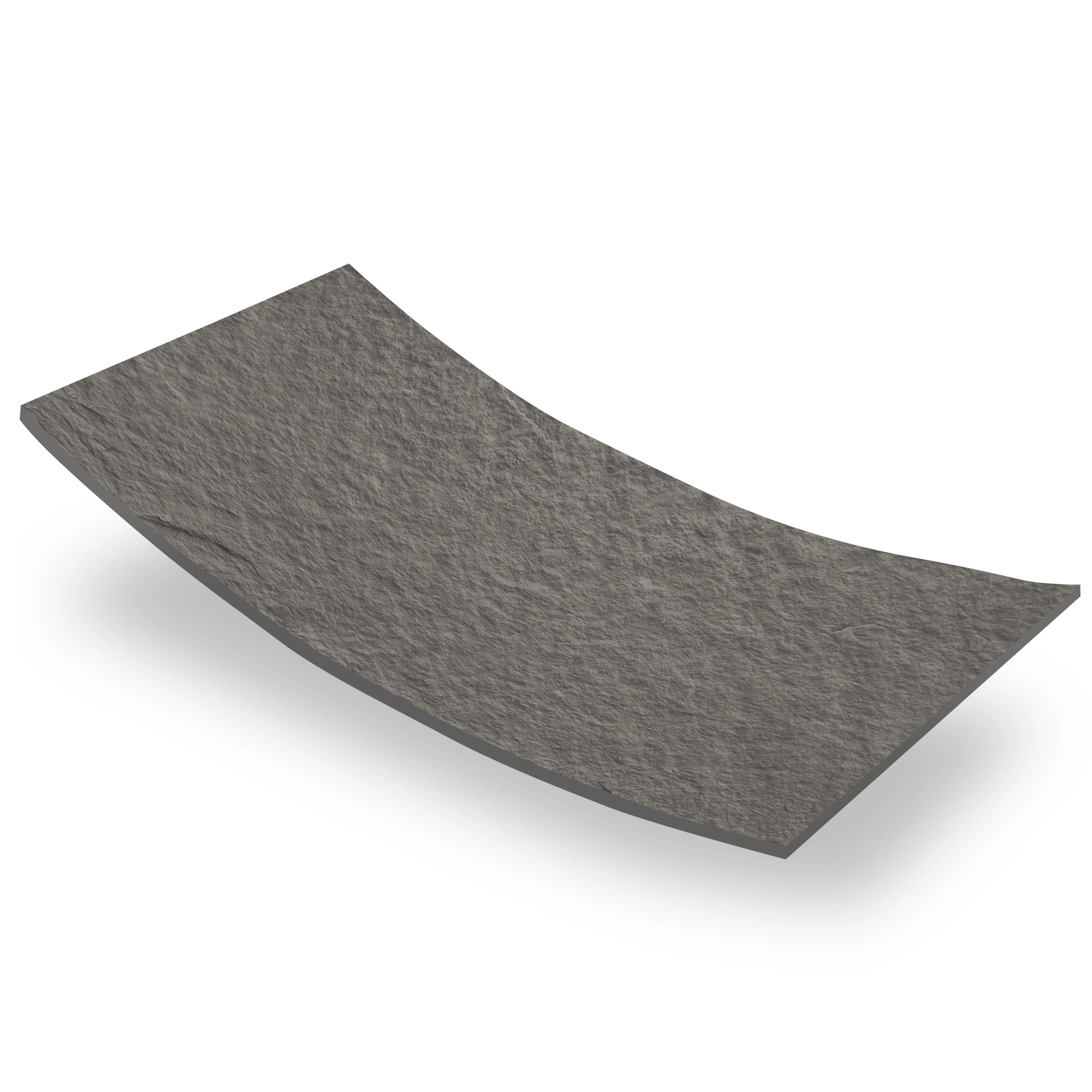
Integrating rough granite stone (medium grey) with greenery isn't about throwing a few stones on the ground and planting a bush nearby—it's about creating a conversation between two elements that speak different languages but share the same goal: to make your outdoor space feel alive. Over the years, I've noticed that the most successful landscapes are those where the hardscape (stone, wood, concrete) and softscape (plants, flowers, trees) don't compete—they collaborate . Here are a few principles to guide that collaboration, drawn from years of watching gardens grow (and yes, making my fair share of mistakes along the way).
Think of your landscape as a scale: on one side, the weight of stone; on the other, the lightness of greenery. Too much stone, and the space feels cold, like a construction site. Too much greenery, and it can feel unanchored, like a jungle that's swallowed your yard. The sweet spot? Aim for roughly 60-70% softscape to 30-40% hardscape in most residential gardens, though this can shift depending on your space. For example, a small urban backyard might lean more on hardscape (like a granite patio) to maximize usable area, balanced by vertical greenery (climbing vines, hanging planters) and potted plants. A larger suburban yard, meanwhile, could use granite pathways and retaining walls to define zones, with plenty of lawn, flower beds, and shrubs filling the gaps.
I once worked with a couple who wanted a "cozy but not cramped" backyard. They'd fallen in love with rough granite (medium grey) and wanted to use it everywhere—paths, a patio, even a fire pit. But when we sketched it out, the stone dominated, leaving little room for the hostas and hydrangeas they adored. We adjusted: narrowed the path from 4 feet to 3, scaled back the patio to fit a small dining set instead of a full outdoor kitchen, and added a low granite retaining wall along one edge to frame a flower bed. The result? The stone felt intentional, not overwhelming, and the greenery had room to breathe. They later told me their favorite part was sitting on the patio, where the granite's coolness underfoot was offset by the warmth of the sun on the flowers. Balance, it turns out, isn't just about numbers—it's about how the space feels when you're in it.
Medium grey granite is a neutral, but that doesn't mean it pairs with just any green. The key is to think about the undertones in both the stone and the plants. Medium grey often has subtle hints of taupe, blue, or even green—hold a slab up to the light, and you might notice flecks of quartz or feldspar that catch the sun. These undertones can either clash or harmonize with your plants. For example, if your granite has warm taupe undertones, it will sing alongside the earthy greens of ornamental grasses (like fountain grass or miscanthus) and the soft yellows of black-eyed Susans. If there are cool blue-grey hints, try pairing it with silvery-green plants like lamb's ear or Russian sage, or deep greens like boxwood and holly.
And don't forget about pops of color! Grey is the perfect backdrop for bold blooms. Imagine a granite pathway lined with red salvia, or a patio bordered by purple coneflowers—those bright hues will pop like paint on a canvas, making the stone feel even more grounded by comparison. I visited a garden once where the homeowner had planted orange daylilies along a granite retaining wall. The contrast was striking, but not jarring—the warm orange played off the stone's taupe undertones, creating a space that felt energetic yet calm. "It's like adding spices to a stew," she told me. "A little goes a long way, but it makes everything taste better."
One of the easiest ways to make your landscape feel dynamic is to play with texture. Rough granite stone (medium grey) has a bold, tactile surface—so why not pair it with plants that offer the opposite? Think soft, feathery ferns spilling over a granite step, or smooth, round river rocks (interspersed with the granite) alongside spiky agave. The contrast creates visual interest, drawing the eye across the space and making it feel layered and rich.
I have a friend with a tiny front yard who used this trick brilliantly. She laid rough granite stepping stones (medium grey) from the sidewalk to her porch, spacing them so that moss and creeping thyme could grow between them. The granite's roughness was offset by the thyme's tiny, soft leaves and the moss's velvety texture. When you walked on the path, your feet felt the stone's solidity, but your eyes were drawn to the delicate greenery peeking through the cracks. It was like walking on a path made of stories—each stone a chapter, each plant a sentence. Texture, in that case, wasn't just about looks; it was about engaging all the senses.
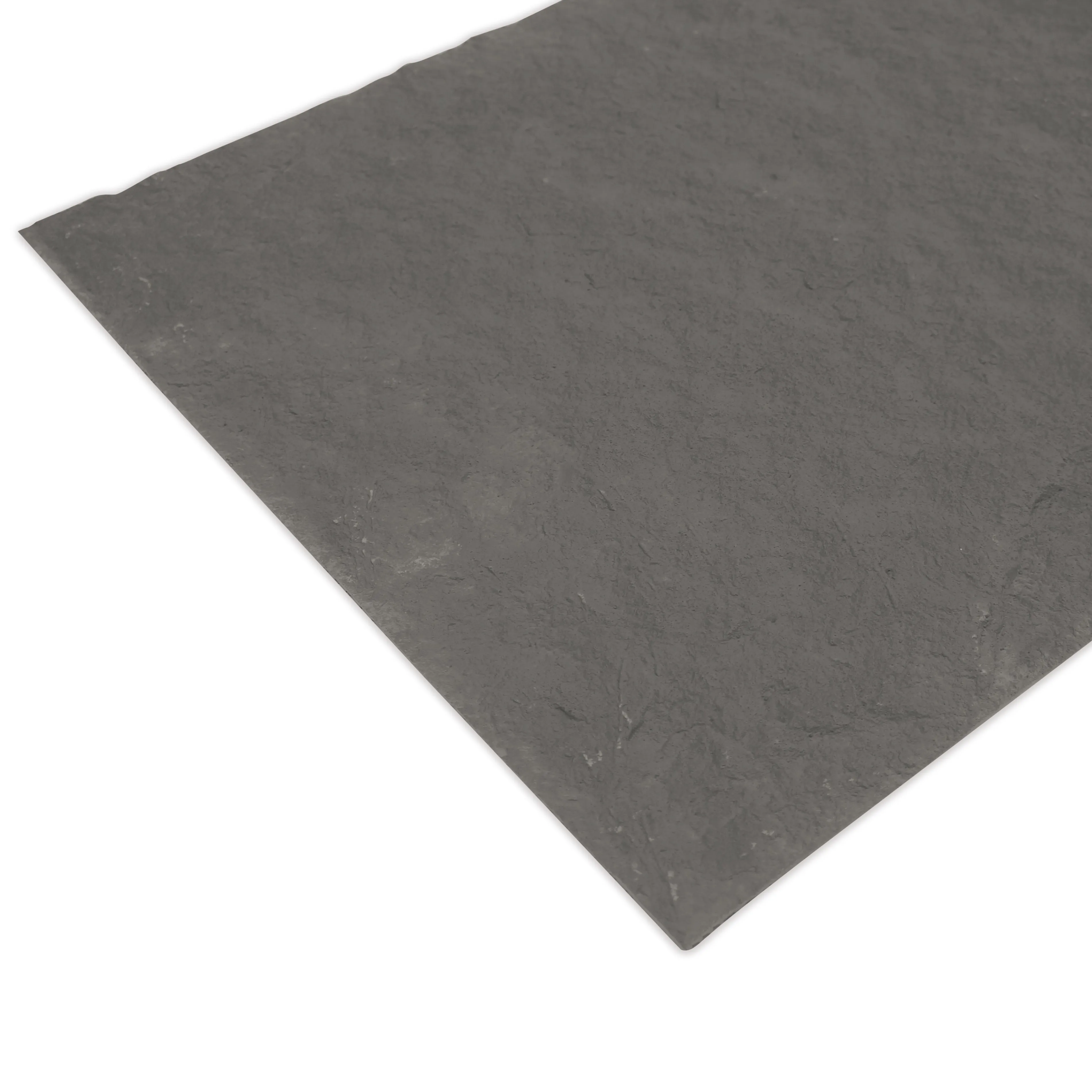
Now that we've talked about the "why" and "how" of design principles, let's get into the nitty-gritty: what can you actually build with rough granite (medium grey) in your yard? The beauty of this stone is its versatility—it works as a star feature or a supporting player. Here are a few ideas, from simple to more ambitious, to spark your creativity.
A granite pathway is more than just a way to get from the driveway to the door—it's a narrative device. It says, "This way to something wonderful." Rough granite (medium grey) is ideal for paths because its uneven surface provides traction (no slipping in the rain!), and its natural color won't fade or stain easily. For a casual look, use irregularly shaped slabs (called "flagstone") set in a bed of gravel or sand, with space between them for grass or groundcover to grow. This "wilderness path" feel is perfect for gardens that aim for a relaxed, cottage-style vibe. For a more polished look, use rectangular or square cut stones laid in a pattern (like herringbone or running bond), with mortar or polymeric sand between the joints to keep weeds at bay.
When planning your path, think about its width. A main path (from driveway to door) should be at least 3 feet wide to accommodate two people walking side by side. A secondary path (to the garden, or around the house) can be narrower—2 feet is enough for one person. And don't make it perfectly straight! Curves slow people down, encouraging them to notice the greenery along the way. I once designed a path that curved around a mature oak tree, with granite slabs placed to "flow" with the tree's roots. The result? People would often pause mid-walk to admire the tree, or stoop to pick a flower from the bed beside the path. A straight path gets you where you're going; a curved one makes the journey feel worth taking.
If your yard has slopes or uneven terrain, a retaining wall isn't just practical—it's a design opportunity. Rough granite (medium grey) retaining walls are sturdy enough to hold back soil, but they also add depth and height to your landscape. A low wall (1-2 feet tall) can frame a flower bed or define a patio; a taller wall (3-4 feet) can create a terraced garden, turning a steep slope into usable space for planting or seating.
The key to a beautiful retaining wall is to make it look like it's always been there. Avoid perfectly uniform stones—mix sizes and shapes to mimic how stone might naturally pile up in nature. Use larger, heavier stones at the base for stability, and smaller ones near the top. And leave gaps between the stones (called "weep holes") to allow water to drain, preventing pressure from building up behind the wall. For extra charm, plant trailing plants (like ivy or creeping jenny) at the top of the wall, so they spill over the edges, softening the stone's ruggedness.
I visited a home in the hills where the backyard sloped sharply down to a creek. The homeowners had built a series of low granite retaining walls, creating three terraced levels: a upper level with a patio, a middle level with vegetable beds, and a lower level with native shrubs. The walls were built with rough granite (medium grey), and between the stones, they'd planted ferns and astilbe, which thrived in the shade of the trees. From the patio, you could look down and see the terraces stepping down to the water, the grey stone blending with the greenery and the blue of the creek. It was functional (preventing erosion) and breathtakingly beautiful—a reminder that even practical features can tell a story.
You don't need a full path or wall to incorporate rough granite (medium grey) into your landscape. Small accent features can add character and tie the space together. A granite bench, for example, becomes a quiet spot to read or watch the kids play, while a birdbath carved from a single granite slab adds a focal point to a flower bed. Even something as simple as a few granite stepping stones in a lawn can create a "secret garden" vibe, inviting people to wander off the main path.
One of my favorite accent ideas is a granite fire pit. There's something primal about gathering around a fire, and rough granite (medium grey) makes the perfect ring to contain the flames. Pair it with Adirondack chairs and a few potted plants (like succulents or ornamental grasses) for a cozy outdoor living room. I helped a family build one in their backyard, and they later told me it had become the heart of their home—summer nights roasting marshmallows, fall evenings sipping cider, even winter mornings bundled up by the fire with hot cocoa. The granite, they said, made it feel permanent, like a legacy they could pass down to their kids. "It's not just a fire pit," the dad told me. "It's where we make memories."
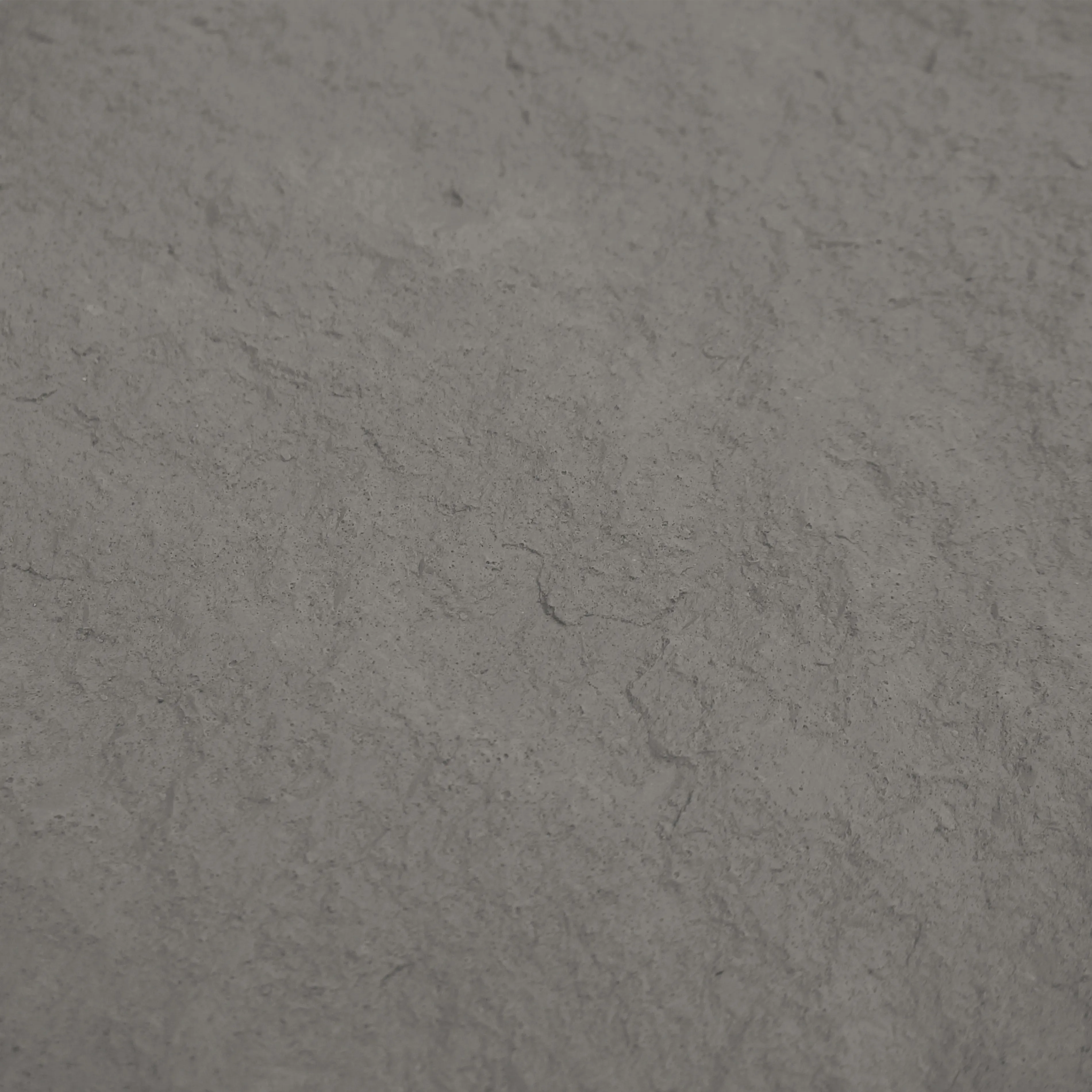
While rough granite stone (medium grey) shines on its own, it also plays well with other materials—adding depth and variety to your landscape. Below is a comparison of how it pairs with some popular landscaping materials, from warm wood grain board to sleek fair-faced concrete.
| Material | Style & Texture | How It Pairs with Rough Granite (Medium Grey) | Best Uses in Landscaping |
|---|---|---|---|
| Wood Grain Board | Warm, organic, with visible wood knots and grain lines | Creates a "rustic modern" vibe—granite's cool grey balances wood's warmth. Use wood for a deck or fence, and granite for steps or a patio border. | Deck steps (granite treads, wood risers), patio borders (wood edging, granite slabs), garden benches (wood seat, granite legs) |
| Stream Limestone (Claybank) | Soft, earthy beige with smooth, water-worn edges | Adds a softer contrast to granite's ruggedness. Claybank limestone complements medium grey's taupe undertones, creating a natural, desert-inspired look. | Mixed stone pathways (granite and limestone slabs), retaining walls (granite base, limestone top layer), dry creek beds (limestone pebbles, granite boulders) |
| Fair-Faced Concrete | Sleek, modern, with a smooth or lightly textured finish | For a contemporary landscape: concrete patio with granite accent strips, or a concrete fire pit ringed with granite stones. The contrast of smooth concrete and rough granite adds visual interest. | Modern patio (concrete slab, granite inlays), outdoor kitchen countertops (concrete surface, granite backsplash), minimalistic pathways (concrete with granite stepping stones) |
| Bamboo Mat Board | Natural, lightweight, with a woven texture | Adds an exotic, tropical flair. Bamboo's light color and fine texture contrast beautifully with granite's heaviness. Use bamboo for screening or shade, and granite for hardscaping. | Privacy screens (bamboo mat panels), pergola roofs (bamboo slats), patio flooring (granite slabs with bamboo furniture) |
| Slate Veil White | Bright, clean white with subtle grey veining | Creates a high-contrast, elegant look. White slate pops against medium grey granite, perfect for a formal garden or entryway. | Entryway steps (granite risers, slate treads), fountain surrounds (slate basin, granite coping), flower bed edging (slate tiles, granite borders) |
One of my favorite combinations is granite and wood grain board. I worked with a family who wanted a "cabin in the city" feel—they lived in a townhouse with a small backyard but craved the coziness of a mountain retreat. We built a wooden deck (using wood grain board for durability) and added granite steps leading down to a small lawn. The deck's warm brown tones played off the granite's cool grey, and we planted evergreen shrubs and ferns around the edges to soften the transition. They now use the deck for morning coffee and the lawn for their dog to play—proof that even small spaces can feel like a getaway when materials are paired thoughtfully.
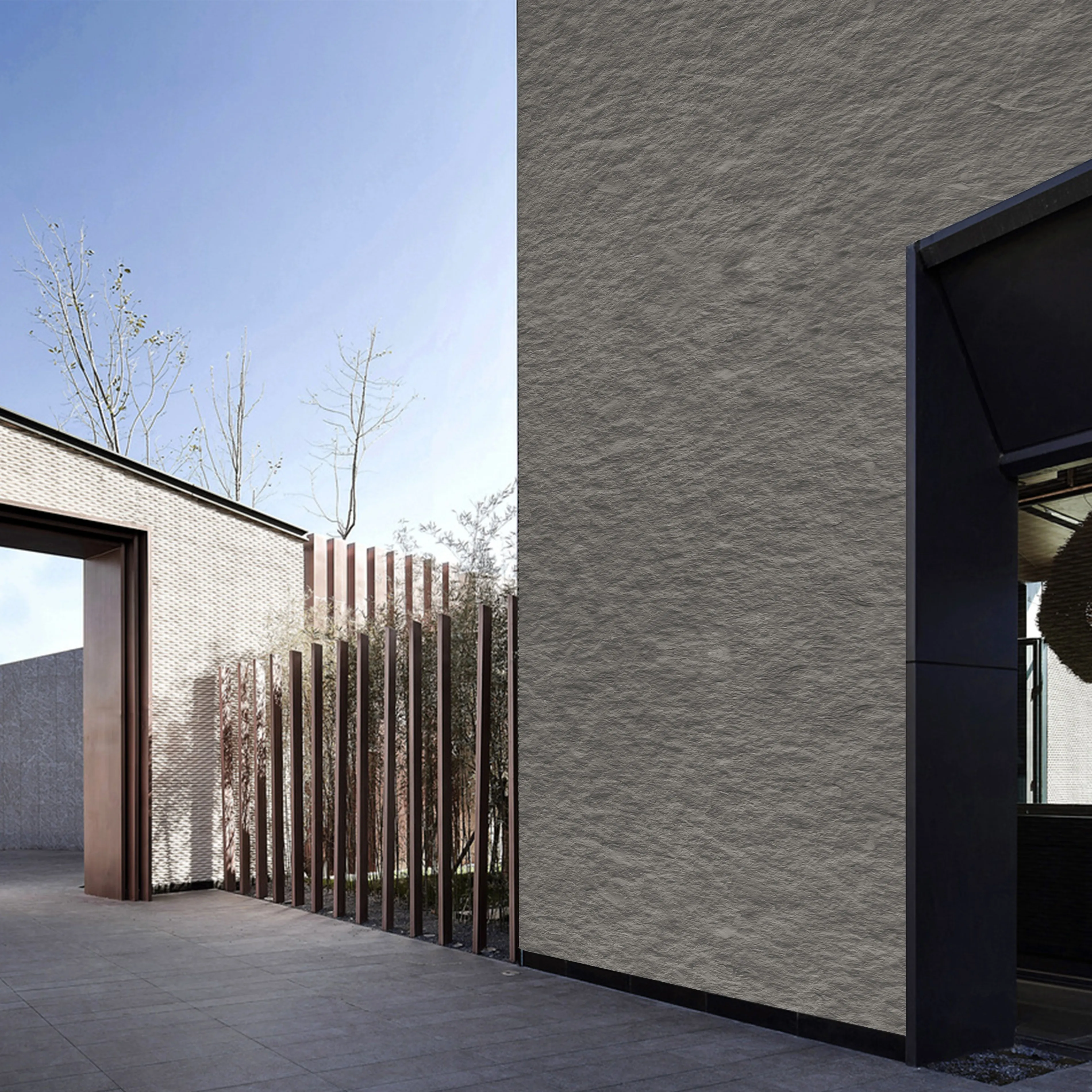
Sometimes, the best inspiration comes from seeing how others have done it. Below are two real-world examples of residential landscapes that integrate rough granite stone (medium grey) with greenery—each with its own style and story.
The Johnsons, a family of four in suburban Chicago, wanted a backyard that was "kid-friendly but not chaotic"—a space where their two young children could play, and they could host the occasional barbecue. Their yard had a gentle slope, which they wanted to use to create separate zones: a play area, a dining area, and a quiet seating nook.
We started with the dining area: a 12x10 foot patio made of rough granite (medium grey) slabs, laid in a running bond pattern. The slabs were spaced ½ inch apart, with polymeric sand between them to prevent weeds. Around the patio, we built a low granite retaining wall (18 inches tall) to level the slope, creating a flat area for the table and chairs. Behind the wall, we planted a mix of perennials: hostas, daylilies, and coneflowers, which would come up year after year with minimal maintenance.
A granite pathway led from the patio to the play area—a small lawn bordered by a bamboo mat board fence (for privacy) and dotted with granite stepping stones. The kids loved jumping from stone to stone, and the bamboo fence kept balls from rolling into the neighbor's yard. Finally, the quiet nook: a corner of the yard shaded by a maple tree, with a granite bench and a birdbath. We planted ferns and astilbe (shade-loving plants) around the bench, and added a few potted impatiens for color.
The Johnsons moved in six months ago, and they're already hooked. "The granite patio is where we eat dinner almost every night," Mrs. Johnson told me. "The kids play on the lawn, and when they're in bed, my husband and I sit on the bench and listen to the birds. It's like having a little piece of nature right outside our back door." The key, she said, was how the granite tied everything together—the patio, the path, the bench—while the greenery made it feel soft and inviting. "It's not just a yard anymore," she said. "It's our happy place."
Mr. and Mrs. Patel live in a row house in Philadelphia, with a tiny backyard (just 15x20 feet) and no direct sunlight. They wanted to turn it into a "calm, peaceful retreat" where they could unwind after work, despite the small size and shade.
We focused on vertical space and low-light plants, with rough granite (medium grey) as the foundation. The entire yard was paved with granite flagstone (irregularly shaped slabs) set in a bed of gravel, which allowed water to drain (important in the city, where runoff can be an issue). Along one wall, we installed a wooden trellis (paired with granite post bases) and planted climbing hydrangeas, which thrive in shade and would eventually cover the trellis, adding greenery without taking up floor space.
In the center of the yard, we created a small "garden island": a raised bed (lined with granite blocks) filled with shade-loving plants like hostas, ferns, and bleeding hearts. A granite birdbath sat in the middle of the bed, and we added solar-powered string lights above the yard, strung between the house and the trellis. Finally, we placed a small bistro set (two chairs, a table) in the corner, with a granite side table for drinks.
"We were worried the yard would feel cramped with all that stone," Mr. Patel admitted. "But it's the opposite—it feels open and calm. The granite is cool underfoot on hot days, and the greenery makes it feel like a little forest. We sit out here every night, even in winter (with blankets!), and just breathe. It's our escape from the city."
A landscape is a living, breathing thing—and like any partnership, it needs care to thrive. Fortunately, rough granite stone (medium grey) is low-maintenance, and with a little attention, your greenery will flourish alongside it. Here's how to keep both happy.
Granite is one of the most durable stones, but it's not entirely maintenance-free. Here are a few tips to keep it looking its best:
The plants around your granite will need care, too—and their needs will vary depending on the type. Here are some general tips:
Remember, the goal isn't perfection. A few weeds, a slightly overgrown shrub, or a chipped stone—these are the marks of a landscape that's lived in . My grandmother used to say, "A garden should look like it's been loved, not fussed over." I think the same applies to landscaping. A little imperfection makes it real, and real spaces are the ones that feel like home.
Landscaping with rough granite stone (medium grey) and greenery isn't just about building hardscape and planting softscape—it's about creating a space that reflects who you are. It's about the way the morning sun hits the granite patio, turning it silver; the way your kids' laughter echoes off the retaining wall as they chase butterflies; the way you and your partner sit on the stone bench at night, watching the stars come out while the grass sways gently beside you.
Medium grey granite is more than a material. It's a canvas for your story—a solid, steady presence that will weather storms and seasons, just like your home. And the greenery? It's the heart of that story, growing and changing, reminding you that life is full of beauty and growth. Together, they create something greater than the sum of their parts: a landscape that doesn't just look good, but feels good. A landscape that says, "This is where I belong."
So go ahead—dream big. Sketch that path, plant those flowers, lay that stone. And when you're done, step back and breathe it in. The rough granite underfoot, the greenery all around—this is more than a yard. It's your legacy, one stone and one leaf at a time.
Recommend Products












