
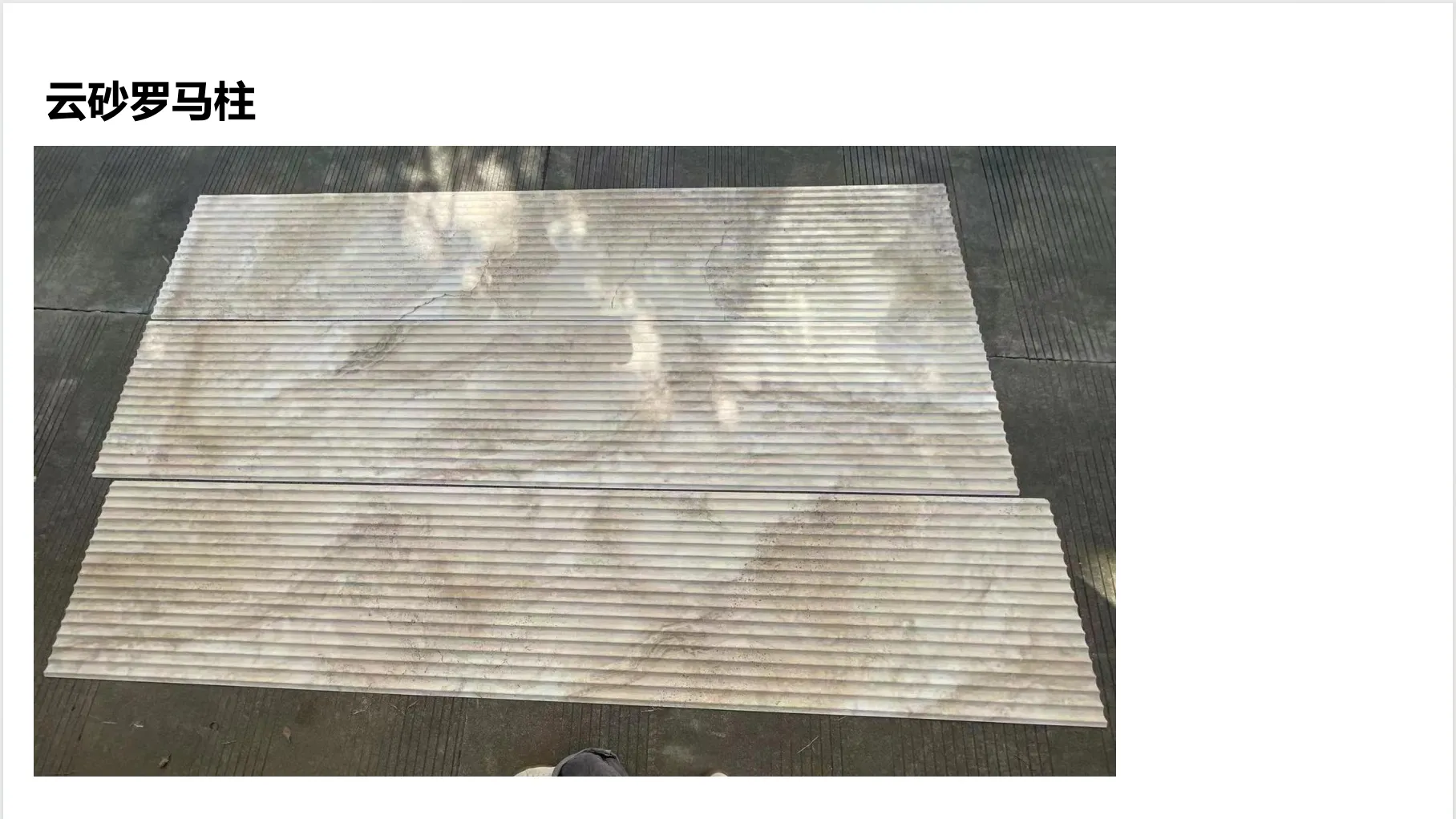
Marble pillars have long been synonymous with grandeur—think ancient temples, stately manors, and opulent palaces. But in today's homes, they're not just relics of the past; they're versatile design elements that bridge classic elegance with modern sensibilities. Whether you're building a new home or renovating an existing space, a marble pillar can serve as a focal point, a structural anchor, or a subtle nod to timeless beauty. In this article, we'll explore how to incorporate marble pillars into your home interiors, pairing them with complementary materials like wood grain board and fair-faced concrete, and even adding playful accents with travertine in starry blue. Let's dive into design ideas that feel both personal and inspiring.
Before we get into styling, let's talk about what makes marble pillars so special. Marble is a natural stone, formed over millennia from limestone subjected to heat and pressure. Each slab has unique veining—swirls of white, gray, beige, or even gold—that tells a story of the earth's history. When carved into a pillar, this stone becomes more than a material; it becomes a conversation piece. But marble pillars aren't just for show. They can be load-bearing, supporting ceilings or upper floors, or purely decorative, adding height and drama to a room without structural purpose.
Take, for example, a small urban apartment. A slim, minimalist marble pillar in the living room can divide the space between the seating area and the dining nook without closing it off. Its smooth surface reflects light, making the room feel larger, while its vertical presence adds architectural interest. In a spacious countryside home, a pair of ornately carved marble pillars flanking a fireplace can evoke old-world charm, turning a cozy living room into a space that feels both grand and welcoming.
Marble pillars can shine in every corner of the home, from the entryway to the bedroom. Let's break down ideas for specific spaces, keeping in mind how to balance marble's elegance with everyday livability.
Your foyer is the first space guests see, and a marble pillar here sets the tone for the rest of the home. Imagine a single, floor-to-ceiling marble pillar in the center of a small foyer, its base wrapped in a thin band of brass for a touch of luxury. The walls, painted a soft off-white, let the pillar's veining take center stage. Above, a pendant light with a warm glow casts shadows on the marble, emphasizing its texture. For a larger foyer, flanking the front door with two marble pillars (one on each side) creates a sense of arrival, like stepping into a boutique hotel or a historic villa.
If your foyer leads into an open-concept living area, extend the marble theme subtly. Use marble for the floor tiles near the pillar, then transition to wood grain board flooring in the living room. The contrast between the cool marble and the warm wood grain board feels intentional but not forced, guiding the eye from the entry to the heart of the home.
In the living room, a marble pillar can anchor the space around your seating arrangement. Picture this: a low-profile sofa in a neutral linen, paired with armchairs upholstered in a soft gray fabric. Behind them, a marble pillar stands tall, its surface polished to a high sheen. To the left of the pillar, a built-in bookshelf with wood grain board shelves adds warmth, while the right side features a floor-to-ceiling window draped in sheer curtains. The natural light streams in, making the marble's veining dance—one moment it looks like ripples in a pond, the next like brushstrokes on a painting.
For a more bohemian vibe, wrap the base of the marble pillar in macramé or woven rope, adding texture and a handmade touch. Pair this with a jute rug, potted plants, and throw pillows in earthy tones, and suddenly the marble pillar feels less formal and more approachable. It's a reminder that elegance doesn't have to mean stuffy—sometimes, it's about mixing high and low, old and new.
Dining rooms are made for making memories, and a marble pillar can elevate even the simplest meal. Imagine a rectangular dining table with a wooden top and metal legs, surrounded by upholstered chairs. At one end of the table, a marble pillar stands, its height just below the ceiling. Above, a chandelier with crystal accents hangs low, casting light on both the table and the pillar. When you host dinner parties, the pillar becomes a backdrop for conversations, its veining sparking comments like, "Is that real marble?" or "I love how it catches the light."
If your dining room is open to the kitchen, use the marble pillar to define the two spaces. The kitchen side could feature fair-faced concrete countertops, a material that's raw and industrial, while the dining side leans into the marble's sophistication. The contrast works because both materials are neutral—they don't compete, but rather complement each other. Fair-faced concrete's matte finish softens the marble's shine, creating a balance that feels modern and grounded.
Bathrooms often get overlooked when it comes to design, but a marble pillar here can turn a functional space into a spa-like retreat. Picture a master bathroom with a freestanding soaking tub positioned near a marble pillar. The pillar is slightly shorter than the ceiling, with a niche carved into its side to hold candles and bath salts. The walls are clad in subway tiles, while the floor features small, hexagonal mosaic tiles in a light gray hue. When you draw a bath, the steam fogs the marble pillar slightly, making its veining look softer, more ethereal—like something out of a dream.
For a more practical approach, use MCM flexible stone as a backsplash around the vanity, which sits adjacent to the marble pillar. MCM flexible stone is a game-changer for bathrooms: it's water-resistant, easy to clean, and comes in a variety of textures. Choose a shade that complements the marble—maybe a soft beige or a light gray—and suddenly the space feels cohesive. The marble pillar adds luxury, while the MCM flexible stone adds durability—perfect for a room that sees daily use.
Marble is a star, but even stars need supporting actors. The right complementary materials can make your marble pillar stand out while enhancing the overall mood of the room. Let's explore a few favorites.
Wood grain board is like a hug for your home—it adds warmth, texture, and a connection to nature. When paired with marble, it softens the stone's coolness, creating a space that feels both elegant and inviting. Use wood grain board for wainscoting, ceiling beams, or even a feature wall near your marble pillar. For example, in a bedroom with a marble pillar in the corner, line the opposite wall with wood grain board paneling painted white. The contrast between the white wood and the marble's gray veining is crisp and clean, while the wood's texture adds depth.
Pro tip: Opt for reclaimed wood grain board if you want to add character. The knots, nail holes, and weathered edges tell a story, making your space feel lived-in and unique. Pair it with a marble pillar that has more pronounced veining, and you've got a combination that's equal parts rustic and refined.
If modern minimalism is your vibe, look no further than fair-faced concrete. This material—raw, unpolished, and full of character—complements marble's elegance by adding an industrial edge. Imagine a living room with fair-faced concrete walls, a concrete floor, and a single marble pillar in the center. The pillar's smooth, shiny surface contrasts with the concrete's rough, matte texture, creating a space that's bold yet balanced. Add a leather sofa, a metal coffee table, and a few abstract paintings, and you've got a room that feels like a New York loft with a touch of old-world charm.
Fair-faced concrete is also surprisingly versatile. Use it for a fireplace surround near your marble pillar, or as a countertop in the kitchen. Its neutral color (think soft grays and beiges) means it pairs well with any marble shade, from classic white and gray to more exotic hues like green or pink.
MCM flexible stone is a material that's all about adaptability. Made from natural stone particles bonded with a flexible backing, it can be cut to fit any shape, making it ideal for tight spaces or curved surfaces. When paired with a marble pillar, it's a practical yet stylish choice. For example, in a home office with a marble pillar near the desk, use MCM flexible stone as a desktop. Its thin profile won't overwhelm the space, and its durability means it can handle daily use—laptop, coffee mugs, and all.
MCM flexible stone also comes in a range of finishes, from matte to glossy, and colors that mimic everything from travertine to slate. Try using it as a backsplash in the kitchen, adjacent to your marble pillar, or as a decorative panel in the hallway. It's a material that works hard so your marble pillar can shine—literally and figuratively.
Marble pillars often come in neutral tones, which makes them easy to style, but that doesn't mean you can't have fun with color. Enter travertine in starry blue—a stone that looks like someone sprinkled stardust into the earth. This unique material features a deep blue base with flecks of silver and gold, like a night sky reflected in water. When used as an accent near a marble pillar, it adds depth and whimsy, turning a plain room into something magical.
How to use it? Try a small accent wall near your marble pillar in the living room. Paint the rest of the walls a soft white, then clad one section in starry blue travertine tiles. The marble pillar, with its gray and white veining, stands in front, and suddenly the room feels like a gallery—one wall is a canvas of stars, the other a sculpture of stone. Add a few gold accessories, like a floor lamp or picture frames, to pick up the flecks in the travertine, and you've got a space that's both sophisticated and playful.
In the bathroom, use starry blue travertine for the shower walls, with a marble pillar separating the shower from the rest of the space. The steam from the shower will make the travertine's colors pop, while the marble pillar adds a touch of luxury. It's like having a private oasis—one where you can relax and pretend you're bathing under the stars.
Seal it right: Marble is porous, so it's prone to staining. Invest in a high-quality sealant and reapply it every 6–12 months, depending on use. This will protect your pillar from spills, water damage, and everyday wear and tear.
Light it up: Lighting can make or break a marble pillar. Use ambient lighting (like recessed ceiling lights) to wash the pillar in a soft glow, or spotlights to highlight specific veining patterns. Avoid harsh, direct light, which can make the stone look flat.
Scale matters: A massive marble pillar in a tiny room will feel overwhelming, while a skinny pillar in a large space might get lost. Measure your room carefully and choose a pillar size that complements the scale of the space. When in doubt, go slightly smaller—you can always add decorative elements to make it feel more substantial.
Embrace imperfection: Marble is a natural stone, which means it may have small cracks, pits, or variations in color. These aren't flaws—they're what make your pillar unique. Learn to love them, and your space will feel more authentic and alive.
Marble pillars are more than just design elements—they're storytellers. They carry the weight of history (quite literally, if they're load-bearing) while creating new memories in your home. Whether you pair yours with wood grain board for warmth, fair-faced concrete for edge, or starry blue travertine for whimsy, the key is to make it reflect who you are. After all, the best homes aren't just beautiful—they're personal.
So go ahead: dream big. Let your marble pillar be a symbol of elegance, a canvas for creativity, or simply a quiet presence that makes you smile every time you walk by. With the right design choices and a little imagination, it will become the heart of your home—a piece of stone that feels like family.
Recommend Products












