
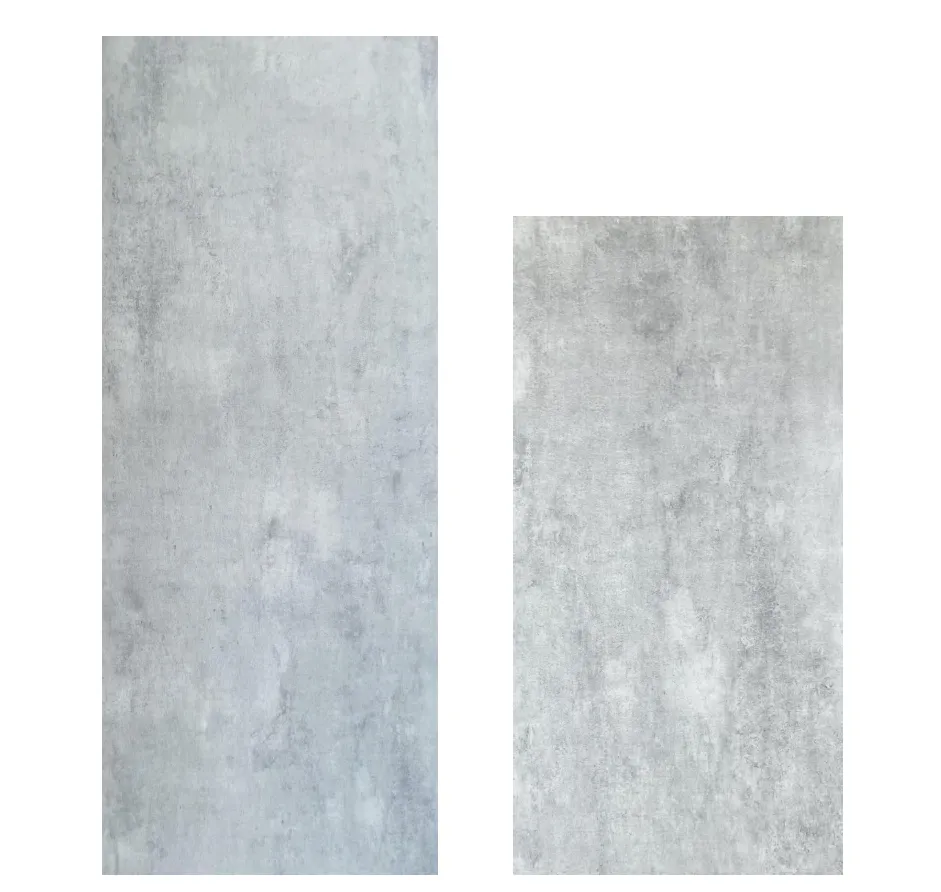
Renovating your home is more than just a project—it's about creating a space that feels uniquely yours, where every corner reflects your style and every material stands the test of time. But let's be honest: beauty often comes with a price tag. Traditional marble, for example, has long been the gold standard for elegance, but its cost and high maintenance can leave homeowners feeling stuck between their dream aesthetic and a realistic budget. Enter Marble Concrete Board —a game-changer that marries the timeless allure of natural stone with the practicality of modern engineering. In this guide, we'll explore why this innovative material is becoming the go-to choice for residential upgrades, how it pairs with other versatile options like Wood Grain Board and Travertine (Starry Green) , and why it might just be the key to transforming your space without breaking the bank.
At first glance, you might mistake Marble Concrete Board for polished natural marble. Its surface boasts the same subtle veining, soft luminosity, and organic texture that makes marble a favorite among designers. But here's the twist: unlike traditional marble, which is quarried from stone and prone to cracks, stains, and high costs, Marble Concrete Board is an engineered material. It's crafted by blending high-strength concrete with natural marble aggregates and advanced binders, resulting in a product that's lighter, more durable, and significantly more affordable than its natural counterpart.
For homeowners, this means the luxury of marble-like aesthetics without the luxury price tag. Whether you're updating a kitchen backsplash, revamping a bathroom shower wall, or adding an accent wall to your living room, Marble Concrete Board offers the kind of versatility that makes design dreams achievable. And it's not just about looks—this material is built to last. Resistant to scratches, stains, and moisture, it holds up to the chaos of daily life: kids' sticky fingers, pet paws, even the occasional spilled glass of red wine. Unlike natural marble, which requires regular sealing and delicate cleaning, Marble Concrete Board is low-maintenance, making it ideal for busy households.
One of the most exciting things about Marble Concrete Board is its ability to play well with others. It's not a one-trick pony—instead, it acts as a neutral canvas that can be paired with a variety of textures and colors to create a space that feels uniquely yours. Let's explore a few design combinations that bring out the best in Marble Concrete Board:
There's something inherently inviting about the pairing of stone and wood. Wood Grain Board , with its rich, tactile texture and warm tones, complements the cool elegance of Marble Concrete Board perfectly. Imagine a kitchen where Marble Concrete Board covers the countertops, its light veining echoing the natural grain of Wood Grain Board cabinet doors. Or a dining room where a Marble Concrete Board accent wall serves as the backdrop for a wooden dining table and chairs. The contrast of smooth stone and rough-hewn wood creates a balanced, cozy atmosphere that feels both sophisticated and lived-in.
For a more contemporary look, add a touch of metallic glamour with Lunar Peak Silvery . This sleek, silvery stone has a subtle shimmer that catches the light, making it the perfect accent for Marble Concrete Board. Use Lunar Peak Silvery as a border around a Marble Concrete Board fireplace, or as a backsplash insert in a kitchen with Marble Concrete Board countertops. The combination of soft marble veining and cool silver creates a space that feels modern and luxurious, without veering into flashy territory.
If you're craving something truly unique, consider incorporating Travertine (Starry Green) into your design. This eye-catching stone features a deep green base dotted with tiny, iridescent flecks that resemble stars in the night sky. Pair it with Marble Concrete Board in a bathroom: use Marble Concrete Board for the shower walls and Travertine (Starry Green) for the floor or a niche. The result? A space that feels like a private oasis, where every glance downward reveals a "starry sky" beneath your feet. It's a bold choice, but one that pays off in personality and visual interest.
Let's talk numbers—because at the end of the day, renovation budgets matter. Marble Concrete Board isn't just beautiful; it's also smart economics. To put it in perspective, traditional marble can cost anywhere from $50 to $200 per square foot, depending on the type and sourcing. Marble Concrete Board, on the other hand, typically ranges from $20 to $50 per square foot—a fraction of the cost. But the savings don't stop at the initial purchase. Let's break down the long-term benefits:
| Material | Avg. Cost per sq ft | Lifespan | Annual Maintenance Cost | Best For |
|---|---|---|---|---|
| Marble Concrete Board | $20–$50 | 20–30 years | $10–$20 (occasional cleaning) | Kitchens, bathrooms, accent walls |
| Traditional Marble | $50–$200 | 15–20 years (with proper care) | $100–$200 (sealing, polishing, stain removal) | Low-traffic areas (formal living rooms, foyers) |
| Fair-Faced Concrete | $15–$30 | 25–30 years | $30–$50 (sealing, crack repair) | Industrial, minimalist spaces |
As the table shows, Marble Concrete Board offers a sweet spot between cost, lifespan, and maintenance. Its durability means you won't be replacing it every decade, and its low-maintenance nature frees up time and money for other home projects. Plus, because it's lightweight and easy to install (especially when paired with flexible materials like MCM Flexible Stone ), labor costs are often lower than those for traditional marble installation, which requires heavy lifting and precise cutting.
To truly understand the impact of Marble Concrete Board, let's step into a few hypothetical (but realistic) homes where this material has transformed spaces:
Sarah, a young homeowner in Chicago, wanted to update her 1990s kitchen without draining her savings. She'd fallen in love with marble countertops but was shocked by the $8,000 quote for natural stone. Enter Marble Concrete Board: at $35 per square foot, her 30-square-foot countertop came out to $1,050—leaving room in her budget for new appliances. She paired the countertops with Wood Grain Board cabinets and a subway tile backsplash, creating a space that looks like it belongs in a design magazine, all for under $10,000.
Michael, a graphic designer in Seattle, wanted his bathroom to feel like a "mini spa" with a touch of whimsy. He used Marble Concrete Board for the shower walls, its soft white base with gray veining creating a clean, calming backdrop. To add personality, he tiled the floor with Travertine (Starry Green), whose star-like flecks catch the light from the overhead fixture, turning every shower into a starlit experience. "I wanted something unique, but I didn't want to spend a fortune," he says. "Marble Concrete Board gave me the luxury look I wanted, and the starry travertine adds that 'wow' factor without being over the top."
For their open-concept living area, David and Lisa, a couple in Austin, wanted to blend industrial and modern styles. They chose Fair-Faced Concrete for the main walls and used Marble Concrete Board for the fireplace surround. The contrast between the raw, textured concrete and the smooth, marble-like stone creates a dynamic focal point. "We were worried concrete might feel cold, but the Marble Concrete Board adds warmth and elegance," Lisa explains. "Plus, it's so durable—our toddler has already tried to draw on it with crayons, and a quick wipe with a damp cloth took it right off."
It's natural to have questions when considering a new material for your home. Here are a few of the most common concerns we hear, and why Marble Concrete Board stacks up:
Yes—and in some ways, more so. Modern manufacturing techniques have made it possible for Marble Concrete Board to replicate the look of natural marble with stunning accuracy, from the veining to the subtle sheen. Plus, because it's engineered, you can choose from a wider range of colors and patterns, including options that mimic rare or expensive marbles (like Calacatta or Statuario) at a fraction of the cost.
Absolutely. Marble Concrete Board is non-porous, meaning it resists water absorption and mold growth—two common issues with natural marble in bathrooms. Unlike traditional stone, which can stain if water sits on it for too long, Marble Concrete Board can handle splashes, steam, and humidity without a problem. Just be sure to seal the grout lines (as you would with any tile) to prevent moisture from seeping behind the boards.
Many Marble Concrete Board products are made with recycled materials, and because they're lightweight, they require less energy to transport than traditional marble. Additionally, their long lifespan means less frequent replacement, reducing waste over time. For homeowners focused on sustainability, this is a major plus.
In a world where homeowners want it all—beauty, durability, and affordability—Marble Concrete Board delivers. It's a material that doesn't force you to choose between style and budget, or between luxury and practicality. Whether you're renovating a small apartment or a sprawling family home, it offers endless design possibilities, from classic to contemporary, rustic to industrial.
So, if you're dreaming of a home that feels like a reflection of your style but worried about the cost, consider Marble Concrete Board. Pair it with Wood Grain Board for warmth, Travertine (Starry Green) for whimsy, or Lunar Peak Silvery for modern glamour. The result? A space that's not just renovated—but transformed. And isn't that what home renovation is all about?
Recommend Products












