
Staircases are often the unsung heroes of a home. They connect floors, guide movement, and—when done right—serve as a striking focal point that greets you the moment you walk in. Yet, for many homeowners, staircases are treated as an afterthought: functional but forgettable, clad in generic materials that blend into the background. But what if your staircase could do more? What if it could tell a story, reflect your style, and even evoke emotion every time you ascend or descend? That's where the right cladding material comes in—and today, we're diving into a game-changer: COLORIA MCM's Poly Wood Board.
In this article, we'll explore how Poly Wood Board is redefining residential staircase design, why it stands out among traditional materials, and how real homes are using it to transform ordinary stairs into extraordinary design statements. We'll also touch on complementary COLORIA MCM materials like Bamboo Mat Board and Fair-Faced Concrete, giving you a full toolkit to reimagine your own staircase. Let's start by understanding why staircase cladding matters in the first place.
Think about the last time you visited a friend's home. Chances are, you remember the entryway—the lighting, the flooring, the way the space made you feel. Staircases, positioned prominently in many floor plans, are part of that first impression. A well-clad staircase feels intentional: it shows thoughtfulness in design, a commitment to quality, and a personal touch that generic materials can't match.
Beyond aesthetics, cladding plays a practical role. Staircases endure heavy foot traffic: morning rushes, kids racing up and down, pets trotting along. They're exposed to spills, scuffs, and the wear and tear of daily life. The wrong material can quickly look worn, requiring frequent repairs or replacements. The right material, though, balances durability with beauty, standing up to life's chaos while aging gracefully.
Traditional options like solid wood, tile, or carpet have long been go-tos, but they come with trade-offs. Solid wood, while warm and timeless, is prone to scratches and water damage, and can be expensive to maintain. Tile is durable but often cold underfoot and can feel harsh in cozy spaces. Carpet adds softness but traps dirt and stains, making it a hassle for busy households. So, what's the alternative? Enter Metal Composite Material (MCM) cladding—and specifically, COLORIA MCM's Poly Wood Board.
MCM, or Metal Composite Material, is a cutting-edge building material made by bonding two thin metal skins (often aluminum) to a rigid core. The result? A lightweight, durable, and highly customizable material that's taking the design world by storm. COLORIA MCM, a leader in the field, has elevated this technology by infusing it with artistic flair—creating cladding solutions that mimic natural materials with stunning realism, minus the drawbacks of the real thing.
What sets COLORIA MCM apart is its commitment to versatility. Their product line spans everything from stone-inspired panels to metal finishes, but today, our focus is on a standout option for residential spaces: Poly Wood Board. Designed to capture the warmth and texture of real wood without the maintenance headaches, Poly Wood Board is a love letter to nature, reimagined for modern living.
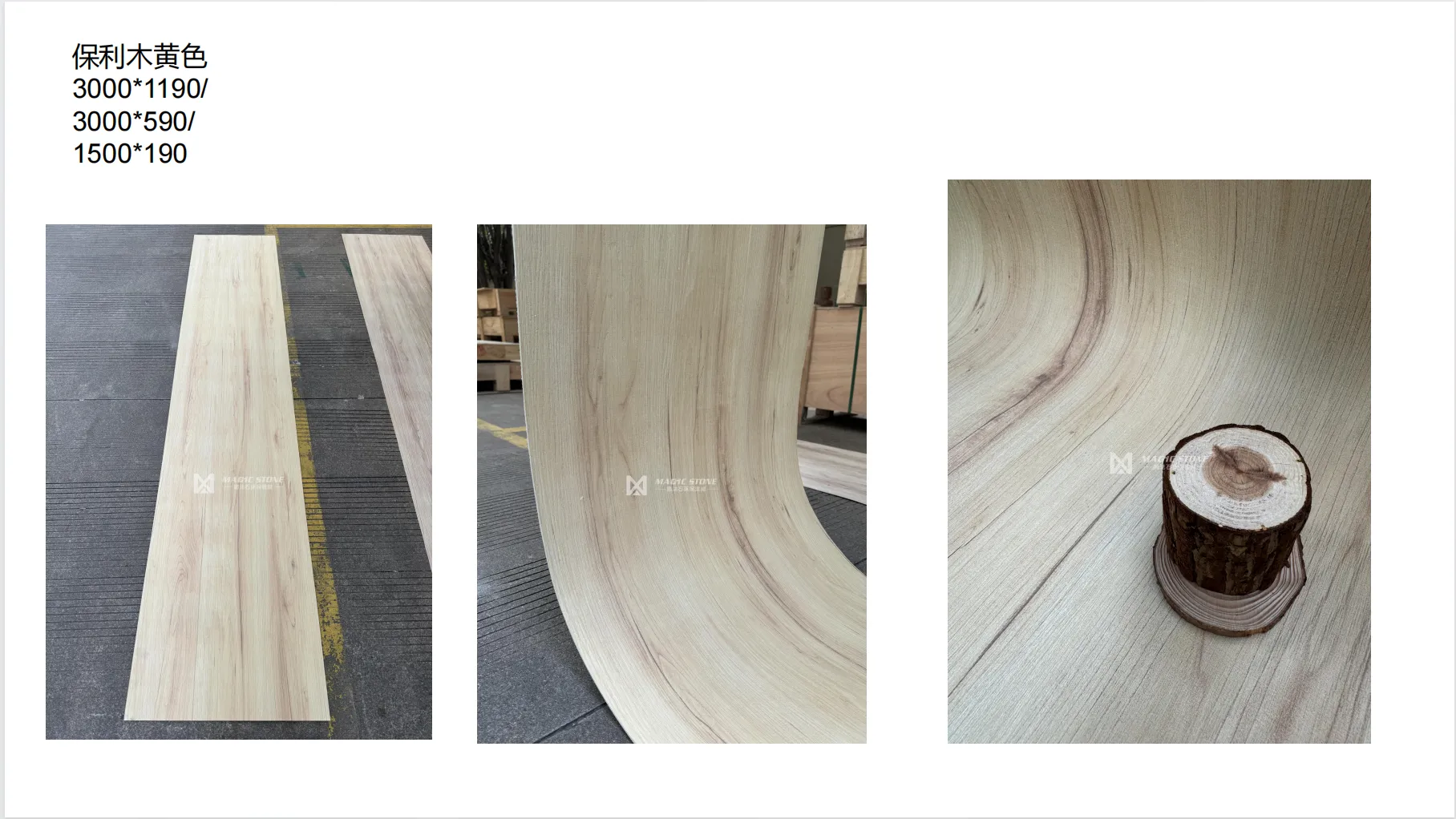
Poly Wood Board is COLORIA MCM's take on wood-look cladding, but it's far from your average "wood-look" product. Unlike vinyl planks or laminate, which often feel plastic or one-dimensional, Poly Wood Board uses advanced printing and texturing techniques to replicate the grain, knots, and subtle color variations of real wood. The result? A surface that looks and feels authentic—so much so that guests often do a double-take when they realize it's not solid hardwood.
But the magic is in what lies beneath the surface. Thanks to COLORIA MCM's composite construction, Poly Wood Board is lightweight yet incredibly strong. It's resistant to moisture, scratches, and UV damage—meaning it won't warp in humid basements, fade in sunlit entryways, or show scuffs from kids' shoes. It's also fire-retardant and easy to clean, making it ideal for high-traffic areas like staircases.
Staircases demand a material that can handle both form and function, and Poly Wood Board delivers on both fronts. Let's break down the benefits:
Warmth Without the Maintenance: Real wood stairs require regular staining, sealing, and polishing to stay looking fresh. Poly Wood Board? A quick wipe with a damp cloth is all it takes. No more worrying about water rings from spilled drinks or pet claws leaving marks.
Durability That Lasts: Unlike solid wood, which can crack or splinter over time, Poly Wood Board's composite core resists impact and wear. It's also dimensionally stable, meaning it won't expand or contract with temperature changes—perfect for homes with fluctuating humidity levels.
Sustainability at Its Core: For eco-conscious homeowners, Poly Wood Board is a win. It reduces reliance on harvested hardwoods, using recycled materials in its core and low-VOC inks in its printing process. COLORIA MCM also prioritizes energy-efficient manufacturing, making this a choice you can feel good about.
Aesthetic Versatility: Whether your home is modern minimalist, rustic farmhouse, or coastal chic, Poly Wood Board has a style to match. COLORIA offers a range of finishes, from light oak and ash to rich walnut and teak, each with realistic grain patterns that add depth and character.
Words can only describe so much—seeing Poly Wood Board in real homes is where the inspiration truly hits. Let's take a tour of three distinct residential spaces that used COLORIA MCM's Poly Wood Board to transform their staircases, proving that this material works across design styles.
In a sleek, light-filled home in Portland, Oregon, the staircase was designed to be a bridge between the home's industrial bones and its cozy interior. The homeowners wanted something that would add warmth without clashing with the space's neutral palette of whites, grays, and black metal accents. Enter Poly Wood Board in "Natural Ash"—a light, blonde finish with subtle grain that softens the staircase's sharp angles.
The stairs feature open risers and floating treads, clad in Poly Wood Board, with black metal railings and a glass panel insert. The result? A staircase that feels airy yet grounded, with the wood-look cladding adding a touch of organic texture that prevents the space from feeling too cold. "We wanted the stairs to feel like a 'soft spot' in the home," says the homeowner. "Poly Wood Board gave us that warmth without the hassle of real wood. Plus, when the morning light hits the treads, the grain looks so real—our guests are always shocked when we tell them it's not solid ash."
A renovated 1920s farmhouse in upstate New York needed a staircase that honored its historic roots while standing up to a busy family of five. The original stairs were narrow and steep, with worn pine treads that had seen better days. The homeowners dreamed of a "rustic but refined" look, inspired by barn wood but without the splinters and uneven surfaces.
They chose Poly Wood Board in "Reclaimed Walnut"—a rich, dark finish with visible knots and grain variations that mimic weathered barn wood. The cladding was applied to both treads and risers, paired with wrought-iron balusters and a thick wooden handrail (yes, real wood—proving Poly Wood Board plays well with other materials). The result is a staircase that feels like it's been part of the home for decades, but with the durability to handle kids, dogs, and holiday gatherings for years to come. "We wanted that 'lived-in' charm without the upkeep," says the homeowner. "Poly Wood Board checks all the boxes. It even sounds like real wood when you walk on it—no hollow, plastic echo."
In a beachfront home in Charleston, South Carolina, the staircase needed to withstand salt air, humidity, and the occasional sandy foot. The homeowners wanted a light, airy look that evoked the beach without leaning into kitschy "coastal" clichés. Poly Wood Board in "Driftwood Gray" was the answer—a pale, weathered finish with subtle blue-gray undertones that complement the home's ocean views.
The stairs are wrapped in Poly Wood Board, with white risers and a simple white handrail. Large windows flood the space with natural light, making the wood-look cladding glow with a soft, sun-bleached effect. "We were worried about real wood warping in the humidity," says the homeowner. "Poly Wood Board has held up perfectly—even after two hurricane seasons. And it still looks as fresh as the day it was installed."
While Poly Wood Board is a star on its own, it also plays well with other COLORIA MCM materials, allowing for creative combinations that add depth and interest to staircase design. Here are two standout options to consider:
For homeowners drawn to natural textures with a global flair, Bamboo Mat Board is a stunning choice. Mimicking the look of woven bamboo, this material adds a tactile, artisanal quality to staircases. Imagine pairing Poly Wood Board treads with Bamboo Mat Board risers for a layered, earthy look—or using Bamboo Mat Board as an accent panel on the staircase wall to complement Poly Wood Board stairs. It's a combination that feels both serene and sophisticated, perfect for Zen-inspired or bohemian homes.
For a more contemporary vibe, Fair-Faced Concrete from COLORIA MCM adds an industrial, raw aesthetic that contrasts beautifully with Poly Wood Board's warmth. Picture a staircase with Poly Wood Board treads and Fair-Faced Concrete risers: the smooth, gray concrete balances the wood's texture, creating a look that's both modern and inviting. It's a favorite among architects for its ability to add "weight" to a space without feeling heavy, making it ideal for open-concept homes where the staircase is on full display.
Still on the fence about whether Poly Wood Board is right for your staircase? Let's compare it to two common alternatives: solid hardwood and vinyl plank cladding.
| Feature | Poly Wood Board (COLORIA MCM) | Solid Hardwood | Vinyl Plank |
|---|---|---|---|
| Durability | Highly resistant to scratches, moisture, and UV damage; won't warp or splinter. | Prone to scratches, water damage, and warping in humid conditions. | Resistant to moisture but can scratch easily; prone to dents from heavy impact. |
| Maintenance | Low maintenance: Wipe clean with a damp cloth; no staining or sealing required. | High maintenance: Requires annual staining/sealing; periodic sanding to remove scratches. | Low maintenance but can be difficult to repair if damaged (often requires full plank replacement). |
| Aesthetic Realism | Highly realistic grain, knots, and texture; mimics natural wood closely. | Authentic wood look and feel, but limited to available wood species. | Often looks artificial; limited texture and grain variation. |
| Sustainability | Uses recycled materials; reduces reliance on harvested hardwoods; low-VOC production. | Requires harvesting of trees; can be sustainable if sourced from FSC-certified forests (but often not). | Made from PVC, which is non-biodegradable and can release harmful chemicals during production. |
| Cost | Mid-range: More expensive than vinyl but less costly than high-end hardwoods (e.g., teak, walnut). | High: Solid hardwood is one of the most expensive cladding options. | Low: Budget-friendly but may require replacement sooner than other options. |
Ready to take the plunge? Here are a few design tips to help you maximize the impact of Poly Wood Board on your staircase:
Mix Treads and Risers: For visual interest, pair Poly Wood Board treads with contrasting risers (e.g., white painted wood, Fair-Faced Concrete, or Bamboo Mat Board). This breaks up the monotony and makes the staircase feel more dynamic.
Play with Lighting: Staircase lighting can make Poly Wood Board's texture pop. Install LED strip lights under the treads or wall sconces nearby to highlight the grain and create a warm, inviting glow in the evening.
Consider Open Risers: Open risers paired with Poly Wood Board treads create a sense of spaciousness, making small entryways feel larger. They also allow light to flow through, enhancing the wood-look cladding's natural beauty.
Match or Contrast with Flooring: If your entryway has hardwood floors, choose a Poly Wood Board finish that complements (but doesn't exactly match) the floor color to create cohesion without looking too "matchy-matchy." If you have tile or concrete floors, use Poly Wood Board to add warmth and contrast.
Installing Poly Wood Board is straightforward, especially if you're working with a professional contractor familiar with MCM materials. The panels are lightweight, making them easy to handle and cut to size. They can be adhered directly to existing stair treads and risers (provided the surface is clean and level) or mounted on a subframe for a floating look.
As for care, Poly Wood Board is designed to be low-maintenance. For day-to-day cleaning, a quick wipe with a damp microfiber cloth is usually enough. For tougher stains (like mud or food spills), use a mild detergent mixed with water—avoid harsh chemicals or abrasive scrubbers, which can damage the finish. Over time, you may notice minor wear, but unlike real wood, Poly Wood Board won't require refinishing.
Your staircase is more than a path between floors—it's a chance to make a statement, express your style, and create a space that feels uniquely yours. With COLORIA MCM's Poly Wood Board, you don't have to sacrifice durability for beauty or maintenance for aesthetics. It's a material that understands the demands of modern life while honoring the timeless appeal of natural wood.
Whether you're building a new home, renovating an existing staircase, or simply looking to refresh your space, Poly Wood Board offers endless possibilities. From modern minimalism to rustic charm, it adapts to your vision, creating stairs that are as functional as they are beautiful. And with real homes already showcasing its transformative power, the proof is in the photos: Poly Wood Board isn't just a cladding material—it's a design revolution for residential staircases.
So, what are you waiting for? Let your staircase tell your story. With COLORIA MCM's Poly Wood Board, the next chapter of your home's design starts with a single step—one that's warm, durable, and undeniably you.
Recommend Products












