
Step into the lobby of a world-class resort, and what's the first thing that captures your attention? Is it the soft glow of chandeliers, the scent of exotic blooms, or the hushed murmur of guests savoring their first moments of relaxation? While all these elements play a role, there's an unsung hero quietly shaping that initial "wow" factor: the materials. From the floor beneath your feet to the walls that cradle the space, every surface tells a story—and in luxury hospitality, that story is one of intention, elegance, and connection. Today, we're diving into the materials that transform resorts from mere accommodations into unforgettable experiences, with a spotlight on the timeless allure of marble pillars, the starry charm of travertine, the warm radiance of lunar peak golden, and more. These aren't just building blocks; they're the vocabulary of luxury design, crafting spaces that linger in memory long after check-out.
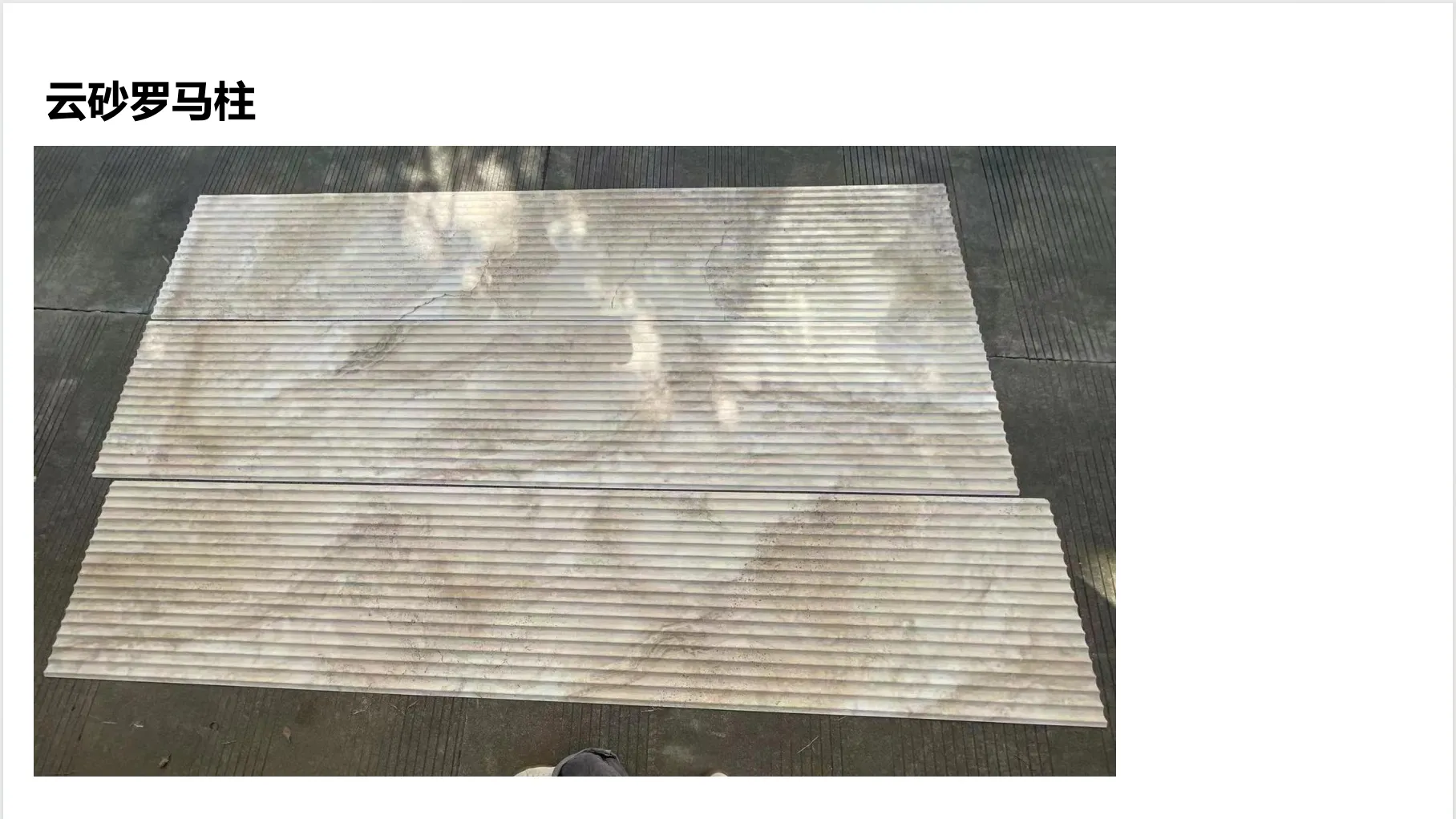
Ask any designer what defines a luxury resort lobby, and chances are "marble pillars" will top the list. There's something inherently regal about these structures—tall, graceful, and rooted in history, yet utterly contemporary when reimagined for modern spaces. Marble pillar real photos, even when described in words, evoke a sense of grandeur: think smooth, veined surfaces that catch the light, their neutral tones (ivory, cream, soft gray) serving as a canvas for the rest of the room's design. But it's not just about aesthetics; marble pillars are engineering marvels, too. Carved from single slabs or meticulously assembled, they balance strength with delicacy, holding up ceilings while appearing to float. In a luxury resort, they're more than structural—they're symbols of permanence and prestige, welcoming guests with a silent promise: "Here, you are in a place that values beauty as much as comfort."
Take, for example, a hypothetical beachfront resort in the Maldives. Its lobby features four marble pillars, each standing 12 feet tall, their surfaces polished to a high sheen that reflects the turquoise waters outside. The veining—soft grays and golds—mimics the waves, creating a seamless flow between indoor and outdoor spaces. At night, uplights cast gentle shadows, turning the pillars into works of art. Guests pause here, instinctively reaching out to brush their fingers against the cool, smooth stone—a tactile reminder of the resort's commitment to quality. This is the power of marble pillars: they don't just fill space; they command it, turning a simple lobby into a destination within a destination.
While marble pillars steal the spotlight, the best luxury designs thrive on balance—and that's where complementary materials like travertine (starry blue) come in. Travertine, a form of limestone, is beloved for its porous, organic texture, but the starry blue variant takes it to another level. Imagine flooring that looks like a night sky: cream-colored stone dotted with tiny, iridescent "stars" in deep blues and purples, created by mineral deposits that catch light at different angles. In a resort's dining area, this material transforms the space from ordinary to otherworldly. Paired with marble pillars, it adds depth without overwhelming, grounding the elegance of the marble in something more playful, more alive.
Consider a rooftop restaurant in a mountain resort. The floor is laid with travertine (starry blue), and as the sun sets, the stars on the stone seem to twinkle, mirroring the actual night sky above. The marble pillars here are slimmer, their veining in soft blues to complement the flooring, creating a cohesive, immersive experience. Guests don't just eat here; they feel as if they're dining under the stars, the material itself enhancing the mood. It's a reminder that luxury isn't just about opulence—it's about storytelling, and travertine (starry blue) is a master storyteller.
If travertine (starry blue) is the night sky, then lunar peak golden is the sunrise—warm, radiant, and full of promise. This material, with its subtle metallic sheen and golden undertones, adds a touch of warmth to spaces that might otherwise feel cold or sterile. Often used in accents—trim around mirrors, baseboards, or even in custom light fixtures—lunar peak golden softens the edges of modern design, making it feel inviting. In a resort's spa, for instance, imagine marble pillars flanked by wall sconces with lunar peak golden finishes. The light they cast has a honeyed glow, turning the cool marble into something more nurturing. Guests step in, and suddenly, the spa feels less like a clinical space and more like a sanctuary—all thanks to that hint of gold.
But lunar peak golden isn't just for small touches. In a beach resort's infinity pool area, it could be used as a trim along the pool's edge, catching the sunlight and turning the water into a shimmering gold mirror. Paired with the blue of the ocean and the white of the marble pillars, it creates a color palette that's both vibrant and harmonious. It's a material that understands nuance—never too flashy, always just enough to make you feel special.
Not all luxury is about sparkle and shine. Sometimes, it's about contrast—and fair-faced concrete delivers that in spades. This material, with its matte finish, visible aggregates, and subtle texture, is the epitome of "less is more." In a luxury resort, it's often used to balance the opulence of marble pillars, adding a modern, industrial edge that feels fresh and unexpected. Imagine a ski resort in the Alps: its lobby features marble pillars with sharp, geometric cuts, paired with fair-faced concrete walls. The concrete, with its cool gray tone and rough texture, contrasts beautifully with the marble's smoothness, creating a space that feels both timeless and contemporary. Guests, used to traditional mountain lodges, are pleasantly surprised—this isn't just a place to stay; it's a design statement.
Fair-faced concrete also plays well with light. In a resort's wine cellar, for example, concrete walls act as a backdrop for wooden racks and marble-topped tasting tables. The material absorbs light, creating a cozy, intimate atmosphere that makes wine tastings feel exclusive. It's durable, too—resistant to stains and easy to maintain, making it practical for high-traffic areas. In luxury hospitality, where form and function must coexist, fair-faced concrete is a quiet workhorse, proving that elegance doesn't have to be fragile.
Luxury resorts aren't confined to four walls—their outdoor spaces are just as crucial to the guest experience. Here, materials need to stand up to the elements while maintaining their beauty, and Bali stone is a perfect fit. Inspired by the lush landscapes of its namesake island, Bali stone is a natural, porous material with warm, earthy tones (think terracotta, sand, and soft browns) and a rough, textured surface that feels like it's been shaped by wind and water. It's ideal for pool decks, garden paths, and outdoor pavilions, bringing a sense of organic calm to these spaces.
Picture a tropical resort's pool area: Bali stone tiles line the walkways, their surface slightly uneven underfoot, reminding guests they're in a natural setting. Nearby, a marble pillar stands sentinel at the entrance to a cabana, its smoothness a striking contrast to the stone's roughness. The combination is intentional: the Bali stone grounds the space in nature, while the marble adds a touch of luxury. Guests walk barefoot on the stone, feeling the warmth of the sun and the texture of the earth, and suddenly, they're not just on vacation—they're connected to the destination. That's the magic of Bali stone: it doesn't fight the environment; it embraces it, making outdoor spaces feel like an extension of the landscape.
At the end of the day, luxury hospitality is about emotion. It's about making guests feel pampered, inspired, and seen. Materials play a huge role in this: the coolness of marble underfoot, the warmth of lunar peak golden, the texture of Bali stone—all these sensory details add up to create a mood, a memory. Research shows that guests are more likely to return to a resort if they have a strong emotional connection to it, and that connection often starts with how a space feels .
Take a guest arriving at a mountain resort after a long journey. They step into the lobby, and their eyes are drawn to the marble pillars—tall, reassuring, a sign that they've arrived somewhere special. Their feet touch travertine (starry blue) flooring, and they smile, noticing the tiny stars. They feel the warmth of lunar peak golden in the lighting, and suddenly, their fatigue melts away. Later, they walk on Bali stone paths in the garden, breathing in the fresh air, and think, "This place gets me." That's the power of thoughtful material selection: it turns a stay into an experience, a moment into a memory.
Marble pillars, travertine (starry blue), lunar peak golden, fair-faced concrete, Bali stone—these aren't just materials. They're the building blocks of emotion, the tools designers use to craft spaces that delight, comfort, and inspire. In luxury hospitality, where every detail matters, they're the difference between a "nice hotel" and a "destination you'll talk about for years."
So the next time you step into a luxury resort, take a moment to look around. Notice the marble pillars, the texture of the flooring, the subtle accents that catch the light. Each one has a story to tell, and together, they're telling you: "You are valued here." That's the true essence of luxury—and it's written in stone, in metal, in every carefully chosen material that makes a resort feel like home.
Recommend Products












