
Walk down any busy street, and what's the first thing that catches your eye? More often than not, it's the store fronts—those silent storytellers that whisper (or shout) a brand's personality before you even step inside. A café with warm wooden panels might make you crave a latte; a sleek, modern boutique with metallic accents could hint at cutting-edge fashion; a bookstore with stone-like textures might feel like a cozy haven for book lovers. The truth is, retail design isn't just about aesthetics—it's about connection. It's about making someone pause, think, "I want to go in there," and feel like they belong before they even open the door.
But here's the thing: creating that perfect store front isn't easy. Retailers juggle a million priorities—budget, durability, sustainability, and of course, that "wow" factor. Traditional materials often fall short: solid wood warps in the rain, natural stone is heavy and expensive, concrete can feel cold and sterile. So what if there was a way to get the beauty of natural materials without the hassle? Enter COLORIA's MCM Project Board Series—a lineup of modified composite materials designed to blend artistry with practicality. And today, we're putting the spotlight on one of its stars: Poly Wood Board. Let's dive into how this material, paired with COLORIA's other innovations like Flexible Stone and Wood Grain Board, is redefining retail store fronts—one real photo, one texture, one customer connection at a time.
Let's start with a scenario we've all seen. Picture a charming little boutique downtown. It opened last year with a store front clad in solid oak—warm, inviting, exactly the vibe the owner wanted. But after a harsh winter and a few rainstorms, the wood started to crack. The paint peeled. Now, instead of "cozy charm," it looks tired. The owner is faced with a tough choice: shell out for expensive repairs, or settle for a material that doesn't quite match their brand. Sound familiar? This is the reality for many retailers stuck in the cycle of "beautiful but fragile" or "durable but dull."
Or take natural stone. A high-end jewelry store might opt for marble to exude luxury, but marble is heavy—installing it requires reinforced structures, driving up costs. It's also porous, so a stray coffee spill or a rainy day can leave permanent stains. And let's not forget sustainability: mining natural stone or cutting down mature trees for wood isn't exactly eco-friendly, and today's consumers notice that. They want to support brands that align with their values, and a store front made from unsustainable materials can send the wrong message.
Then there's the "sameness" problem. Walk through a mall, and how many store fronts blend together? Beige paint, generic tiles, the same old glass facades. In a world where attention spans are shorter than ever, blending in is the kiss of death. Retailers need materials that help them stand out—but not in a "loud" way. They need materials that tell a story. A story of warmth, or innovation, or heritage. That's where COLORIA's MCM Project Board Series comes in. These aren't just "materials"—they're tools for storytelling.
First, let's clarify what MCM stands for: Modified Composite Material. Think of it as nature's best features, reimagined. COLORIA takes elements like stone, wood, and metal, processes them into a lightweight, durable composite, and then adds a layer of artistry—custom colors, textures, finishes that mimic the real thing, but better. The result? Materials that look and feel natural, but are resistant to weather, scratches, and time. They're also lightweight (so installation is easier and cheaper), eco-friendly (many are made from recycled materials), and infinitely customizable. It's like having a painter's palette with the strength of a superhero.
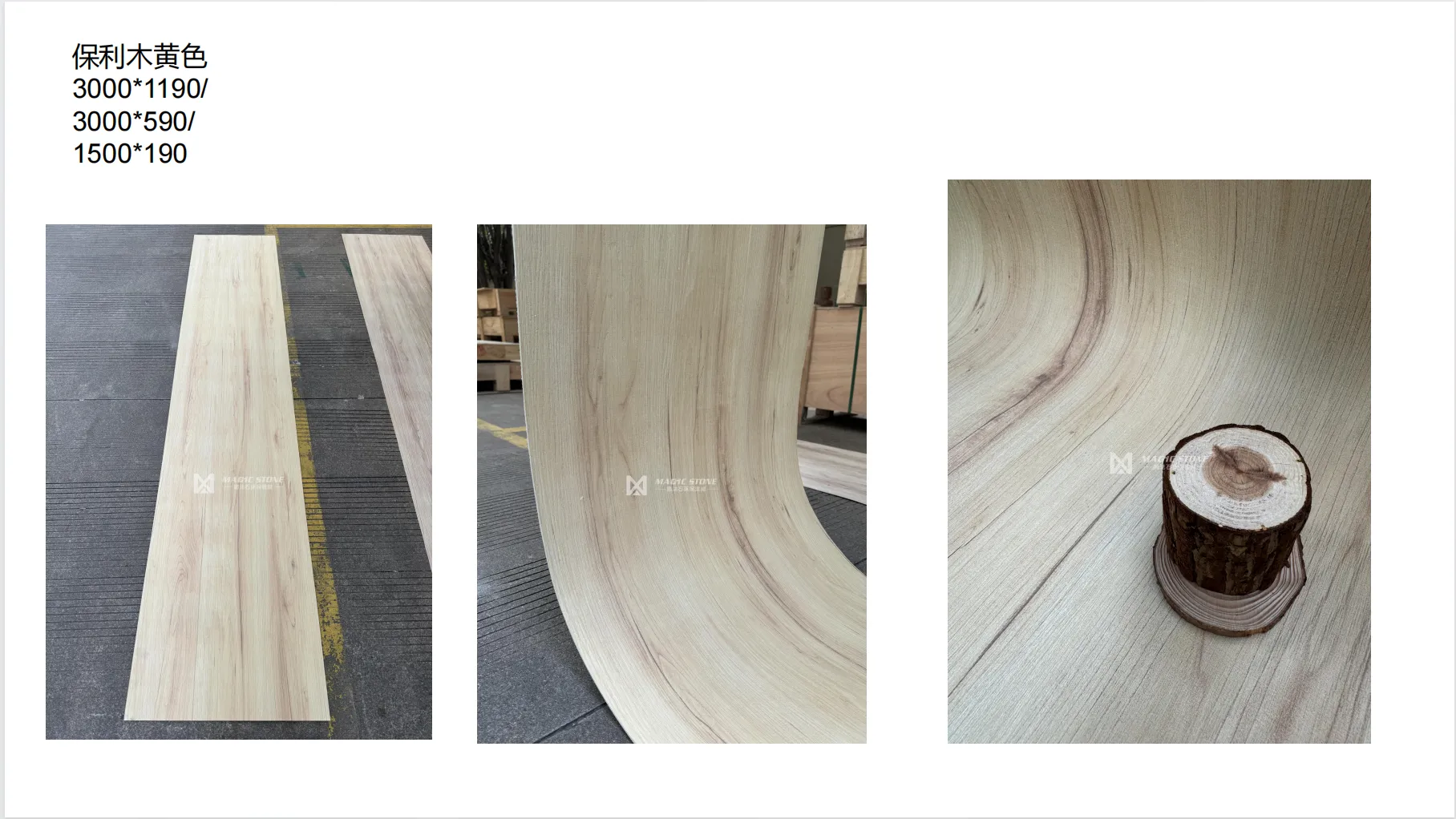
The MCM Project Board Series isn't a one-size-fits-all solution. It's a family of materials, each with its own personality. There's Flexible Stone, which bends like a sheet of paper but looks like quarried stone—perfect for curved store fronts or accent walls. There's Wood Grain Board, which captures the intricate patterns of oak, pine, or teak without a single tree cut down. And then there's Poly Wood Board—the material we're here to talk about. Let's zoom in.
Close your eyes for a second and think of "wood." What do you see? Maybe the smooth grain of a kitchen table, the rough texture of a barn door, the warm amber hue of sunlight filtering through a forest. Now, open your eyes and imagine that feeling on a store front. That's what Poly Wood Board aims to capture—but with a twist. It's wood, but better.
Let's talk about the real photos. I've seen them, and they're striking. One photo shows a café in a coastal town: the store front is clad in Poly Wood Board in a soft "natural oak" finish. The morning sun hits the panels, and you can see the subtle variation in the grain—light and dark streaks, just like real wood. But here's the kicker: this café is steps from the ocean. Salt air, humidity, rain—none of it phases the Poly Wood Board. No warping, no rotting, no need for constant staining. The owner says customers often comment, "I love your wooden exterior—it feels so homey!" They have no idea it's composite. And that's the magic: it looks authentic, because it's designed to feel authentic.
Another real photo features a boutique selling handmade ceramics. The store front uses Poly Wood Board in a "charred cedar" finish—deep, rich, with a slightly rough texture that mimics wood that's been gently torched (a technique called shou sugi ban, popular for its rustic charm). The contrast between the dark wood panels and the large glass windows is stunning. It says, "We're modern, but we respect tradition." And because Poly Wood Board is lightweight, the boutique didn't need to reinforce its walls to install it—saving time and money that went instead into the beautiful ceramics inside.
What makes Poly Wood Board stand out in these photos? It's the details. The way the light plays on the grain, creating depth. The warmth of the color—no harsh, artificial tones, just the soft, earthy hues of real wood. Even up close, the texture holds up: run your hand over it, and you'll feel the slight ridges and grooves, just like you would with solid wood. But unlike solid wood, you don't have to worry about splinters or splinters or termites. It's low-maintenance, too—just a quick wipe with a damp cloth, and it looks as good as the day it was installed.
Poly Wood Board is amazing on its own, but some of the most memorable store fronts use a mix of materials. Think of it like a recipe: a little wood for warmth, a little stone for texture, a touch of metal for edge. COLORIA's lineup makes mixing and matching easy, thanks to consistent quality and a cohesive design philosophy. Let's explore a few pairings that work wonders.
Imagine a neighborhood café that wants to feel like a friend's living room—warm, welcoming, but with a modern twist. The designer uses Poly Wood Board (in "honey pine") for the lower half of the store front, adding warmth and texture. For the upper half, they pair it with Flexible Stone in "Lunar Peak Silvery"—a sleek, silvery-gray stone texture that adds contrast without feeling cold. The result? A store front that says, "Come in for a cozy latte, but stay for the stylish vibe." The Poly Wood Board makes you want to linger, while the Lunar Peak Silvery keeps it fresh and modern.
Bookstores are all about storytelling, and this one wants to blend "old-world charm" with "urban cool." The designer goes bold: Poly Wood Board (in "vintage walnut") for the door frame and accent panels, adding that classic, library-like warmth. Then, they layer in Fair-Faced Concrete from COLORIA's lineup—raw, unpolished, with subtle gray tones—for the main facade. The contrast is striking: the wood feels like history, the concrete feels like now. Add a few large windows with black metal frames, and suddenly, this isn't just a bookstore—it's a destination. Customers walk by, see the mix of textures, and think, "This place has personality. I need to check it out."
But how do you know which materials work best for your brand? That's where COLORIA's real photos come in handy. They don't just show the materials—they show them in context. You can see Poly Wood Board next to Wood Grain Board, or Flexible Stone paired with Foamed Aluminium Alloy Board (Vintage Gold). It's like test-driving a car before you buy it: you get a feel for how it looks in different lights, with different colors, and in real-world settings. No more guessing if "charred cedar" will clash with your brand's blue logo—you can see it, right there in the photo.
Let's get practical for a second. We've talked about the "feels" and "looks," but what about the "works"? At the end of the day, a store front has to hold up. It has to survive rain, snow, UV rays, and the occasional stray shopping cart. COLORIA's MCM materials are built for this. Take Poly Wood Board: it's water-resistant, so no warping or rotting. It's fade-resistant, so that "honey pine" hue stays honey pine, not "sun-bleached beige." It's scratch-resistant, so even if a delivery truck bumps into it, there's no need for panic. And because it's lightweight (about 1/5 the weight of solid wood), installation is faster and cheaper—no need for heavy machinery or extra structural support.
Sustainability is another big win. COLORIA's MCM Project Board Series uses recycled materials where possible, and since they're composite, they reduce the demand for natural resources. Poly Wood Board, for example, contains no solid wood—so no trees are cut down. Flexible Stone is made from recycled stone dust and resins, diverting waste from landfills. For retailers who want to shout their eco-friendly values from the rooftops (or, you know, their store fronts), this is a game-changer. Customers today don't just buy products—they buy stories. And a story that includes "we care about the planet" is one they'll remember.
Still unsure which material is right for you? Let's break it down with a quick comparison. Here's how some of COLORIA's top retail materials stack up in terms of features, aesthetics, and best uses:
| Material Name | Key Features | Aesthetic Appeal | Best For... |
|---|---|---|---|
| Poly Wood Board | Lightweight, water-resistant, wood-like texture, customizable finishes (honey pine, charred cedar, white wood) | Warm, inviting, natural. Feels "homey" or "rustic-chic." | Cafés, bookstores, boutiques, farm-to-table restaurants |
| Flexible Stone | Bendable, stone-like appearance (marble, slate, travertine), lightweight, weather-resistant | Elegant, luxurious, or earthy (depending on finish). Adds depth and texture. | High-end retail, spas, jewelry stores, art galleries |
| Wood Grain Board | Intricate wood grain patterns (oak, teak, bamboo), scratch-resistant, fade-resistant | Polished yet natural. Works for both modern and traditional designs. | Clothing stores, home decor shops, coworking spaces |
| Fair-Faced Concrete | Raw, unpolished look, industrial vibe, durable, low-maintenance | Edgy, modern, minimalist. Feels "urban" or "artistic." | Tech stores, indie boutiques, coffee roasters, art studios |
| Lunar Peak Silvery | Metallic-silver finish, sleek, reflective, lightweight | Futuristic, modern, high-energy. Stands out in busy areas. | Electronics stores, fashion-forward boutiques, pop-up shops |
Of course, these are just starting points. The beauty of COLORIA's lineup is that you can mix and match. A clothing boutique might use Poly Wood Board for the door frame, Flexible Stone (Travertine, Starry Blue) for an accent wall, and Lunar Peak Silvery for trim. The possibilities are endless—and the real photos help you visualize exactly how it will all come together.
So, you're sold. You want a store front that tells your brand's story, lasts for years, and doesn't break the bank. How do you get from "I love Poly Wood Board" to "my store front looks amazing"? It starts with a conversation. COLORIA works with retailers, designers, and contractors to understand your vision, budget, and needs. They'll share real photos of materials in similar settings, help you pick finishes and colors, and even provide samples so you can feel the texture in your hands. Once you've settled on a design, their team ensures a smooth installation—fast, efficient, and hassle-free.
And the best part? You're not just getting a material—you're getting a partner. COLORIA stands behind its products, so if something goes wrong (which, let's be real, rarely happens), they're there to fix it. It's the kind of support that lets you focus on what you do best: running your business and connecting with customers.
At the end of the day, retail is about people. It's about the barista who remembers your order, the boutique owner who helps you find the perfect gift, the bookstore clerk who recommends your new favorite novel. Your store front is the first chapter of that story. It's the "hello" before the "hi, how are you?" It deserves to be warm, authentic, and uniquely you.
COLORIA's MCM Project Board Series—with stars like Poly Wood Board, Flexible Stone, and Wood Grain Board—isn't just about materials. It's about giving you the tools to tell your story, without compromise. It's about having a store front that looks as good on year five as it did on day one. It's about making customers feel something before they even walk through the door.
So, what's your story? Is it warm and woody, like a cozy café? Sleek and modern, like a tech boutique? Earthy and natural, like a wellness shop? Whatever it is, COLORIA's got the materials to bring it to life. And the real photos? They're just the beginning. The rest? That's up to you—and the customers who'll soon be walking through your door, drawn in by the story your store front tells.
Recommend Products












