
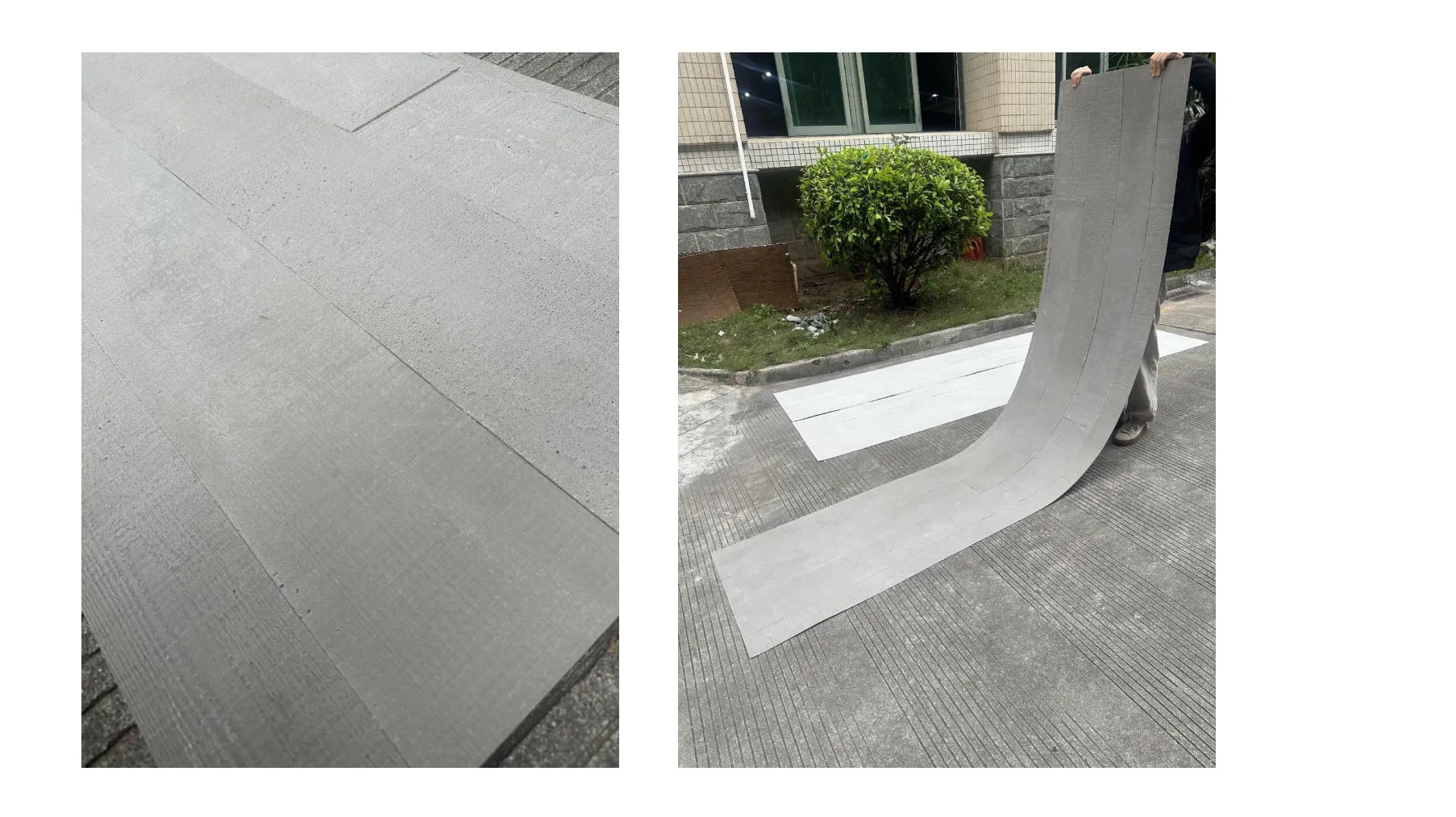
Walk into any successful retail store today, and you'll quickly realize it's not just the products that draw you in—it's the space itself. The walls, the floors, the textures underfoot and overhead—they all work together to tell a story, evoke a mood, and make you want to stay a little longer. In an era where shopping is as much about experience as it is about transactions, the materials that shape these interiors have never been more critical. Today, we're diving into two game-changers in retail design: wood-cement board and MCM flexible stone. We'll explore how they're transforming stores, why designers can't get enough of them, and how complementary materials like fair-faced concrete, travertine (starry blue), and wood grain board are elevating the aesthetic even further. Let's start by understanding why the right materials matter in retail.
Think about the last time you walked into a store that felt "off." Maybe the lighting was harsh, or the floors felt cold and uninviting, or the walls looked cheap and flimsy. Chances are, you didn't stay long—and you probably didn't buy much either. Now contrast that with a store that felt warm, welcoming, and thoughtfully designed. Maybe the walls had a tactile texture that made you want to reach out and touch them, or the floors had a natural pattern that guided you through the space. That's the power of materials. They don't just fill a room—they create an emotional connection.
Retail designers have long known this, but in recent years, the demand for materials that are both aesthetically stunning and practically functional has skyrocketed. Shoppers today crave authenticity; they want spaces that feel "real," not cookie-cutter or overly polished. They're drawn to textures that tell a story—materials that look like they've been shaped by time, nature, or human hands. At the same time, retailers need materials that can stand up to heavy foot traffic, resist scratches and stains, and are easy to maintain. It's a balancing act between beauty and durability, and that's where wood-cement board and MCM flexible stone shine.
Another key trend driving material choice in retail is sustainability. More and more brands are prioritizing eco-friendly options, not just as a marketing tool, but because their customers care about the planet. Materials labeled as "green building materials" aren't just good for the environment—they also add a layer of trust and authenticity to a brand's image. When a store uses sustainable materials, it sends a message: "We care about more than just selling you something. We care about the world we live in." That resonates with today's consumers, who are increasingly making purchasing decisions based on a brand's values.
If you've ever seen wood-cement board real photos, you know there's something inherently appealing about it. It looks like wood—warm, organic, with visible grains and knots that add character—but it's made from cement, which means it's tough as nails. That combination is a dream come true for retail designers. Wood brings the cozy, inviting feel that makes customers want to linger, while cement ensures the material can handle the chaos of daily retail life: scuff marks from shopping carts, spills from coffee cups, even the occasional bump from a display shelf.
So, what exactly is wood-cement board? It's a composite material made by blending wood fibers with cement, then pressing and curing the mixture to create boards that mimic the look of real wood. The result is a material that's resistant to moisture, fire, and pests—problems that plague traditional wood in high-traffic areas. For example, a clothing boutique in a humid climate might struggle with regular wood paneling warping or rotting, but wood-cement board stays stable year-round. A toy store with kids running around won't have to worry about scratches ruining the wall finish, because this material is surprisingly scratch-resistant.
But it's not just about durability. Wood-cement board also offers endless design possibilities. It comes in a range of finishes, from light oak to dark walnut, and can be left natural or painted. Some varieties even have a rough-sawn texture that adds depth and dimension to walls, while others are smooth for a more modern look. Designers often use wood-cement board real photos during the planning phase to help clients visualize how the texture will play with lighting. A well-placed spotlight, for example, can highlight the grain patterns, creating shadows that make the wall feel dynamic and alive.
One of the most exciting things about wood-cement board is how versatile it is. It works in almost any retail setting, from a rustic coffee shop to a sleek tech store. Imagine a boutique selling artisanal home goods: wood-cement board walls in a warm, honey tone would complement handmade ceramics and woven textiles, creating a cohesive "homely" vibe. Now picture a high-end sneaker store: wood-cement board in a dark, espresso finish paired with metal accents and LED lighting would feel modern and edgy, matching the boldness of the products. The material adapts to the brand's personality, which is why it's become a staple in retail design.
And let's not forget about installation. Unlike traditional wood, which can be tricky to cut and install (especially in large spaces), wood-cement board is lightweight and easy to handle. It can be cut with standard tools, nailed or screwed into place, and even curved for creative designs. This saves time and money during construction, which is a big win for retailers working on tight budgets and deadlines. Plus, because it's pre-finished, there's no need for painting or staining on-site—another time-saver that reduces disruption to the store's opening timeline.
If wood-cement board is the "warm hug" of retail materials, MCM flexible stone is the "versatile chameleon." Short for Modified Composite Material, MCM flexible stone is a thin, lightweight panel that mimics the look of natural stone—think marble, granite, travertine—but with a flexibility that traditional stone can't match. It's like having the beauty of natural stone without the weight, cost, or installation headaches. For retailers who want a high-end look on a mid-range budget, MCM flexible stone is a game-changer.
What makes MCM flexible stone so special? Let's start with its flexibility. Traditional stone slabs are heavy and rigid, which limits where they can be used. You can't curve them, and installing them on ceilings or curved walls is nearly impossible. MCM flexible stone, on the other hand, is thin (usually 3-5mm thick) and bendable, which means it can be applied to almost any surface: walls, ceilings, columns, even furniture. Imagine a cosmetics store with a curved feature wall covered in MCM flexible stone that looks like marble—it would create a sense of flow and elegance that draws customers in and makes the space feel luxurious.
Then there's the range of options. MCM flexible stone comes in hundreds of finishes, from classic marble veining to bold, modern patterns. One of the most popular choices among designers is travertine (starry blue), a stunning finish that features a deep blue base with flecks of silver and gold that look like stars in the night sky. It's eye-catching without being overwhelming, making it perfect for accent walls or display backdrops. In a jewelry store, for example, a travertine (starry blue) accent wall behind a diamond display would make the gems sparkle even more—creating a truly memorable visual experience.
Durability is another key selling point. MCM flexible stone is resistant to scratches, stains, and fading, which is essential in retail spaces where walls are constantly being brushed against, leaned on, or decorated with posters and signage. Unlike natural stone, which can etch if spilled on with acidic liquids (like lemon juice or vinegar), MCM flexible stone is non-porous, so spills wipe right off. This makes it ideal for cafes, food courts, or any retail space where food and drinks are served.
Installation is a breeze too. Because MCM flexible stone is lightweight, it doesn't require the heavy-duty structural support that natural stone does. It can be installed using adhesives, which means no messy mortar or specialized tools. This not only speeds up the construction process but also reduces labor costs. For retailers who need to renovate quickly to keep up with seasonal trends, this is a huge advantage. A clothing store can switch out its accent walls from a summery travertine (starry orange) to a cozy travertine (starry red) for winter without shutting down for weeks.
While wood-cement board and MCM flexible stone are stars in their own right, they rarely work alone. The best retail interiors are layered, with multiple materials working together to create depth and interest. Let's take a look at some complementary materials that designers are pairing with wood-cement board and MCM flexible stone to create stunning retail spaces.
| Material | Aesthetic | Best For | Why It Works with Wood-Cement Board & MCM Flexible Stone |
|---|---|---|---|
| Fair-Faced Concrete | Raw, industrial, minimalist | Tech stores, modern boutiques, art galleries | Its cool, gray tone contrasts beautifully with the warmth of wood-cement board, while its smooth texture balances the organic feel of MCM flexible stone. |
| Travertine (Starry Blue) | Vibrant, cosmic, eye-catching | Accent walls, display niches, checkout counters | Adds a pop of color to neutral wood-cement board or fair-faced concrete, creating a focal point that draws customers' attention. |
| Wood Grain Board | Warm, natural, rustic | Bookstores, cafes, home decor shops | Enhances the wood-like texture of wood-cement board, adding layers of warmth. Its uniform grain pattern creates a sense of calm and continuity. |
| Foamed Aluminium Alloy Board (Vintage Silver) | Sleek, metallic, retro-modern | High-end fashion stores, electronics shops | Adds a touch of glamour to wood-cement board's earthiness. Its lightweight nature makes it easy to pair with MCM flexible stone on ceilings or walls. |
| Slate Veil White | Clean, crisp, sophisticated | Beauty salons, luxury boutiques, jewelry stores | Its bright, white surface reflects light, making small spaces feel larger. Pairs well with dark wood-cement board or bold MCM flexible stone colors. |
Let's dive deeper into a few of these. Fair-faced concrete, for example, is having a moment in retail design. Also known as "exposed concrete," it's left in its natural state after pouring, with visible seams and a slightly rough texture that feels raw and authentic. When paired with wood-cement board, it creates a beautiful contrast between industrial and organic. Imagine a bookstore with fair-faced concrete floors, wood-cement board walls, and MCM flexible stone shelves in travertine (starry blue). The concrete adds an urban edge, the wood-cement board brings warmth, and the travertine (starry blue) shelves make the books pop—creating a space that feels both modern and cozy.
Wood grain board is another great pairing for wood-cement board. While wood-cement board has a more rustic, textured look, wood grain board has a smoother, more uniform pattern that adds a sense of order. In a clothing store, for example, wood grain board could be used for display racks, while wood-cement board lines the walls. The two woods complement each other, creating a cohesive "natural" theme without feeling repetitive. Add in MCM flexible stone in travertine (beige) for the checkout counter, and you've got a space that feels warm, inviting, and put-together.
For retailers who want to add a touch of luxury, foamed aluminium alloy board (vintage gold) is a great choice. Its metallic finish adds a bit of glamour, which pairs surprisingly well with the earthiness of wood-cement board. A high-end shoe store might use wood-cement board for the walls, foamed aluminium alloy board (vintage gold) for trim and display cases, and MCM flexible stone in marble interstellar gray for the floors. The result is a space that feels both opulent and grounded—perfect for luxury brands that want to feel accessible.
Retail design is always evolving, and materials are at the forefront of these changes. Let's take a look at some of the top trends shaping how designers use wood-cement board, MCM flexible stone, and other materials in retail spaces today.
Biophilic Design: This trend is all about bringing nature indoors, and it's driving demand for materials that mimic natural textures. Wood-cement board and wood grain board are obvious fits here, but MCM flexible stone is also playing a role. Finishes like travertine (starry green)—which features flecks of green that look like moss on stone—or stream limestone (claybank), which has a pattern that resembles flowing water, are becoming popular. These materials help create a sense of calm and connection to nature, which is especially appealing in busy urban stores.
Industrial Chic: While biophilic design is about softness, industrial chic is about embracing raw, unfinished materials. Fair-faced concrete is a staple here, but designers are also pairing it with MCM flexible stone in bold, dark colors like dolomitic travertine (dark grey) or granite portoro. Wood-cement board adds warmth to balance the coolness of concrete and dark stone, creating spaces that feel edgy but not unwelcoming. Think of a brewery taproom with fair-faced concrete walls, wood-cement board ceilings, and MCM flexible stone bar tops in glacial slate—it's industrial, but the wood and stone keep it from feeling cold.
Colorful Accents: Neutral tones will always have a place in retail design, but lately, designers are adding pops of color with materials like travertine (starry red), travertine (starry orange), or rona yellow. These bold hues are used sparingly—on an accent wall, a display shelf, or a checkout counter—to create visual interest and reinforce brand identity. For example, a children's toy store might use wood-cement board for most walls but add a travertine (starry blue) accent wall behind the puzzle section, tying into the brand's playful, adventurous vibe.
Sustainable Luxury: As we mentioned earlier, sustainability is no longer a "nice-to-have"—it's a "must-have." Retailers are increasingly choosing materials labeled as "green building materials," and designers are finding ways to make these materials feel luxurious. Wood-cement board, which is often made from recycled wood fibers, and MCM flexible stone, which requires less energy to produce than natural stone, are both great examples. Pair them with foamed aluminium alloy board (vintage silver)—which is lightweight and recyclable—and you've got a space that's both eco-friendly and high-end.
To truly understand the impact of these materials, let's look at a hypothetical case study. Imagine a small boutique in a busy downtown area that sells handmade jewelry and accessories. The owner wants the space to feel warm and inviting, but also durable enough to handle daily foot traffic. The designer's solution? A combination of wood-cement board, MCM flexible stone, and fair-faced concrete.
First, the walls: The main walls are covered in wood-cement board in a light oak finish, which adds warmth and makes the space feel cozy. The designer uses wood-cement board real photos during the planning phase to show the owner how the grain will catch the light from the store's large windows, creating a soft, inviting glow. For the accent wall behind the main jewelry display, the designer chooses MCM flexible stone in travertine (starry blue)—the blue hue complements the silver and gold jewelry, making it stand out, while the "starry" flecks add a touch of magic.
The floors are fair-faced concrete, which is polished to a smooth finish but still retains its industrial edge. This contrasts nicely with the wood-cement board walls, adding visual interest without clashing. The checkout counter is made from wood grain board, which ties back to the wood-cement board walls and adds a cohesive look. To add a bit of glamour, the designer uses foamed aluminium alloy board (vintage gold) for the trim around the display cases and the edges of the checkout counter.
The result? A store that feels both intimate and upscale. Customers are drawn in by the warm wood tones and the eye-catching travertine (starry blue) accent wall. The fair-faced concrete floors are easy to clean, so the store always looks neat and tidy, even during busy weekends. And because all the materials are durable, the owner doesn't have to worry about frequent repairs or replacements. It's a space that reflects the brand's values—handmade, high-quality, and thoughtful—and keeps customers coming back.
As retail continues to evolve, one thing is clear: materials will remain at the heart of great design. Wood-cement board and MCM flexible stone are leading the charge, offering the perfect blend of beauty, durability, and sustainability that modern retailers need. Whether paired with fair-faced concrete for an industrial look, wood grain board for warmth, or travertine (starry blue) for a pop of color, these materials are helping designers create spaces that don't just sell products—they create experiences.
For retailers looking to stand out in a crowded market, investing in the right materials isn't just a design choice—it's a business decision. A well-designed space attracts customers, keeps them longer, and turns one-time shoppers into loyal fans. And with materials like wood-cement board and MCM flexible stone, it's easier than ever to create a space that's both beautiful and practical.
So, the next time you walk into a store that takes your breath away, take a moment to look at the walls and floors. Chances are, you'll spot wood-cement board, MCM flexible stone, or one of their complementary materials working together to create that magic. And who knows? Maybe it will inspire you to rethink your own space—because in retail, the right materials aren't just part of the design. They're part of the story.
Recommend Products












