
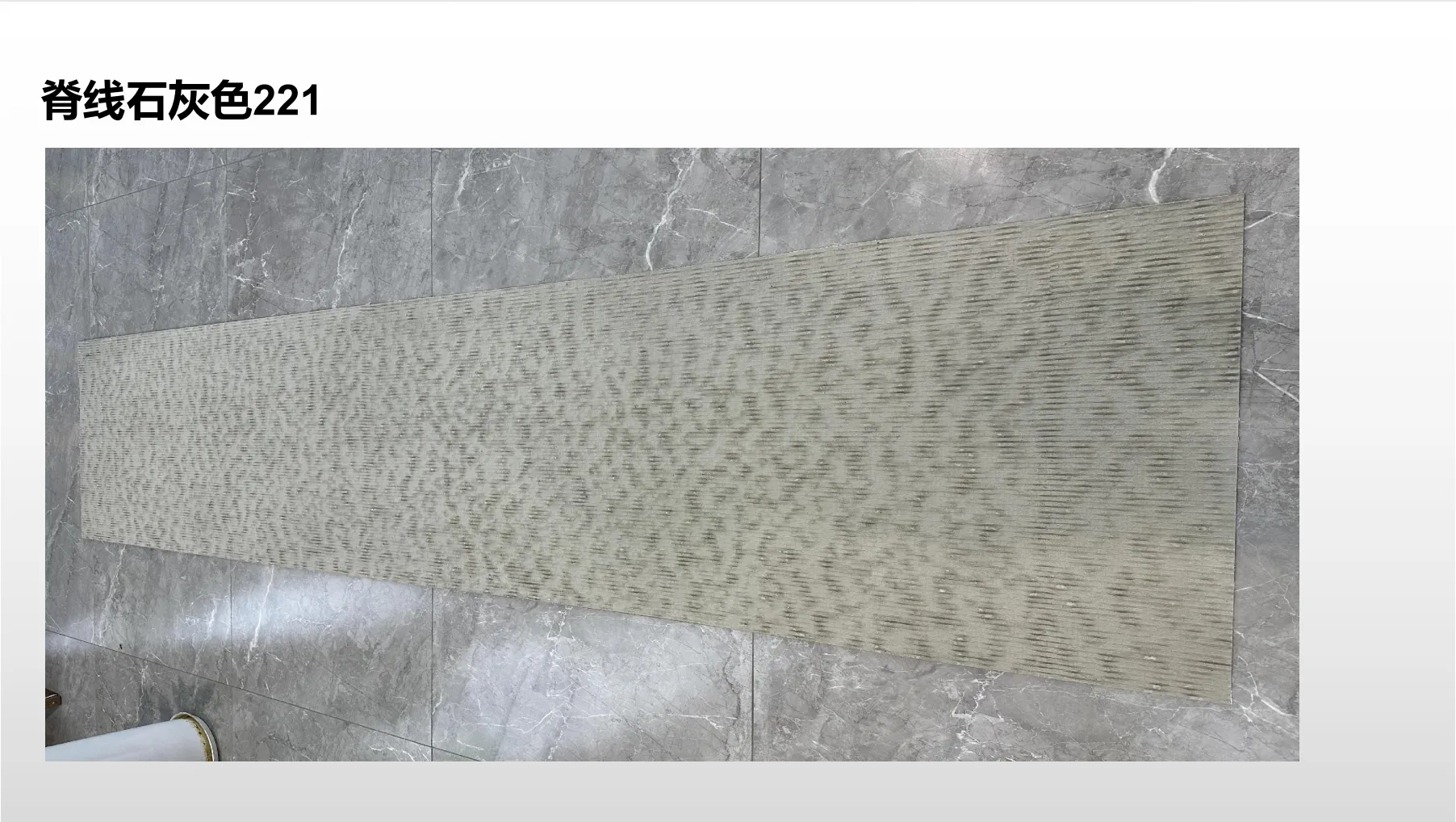
There's something timeless about the look of natural stone in a home. The rough texture, the earthy tones, the way it adds depth and character to any room—whether it's a cozy living room accent wall or a sleek kitchen backsplash. But if you've ever considered tackling a stone installation project yourself, you've probably hit a wall: traditional stone is heavy, brittle, and tricky to cut, even for seasoned DIYers. That's where MCM Flexible Stone comes in. Specifically, their Ridged Stone series has been turning heads lately, and after diving into countless ridged stone real photos from homeowners, I knew I had to share how *you* can bring that same high-end look to your space—no professional contractor required.
First off, let's talk about what makes MCM Flexible Stone different. Unlike traditional stone slabs or even concrete board (which can still be cumbersome), MCM's products are engineered to be lightweight and flexible, thanks to a composite material that mimics the look and feel of natural stone without the hassle. The Ridged Stone line, in particular, stands out for its distinct, textured ridges that add movement and dimension—think the weathered surface of a mountain cliff or the natural grooves in riverbed rock, but polished enough to feel intentional.
I chatted with Sarah, a first-time DIYer who used Ridged Stone for her bathroom accent wall, and she summed it up perfectly: "I wanted something that felt 'real,' not like a cheap sticker. But I also didn't want to spend weeks (or thousands) on installation. MCM's panels were so light I could carry a stack by myself, and cutting them with a regular utility knife? Total game-changer." That flexibility—both literal and metaphorical—is why so many homeowners are ditching traditional materials for MCM.
And let's not forget the aesthetic. Scroll through any ridged stone real photos online, and you'll see it adapts to almost any style: modern minimalist spaces love its clean lines, rustic homes lean into its organic texture, and even industrial lofts pair it with metal accents for an edgy vibe. Plus, MCM offers a range of colors—from soft greys that blend with neutral palettes to bold rusty reds that make a statement—so you're not stuck with one "look."
One of the biggest myths about stone installation is that you need a garage full of power tools. Spoiler: You don't. Here's what Sarah and other DIYers swear by for their MCM Ridged Stone projects:
Pro tip: If you're working with corners or odd angles, grab a pair of tin snips—they'll make trimming the flexible material a breeze. And don't skip the level! Even a small mistake in alignment can throw off the entire project, so take the extra 30 seconds to double-check as you go.
Before you even unbox your Ridged Stone panels, let's talk surface prep. MCM panels adhere best to clean, smooth, and dry surfaces—so whether you're installing over drywall, plywood, or even existing tile (yes, you can go over tile!), you'll need to start with a blank canvas.
First, clean the area thoroughly. Grease, dust, or mildew will prevent the adhesive from sticking, so use a mild detergent and water, then let it dry completely (overnight is best). Next, check for bumps or cracks. If your wall has dents, fill them with spackle and sand smooth once dry. For uneven surfaces, a thin layer of joint compound can help level things out. Trust me, skipping this step is how you end up with wobbly panels or air bubbles later—don't rush it!
Okay, you've got your tools, your surface is prepped, and your Ridged Stone panels are unboxed (pro move: lay them out on the floor first to arrange the pattern—you'll want to match up the ridges for a seamless look). Let's get to installing.
Start by measuring the area you're covering. Let's say you're doing a 4x8 ft accent wall. Mark the center point both horizontally and vertically—this will be your "starting line" to keep panels aligned. Then, measure each panel against the space, marking where you need to cut. Remember: MCM panels are flexible, but they're still rigid enough to hold a shape, so take your time here.
To cut, lay the panel flat on a work surface, place your straightedge along the marked line, and score it deeply with your utility knife. Then, gently bend the panel along the score line—it should snap cleanly. For curves or notches (like around outlets), use tin snips to trim away small sections. Sarah laughed when she told me, "I was so nervous my first cut would be crooked, but it was like cutting through thick cardboard. Total confidence boost!"
MCM recommends their proprietary adhesive, but any high-quality construction adhesive designed for stone or tile will work. Use the notched trowel to spread a thin, even layer over the back of the panel—about 1/8 inch thick. Hold the trowel at a 45-degree angle to create ridges in the adhesive; this helps with airflow and ensures full contact with the wall.
Pro tip: Don't apply adhesive to the entire wall at once—work in small sections (2-3 panels at a time) to prevent it from drying out before you place the panels. No one wants to scrape dried adhesive off a wall mid-project. Ask me how I know.
Align the first panel with your center marks, then press it firmly against the wall, starting from the middle and working outward to push out air bubbles. Use the rubber mallet to tap lightly on the surface—this helps the adhesive bond. Check with your level to make sure it's straight, then repeat with the next panel, making sure the ridges line up (or stagger them, if you prefer a more random look). Leave a 1/8-inch gap between panels for grout, if you're using it (more on that later).
Corners can be tricky, but MCM panels are flexible enough to wrap around 90-degree angles. Just cut the panel to size, apply adhesive to both the wall and the edge of the adjacent panel, and press gently to form a tight seal. If the corner is rounded (like in some bathrooms), you can trim the back of the panel to create a slight bend—no special tools needed.
Grout isn't always necessary with MCM Ridged Stone, but many homeowners choose to add it for a more traditional stone look. If you go this route, wait 24 hours for the adhesive to dry, then mix your grout (choose a color that complements the stone—grey or off-white works well for most Ridged Stone shades) and apply it with a rubber float, pushing it into the gaps. Let it sit for 10-15 minutes, then wipe away excess with a damp sponge. Buff with a dry cloth once it's fully dry to remove haze.
Finally, seal the panels to protect against stains, especially if you're using Ridged Stone in high-moisture areas like kitchens or bathrooms. MCM recommends a water-based stone sealer—apply it with a foam brush, let it soak in for 5 minutes, then wipe away excess. Let it dry 24 hours before using the space, and you're done!
Enough talk—let's look at some real spaces. Remember Sarah's bathroom? She went with the "Cloud-Dragon" colorway (a soft grey with subtle white veining) for her shower niche and adjacent accent wall. The ridges catch the light from her vanity mirror, creating shadows that make the small bathroom feel larger. "Guests always ask if it's real stone," she says. "I just smile and say, 'Yep—and I did it myself.'"
Then there's Mark, who used the "Rusty Red" Ridged Stone for his kitchen backsplash. Paired with white cabinets and brass hardware, the warm red tones add a pop of color without overwhelming the space. "I was worried it would clash with my countertop (a light marble), but the ridges break up the color, so it feels cohesive," he explains. "Plus, cleaning it is a breeze—no more scrubbing grout lines like with my old tile!"
My favorite, though, is a home office I saw online where the homeowner used Ridged Stone (in "Slate Veil White") as a backdrop for their desk. The ridges add texture without distracting from the room's purpose, and the white color keeps the space bright and airy. It's a reminder that stone doesn't have to be dark or heavy—it can be light, versatile, and even… cheerful?
| Material | Weight (per sq ft) | Installation Time (10 sq ft) | Durability | Best For |
|---|---|---|---|---|
| MCM Ridged Stone | 1.5 lbs (super lightweight!) | 2-3 hours (DIY-friendly) | Water-resistant, scratch-resistant, fade-resistant | Accent walls, backsplashes, bathrooms, furniture |
| Traditional Natural Stone | 8-10 lbs (heavy!) | 6-8 hours (needs pro tools) | High, but prone to chipping/cracking | Floors, fireplaces (high-traffic areas) |
| Concrete Board | 4-5 lbs | 4-5 hours (still requires cutting tools) | Durable, but less flexible | Outdoor patios, commercial spaces |
| Travertine (Natural) | 7-9 lbs | 5-7 hours (porous, needs sealing) | Moderate (stains easily without sealant) | Classical-style interiors, floors |
As you can see, MCM Ridged Stone wins on weight, time, and versatility—perfect for DIYers who want big results without big stress.
At the end of the day, home improvement is about more than just aesthetics—it's about creating a space that feels like *yours*. MCM Ridged Stone makes that possible, even if you've never picked up a trowel before. It's lightweight, flexible, and designed to look like the real deal, without the real deal's headaches.
So, what are you waiting for? Grab your measuring tape, scroll through some ridged stone real photos for inspiration, and start small—a 2x3 ft accent wall, a backsplash, or even a fireplace surround. Trust me, the first time someone asks, "Did you hire a pro for this?" you'll know it was worth it.
And if you do take the plunge? Tag MCM in your photos—they love featuring DIYers, and who knows? Your project might be the next ridged stone real photos that inspires someone else to pick up a utility knife and get creative.
Recommend Products












