
A Deep Dive into Texture, Craftsmanship, and the Stories Behind the Surfaces
Walk into any thoughtfully designed space, and you'll notice it before you can name it: texture. It's the quiet force that turns a room from "nice" to "unforgettable." It's the rough-hewn edge of a wooden table that makes you want to run your hand across it, the subtle grain of a wall that catches the light and shifts as you move. Texture is emotion made tangible—and in architecture, it's the difference between a building that stands and one that breathes .
For designers and architects, finding materials that marry texture with practicality has long been a quest. Natural stone is stunning but heavy, fragile, and hard to shape. Traditional cladding often feels flat, lacking the depth that makes a space feel alive. That's where COLORIA MCM comes in. Their lineup of modified composite materials—from the versatile mcm flexible stone to the bold mcm big slab board series —is redefining what's possible. And today, we're zeroing in on one of their most captivating offerings: Ridged Stone. But we're not just talking about the material itself—we're diving into the real photos that capture its essence, and how those images are changing the way we design.
Let's start with the obvious: photos matter. In a world where design decisions are often made online, where swatches and samples can only tell part of the story, a high-quality image becomes a bridge between concept and reality. But Ridged Stone real photos aren't just "high-quality"—they're immersive . They don't just show you a texture; they let you almost feel it.
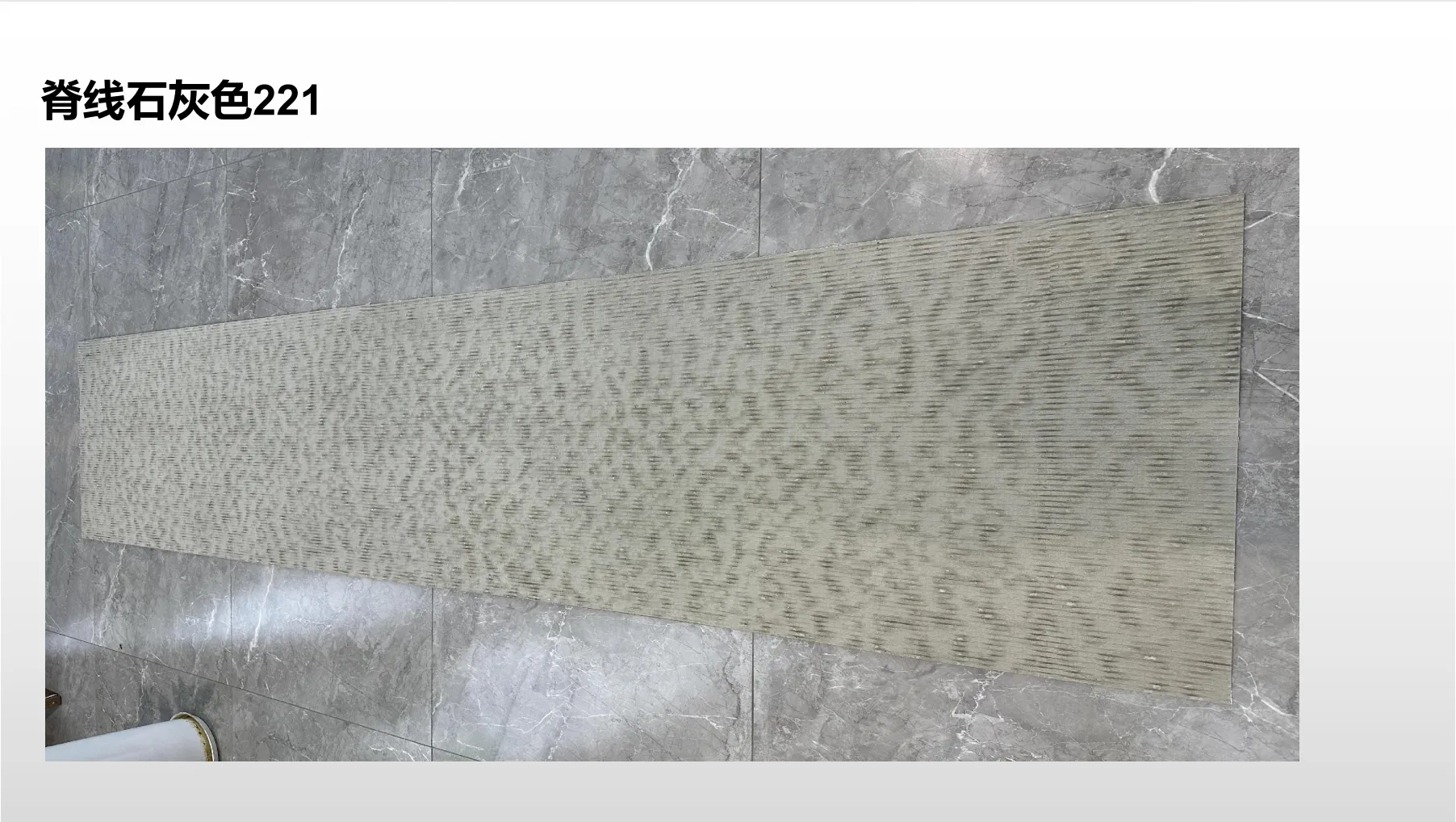
Take, for example, a close-up shot of Ridged Stone's surface. The camera lingers on the linear ridges, each one rising gently before tapering off, like the ripples left by a finger dragged through wet sand. The light hits at a 45-degree angle, casting soft shadows in the valleys between ridges—shadows that shift with the time of day, just like they would in a real room. You can see the tiny, intentional variations in height: no two ridges are exactly alike, mimicking the organic irregularity of natural stone, but with a precision that speaks to modern engineering. These photos don't just document the texture; they perform it.
Another photo might showcase Ridged Stone in context: a residential fireplace surround, where the ridges frame the flames, their warmth contrasting with the cool, earthy tone of the material. Or a commercial lobby, where a wall of Ridged Stone stretches from floor to ceiling, the ridges creating a sense of movement that guides visitors through the space. In these images, you start to understand the material's versatility—how it can be bold or understated, depending on the application.
But what makes these photos truly special is their honesty. There's no heavy filtering or over-editing here. The team at COLORIA knows that designers need to see the truth of a material: how it absorbs light, how its color shifts in different environments, how the texture interacts with other elements like wood or metal. A Ridged Stone real photo will show you the slight variations in tone across a slab, the way a ridge might have a tiny, imperceptible nick (a deliberate nod to natural wear), or how the material softens a space when paired with warm lighting. These details aren't flaws—they're the proof that Ridged Stone isn't just a product; it's a character in the design story.
To appreciate Ridged Stone, it helps to understand the innovation that goes into making it. At its core, it's part of COLORIA's mcm flexible stone range—a line of modified composite materials that blend natural minerals with advanced polymers. The result? A material that's 70% lighter than natural stone, yet just as durable. It bends, it cuts, it installs easily—and it carries textures that rival the real thing.
The ridged texture itself is a feat of engineering. Unlike natural stone, which is shaped by centuries of geological activity, Ridged Stone's pattern is crafted with intentionality. Using techniques from COLORIA's 3d printing series , the ridges are formed with microscopic precision, ensuring consistency across large surfaces while retaining the organic feel that makes texture so appealing. It's a marriage of art and technology: a designer sketches the ideal ridge profile, engineers refine it for durability, and the 3D printing process brings it to life, layer by layer.
But here's the kicker: despite its high-tech origins, Ridged Stone feels authentic . Run your hand over it, and you'll feel the resistance of the ridges, the slight give of the material (a result of its flexibility), and the cool, solid weight that grounds it. It's a texture that invites interaction—something that's immediately apparent in the real photos, where the play of light and shadow makes you want to reach through the screen and touch it.
Ridged Stone isn't just a pretty texture—it's a workhorse. Its flexibility (it can bend to a 30mm radius) and durability (resistant to moisture, UV rays, and impact) make it suitable for almost any space. Let's walk through a few real-world scenarios where Ridged Stone, as seen in those captivating photos, has made a difference.
Imagine a modern home with an open-concept living area. The walls are painted a soft white, the floors are polished concrete—but something's missing. Enter Ridged Stone: a feature wall behind the sofa, its linear ridges adding depth without overwhelming the space. In the real photos, you can see how the ridges catch the light from the floor-to-ceiling windows, creating a dynamic backdrop that changes throughout the day. It's not just a wall anymore; it's a focal point, a conversation starter. Homeowners love it because it's low-maintenance (no sealing, no staining) and kid-friendly (resistant to scuffs). Designers love it because it adds texture without the hassle of natural stone.
First impressions matter in commercial design, and Ridged Stone delivers. Take a boutique hotel lobby: the check-in desk is clad in fair-faced concrete , its raw, industrial vibe balanced by Ridged Stone walls in a warm taupe. The photos of this space show how the two materials play off each other—the smoothness of the concrete highlighting the texture of the stone, creating a lobby that feels both modern and inviting. Because Ridged Stone comes in large formats (thanks to COLORIA's mcm big slab board series ), there are minimal seams, giving the wall a seamless, monolithic look that reads as luxurious.
Outdoor spaces are tough on materials, but Ridged Stone thrives here. A restaurant patio with an outdoor fireplace clad in Ridged Stone? The photos show it holding up against rain, snow, and harsh sunlight, its color fading minimally over time. A residential backyard with a Ridged Stone accent wall around the pool? It's slip-resistant and easy to clean, making it both safe and stylish. Unlike natural stone, which can crack in freezing temperatures, Ridged Stone's composite makeup makes it weatherproof—proving that beauty and brawn can coexist.
| Product Line | Texture Characteristic | Ideal Application | Material Flexibility |
|---|---|---|---|
| Ridged Stone | Deep, linear ridges with subtle undulations; mimics natural erosion patterns | Feature walls, fireplaces, accent panels, outdoor cladding | High (bends to 30mm radius; suitable for curved surfaces) |
| mcm big slab board series | Smooth yet textured; large-format consistency with minimal seams | Lobby walls, exterior facades, entire room cladding | Moderate (ideal for flat/large surfaces; spans up to 3m in length) |
| 3d printing series | Customizable patterns (geometric, organic, abstract); intricate detailing | Art installations, ceiling panels, custom furniture accents | Very high (tailored to design specs; limited only by imagination) |
We've talked a lot about Ridged Stone's real photos, but let's step back and ask: why do they matter so much? For designers, they're a tool. A photo of Ridged Stone in a sunlit room tells you how it will interact with natural light. A photo of it next to fair-faced concrete shows you how it complements other materials. A close-up photo reveals details you might miss in a sample—like how the ridges catch dust (spoiler: they don't, thanks to COLORIA's anti-dust coating) or how the color shifts in warm vs. cool lighting.
For clients, real photos are reassurance. They bridge the gap between a designer's vision and a homeowner's "I'll believe it when I see it." A client might look at a swatch of Ridged Stone and think, "That's nice," but show them a photo of it installed in a space similar to theirs, and suddenly it clicks. "That's exactly what I want," they'll say. It's the difference between a concept and a commitment.
And for COLORIA, these photos are a promise. They say, "This is what you'll get—no surprises." In an industry where materials can look drastically different in person than in catalogs, that transparency builds trust. It's why the team invests in professional photography, shooting in real spaces with natural light, and avoiding heavy editing. They want you to see Ridged Stone as it is: imperfectly perfect, textured, and ready to transform your project.
As design trends lean into warmth, authenticity, and sustainability, materials like Ridged Stone are poised to lead the way. COLORIA's commitment to innovation—whether through mcm flexible stone , big slab boards , or 3D printing —means they're not just keeping up with trends; they're setting them. And as technology advances, we can expect even more textures, more customization, and more ways to bring spaces to life.
But at the end of the day, it's not just about technology. It's about connection. Ridged Stone, as seen in those real photos, connects us to something primal: our love of texture, of surfaces that tell a story, of spaces that feel human. In a world that's increasingly digital, tactile experiences matter more than ever. They ground us, they comfort us, they remind us that design isn't just about how something looks—it's about how it makes us feel.
Recommend Products












