
Walk down any urban street, and the buildings around you do more than just stand—they speak. A sleek glass tower whispers modernity; a brick facade hums with warmth; a stone-clad structure exudes timelessness. But for architects, designers, and builders, creating that "voice" has long been a balancing act: between durability and beauty, tradition and innovation, cost and creativity. Enter MCM Flexible Stone—a material that doesn't just bridge these gaps, but erases them entirely. Today, we're diving into how this revolutionary product is redefining commercial exteriors, with a spotlight on standout collections like Ridged Stone, Lunar Peak, and Travertine (Starry Green), and why it's becoming the go-to choice for projects that demand both heart and hardiness.
For decades, commercial buildings leaned on materials like natural stone, brick, or concrete. They're reliable, sure—but they come with trade-offs. Natural stone, for all its grandeur, is heavy. A single slab can weigh hundreds of pounds, requiring reinforced structural support and driving up construction costs. Brick, while charming, limits design flexibility; once laid, it's hard to pivot if the client craves a different texture or color. Concrete, though durable, often feels cold and industrial, lacking the warmth that draws people in. And then there's maintenance: stone chips, brick fades, concrete cracks. For business owners, that means ongoing repairs, disrupted operations, and a facade that loses its luster far too soon.
Take, for example, a boutique hotel in downtown Portland I worked on a few years back. The client dreamed of a facade that felt "organic yet modern," inspired by the Pacific Northwest's forests. We initially planned to use natural travertine—its porous, earthy texture fit the vision perfectly. But when the engineering team ran the numbers, the weight of the stone would have required reinforcing the building's frame, adding six months to the timeline and $200,000 to the budget. The client had to compromise, settling for a painted stucco that never quite captured that "lived-in luxury" feel. Stories like this are all too common—and they're exactly why MCM Flexible Stone was invented.
At its core, MCM (Modified Composite Material) Flexible Stone is a game of smart engineering. It's crafted by bonding natural stone particles—think crushed travertine, granite, or marble—to a lightweight, flexible backing (often fiberglass or polymer). The result? A material that looks and feels like the real thing but weighs up to 80% less. A 4x8-foot panel of MCM Flexible Stone might weigh just 15 pounds, compared to 100+ pounds for natural stone. That lightness isn't just about convenience; it's transformative. Suddenly, architects aren't limited by structural constraints. They can curve panels around corners, layer textures for depth, or even create 3D art installations on building facades—all without compromising safety or cost.
But flexibility here isn't just physical. MCM Flexible Stone is also chemically tough. It's resistant to UV rays, so colors won't fade under harsh sunlight. It repels water, preventing mold or mildew in rainy climates. And it's scratch-resistant, standing up to everything from hailstorms to stray shopping carts. In lab tests, panels have endured extreme temperature swings—from -40°F to 180°F—without cracking or warping. For a restaurant in Arizona, that means the facade stays vibrant even in 110°F summers; for a retail store in Chicago, it weathers blizzards without looking worse for wear. This durability isn't an afterthought—it's baked into the material's DNA.
What truly sets MCM Flexible Stone apart, though, is its design versatility. This isn't a "one-size-fits-all" material—it's a playground for creativity. Let's explore a few standout collections that are making waves in commercial architecture:
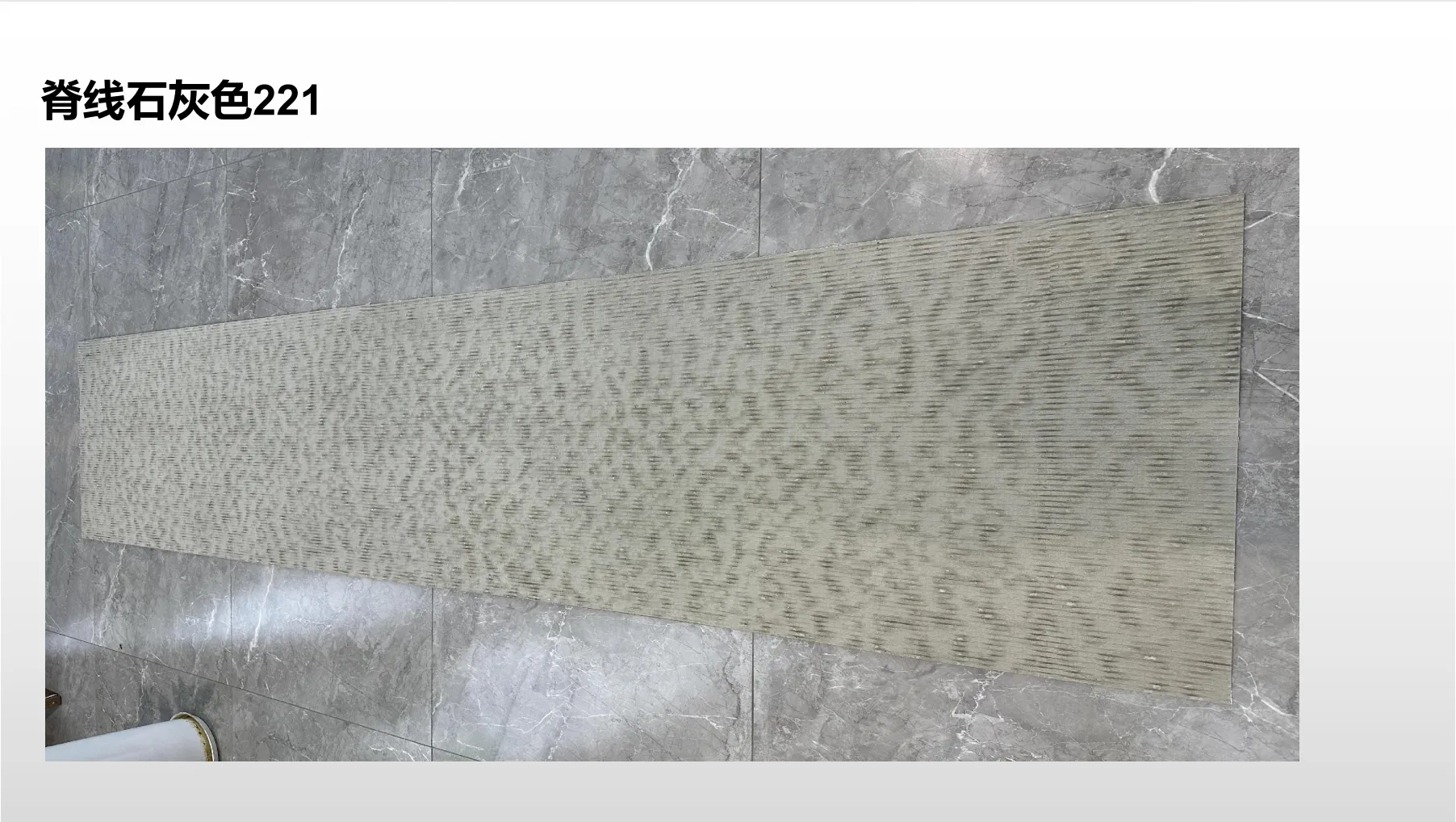
Ridged Stone isn't just a texture—it's a narrative. Imagine running your hand over a facade that mimics the weathered ridges of a mountain, or the gentle undulations of a riverbed. These panels are designed to catch light and shadow, creating depth that shifts throughout the day. A coffee shop in Seattle used Ridged Stone in a warm beige tone for its exterior, and customers often comment on how "inviting" it feels—like a hug from the building itself. The ridges break up the monotony of flat surfaces, making even a small storefront feel dynamic. And because MCM is flexible, the ridges can be customized: subtle waves for a coastal vibe, sharp peaks for an industrial edge, or soft curves for a minimalist look.
If Ridged Stone is earthy, the Lunar Peak Series is out of this world—literally. Available in Silvery, Golden, and Black, these panels evoke the moon's cratered surface, with a metallic sheen that shimmers at dusk. A tech startup in San Francisco chose Lunar Peak Silvery for its headquarters, and the effect is stunning: by day, it's a sleek, futuristic facade that mirrors the sky; by night, it glows under LED lighting, looking like a structure from a sci-fi film. What's clever about Lunar Peak is its duality—it's bold enough to make a statement but neutral enough to pair with other materials. One architect mixed Lunar Peak Black with wood accents for a "space meets nature" aesthetic in a boutique hotel lobby, and the result went viral on design blogs.
For projects that crave natural beauty without the weight of real travertine, Travertine (Starry Green) is a showstopper. These panels replicate the porous, honeycombed texture of natural travertine, but with a twist: flecks of iridescent green that catch the light, like stars scattered across a forest floor. A wellness center in Colorado used this collection for its exterior, and patients often mention how the facade "calms" them before appointments. It's a subtle detail—the starry flecks are tiny, but they add a touch of magic that makes the building feel less like a clinic and more like a retreat. And because it's MCM, the "pores" in the travertine texture are sealed, preventing water absorption and ensuring the green hue stays vibrant for decades.
Concrete has long been a staple of industrial design, but traditional fair-faced concrete can feel cold and uninviting. MCM's take? A warmer, more tactile version that retains the material's raw appeal but adds softness. Fair-faced Concrete panels in MCM are available in light, medium, and dark gray, with a slightly textured surface that feels more "handmade" than machine-poured. A brewery in Portland used these panels for its taproom exterior, pairing them with reclaimed wood accents and metal fixtures. The result? A space that feels both rugged and welcoming—perfect for a spot where people come to relax and connect. One regular joked, "I came for the beer, but I stay because the building feels like home."
| Material | Weight (per sq ft) | Installation Time | Durability (UV/Water/Scratch Resistant) | Design Flexibility |
|---|---|---|---|---|
| Natural Stone (Granite/Marble) | 15–25 lbs | 4–6 weeks (requires heavy machinery) | High (but prone to chipping/cracking) | Low (fixed slabs, limited customization) |
| Brick | 10–12 lbs | 3–4 weeks (labor-intensive laying) | Medium (fades over time, mortar cracks) | Low (uniform color/texture, hard to modify) |
| Traditional Concrete | 12–15 lbs | 2–3 weeks (curing time required) | High (but prone to staining, lacks warmth) | Medium (can be stamped, but limited textures) |
| MCM Flexible Stone | 1–3 lbs | 1–2 weeks (lightweight, easy to install) | High (UV/water/scratch resistant; no chipping) | Very High (custom textures, colors, curves, 3D designs) |
Let's step beyond the specs and talk about real buildings—because at the end of the day, architecture is about people. Take the "Ember & Stone" restaurant in Austin, Texas. The owner, Maria, wanted a facade that felt "rustic yet refined," inspired by the city's blend of cowboy heritage and modern creativity. Traditional materials weren't cutting it: natural stone was too heavy for her historic building's structure, and brick felt too "cookie-cutter." Then she discovered MCM Flexible Stone's Travertine (Starry Orange) panels. The warm, terracotta hue with flecks of gold mirrored the restaurant's menu of wood-fired dishes, and the lightweight panels didn't require structural upgrades. Today, the facade is Instagram-famous—customers pose in front of it before dinner, and Maria estimates it's boosted foot traffic by 30%. "It's not just a wall," she says. "It's part of the experience."
Or consider the "Nexus Hub" office complex in Atlanta. The architects wanted a campus that felt "connected to nature" but still projected professionalism. They chose Lunar Peak Golden for the main building—its metallic finish reflects the surrounding oak trees, blending the structure into the landscape—and paired it with Ridged Stone in a soft gray for the walkways. Employees report feeling "more creative" in the space, and tenant retention is 20% higher than the city average. "We didn't just build offices," the lead architect told me. "We built a community hub—and MCM made it possible to balance aesthetics with functionality."
Even historic renovations are benefiting. The "Heritage Lofts" in Boston, a converted 1920s factory, needed an exterior update that honored its past but met modern safety codes. The original brick was crumbling, and replacing it with new brick would have erased the building's character. Instead, the team used MCM Flexible Stone's "Historical Pathfinders Stone" panels—designed to mimic the weathered, uneven texture of old brick, right down to the mortar lines. The result? A facade that looks like it's been there for a century, but with the durability of a modern material. "It's like giving the building a second life," the preservationist on the project said.
Beyond the obvious—beauty, durability, design freedom—MCM Flexible Stone offers perks that make commercial projects smoother, smarter, and more profitable. Let's break them down:
As architects and builders continue to push boundaries, MCM Flexible Stone is evolving right alongside them. We're already seeing 3D-printed MCM panels that create intricate, custom patterns—think geometric mosaics or even company logos embedded into facades. There's talk of "smart" MCM panels with integrated solar cells or LED lighting, turning exteriors into functional art. And with the rise of biophilic design (connecting people to nature through architecture), collections like Travertine (Starry Green) and Gobi Panel (which mimics desert landscapes) are becoming staples for projects focused on wellness and mental health.
But perhaps the most exciting part? MCM Flexible Stone isn't just for "big" projects. Small businesses, cafes, and even residential buildings are adopting it, because great design shouldn't be reserved for skyscrapers. It's a material that democratizes creativity—letting anyone, regardless of budget or building size, create a facade that tells their story.
At the end of the day, MCM Flexible Stone is more than just a building material. It's a shift in how we think about exteriors: not as static walls, but as dynamic, living parts of our environment. It's about creating spaces that don't just *exist*—they *resonate*. Whether it's the cozy warmth of Ridged Stone, the cosmic allure of Lunar Peak, or the earthy magic of Travertine (Starry Green), these panels are helping buildings connect with people on a deeper level.
So the next time you walk down that city street, take a closer look at the facades around you. Chances are, some of the most striking ones are made with MCM Flexible Stone. And as you do, remember: behind every great building is a vision—and now, thanks to materials like this, that vision can be as bold, beautiful, and human as we dare to dream.
Recommend Products












