
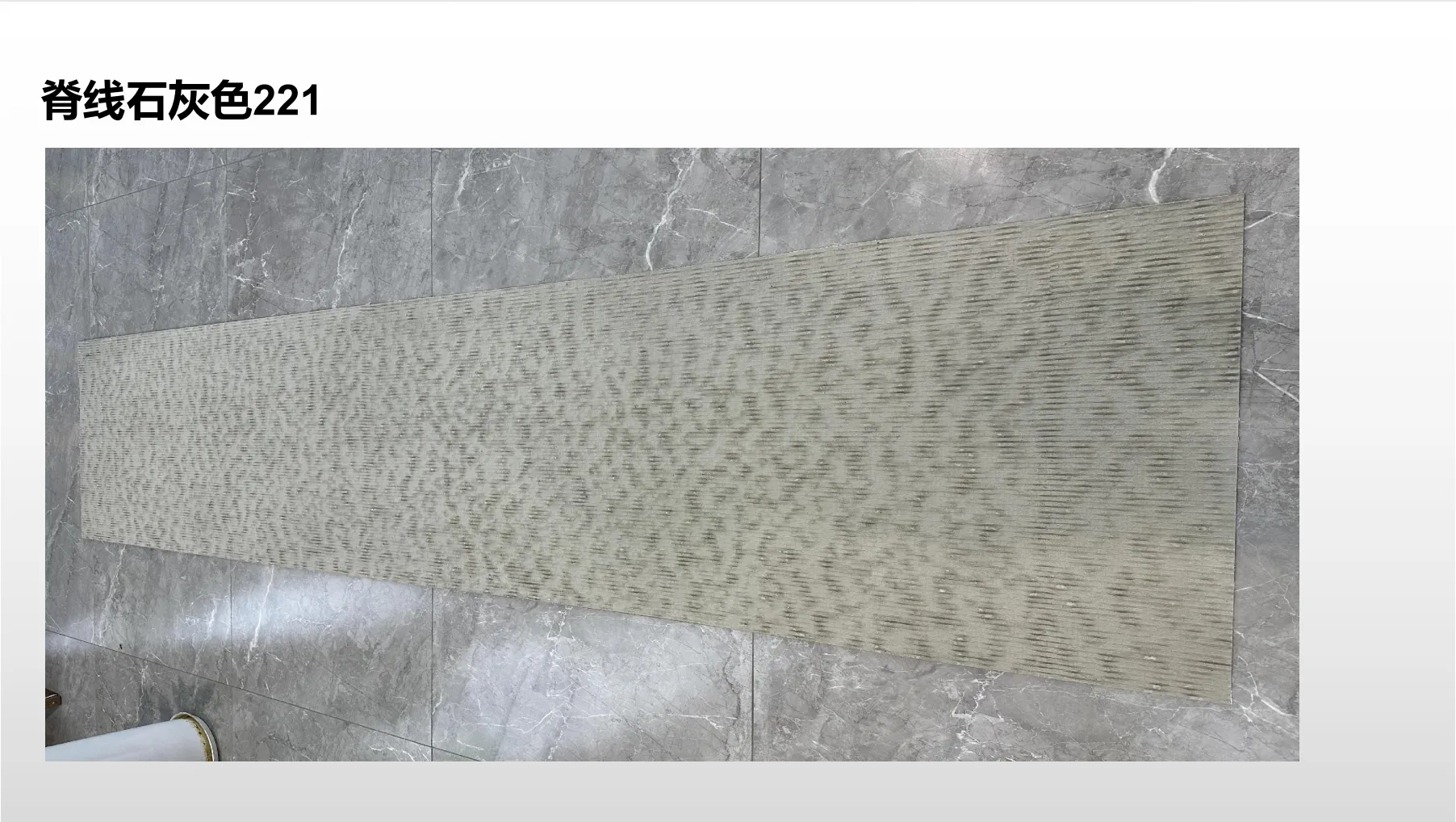
It was a Tuesday evening when Mark first realized his living room was broken. Not in a "needs a new couch" way, but in a deeper, quieter sense. He was standing in the middle of it, coffee in hand, staring at the walls—pale, flat, uninspired drywall that had started to yellow at the corners. The fireplace, once the room's "focal point," was just a brick eyesore, its mortar crumbling like old bread. Outside, rain pattered against the windows, and the room felt… heavy. Like it was shrinking in on itself. "This isn't a home," he thought. "It's just a box with furniture."
Sound familiar? Maybe you've stood in a room like that—one that feels more like a placeholder than a reflection of who you are. A space that makes you hesitate before inviting friends over, or where you find yourself avoiding spending time, even on lazy weekends. For Mark, that hesitation had turned into frustration. He'd tried paint (too temporary), wallpaper (peeled in months), even considered real stone for the fireplace (until the contractor mentioned "structural reinforcement" and a price tag that made his jaw drop). Traditional materials felt like a series of compromises: beautiful but fragile, durable but dull, affordable but ugly. What he wanted was something that felt alive —textured, warm, unapologetically there —without the headache.
That's when he stumbled on MCM Flexible Stone. At first, he thought it was too good to be true: "flexible stone"? It sounded like a marketing gimmick. But then he saw the photos—real photos, not stock images—of Ridged Stone walls, of Lunar Peak panels catching the light, of spaces that looked like they belonged in a design magazine but were actually family homes. He clicked through case studies, read reviews from homeowners and designers alike, and something shifted. Maybe, just maybe, this was the missing piece.
Let's get real: renovation materials have been stuck in a rut for decades. Think about it. Real stone? Gorgeous, but it's heavy—we're talking hundreds of pounds per slab. That means you need special tools, reinforced walls, and a team of installers. And if it cracks? Good luck fixing it. Wood? Warm and inviting, but scratch it, spill on it, or let sunlight hit it too long, and it fades, warps, or rots. Concrete? Durable, sure, but it feels like a prison wall—cold, unforgiving, and about as personality-filled as a spreadsheet. Even "modern" options like vinyl or laminate often feel fake, like they're trying too hard to mimic something better. They look great in the store, but in your home, under your lighting, they fall flat.
MCM Flexible Stone isn't here to mimic. It's here to elevate . Made from a modified composite material, it's lightweight (seriously—you could hang a panel with just a few screws), flexible (it bends around corners, curves, even archways), and designed to capture the raw, unfiltered beauty of natural textures without the hassle. It's stone, but smarter. Metal, but softer. Wood, but stronger. And the best part? It's not just for "statement walls." It's for people who want their entire home to feel intentional—from the backsplash in the kitchen to the accent wall in the bedroom.
Take Ridged Stone, for example. Mark first saw it in a real photo of a kitchen renovation—a homeowner had used it for the backsplash, and the texture was unmistakeable . Not the flat, uniform "stone-look" of cheap tiles, but actual ridges and valleys, like the surface of a riverbed worn smooth by time. In the photo, you could almost feel it: that slight grit under your fingertips, the way light played in the crevices, making the wall look like it was breathing. "That's it," Mark thought. "That's the texture I've been missing."
Mark worked with a designer named Sarah, who specialized in MCM materials. Together, they mapped out the room, focusing on three key areas: the fireplace (the "problem child"), the accent wall behind the couch, and the ceiling (yes, the ceiling—Sarah called it "the fifth wall," and Mark quickly realized she was right). Here's how they did it, using four standout MCM products that turned his "box with furniture" into a room he now calls "the heart of the house."
Let's start with the fireplace. Remember that crumbling brick eyesore? Sarah suggested wrapping it in Ridged Stone, and Mark was skeptical. "Stone on brick?" he asked. "Won't it look bulky?" But Sarah pulled up a real photo of a similar project: a small, outdated fireplace transformed by Ridged Stone in a warm, earthy tone. The ridges weren't sharp or aggressive—they were soft, like the stone had been carved by hand, not a machine. "It's not about covering the brick," she said. "It's about giving it a new story."
The installation day was a revelation. Two installers arrived with panels that were surprisingly light (Mark could lift one with one hand) and flexible enough to curve slightly over the fireplace's uneven edges. No sledgehammers, no dust, no "structural reinforcement"—just a few hours, some adhesive, and suddenly, the fireplace wasn't an eyesore anymore. It was commanding . Up close, the Ridged Stone has this organic texture—you can see tiny variations in the ridges, like nature itself had a hand in making it. Run your hand over it, and it's cool but not cold, rough but not harsh. It's the kind of texture that makes you want to pause, to touch it again, to notice it. Mark's 10-year-old, who'd previously declared the fireplace "boring," now sits in front of it, tracing the ridges with her finger. "It looks like a dragon's back," she told him. He couldn't agree more.
The accent wall behind the couch was next. Mark wanted something that would balance the earthiness of the Ridged Stone fireplace without clashing. Sarah suggested Lunar Peak Silvery, and at first, he was confused. "Silver? In a living room?" But then she showed him a real photo: a wall panel that wasn't shiny or metallic, but had this soft, diffused glow, like moonlight on snow. "It's not about being flashy," Sarah explained. "It's about light."
She was right. Lunar Peak Silvery isn't your typical "metal finish." It's muted, almost brushed, with a texture that catches light in unexpected ways. In the morning, when the sun streams through the east window, the wall shimmers—not like a mirror, but like a field of grass under a breeze, each blade catching a little bit of sun. In the evening, with the lamp on, it casts these warm, fuzzy shadows across the couch, turning a plain wall into a conversation starter. "People walk in and stop," Mark laughs. "They'll say, 'Is that… metal?' And I'll say, 'It's Lunar Peak,' and then they have to touch it. It's like a magic trick." Even his mother, who's notoriously hard to impress, ran her hand over it and said, "Well. That's nice. Not too 'modern.'" High praise, indeed.
To tie the room together, Sarah suggested a thin strip of foamed aluminium alloy board in vintage silver along the top edge of the Ridged Stone fireplace. Mark was nervous—stone and metal? It sounded like a recipe for "industrial chaos." But Sarah had a vision: a subtle border that would frame the fireplace, adding a touch of modernity without overwhelming the stone's organic texture. "Think of it as a picture frame for the room's best feature," she said.
When the installers put it up, Mark held his breath. Then he stepped back, and… smiled. The vintage silver has this worn-in, almost antique finish—like a well-loved pocket watch or a silver spoon passed down through generations. It doesn't scream "look at me"; instead, it whispers, "I belong here." The contrast between the rough Ridged Stone and the smooth, cool aluminium is unexpected but perfect. It's like pairing a cozy flannel shirt with a sleek leather jacket—two opposites that somehow make each other better. "It's the little details," Mark says now. "That strip? It's not something you notice right away, but when you do, you realize how much it pulls the whole room together."
The ceiling was the wild card. Sarah proposed Bamboo Mat Board, and Mark thought she was joking. "Bamboo on the ceiling? That's… bold." But then he felt a sample. It's woven, but not in a flimsy, "tropical themed" way. The strands are thick, sturdy, with a natural variation in color—some light, some dark, like sunlight filtering through a bamboo forest. "It adds warmth from above," Sarah said. "Rooms feel smaller when the ceiling is just flat white. This? It makes the space feel taller, airier, like you're sitting under a canopy."
Now, when Mark lies on the couch, he stares up at that ceiling and smiles. It's not perfect—some strands are thicker than others, some have tiny knots—and that's the point. It feels alive, like a piece of nature that's been gently invited indoors. On rainy days, when the light is soft, it casts these delicate shadows on the walls, like leaves rustling in the wind. Even his dog, a golden retriever named Max, has taken to lying directly underneath it, as if he knows it's the coziest spot in the house. "It's weird," Mark says. "You don't think about the ceiling much, but now? I notice it every day. It makes the whole room feel like a hug."
Let's paint the "before" picture clearly. Mark's living room was 180 square feet of missed potential. The walls were painted a sad off-white that had yellowed near the ceiling. The fireplace was red brick with blackened mortar, its mantel a chipped piece of pine that looked like it belonged in a college dorm. The flooring was cheap laminate that pretended to be hardwood but creaked like a horror movie set. The ceiling? Flat, white, and forgettable. Worst of all, the room had no personality. It didn't say "Mark"—it said "anyone." A generic space for a generic life.
Mark avoided it. He'd work late to skip evening TV there, opt for takeout at the kitchen counter instead of eating on the couch. When friends asked to come over, he'd make excuses. "The place is a mess," he'd say, even when it wasn't. Deep down, he was embarrassed. This room was supposed to be where memories happened—game nights, movie marathons, lazy Sundays with coffee—but instead, it felt like a reminder of all the things he couldn't fix.
Fast forward to six months after the renovation. Walk into Mark's living room now, and the first thing you notice is the light. It's softer, warmer, like the room itself is breathing. The Ridged Stone fireplace dominates one wall, its texture catching the light from the new pendant lamp above the couch. To the left, the Lunar Peak Silvery accent wall shimmers gently, turning what was once a blank space into a canvas for light and shadow. Above, the Bamboo Mat Board ceiling adds depth, making the room feel taller, airier, like it's reaching up to the sky.
But it's the little things that matter most. The way Max curls up in front of the fireplace now, like he knows it's the heart of the room. The way Mark's daughter has taken to drawing on the Lunar Peak wall with washable markers (don't worry—they wipe right off). The way friends walk in and say, "Whoa. This is… you ." Game nights are back, with people spilling off the couch onto the floor, drinks in hand, laughing loud enough to rattle the windows. Mark even finds himself sitting there alone sometimes, just staring at the walls, smiling like an idiot. "It sounds silly," he admits, "but this room makes me happy. Like, genuinely happy. I don't want to leave it anymore."
| Feature | Before Renovation | After Renovation (with MCM Flexible Stone) |
|---|---|---|
| Wall Texture | Flat, yellowed drywall; no depth or character. | Ridged Stone (fireplace) with organic, hand-carved texture; Lunar Peak Silvery (accent wall) with soft, moonlit shimmer. |
| Lighting | Dull, harsh light that highlighted flaws (yellowed corners, peeling paint). | Warm, diffused light enhanced by Lunar Peak's light-catching texture and Bamboo Mat Board's shadow play. |
| Durability | Wall paint chipped; wallpaper peeled; brick fireplace mortar crumbling. | Ridged Stone resists scratches and spills; Lunar Peak and foamed aluminium alloy board (vintage silver) withstand daily wear; Bamboo Mat Board is moisture-resistant and fade-proof. |
| Installation | Would have required structural work (for real stone) or messy, time-consuming wallpaper/ paint. | Installed in 2 days with minimal dust; lightweight panels hung with adhesive and screws (no structural changes needed). |
| Vibe | Generic, cold, uninspired—a "box with furniture." | Warm, textured, alive—a space that feels like a reflection of the people who live there. |
"I used to think renovation was about 'fixing' a room. Now I realize it's about unlocking it. MCM Flexible Stone didn't just cover my walls—it gave my living room a voice. And turns out, it was saying exactly what I needed to hear: 'Welcome home.'"
— Mark, homeowner
At the end of the day, renovation isn't about walls or ceilings or fireplaces. It's about how a space makes you feel. Does it make you want to stay? To connect? To breathe a little deeper? Traditional materials too often prioritize function over feeling—they're designed to "work," not to move you. MCM Flexible Stone is different. It's designed with emotion in mind.
Take Ridged Stone: it's not just "textured"—it's textured in a way that makes you want to reach out and touch it, to feel the ridges and valleys, to connect with something real. Lunar Peak Silvery isn't just "shiny"—it's a reminder of the beauty in subtlety, of how light can turn a dark corner into something magical. Foamed aluminium alloy board (vintage silver) isn't just "metal"—it's a bridge between old and new, a nod to the past and a wink to the future. Bamboo Mat Board isn't just "decorative"—it's a piece of the outdoors, brought inside to remind us of the world beyond our walls.
These materials don't just cover spaces—they transform them. They turn houses into homes, boxes into stories, and "before" photos into "after" photos that make you want to pick up the phone and call a contractor. They're for people who refuse to compromise—who want beauty and durability, personality and practicality, a space that feels like them .
Mark's story isn't unique. It's the story of anyone who's ever looked at a room and thought, "This could be better." It's the story of designers who've struggled to find materials that match their vision, of homeowners who've dreamed of a space that feels alive. And it's the story of MCM Flexible Stone—materials that don't just meet expectations, but shatter them.
So if you're standing in a room that feels like a placeholder, if you're tired of compromising on beauty or durability, if you're ready to turn "someday" into "today"—maybe it's time to look at MCM Flexible Stone. Start with the photos—real photos, not stock images—of Ridged Stone walls and Lunar Peak panels and Bamboo Mat Board ceilings. Read the stories, touch the samples, imagine what your space could be.
Because here's the truth: your home shouldn't just be a place you live. It should be a place that lives with you—textured, warm, unapologetically there . And with MCM Flexible Stone, that's not just a dream. It's a renovation.
Mark's living room isn't just a room anymore. It's a testament to that. And yours could be too.
Recommend Products












