
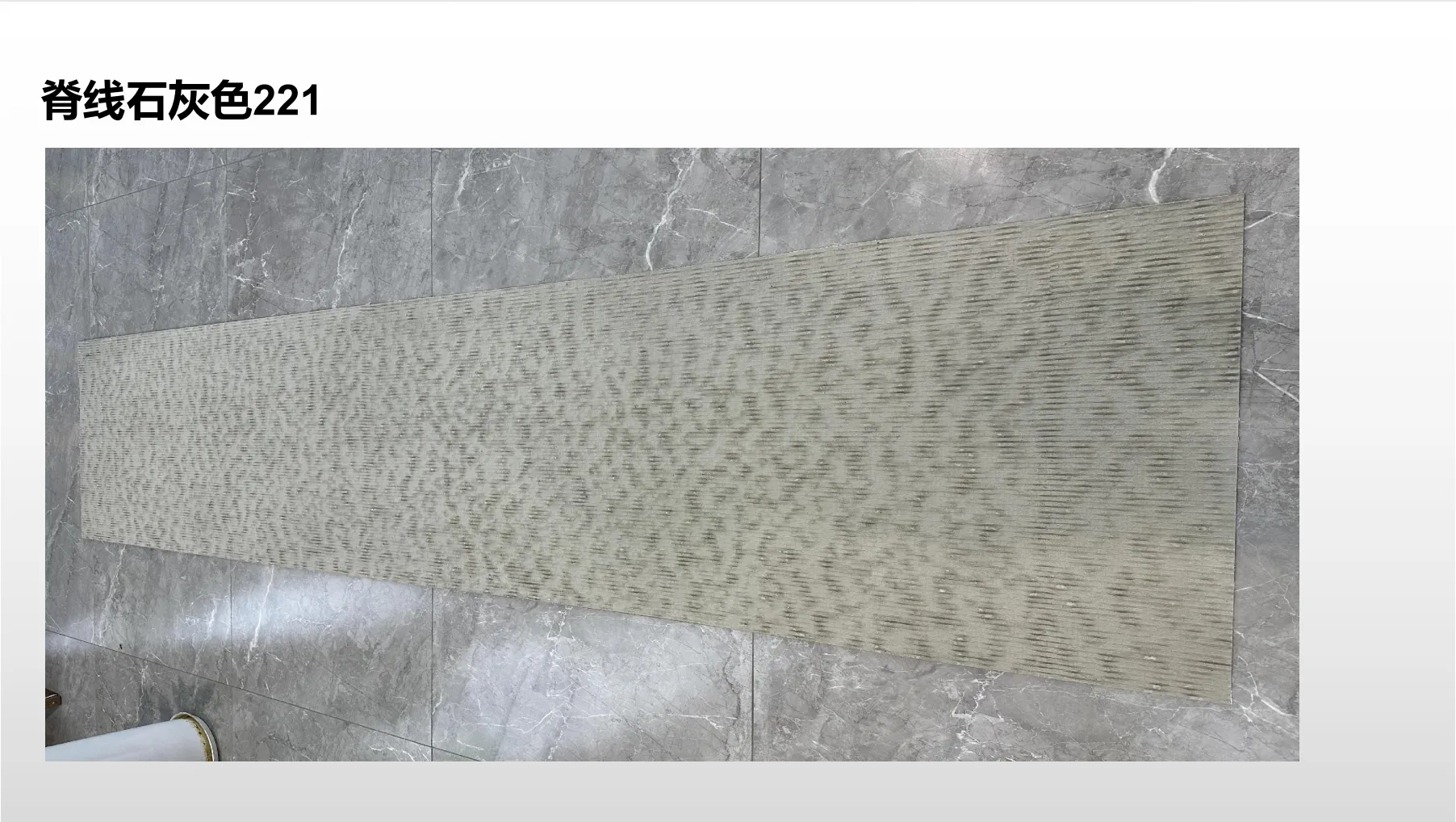
Exploring how tactile ridges and MCM innovation are redefining modern minimalism—one texture at a time.
Walk into any "minimalist" home from a decade ago, and you might've been met with a sea of stark white walls, sleek surfaces, and not much else. It was clean, sure—but often felt cold, like a gallery stripped of art. Today, though, minimalism has grown up. Designers and homeowners alike are realizing that "less" doesn't have to mean "lifeless." Instead, the new minimalism is all about texture : the kind that invites you to reach out, run a hand along a wall, or pause to admire how light plays across a surface.
Enter Ridged Stone—a standout in the world of MCM (Modified Composite Material) design. If you've seen ridged stone real photos , you know exactly what I mean: those gentle, organic ridges that mimic the weathered grooves of natural rock, but with a consistency and flexibility that natural stone could never match. It's not just a material; it's a storyteller. And in minimalist spaces, where every element counts, that story matters.
This article isn't about theoretical design ideas. It's about real spaces, real textures, and real photos that prove Ridged Stone isn't just a trend—it's a tool for creating minimalist interiors that feel lived-in, warm, and uniquely yours. Let's dive in.
First, let's get technical—briefly. Ridged Stone is part of the broader MCM flexible stone family, which uses advanced composite technology to replicate the look and feel of natural stone without the hassle. Think: lightweight panels (so they're easy to install on walls, ceilings, even furniture), water-resistant properties (hello, bathrooms and kitchens), and a durability that outlasts many natural materials. But what truly sets Ridged Stone apart is its texture—the star of the show.
Minimalism thrives on contrast, and Ridged Stone delivers it in spades. Those subtle, repeating ridges add visual interest without overwhelming a space. In a room painted soft white, for example, a Ridged Stone accent wall becomes the focal point—not because it's bold, but because it changes . Morning light filters through the window, casting delicate shadows along the ridges. By afternoon, the sun dips lower, and those shadows stretch, transforming the wall's appearance. At night, warm overhead lighting softens the texture, making the space feel cozy and intimate.
I recently came across a ridged stone real photo of a home office that nailed this. The designer paired a Ridged Stone wall in a muted beige with a sleek wooden desk and a few potted plants. From the photo, you could almost feel the contrast: the cool, smooth wood against the warm, tactile ridges of the stone. It was minimalist, yes—but it wasn't sterile. It felt like a space where ideas could flow, not a room frozen in time.
Modern minimalism isn't just about aesthetics—it's about intentionality. Many homeowners today want materials that look good and do good. Ridged Stone checks both boxes. As part of the MCM lineup, it's often made with recycled materials, and its lightweight nature reduces transportation emissions during installation. Plus, unlike natural stone, which requires heavy quarrying, MCM production has a lower environmental footprint. So when you choose Ridged Stone, you're not just designing a beautiful space—you're making a choice that aligns with the "less waste, more meaning" ethos of minimalism.
Words can only go so far. To really understand Ridged Stone's impact, let's look at real photos of how it's being used in homes and commercial spaces. These aren't staged showroom shots—they're everyday spaces where texture takes center stage.
One of the most popular ways to use Ridged Stone is as a feature wall in the living room. Take, for example, a recent project in Portland, Oregon. The homeowner wanted a minimalist space but felt their all-white living room was "missing something." Enter Ridged Stone in a soft, earthy beige. The wall behind the sofa now boasts those gentle ridges, and in the real photos from the project, you can see how it anchors the room. Paired with a low-profile linen sofa, a few woven baskets, and a wood grain board coffee table, the space feels grounded—like a hug for the eyes.
What's clever here? The Ridged Stone doesn't compete with the room's other elements; it complements them. The wood grain board adds warmth, while the stone's texture adds depth. Together, they create a space that's calm but never boring.
Bathrooms are tricky for texture—many materials can't handle the humidity. But Ridged Stone? It's water-resistant, making it perfect for backsplashes or shower walls. A bathroom renovation in Austin, Texas, used Ridged Stone in a light gray shade behind the vanity. The real photos show how the ridges catch the light from the frosted window, creating a soft, diffused glow. To keep the space cohesive, the designer paired the stone with bamboo mat board shelves—another MCM material that adds a natural, woven texture without overwhelming the room.
The result? A bathroom that feels like a spa retreat, not a utilitarian space. Who says minimalism can't be luxurious?
With more people working from home, home offices need to be both functional and inspiring. A designer in Seattle tackled this by cladding one wall of a small home office with Ridged Stone in a deep charcoal. The real photos of the space are striking: the dark ridges contrast beautifully with the light wood desk and white bookshelves, creating a focal point that's both bold and calming. The texture of the stone adds a sensory element—something to look at or even touch during a long workday—that helps reduce stress and boost creativity.
Ridged Stone is a team player. It shines brightest when paired with other MCM materials that share its minimalist spirit. Here are a few combinations that work beautifully, inspired by real photos of designer projects:
| MCM Material | Texture Profile | Best Paired With Ridged Stone In... | Why It Works |
|---|---|---|---|
| Wood Grain Board | Smooth, linear grains that mimic natural wood | Living rooms, dining areas | Wood's warmth balances stone's coolness; creates a "nature meets modern" vibe. |
| Bamboo Mat Board | Soft, woven texture with subtle grid patterns | Bathrooms, entryways | Woven texture adds organic softness; bamboo's eco-friendly appeal aligns with minimalist values. |
| Fair-Faced Concrete | Raw, industrial finish with visible aggregate | Home offices, commercial spaces | Concrete's rawness contrasts with stone's organic ridges; creates an edgy, modern look. |
| Travertine (Starry Blue) | Swirled, marble-like texture with subtle blue undertones | Accent walls, kitchen backsplashes | A pop of color without chaos; the starry pattern complements Ridged Stone's linear ridges. |
In minimalist design, sticking to a neutral color palette (beige, gray, white, soft brown) keeps the focus on texture. For example, pair Ridged Stone in light gray with wood grain board in warm oak and bamboo mat board in natural beige. The textures differ—ridges, grains, weave—but the colors blend, creating harmony.
Ready to bring Ridged Stone into your home? Here are some practical tips, gleaned from real photos and designer insights, to help you get started:
- Overdoing it. Minimalism is about balance. A Ridged Stone wall paired with a textured rug, woven curtains, and a shaggy sofa? That's clutter, not texture.
- Ignoring scale. In a small room, opt for finer ridges to avoid overwhelming the space. In a large, open area, bolder ridges can add drama.
- Matching textures too closely. If your Ridged Stone has deep ridges, pair it with smooth materials (like wood grain board) to create contrast. Too many competing textures will feel chaotic.
In a world of filtered Instagram posts and AI-generated renderings, there's something powerful about real photos . They don't lie. They show Ridged Stone in imperfect, everyday light—in homes with messy coffee cups, kids' toys, and all the little things that make a space "real." When you look at these photos, you're not just seeing a material—you're seeing how it fits into a life.
I recently spoke with a homeowner who was hesitant to try Ridged Stone until she saw real photos of a project similar to hers. "The website renderings looked nice, but they felt too perfect," she said. "Then I saw photos of a family room with the same stone, and there was a dog bed in front of the wall, and a scuff mark from a kid's bike. That's when I thought, 'This works in real life.'"
That's the magic of Ridged Stone—and of MCM materials in general. They're designed for real life: durable enough for busy homes, flexible enough for unique spaces, and textured enough to make minimalism feel human.
Recommend Products












