
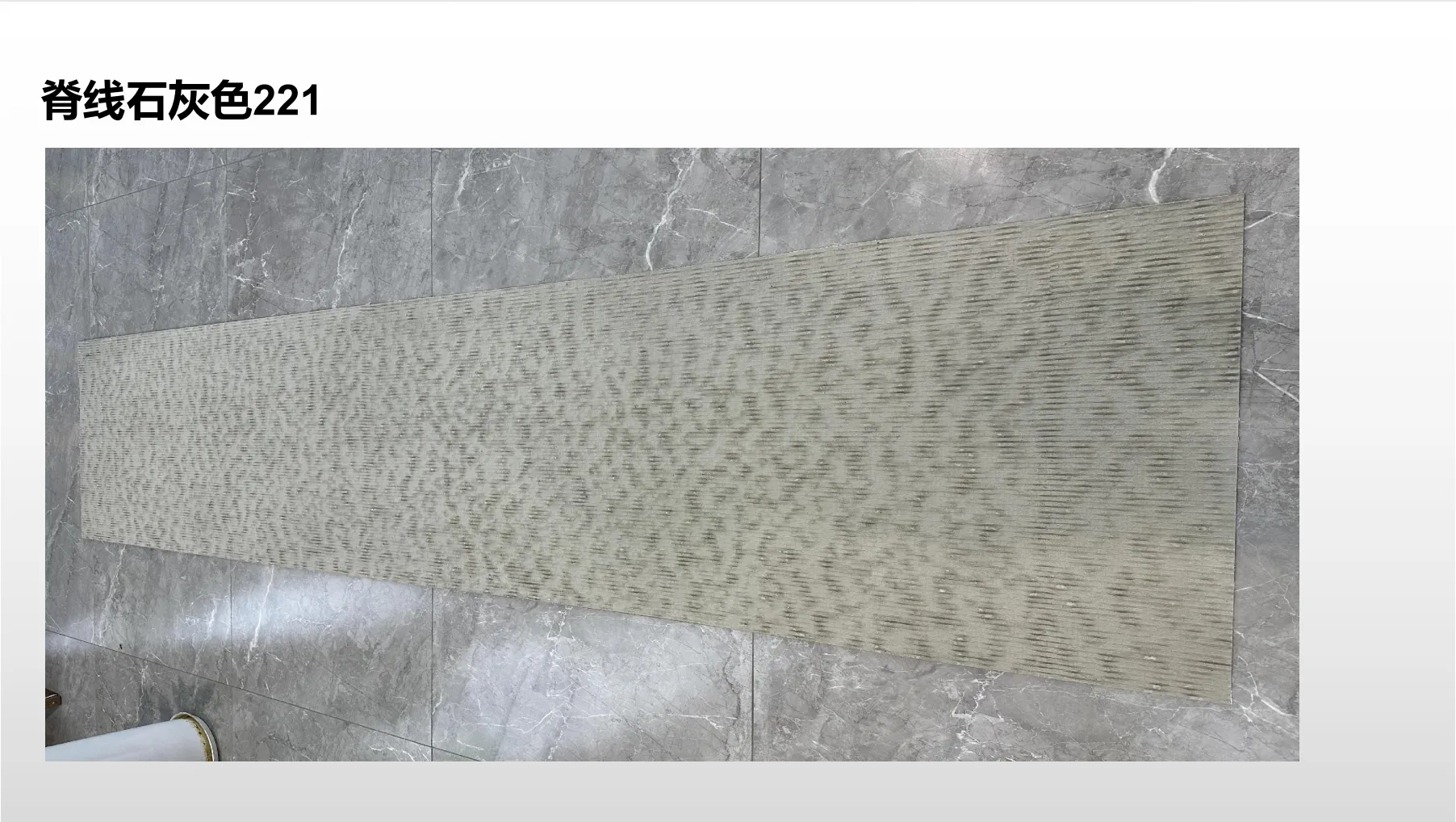
Walk past a building as the sun dips below the horizon, and you might notice something extraordinary: the exterior seems to come alive, shifting from static stone to a canvas of light and shadow. This transformation isn't magic—it's the artful interplay between MCM (Modified Composite Material) exteriors and nighttime illumination. Among the diverse MCM series, one material stands out for its dramatic response to light: Ridged Stone . Its textured surface, defined by deliberate, linear ridges, doesn't just sit there; it interacts with light, creating depth, movement, and mood in ways few other materials can. In this article, we'll explore how nighttime lighting transforms Ridged Stone and other MCM series, turning ordinary exteriors into unforgettable visual experiences.
Daylight reveals color and basic texture, but nighttime? Nighttime is when materials truly reveal their personality. Soft ambient glow, sharp spotlights, warm incandescents, or cool LEDs—each light source writes a different story on MCM surfaces. For architects and designers, this isn't just about visibility; it's about emotion. A restaurant exterior lit with warm, golden light might feel inviting; a corporate building bathed in cool, blue-toned light could exude professionalism. And at the heart of this dialogue lies texture—the way a material's surface catches, absorbs, or reflects light.
MCM flexible stone , a cornerstone of modern exterior design, is engineered to mimic the look and feel of natural stone while offering lightweight durability. But what makes it exceptional is its ability to hold texture with precision. Unlike heavy natural stone, which can be unpredictable in how it interacts with light, MCM series like Ridged Stone, Lunar Peak , and Fair-faced Concrete are crafted with intentionality—every ridge, pit, or sheen is designed to perform under specific lighting conditions. This control is why Ridged Stone, with its structured, linear ridges, has become a favorite for projects aiming to make a statement after dark.
Imagine (oops—strike that). Let's experience it: stand before a wall of Ridged Stone at twilight. As the first outdoor lights flicker on, something happens. The ridges, which might have seemed subtle in daylight, suddenly become protagonists. A warm spotlight angled from above casts long, slanted shadows between the ridges, creating a sense of movement—as if the wall itself is breathing. Shift the light to a lower angle, and the shadows shorten, emphasizing the height of each ridge, turning the surface into a rhythmic pattern of peaks and valleys. Even moonlight, soft and diffused, plays with Ridged Stone: the ridges catch the silvery glow, while the valleys retreat into gentle darkness, adding depth that flat surfaces can never achieve.
What makes Ridged Stone unique isn't just its texture, but its consistency. Natural stone might have random grooves or uneven surfaces, but Ridged Stone's ridges are uniform yet organic—close enough to create pattern, varied enough to avoid looking mechanical. This balance is key. Under harsh, direct light, it avoids appearing harsh; under soft, indirect light, it doesn't fade into blandness. It's a material that adapts, enhancing the mood of its environment rather than fighting it.
Ridged Stone is far from alone in its nighttime performance. Let's put it side by side with other standout MCM series to see how they interact with light. The table below breaks down four popular options: Ridged Stone, Lunar Peak Silvery , Fair-faced Concrete , and Travertine (Starry Green) . Each has its own language when spoken to by light.
| Material | Light Interaction | Texture Highlighted | Ambiance Created |
|---|---|---|---|
| Ridged Stone | Directional shadows; ridges cast linear shadows that shift with light angle. Warm light emphasizes earthiness; cool light sharpens contrast. | Linear ridges; height and spacing of ridges become focal points, creating rhythm. | Dramatic, dynamic; feels active and intentional, ideal for entrances or feature walls. |
| Lunar Peak Silvery | Reflective but not mirror-like; silvery undertones catch both warm and cool light, creating a subtle metallic sheen. Moonlight amplifies its ethereal quality. | Micro-texture; fine, almost powdery surface that glows softly, like moonlight on snow. | Elegant, modern; evokes calm and sophistication, perfect for luxury residential or corporate exteriors. |
| Fair-faced Concrete | Absorbs more light than it reflects; softens harsh light, creating a muted, diffused glow. Texture becomes visible only under direct, bright light. | Raw, industrial texture; small air bubbles and trowel marks are gently highlighted, adding warmth to its minimalist look. | Serene, grounded; industrial chic with a touch of coziness, great for cafes or art galleries. |
| Travertine (Starry Green) | "Starry" flecks (tiny, reflective particles) catch light like scattered stars; green base absorbs warm light, making the stars pop against a cool backdrop. | Organic pitting and veining; the natural "holes" in travertine become dark pools, while the stars twinkle in between. | Whimsical, natural; feels like bringing the night sky down to earth, ideal for parks or boutique hotels. |
The table tells a clear story: Ridged Stone thrives on contrast and drama, while Lunar Peak Silvery leans into elegance, Fair-faced Concrete calm, and Travertine (Starry Green) adds a touch of whimsy. But what happens when these materials are combined? Some of the most striking exteriors use a mix—Ridged Stone for a bold entrance, Lunar Peak Silvery for the upper floors, creating a visual journey from dynamic to serene as the eye moves upward.
While Ridged Stone steals the spotlight for its dramatic shadow play, other MCM series have their own nighttime superpowers. Let's shine a light on a few:
We touched on Travertine (Starry Green) , but the entire Starry line— Starry Red , Starry Orange , Starry Blue —deserves attention. These variants have embedded "star" particles that react differently to light based on color. Starry Red, for example, comes alive under warm, amber light; the red base deepens, and the stars glow like embers. Starry Blue, under cool, white light, mimics a twilight sky, with the stars appearing as distant galaxies. It's not just cladding; it's storytelling.
While Lunar Peak Silvery is understated, Lunar Peak Golden is unapologetically luxurious. Under warm lighting, its golden sheen intensifies, creating a rich, opulent effect—think a five-star hotel entrance that feels like stepping into a gilded age. Lunar Peak Black , on the other hand, is a study in contrast. It absorbs most light, but its subtle texture (similar to Silvery) catches just enough to avoid looking flat, making it perfect for modern exteriors where bold minimalism is key.
Foamed aluminium alloy boards (vintage silver, vintage gold, gold) are the chameleons of MCM. Lightweight and durable, their metallic surfaces reflect light so intensely that they can transform with the time of night. Vintage Silver, under streetlights, takes on a weathered, industrial charm; Gold, under warm spotlights, becomes almost liquid, like molten metal frozen in place. They're not for the shy—these boards demand attention, making them ideal for statement buildings in busy urban areas.
Great lighting doesn't happen by accident. To make the most of Ridged Stone and other MCM series, designers need to think like cinematographers—framing the material, choosing the right "lens" (light source), and setting the mood. Here are a few practical insights:
Let's not forget: exteriors aren't just about looks—they need to withstand the elements. Hail, rain, UV rays, temperature swings—none of these are kind to building materials. Here's where MCM series shine. MCM flexible stone is lightweight (up to 80% lighter than natural stone), reducing structural load, but it's also incredibly tough. Ridged Stone, for example, resists cracking, fading, and moisture absorption, ensuring its texture and color remain vibrant for decades—even under constant exposure to rain and snow.
This durability means the nighttime magic doesn't fade. Unlike natural travertine, which can etch or discolor over time, Travertine (Starry Green) retains its "stars" and color, ensuring that 10 years down the line, it still twinkles under the night sky. Similarly, Fair-faced Concrete MCM won't develop unsightly stains or cracks, keeping its industrial-chic appeal intact season after season.
Ridged Stone real photos might capture a moment in time, but the true beauty of MCM exteriors lies in their transformation. Nighttime illumination isn't just about making buildings visible; it's about turning them into experiences—dramatic, serene, whimsical, or bold. Ridged Stone, with its structured ridges and dynamic shadow play, is a star performer in this arena, but it's far from alone. From the silvery glow of Lunar Peak to the twinkling stars of Travertine, MCM series offer endless possibilities for designers willing to dance with light.
So the next time you find yourself outside after dark, take a second look at the buildings around you. Notice how the light plays on their surfaces. Maybe you'll spot Ridged Stone, its ridges throwing shadows like a conductor leading an orchestra of light. Or perhaps Lunar Peak Silvery, glowing softly under the moon. Whatever you see, remember: it's not just stone. It's art, science, and a little bit of nighttime magic—all wrapped into one.
Recommend Products












