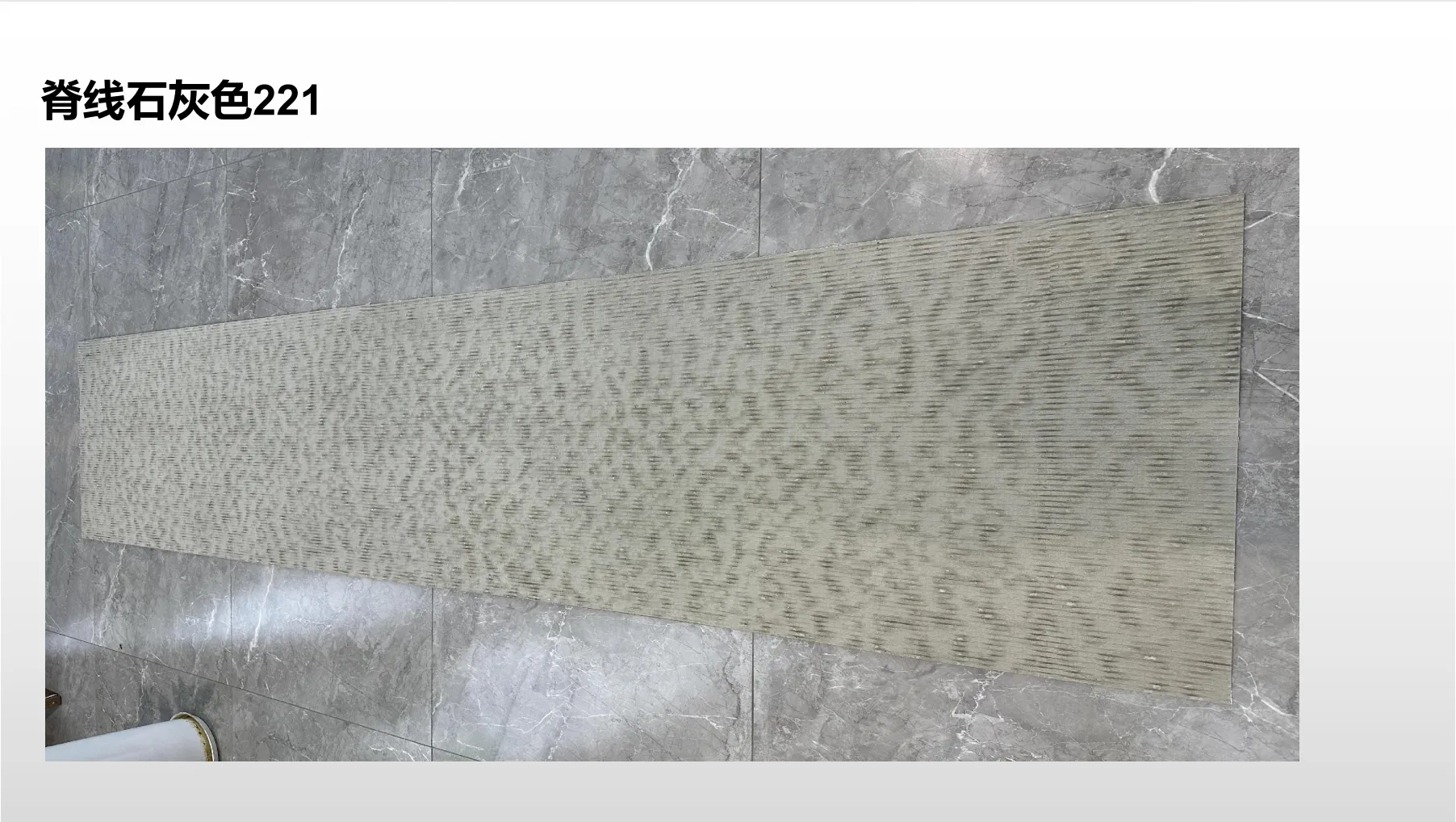
The first time I stepped into the lobby of the Al Faisaliah Tower extension in Riyadh, I was struck not by the height of the ceilings or the gleam of the glass, but by the wall beside the reception desk. It wasn't just a wall—it was a texture, a story. Sunlight slanted through the floor-to-ceiling windows, catching the ridges of a stone panel that looked like it had been carved by wind over centuries, yet felt smooth to the touch, as if polished by careful hands. A guard noticed my stare and smiled. "That's Ridged Stone," he said. "New material. Everyone asks about it." That moment stuck with me: how a single surface could turn a sterile commercial space into something alive, something that made you want to reach out and connect. In Saudi Arabia's rapidly evolving urban landscape, where skyscrapers pierce the skyline and innovation is etched into every corner, the materials that clothe these buildings are no longer afterthoughts. They're the heartbeats of spaces, and
MCM Project Board Series is leading that charge—one textured panel, one Starry Blue
travertine tile, one
Lunar Peak silvery slab at a time.
Beyond Bricks and Mortar: The Rise of Sensory Architecture
Walk through any major commercial tower in Riyadh, Jeddah, or Dammam today, and you'll notice a shift. Gone are the days of generic concrete and monotonous glass facades. Architects and designers are now crafting environments that engage the senses, spaces that linger in memory not just for their function, but for how they make you feel. This is sensory architecture—and at its core are materials that tell a story.
MCM Project Board Series, a collection of innovative building materials, has become the go-to for this new wave of design. What makes MCM stand out isn't just its technical prowess (though we'll get to that), but its ability to blend the raw, earthy charm of natural stone with the precision of modern engineering. It's as if they took the soul of a centuries-old desert rock formation and gave it a contemporary voice.
Take Ridged Stone, for example. The name says it all, but seeing it in person is another experience entirely. The panels feature gentle, undulating ridges that mimic the patterns of sand dunes sculpted by the wind—a nod to Saudi Arabia's vast deserts, where nature is the original architect. Run your hand over it, and you'll feel a subtle texture that's neither rough nor slick, but somewhere in between, like the skin of a well-loved book. In the Al Faisaliah extension, these panels line the elevator lobbies, and I've watched people pause mid-conversation to trace the ridges with their fingers. It's a small, unconscious act, but it speaks volumes: when a material invites touch, it creates connection.
But MCM doesn't stop at Ridged Stone. The Project Board Series is a treasure trove of such sensory experiences, each material designed to evoke a different emotion, tell a different tale. There's
Travertine (Starry Blue), which shimmers with tiny, iridescent flecks that look like a night sky spilled across the stone.
Lunar Peak Silvery, with its cool, metallic sheen, feels like a fragment of the moon brought down to earth. Even the names themselves—
Gobi Panel,
Historical Pathfinders Stone,
Bali Stone—whisper of adventure and heritage, turning building materials into conversation starters.
"We don't just sell panels," says Fatima Al-Mansoori, a senior designer at a leading Riyadh-based architecture firm who's worked with MCM materials on three major commercial projects. "We sell experiences. In Saudi Arabia, where we're building the future but honoring our past, MCM gets that balance right. Their materials don't shout—they breathe. They make a tower feel like a place, not just a structure."
To understand MCM's impact, it helps to look at the problem they're solving. Commercial towers in Saudi Arabia face a unique challenge: they need to be bold, modern symbols of progress, but they also need to reflect the country's rich cultural heritage. Too often, "modern" has meant cold, impersonal materials that feel disconnected from the land and its people.
MCM Project Board Series changes that by reimagining traditional stone and texture through a contemporary lens.
Take Flexible Stone, one of MCM's standout technologies. Traditional stone is heavy, brittle, and hard to shape—limiting its use in creative designs. MCM's Flexible Stone, however, is lightweight and malleable, allowing architects to curve, bend, and contour it into shapes that were once impossible. Imagine a lobby wall that arcs gently overhead, clad in
Travertine (Starry Red) that seems to flow like liquid—thanks to Flexible Stone, that's now a reality. It's innovation that serves art, not the other way around.
Then there's the 3D Printing Series, which marries cutting-edge technology with the warmth of natural materials. Using 3D printing, MCM can create intricate patterns and textures that would take master craftsmen months to carve by hand. The result? Panels that feel both artisanal and futuristic, like the "
Thread" design, which features delicate, interwoven lines that resemble traditional Saudi weaving patterns, but rendered with mathematical precision. In the King Abdullah Financial District in Riyadh, a bank tower uses these
Thread panels in its atrium, and visitors often mistake them for handcrafted art installations. That's the magic of MCM: blurring the line between "construction material" and "art."
But perhaps the most compelling aspect of
MCM Project Board Series is its commitment to sustainability—a critical consideration in Saudi Arabia's push for green building practices. Many of their materials, like Foamed Aluminium Alloy Board (Vintage Silver) and
Fair-Faced Concrete, are made with recycled or low-impact materials, reducing the carbon footprint of construction. Even the production process is designed to minimize waste, using 3D printing to create panels with minimal offcuts. For developers aiming to meet LEED or Estidama certifications, MCM isn't just a design choice—it's a responsible one.
"Sustainability isn't a buzzword for us," explains Ahmed Hassan, MCM's regional sustainability director for the Middle East. "It's about respect—for the planet, for the communities we build in. When you choose MCM, you're not just getting a beautiful panel; you're getting a material that was made with care. That matters to our clients in Saudi Arabia, who want their buildings to stand for progress in every sense of the word."
A Closer Look: Standout Materials in Saudi Commercial Towers
To truly appreciate MCM's versatility, let's dive into some of the materials that are making waves in Saudi Arabia's commercial towers. These aren't just products—they're tools that architects and designers are using to craft unique, memorable spaces.
Ridged Stone:
As we touched on earlier, Ridged Stone is a star player, and for good reason. Its desert-inspired texture makes it a natural fit for Saudi architecture, but it's also surprisingly versatile. In the lobby of a tech startup tower in Jeddah, it's paired with sleek glass and metal accents for a modern, industrial look. In a luxury hotel tower in Riyadh, it's used alongside warm wood tones to create a cozy, inviting atmosphere. The key is its neutral color palette—soft beiges and grays—that acts as a canvas for other design elements. And because it's part of MCM's Flexible Stone line, it can be installed on curved surfaces, like the rounded walls of a spiral staircase, adding drama without the weight of traditional stone.
Travertine (Starry Blue):
If Ridged Stone is the quiet storyteller,
Travertine (Starry Blue) is the showstopper. This material takes classic
travertine—a stone beloved for its porous, organic texture—and infuses it with tiny, reflective particles that catch the light. The effect is mesmerizing: in bright daylight, it looks like a deep blue sea with sunlight dancing on the waves; at night, under artificial lighting, it glows with a subtle, starry shimmer. A recent project in Dammam's new waterfront district used Starry Blue
travertine for the exterior cladding of a 40-story commercial tower, and it's become a landmark. From a distance, the building shimmers like a jewel against the skyline; up close, the details of the stone's natural pores and the starry flecks create a rich, layered look.
Lunar Peak Silvery:
For towers aiming for a more futuristic aesthetic,
Lunar Peak Silvery delivers. This material has a smooth, metallic surface with a silvery-gray hue that evokes the moon's surface—cool, elegant, and slightly otherworldly. It's often used in high-tech office towers, where it pairs beautifully with LED lighting and glass. In Riyadh's Digital City, a tech campus dedicated to innovation,
Lunar Peak Silvery panels line the hallways, reflecting the blue glow of digital screens and creating an atmosphere that feels like stepping into a sci-fi film—minus the coldness. What's surprising is how warm it feels in person; the metallic finish softens under natural light, preventing the space from feeling sterile.
Historical Pathfinders Stone:
For projects that want to nod explicitly to Saudi Arabia's heritage,
Historical Pathfinders Stone is a standout. This material mimics the weathered, sun-baked stone of ancient forts and traditional Najdi architecture, with a rough, pitted texture that looks like it's been standing for centuries. A government ministry tower in Riyadh used this stone for its main entrance, framing the modern glass doors with panels that look like they were salvaged from a historic fortress. The contrast is striking: old and new, strength and transparency, tradition and progress. It's a powerful visual metaphor for Saudi Arabia itself.
Comparing MCM's Star Materials: A Quick Guide
|
Material
|
Texture
|
Color Palette
|
Best For
|
Key Feature
|
|
Ridged Stone
|
Gentle, undulating ridges; soft to the touch
|
Beiges, grays, warm neutrals
|
Elevator lobbies, accent walls, curved surfaces
|
Mimics desert sand dunes; flexible for unique shapes
|
|
Travertine (Starry Blue)
|
Porous, organic travertine base with iridescent flecks
|
Deep blue with silver/white star-like particles
|
Exterior cladding, feature walls, high-end lobbies
|
Shimmers in light; creates a "starry night" effect
|
|
Lunar Peak Silvery
|
Smooth, metallic finish; cool to the touch
|
Silvery-gray with subtle metallic sheen
|
Tech offices, modern lobbies, LED-lit spaces
|
Futuristic aesthetic with unexpected warmth
|
|
Historical Pathfinders Stone
|
Rough, pitted, weathered texture
|
Earthy browns, terracottas, sun-bleached beiges
|
Entranceways, heritage-themed projects, cultural centers
|
Evokes ancient Saudi architecture; connects past and present
|
The Science Behind the Beauty: MCM's Technical Edge
While the aesthetic appeal of MCM materials is clear, their technical performance is what makes them a practical choice for commercial towers. Saudi Arabia's climate is harsh: scorching summers with temperatures exceeding 45°C (113°F), strong winds, and occasional sandstorms. Building materials need to withstand these conditions without fading, cracking, or deteriorating—and MCM delivers.
Take Foamed Aluminium Alloy Board, for example. This material is not only lightweight (reducing the load on building structures) but also highly resistant to corrosion and heat. In a country where metal can heat up to dangerous levels in the sun, Foamed Aluminium Alloy stays cool to the touch, making it safe for high-traffic areas. It's also fire-resistant, a critical safety feature for tall buildings. Architects love it because it combines durability with design flexibility—available in Vintage Silver, Vintage Gold, and Gold, it can add a touch of luxury without compromising on performance.
Then there's
Fair-Faced Concrete, a staple in modern architecture that MCM has reimagined. Traditional
fair-faced concrete can be prone to staining and cracking, but MCM's version is treated with a special sealant that makes it resistant to water, dust, and UV rays. It's also available in a range of textures, from smooth to lightly textured, giving designers more creative control. A logistics company's headquarters in Jeddah used
Fair-Faced Concrete for its exterior, and after two years of exposure to sandstorms and heavy rain, the surface still looks as crisp and clean as the day it was installed. "We were worried about maintenance," admits the company's facilities manager, "but MCM's concrete has been practically maintenance-free. It's a relief for a busy commercial building."
MCM's 3D Printing Series also offers technical advantages. By using 3D printing technology, the company can create custom textures and patterns with pinpoint accuracy, ensuring consistency across large projects. This is a game-changer for commercial towers, where uniformity is key to a polished look. A shopping mall in Riyadh used 3D-printed "
Thread" panels for all its interior columns, and the precision of the pattern—each
thread exactly the same width, each curve perfectly mirrored—gives the space a sense of harmony that would be hard to achieve with handcrafted materials.
Perhaps most impressive is MCM's commitment to sustainability, which goes beyond just using recycled materials. The company's manufacturing process is designed to minimize energy use, and many of their products are 100% recyclable at the end of their lifespan. In a country that's made sustainability a cornerstone of its Vision 2030, this matters. "Clients ask about sustainability upfront now," says Al-Mansoori. "They don't just want to know if a material looks good—they want to know if it's good for the planet. MCM's
green building materials check both boxes, which makes our job easier."
"Sustainability isn't optional anymore," adds Hassan. "In Saudi Arabia, we're building cities like NEOM and the Red Sea Project, which are designed to be models of sustainability. MCM materials fit into that vision perfectly. Our Flexible Stone, for example, uses 60% less raw material than traditional stone panels, and our foamed aluminium is 100% recyclable. It's not just about meeting regulations—it's about building a future we can be proud of."
Transforming Spaces: MCM in Action Across Saudi Arabia
To truly grasp the impact of
MCM Project Board Series, let's step into a few real-world projects across Saudi Arabia where these materials have taken center stage. Each tells a story of how the right material can transform a space, making it more than just a building—making it a destination.
The Azure Tower, Riyadh:
A 50-story commercial tower in the heart of Riyadh's business district, The Azure Tower is a study in modern luxury. Its exterior is clad in
Travertine (Starry Blue) panels, which give the building its name. From dawn to dusk, the panels shift color: pale blue in the morning light, deepening to indigo at noon, and shimmering with starry flecks as the sun sets. "We wanted the tower to stand out, but not in a garish way," says the project's lead architect, Omar Khalid. "Starry Blue
travertine does that. It's bold but elegant, and it changes with the light, so the building never looks the same twice." Inside, the lobby features
Lunar Peak Silvery walls and Ridged Stone accents, creating a flow from the dramatic exterior to a warm, welcoming interior. Tenants often comment on how the lobby feels "less like an office and more like a boutique hotel," Khalid notes—a sentiment that boosts employee morale and impresses clients.
Al-Madinah Tech Hub, Medina:
Located in the historic city of Medina, this tech campus blends innovation with tradition, and MCM's
Historical Pathfinders Stone is the bridge between the two. The campus's main building features exterior walls of
Historical Pathfinders Stone, which mimic the weathered stone of Medina's ancient mosques and markets. Inside, however, the spaces are sleek and modern, with Foamed Aluminium Alloy (Vintage Silver) panels and 3D-printed "Linear
Travertine" floors. "We wanted to honor Medina's heritage while signaling that this is a place for forward-thinking tech companies," explains the campus director. "The contrast between the
Historical Pathfinders Stone outside and the modern materials inside works beautifully. It says, 'We respect our past, but we're building the future.'"
The Gobi Plaza, Jeddah:
Named after the Gobi Desert, this mixed-use development in Jeddah's waterfront district draws inspiration from arid landscapes around the world. MCM's
Gobi Panel is the star here—a rough, textured material that looks like compacted sand, with subtle variations in color that evoke desert sunsets. The panels cover the exterior of the plaza's retail pavilion, and at night, LED lights embedded behind the panels make the entire structure glow, like a desert oasis come to life. "People stop to take photos all the time," says the plaza's marketing manager. "It's become an Instagram spot, which is great for business. But more importantly, it feels like a place that belongs here, by the Red Sea. MCM's
Gobi Panel captures that sense of place perfectly."
The Future of Commercial Architecture in Saudi Arabia: MCM's Role
As Saudi Arabia continues to invest in its built environment—with mega-projects like NEOM, Qiddiya, and the Riyadh Metro transforming the landscape—the demand for innovative, sustainable, and culturally resonant building materials will only grow.
MCM Project Board Series is poised to be at the forefront of this movement, not just as a supplier, but as a partner in shaping the future of architecture.
One area where MCM is already pushing boundaries is in customization. As architects and designers seek to create truly unique spaces, the ability to tailor materials to a project's specific vision becomes critical. MCM's 3D Printing Series allows for almost limitless customization, from replicating the texture of a specific desert rock formation to creating patterns inspired by traditional Saudi art. "We had a client who wanted panels that looked like the scales of a falcon—the national bird of Saudi Arabia," recalls Al-Mansoori. "MCM 3D-printed them, and the result was stunning. It's that level of customization that's going to define the next generation of commercial towers."
Sustainability will also play a bigger role, and MCM is already ahead of the curve. The company is experimenting with new materials, like Foamed Aluminium Alloy Board made from 100% recycled aluminum, and exploring ways to integrate solar panels into their cladding systems. Imagine a commercial tower where the exterior panels not only look beautiful but also generate electricity—that's the future MCM is working toward.
Perhaps most importantly, MCM is helping to redefine what "luxury" means in commercial architecture. In the past, luxury often meant imported marble or rare stones—materials that were expensive, heavy, and environmentally costly. MCM is proving that luxury can be sustainable, local, and emotionally resonant. A tower clad in Ridged Stone or
Travertine (Starry Blue) feels luxurious not because of its price tag, but because of the experience it creates—the way it makes people feel when they're inside.
As I left the Al Faisaliah Tower extension that first day, I passed a group of schoolchildren on a field trip, their teacher pointing out the Ridged Stone wall. "See how it looks like the desert?" she said. "That's called design—when something new remembers something old." The children nodded, running their hands over the ridges. In that moment, I realized MCM's true impact: these materials aren't just building the skyline of Saudi Arabia—they're building memories. They're turning commercial towers into places that tell stories, connect people to their heritage, and inspire the next generation. In a country with such bold ambitions, that's more than just good design—it's essential.
So the next time you walk into a commercial tower in Saudi Arabia, take a moment to look around. Notice the walls, the floors, the textures under your hands. Chances are, you're touching
MCM Project Board Series—materials that don't just build buildings, but build connections. And in the end, isn't that what great architecture is all about?