
Walk into any modern café, boutique hotel, or even a friend's newly renovated home these days, and you might notice something different about the walls. They're not just flat, silent surfaces anymore—they're breathing, living tapestries. Vertical gardens, once a niche trend, have grown into something much deeper: a way to weave nature into the fabric of our built environments. But here's the secret no one talks about enough: the magic of a vertical garden isn't just in the plants. It's in the canvas they grow on. And that's where MCM flexible stone steps in, turning ordinary walls into extraordinary stories.
Think about the last time you stood in front of a wall covered in vibrant green leaves, trailing vines, and pops of flowering color. Did it feel like a wall, or did it feel like a portal? That's the power of vertical gardens. They don't just add life to a space—they change how we experience it. A sterile office lobby becomes a serene retreat. A cramped city apartment feels like a countryside escape. Even a small balcony transforms into a private oasis. But to make that magic last, the wall itself needs to be more than a support structure. It needs to complement the greenery, to have a texture and character that feels intentional, not afterthought.
That's where the struggle often begins for designers and homeowners. Traditional stone or concrete walls are heavy, hard to install, and can feel cold against the softness of plants. Wood, while warm, can warp or rot over time when exposed to moisture. So what's the solution? Enter MCM flexible stone—a material that's as kind to the eyes as it is to the hands that install it.
Let's get one thing straight: MCM flexible stone isn't your grandma's building material. It's a modern marvel, born from the idea that beauty shouldn't come at the cost of practicality. Lightweight yet surprisingly durable, it bends where traditional stone cracks, clings to surfaces that would reject heavier materials, and wears the look of natural stone so convincingly, you'll find yourself reaching out to touch it—half-expecting it to feel like the real thing (spoiler: it does, but with a flexibility that feels almost futuristic).
What makes it perfect for vertical gardens? For starters, its weight. At a fraction of the heft of natural stone, it won't strain walls or require reinforced structures, even for large installations. That means you can dream bigger—covering an entire lobby wall or a rooftop terrace—without worrying about structural limits. Then there's its texture. MCM flexible stone isn't smooth or uniform. It carries the organic, weathered look of stone that's been shaped by time: subtle ridges, tiny pits, and variations in color that make each panel feel one-of-a-kind. When paired with the softness of ferns, the boldness of succulents, or the trailing elegance of pothos, it creates a contrast that's nothing short of poetic—rough meets soft, earth meets life.
And let's talk about variety. MCM's lineup isn't just "stone-colored." From the warm beige of travertine to the deep, moody grays of dolomitic stone, there's a shade and texture for every design vision. Want something that feels like a mountain slope? Try the rough granite stone series. Craving a touch of luxury? The marble veil white or marble interstellar gray options add a hint of sophistication. But today, we're here to talk about one texture in particular—the one that's been turning heads in vertical garden circles: ridged stone.
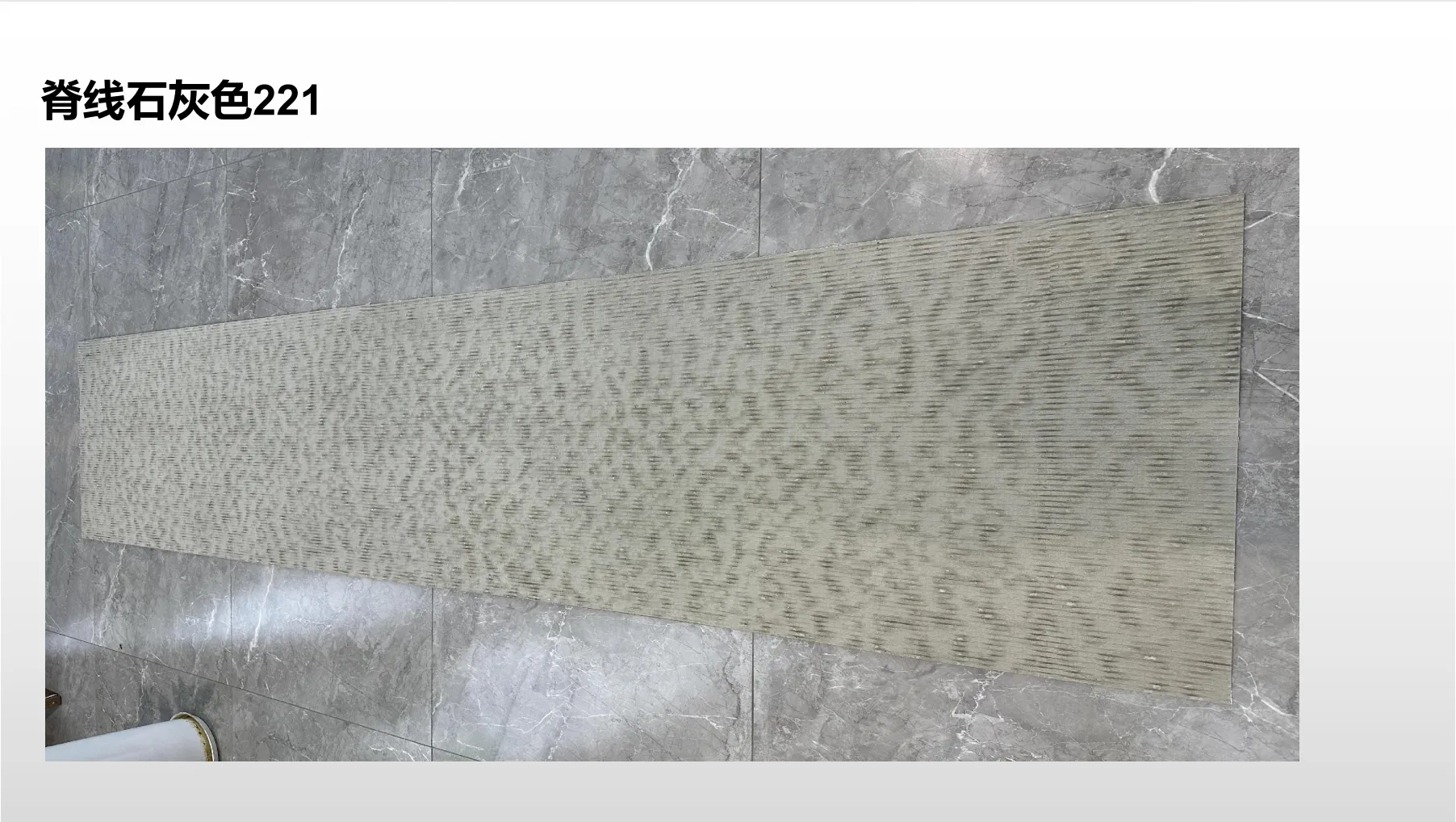
Open up a folder of ridged stone real photos, and you'll immediately see why designers are obsessed. These aren't just product shots—they're windows into a world where walls have personality. The ridged texture isn't sharp or harsh; it's a gentle, rolling pattern, like the ripples left in sand after the tide pulls out. Run your fingers over it (go on, imagine it—wait, no, think about it), and you'd feel the subtle peaks and valleys, each one catching light differently throughout the day. In the morning, sunlight hits the ridges, casting soft shadows that make the wall feel dynamic. In the evening, warm artificial light turns those same ridges into a cozy, inviting glow.
What makes ridged stone so perfect for vertical gardens? It's all about balance. The linear texture of the ridges creates a visual rhythm that complements the organic, unpredictable growth of plants. A climbing philodendron's tendrils weave through the ridges like they were meant to be there. A cluster of pothos leaves rests against the stone, the contrast between smooth foliage and textured stone creating a feast for the eyes. Even small succulents, planted in gaps between panels, look intentional, as if the stone itself cradled them into place.
Take, for example, a recent project by a boutique hotel in Portland. The designer wanted a vertical garden in the atrium that felt "rooted in the Pacific Northwest"—think misty forests and riverbeds. They chose ridged stone in a soft claybank shade, paired with native ferns, Oregon grape, and trailing ivy. The result? Guests now stop mid-conversation to snap photos, commenting on how the wall "feels like walking through a forest without leaving the lobby." And the best part? Because MCM flexible stone is moisture-resistant, the hotel doesn't have to worry about water damage from the plants' irrigation system. It's beauty and brains, wrapped in a single material.
Of course, not every vertical garden is a small balcony or a boutique hotel atrium. Some are grand statements—think shopping mall facades, corporate headquarters, or public parks. For those, size matters. That's where the MCM big slab board series comes into play. These larger-than-life panels (some as wide as 1.2 meters) mean fewer seams, a smoother installation process, and a more cohesive look overall. Imagine a 30-foot wall in a convention center, covered in MCM big slab ridged stone, with cascading greenery spilling over the edges. It's not just a wall anymore—it's a landmark.
What I love most about the big slab series is how it maintains the same attention to detail as the smaller panels. The ridged texture doesn't get lost in the size; if anything, it becomes more dramatic, creating sweeping patterns that draw the eye upward. And because MCM big slabs are still lightweight, installers can cover large areas quickly, reducing labor time and costs. For a recent public library project in Chicago, the design team used MCM big slab board series in "lunar peak silvery" to create a vertical garden that wraps around the building's exterior. The silvery ridges catch the city's skyline light, while the plants (a mix of evergreens and seasonal blooms) add pops of color. It's now known as "the living library"—a place where books and nature coexist.
One of the joys of working with MCM materials is the freedom to mix and match. Ridged stone doesn't have to stand alone. Pair it with foamed aluminium alloy board (vintage gold) for a modern, industrial vibe, or with travertine (starry green) for a celestial touch. The key is to let the textures tell a story together. For example, a home office might feature a ridged stone accent wall (in "rough granite stone, medium grey") with a woven (khaki) panel above, creating a warm, layered look that feels both grounded and airy. Add a vertical garden with snake plants and ZZ plants, and suddenly, workdays feel a little less stressful.
Ridged stone real photos are invaluable here. They're not just pretty pictures—they're tools. A homeowner in Austin, Texas, recently told me she'd been stuck on choosing between ridged stone and linear travertine for her backyard vertical garden. She'd seen both in catalogs, but it wasn't until she looked at the real photos that she made up her mind. "The ridged stone photos showed how the light hit it at different times of day," she said. "I could picture my morning coffee on the patio, with the sun making those little shadows on the wall. Linear travertine was nice, but ridged stone felt… alive."
At the end of the day, any material we use to build our world should respect the planet we live on. MCM flexible stone checks that box, too. Made with eco-friendly, low-VOC materials, it's a sustainable choice for green-minded designers and homeowners. It's also incredibly durable, meaning less waste over time (no need to replace warped wood or cracked stone every few years). And because it's lightweight, transporting and installing it leaves a smaller carbon footprint than traditional stone. When paired with native, drought-resistant plants in a vertical garden, it becomes a symbol of what's possible when we design with both beauty and responsibility in mind.
Vertical gardens are more than a trend—they're a testament to our desire to stay connected to nature, even as we build taller, busier lives. And MCM flexible stone? It's the bridge between that desire and reality. Whether you're drawn to the gentle ridges of ridged stone, the sleekness of MCM big slab boards, or the warmth of travertine, these materials don't just support plants—they support moments . A first date in a restaurant with a vertical garden wall. A child pointing out a butterfly on a leaf in a hospital lobby. A retiree tending to their balcony garden, smiling at how the ridged stone feels like a old friend.
So the next time you look at a vertical garden, take a closer look at the wall behind it. Chances are, it's not just stone. It's a story—one written in texture, color, and the quiet harmony between human creativity and natural beauty. And if you're lucky enough to flip through some ridged stone real photos? You might just see the story of your own space, waiting to be told.
Recommend Products












