
There's a quiet revolution happening in the world of building materials—one that doesn't involve futuristic gadgets or complex technology, but rather a return to the wisdom of nature. Picture this: it's a sweltering summer afternoon, and you step into a home where the air feels refreshingly cool, not because of a blaring air conditioner, but because the walls themselves seem to breathe, holding onto the coolness from the night before. Months later, in the dead of winter, that same home stays toasty warm, even when the temperature drops outside, without the heater running nonstop. What's the secret? It might just be the stone that wraps around it—specifically, rock cut dolomitic stone.
Think of thermal mass as a building's "thermal battery." Materials with high thermal mass absorb heat when the surrounding air is warm, store it, and release it slowly when the air cools. This natural cycle stabilizes indoor temperatures, reducing the need for artificial heating and cooling. It's like having a silent caretaker that keeps your space comfortable, no matter the weather.
Stone has been used in construction for millennia for good reason. Unlike lightweight materials like drywall, which heat and cool quickly, stone is dense and heavy—qualities that make it an exceptional thermal mass material. It doesn't react instantly to temperature changes; instead, it smooths out daily swings. Among stones, rock cut dolomitic stone stands out as a particularly effective player in this thermal dance.
So, what exactly is rock cut dolomitic stone? Dolomite, a mineral of calcium magnesium carbonate, forms over millions of years from marine sediments and mineral transformation. When quarried and "rock cut" directly from the earth, it retains its natural density and structural integrity—key to its thermal performance.
Density is critical here: rock cut dolomitic stone typically has a density of 2.6–2.8 g/cm³, allowing it to store significant heat. Its controlled porosity (not too porous) prevents rapid heat loss, letting it absorb warmth during the day and release it at night. The rock cut process preserves its strength, making it ideal for large-format applications like the mcm big slab board series. These big slabs mean fewer seams, better thermal continuity, and a more efficient thermal mass effect—turning walls into silent, energy-saving systems.
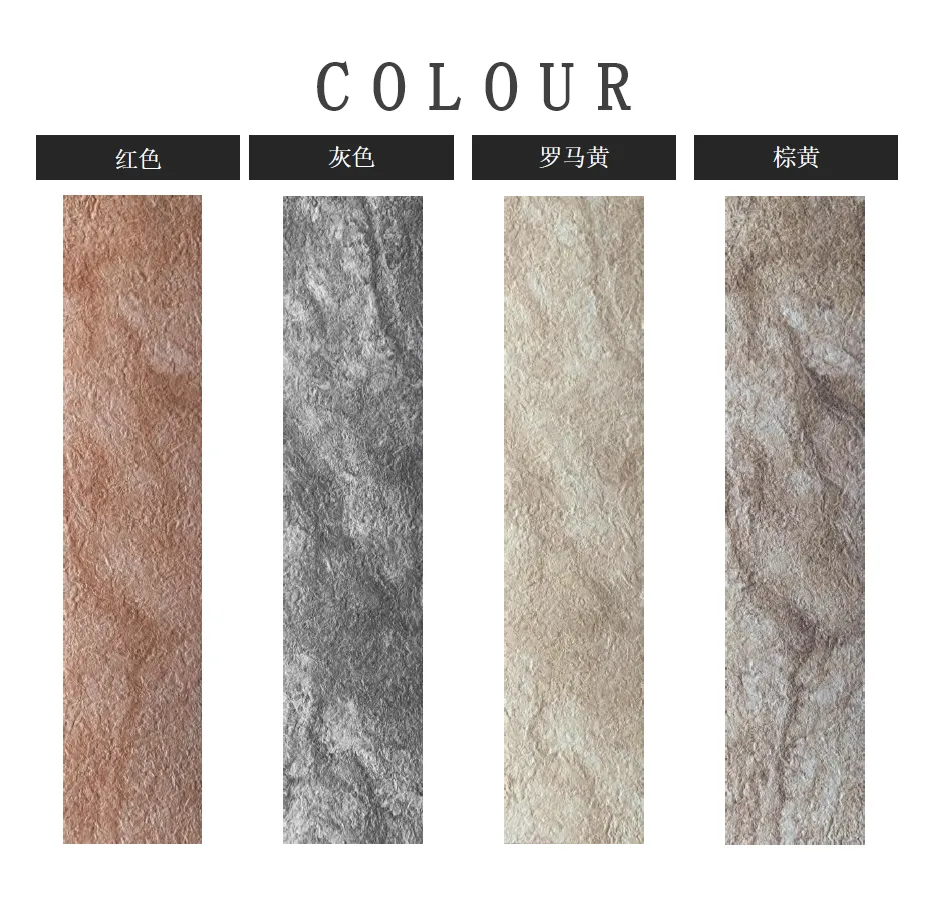
Dolomitic travertine—travertine infused with dolomite—expands thermal mass options with aesthetic versatility. Take dolomitic travertine(dark grey): its moody hue absorbs solar heat, enhancing thermal storage, making it perfect for sunlit facades. Dolomitic travertine(claybank), with its warm, earthy beige, adds a soft glow to interiors while retaining the same thermal properties. Both prove you don't need to sacrifice style for efficiency.
| Stone Type | Color | Texture | Thermal Mass Performance | Best For |
|---|---|---|---|---|
| Rock Cut Dolomitic Stone | Varied earth tones | Rugged, natural | Excellent | Large slabs, exterior cladding |
| Dolomitic Travertine (Dark Grey) | Moody grey | Smooth with subtle pores | Very Good | South-facing walls, accent features |
| Dolomitic Travertine (Claybank) | Warm beige | Soft, matte | Very Good | Interior spaces needing warmth |
For curved walls, historic retrofits, or unique designs, mcm flexible stone offers a solution without losing thermal benefits. MCM (Modified Composite Material) blends stone's performance with flexibility, letting you apply stone-like cladding to curved surfaces or irregular structures. Imagine wrapping a circular staircase in dolomitic texture or adding a curved accent wall—all while maintaining thermal mass. It extends stone's reach, proving sustainability and innovation can coexist.
Consider a Portland office building renovated with mcm big slab board series (rock cut dolomitic stone) and dolomitic travertine(dark grey) accents. Post-renovation, heating/cooling costs dropped 35%, and occupants reported fewer hot/cold spots. The stone's thermal mass "flattened" temperature swings, reducing HVAC strain. It's a story repeated in homes and commercial spaces: stone isn't just decorative—it's an active participant in energy efficiency.
Sustainability amplifies these benefits. Reduced energy use lowers carbon footprints, and natural stone (when quarried responsibly) is renewable. MCM products often have lower embodied energy than traditional stone processing, making them eco-friendlier. Choosing rock cut dolomitic stone isn't just about building—it's about building smarter, for people and the planet.
Rock cut dolomitic stone and its variants—dolomitic travertine(dark grey), dolomitic travertine(claybank), and mcm flexible stone—remind us that ancient wisdom can solve modern problems. They offer more than durability or beauty; they provide a path to energy-efficient, comfortable spaces that harmonize with nature.
So the next time you step into a space that feels effortlessly comfortable, look around. You might be standing in the presence of rock cut dolomitic stone—quietly at work, one thermal cycle at a time, proving that the best building materials are often the ones shaped by time itself.
Recommend Products












