
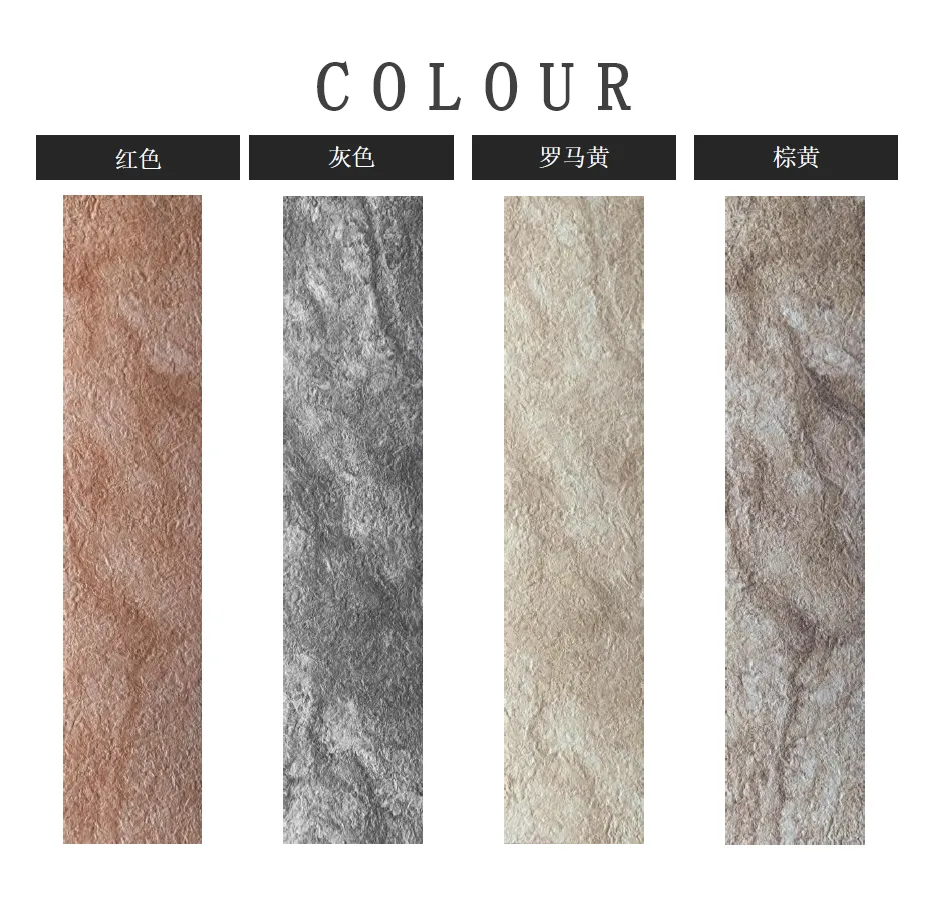
Walk through a historic town square, and you'll likely pause at the stone walls that have stood for decades—their colors soft yet steadfast, bearing the marks of time like a well-loved story. In modern architecture, that same desire for longevity and beauty drives the choice of materials, and few stones capture this balance quite like Rock Cut Dolomitic Stone. With its rugged texture and earthy hues, it's become a favorite for facades, patios, and public spaces, blending seamlessly with both contemporary designs and heritage projects. But here's the question that keeps architects and homeowners up at night: Will that rich, dark grey or warm claybank color stay true when faced with rain, sun, snow, and everything in between?
Color stability isn't just about aesthetics—it's about preserving the intent of a design. Imagine commissioning a home with Dolomitic Travertine (Claybank) to evoke the warmth of a desert landscape, only to find it fading to a pale, washed-out tone after a few harsh winters. Or selecting Dolomitic Travertine (Dark Grey) for a sleek urban facade, hoping its depth will contrast with glass and steel, but watching it develop uneven splotches from years of rain and pollution. For Rock Cut Dolomitic Stone, a material celebrated for its natural character, weather isn't just a background element—it's an active participant in its evolution. Let's dive into how weather shapes the color of this stone, why some variants hold up better than others, and what we can learn from stones that have stood the test of time, like Historical Pathfinders Stone.
First, let's get to know the star of the show. Rock Cut Dolomitic Stone is a type of sedimentary rock formed from dolomite, a mineral rich in calcium and magnesium. What sets it apart is the "rock cut" process—stonecutters use traditional techniques to split the stone along its natural fracture lines, revealing a surface that feels both organic and intentional. Unlike polished marble or uniform concrete, it wears its texture proudly: tiny pits, subtle veining, and a matte finish that catches light in unexpected ways.
Within this family, two variants stand out for their popularity: Dolomitic Travertine (Dark Grey) and Dolomitic Travertine (Claybank). Dark Grey leans into moody sophistication, with deep charcoal tones flecked with lighter grays, while Claybank,,.,.,——,,.
Lunar Peak(,,),,Rock Cut Dolomitic Stone——.(),."",.
Weather isn't a single force—it's a team of elements working together, each with its own way of altering stone color. Let's break down the biggest players and how they interact with Rock Cut Dolomitic Stone.
UV radiation from sunlight is perhaps the most relentless weather factor. Over time, those invisible rays break down the chemical bonds in the stone's minerals, especially the iron oxides that give Dolomitic Travertine (Claybank) its warm hues. Think of it like leaving a favorite shirt in the sun: the more exposure, the more the color fades. In regions with intense sunlight—like the American Southwest or the Middle East—Claybank variants often lighten by 10-15% over 5-7 years, losing that rich, terracotta depth and shifting toward a softer, more uniform beige.
Dolomitic Travertine (Dark Grey) fares slightly better here, thanks to its darker pigments, which absorb more UV radiation and distribute heat more evenly. But even it isn't immune. Prolonged sun exposure can cause "photo-oxidation," where the surface layer oxidizes and turns a lighter, chalkier gray. This is especially noticeable on south-facing walls, where sunlight hits most directly—you might see a clear line between shaded and sun-exposed areas, with the latter appearing washed out.
Rain does more than just wet the stone—it carries dissolved minerals, pollutants, and even organic matter into its pores. For Rock Cut Dolomitic Stone, which is naturally porous, this can lead to two common issues: efflorescence and staining.
Efflorescence is the white, powdery deposit that sometimes forms on stone surfaces after rain. It happens when water seeps into the stone, dissolves minerals like calcium carbonate, then evaporates, leaving those minerals behind. On Claybank stone, this white residue is stark and noticeable, creating a patchy, uneven look. Dark Grey stone hides efflorescence better, but over time, repeated cycles of wetting and drying can make the deposits build up, dulling the stone's natural sheen.
Then there's staining. In urban areas, rainwater can pick up pollutants like soot, car exhaust, or even bird droppings, which soak into the stone's pores. Dark Grey stone tends to show these stains as lighter spots (since the often lighten the dark surface), while Claybank may develop darker, irregular marks. In coastal regions, salt spray from the ocean adds another layer—salt crystals can erode the stone's surface, exposing fresh layers underneath and creating a "frosted" effect that alters color.
Imagine a stone in a region with hot summers and freezing winters: during the day, it heats up, expanding slightly; at night, it cools, contracting. In winter, water seeps into its pores, freezes, and expands by 9%, cracking the stone from the inside out. These micro-cracks might seem minor, but they're gateways for more moisture, more UV damage, and more color change.
Dolomitic Travertine (Claybank), with its slightly softer composition, is more prone to these freeze-thaw cycles than Dark Grey. Over time, the surface can become pitted, exposing lighter layers beneath the original color and creating a "speckled" appearance. Compare this to Lunar Peak Silvery, an engineered stone designed to resist thermal shock—its uniform structure and added binders help it withstand temperature swings without such dramatic surface damage.
To truly understand color stability, we need to look at real projects. Let's compare two case studies: one in a coastal city with high humidity and salt exposure, and another in a desert region with intense sun and dry heat. Both used Rock Cut Dolomitic Stone, but the outcomes highlight just how much weather dictates color evolution.
A medical clinic in Portland, Oregon, chose Dolomitic Travertine (Dark Grey) for its exterior walls in 2018. The Pacific Northwest's climate is mild but wet—over 50 inches of rain annually, high humidity, and occasional salt spray from nearby coastal winds. Five years later, the stone tells a clear story: the north-facing walls, sheltered from direct rain and sun, retain their original deep grey color, with only subtle lightening. The south-facing walls, however, show uneven fading—patches where rainwater pooled have turned a lighter, ashy gray, and salt deposits have created faint white streaks near the base. Notably, the clinic's overhangs protected the stone directly beneath them, creating a "shadow line" of darker grey that contrasts sharply with the exposed areas.
In Scottsdale, Arizona, a homeowner installed Dolomitic Travertine (Claybank) for their backyard patio in 2015. With over 300 days of sunshine annually and temperatures reaching 110°F in summer, the stone faced relentless UV exposure and dry heat. Today, the patio's color has shifted from a warm clay red to a soft terracotta—still beautiful, but noticeably lighter. The areas covered by outdoor furniture (and thus shielded from the sun) remain closer to the original hue, creating a "reverse shadow" effect where the covered spots are darker than the exposed ones. No efflorescence here, thanks to low rainfall, but the UV-driven fading is undeniable.
| Stone Type | Climate Condition | Initial Color | Color After 5 Years | Key Observations |
|---|---|---|---|---|
| Dolomitic Travertine (Dark Grey) | Coastal (Rain, Salt, Humidity) | Deep charcoal with gray flecks | Uneven lightening; white salt streaks at base | North-facing walls retained 85% of original color; south-facing walls showed 20% lightening |
| Dolomitic Travertine (Claybank) | Desert (UV, Dry Heat) | Warm clay red with beige veining | Uniform lightening to soft terracotta | Exposed areas faded 15%; shaded areas retained 90% of original color |
| Historical Pathfinders Stone | Mixed (Rain, Snow, Sunlight) | Varied earth tones (original) | Softened but consistent color; minimal splotching | Over 100 years, color faded 10-12% uniformly, maintaining design integrity |
The takeaway? Rock Cut Dolomitic Stone does change color—but it's not random. The type of dolomite, the climate, and even orientation (sun vs. shade) all play a role. And as Historical Pathfinders Stone shows, with the right conditions and care, color change can be graceful, adding character rather than detracting from beauty.
So, what can you do to keep your Rock Cut Dolomitic Stone looking its best? It starts with proactive care—think of it like skincare for stone. Here are a few key steps:
It's also worth noting that some stones are better suited to harsh climates than others. If you live in an area with extreme weather, consider pairing Rock Cut Dolomitic Stone with more resilient materials like Fair-Faced Concrete for high-exposure areas, or opt for darker variants like Dolomitic Travertine (Dark Grey) which tend to fade less noticeably than lighter tones.
At the end of the day, Rock Cut Dolomitic Stone isn't meant to stay frozen in time. Its color will shift, its surface will weather, and that's part of its charm. Historical Pathfinders Stone didn't become a symbol of endurance because it looked brand-new after a century—it became iconic because it told a story of resilience, of adapting to rain, snow, and sun while retaining its essence.
For architects and homeowners, the lesson is clear: choose Rock Cut Dolomitic Stone not just for its initial color, but for how you imagine it will age. Will that Claybank patio in Arizona develop a soft, sun-kissed glow that complements mature landscaping? Will that Dark Grey facade in a coastal city gain a weathered patina that adds depth to its modern design? When we embrace the stone's ability to evolve, we're not just building structures—we're creating spaces that grow more interesting with time.
So the next time you see a Rock Cut Dolomitic Stone wall, take a closer look. Those subtle shifts in color, the tiny pits, the faint streaks—they're not flaws. They're the stone's way of saying, "I've lived here, and I'm still here." And in a world that often values the new over the nuanced, that's a story worth preserving.
Recommend Products












