
Beneath the polished surfaces of the stones we use to clothe our buildings lies a secret: time. Not just decades or centuries, but millions of years of stories—of oceans that once covered continents, of minerals crystallizing in still waters, of tectonic plates shifting like slow dancers. Among these ancient narrators, Rock Cut Dolomitic Stone stands out, its rough-hewn edges and weathered texture bearing witness to epochs long before humans walked the earth. But just how old is this stone? And what does its age mean for the spaces we design today? Let's dig into the geology, the beauty, and the quiet wisdom of one of MCM's most compelling materials.
Before we talk about its age, let's get to know Rock Cut Dolomitic Stone. Part of MCM's diverse lineup of modified composite materials , it's a celebration of dolomite—a mineral that forms when limestone, itself a sedimentary rock made of ancient marine organisms, is transformed by magnesium-rich fluids. Unlike pure limestone, which is mostly calcium carbonate, dolomitic stone gets its strength and unique texture from this magnesium infusion. The "rock cut" part? That's the artisanal touch: MCM replicates the look of stone quarried from ancient cliffs, with chiseled grooves and irregular edges that mimic the marks of time and human tools.
Think of it as nature's sculpture, refined by both geological forces and human ingenuity. While natural dolomitic stone can weigh tons and be impractical for modern construction, MCM's version captures its essence in a lightweight, durable panel—making it possible to bring the gravitas of ancient rock to skyscrapers, boutique hotels, and residential walls alike.
To understand the age of Rock Cut Dolomitic Stone, we need to rewind the clock—way back. Let's start with the basics: dolomite formation isn't a quick process. It begins with limestone, which forms in shallow marine environments over thousands of years as tiny organisms (like algae and coral) die, their calcium-rich remains settling to the ocean floor. Over time, these sediments compact into rock, layer upon layer, like pages in a history book.
But dolomite needs an extra twist: magnesium. For limestone to become dolomitic, it must interact with magnesium-rich groundwater or hydrothermal fluids. This chemical dance—where magnesium ions replace some of the calcium in the limestone's structure—takes time. We're not talking years, or even centuries. Geologists estimate that full dolomitization can take millions of years. In some cases, the process starts in the sediment before the limestone even lithifies (turns to rock), continuing as the rock is buried deeper by new sediments, heated by the earth's core, and squeezed by tectonic pressure.
So, how old is Rock Cut Dolomitic Stone? While MCM's panels are modern composites, their aesthetic is rooted in natural dolomitic stone formations that range from 250 million to 500 million years old. To put that in perspective: dinosaurs roamed the earth "only" 66 million years ago. This stone was forming when the supercontinent Pangaea was breaking apart, when the first fish evolved jaws, when the oceans teemed with trilobites and brachiopods. It's not just rock—it's a time capsule.
You might wonder: Does a stone's geological age actually affect how it looks or performs? Absolutely. The millions of years Rock Cut Dolomitic Stone "spent" forming aren't just a fun fact—they're written into its very texture.
Older dolomitic stones, for example, often have tighter mineral structures. As groundwater percolates through the rock over eons, it dissolves weaker minerals and redeposits stronger ones, creating a denser, more resilient material. That's why Rock Cut Dolomitic Stone feels so solid—its age has made it tough. This density also resists water absorption, making it ideal for exterior cladding in rainy climates or high-moisture indoor spaces like bathrooms.
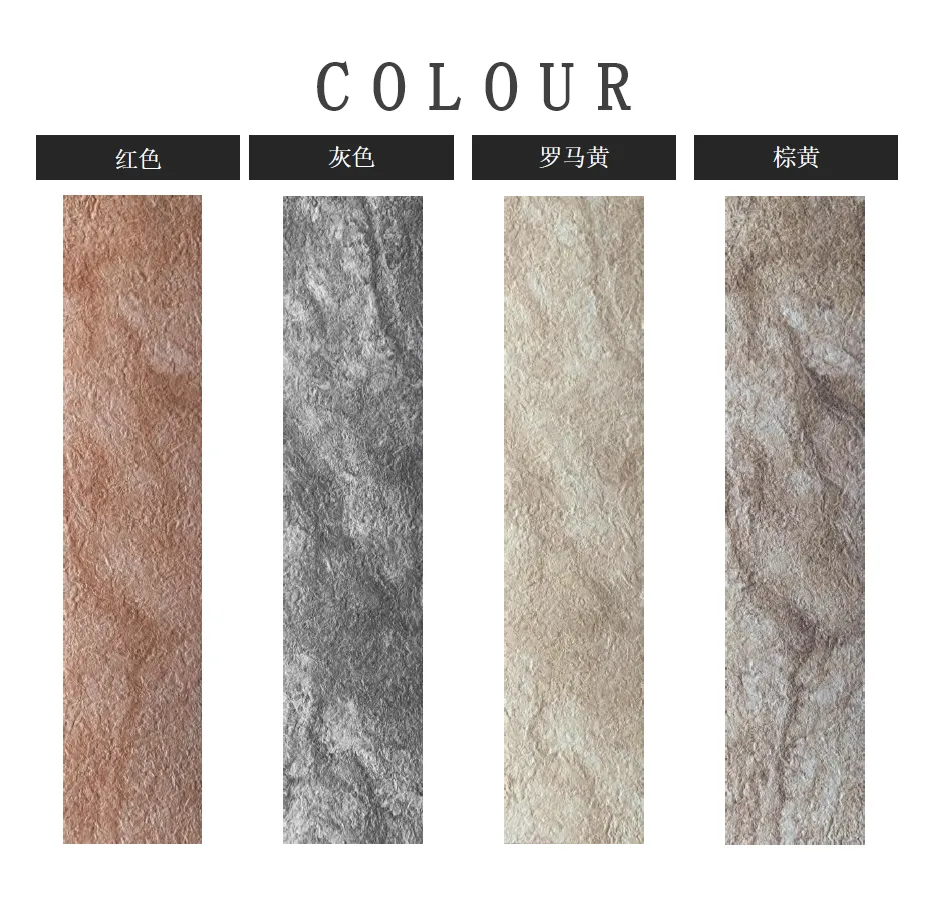
Then there's the color and pattern. Dolomitic stone's hues—think warm claybanks, deep charcoals, and earthy beiges—come from the minerals present during formation. Iron oxides might add rusty streaks; organic matter could leave dark veins. Over time, these pigments mature, deepening like a fine wine. Rock Cut Dolomitic Stone's "rock cut" finish amplifies this, with chiseled surfaces that catch light and shadow, highlighting every nuance of its mineral composition. It's not a uniform, factory-made look—it's the chaos and beauty of millions of years, frozen in place.
Compare that to a younger stone, like some travertines, which form in hot springs over hundreds of thousands of years. Travertine is porous, with tiny holes left by carbon dioxide bubbles—charming, but less dense than dolomitic stone. Both have their place, but Rock Cut Dolomitic Stone's age gives it a gravitas that feels almost ceremonial. It's the difference between a snapshot and a masterpiece painted over centuries.
Rock Cut Dolomitic Stone isn't alone in MCM's collection of "ancient-inspired" materials. Let's take a closer look at how its age and character compare to other fan favorites, from the starry allure of Travertine to the futuristic sheen of the Lunar Peak series.
| Stone Series | Formation Age (Estimated) | Key Characteristics | Best For |
|---|---|---|---|
| Rock Cut Dolomitic Stone (Dark Grey) | 300–500 million years | Dense, magnesium-rich, chiseled texture, deep grey with mineral veining | Heritage buildings, industrial-chic interiors, exterior cladding |
| Travertine (Starry Blue) | 100,000–1 million years | Porous, with "starry" crystal inclusions, soft blue-gray hue | Accent walls, spa interiors, feature facades |
| Lunar Peak Silvery | N/A (inspired by lunar geology) | Sleek, metallic silver, smooth surface, lightweight | Modern offices, futuristic retail spaces, ceiling panels |
| Dolomitic Travertine (Claybank) | 200–300 million years | Blend of dolomite and travertine, warm clay color, medium porosity | Rustic homes, restaurant exteriors, fireplace surrounds |
What stands out? Rock Cut Dolomitic Stone's age is a league above the rest. Travertine (Starry Blue), for all its beauty, is a relative youngster, forming in geologically "recent" hot springs. The Lunar Peak Silvery series, meanwhile, draws inspiration from the moon's ancient surface but uses modern materials like aluminum composites—stunning, but not "aged" in the geological sense. Rock Cut Dolomitic Stone is the real deal: a material with actual eons in its bones.
That said, age isn't everything. Travertine (Starry Blue) has a quality, with tiny, glittering crystals that mimic a night sky—perfect for adding whimsy to a space. Lunar Peak Silvery, with its cool, metallic finish, feels cutting-edge, like bringing a piece of the moon down to earth. But if you're after a material that feels rooted —like it's been part of the planet's story since the beginning—Rock Cut Dolomitic Stone is unbeatable.
So, how do designers and architects actually use a stone that's older than the dinosaurs? Let's dive into some real-world applications where Rock Cut Dolomitic Stone shines.
Imagine restoring a 19th-century town hall, its original stone facade eroded by time. You want something that honors the building's history but is durable enough to stand another century. Enter Rock Cut Dolomitic Stone. Its aged texture and neutral color palette blend seamlessly with historic architecture, while MCM's lightweight composite means it won't strain the building's structure—unlike heavy natural stone. A recent project in Prague used Rock Cut Dolomitic Stone (Claybank) for this very reason, and visitors swear they can't tell the new panels from the original 200-year-old stone.
Industrial design thrives on contrast: rough and smooth, old and new. Rock Cut Dolomitic Stone's chiseled surface pairs beautifully with polished concrete floors or sleek steel beams. A Brooklyn restaurant, for example, used Dark Grey Rock Cut Dolomitic Stone on its feature wall, complemented by brass fixtures and reclaimed wood tables. The result? A space that feels both raw and refined, like a factory turned art gallery.
Modern homes often prioritize clean lines, but that doesn't mean they have to feel cold. Rock Cut Dolomitic Stone adds warmth and texture to minimalist exteriors. A coastal home in Oregon used the Dark Grey variant for its exterior cladding, choosing it for its resistance to saltwater and wind. From the beach, the stone looks like it's been there for centuries, grounding the home in the landscape.
Museums, libraries, and theaters need materials that feel "timeless," and Rock Cut Dolomitic Stone delivers. Its association with longevity—millions of years of survival—resonates in spaces dedicated to preserving human knowledge. A new science museum in Berlin used it in its geology exhibit hall, displaying fossils alongside panels of Rock Cut Dolomitic Stone to draw a direct line between ancient earth and modern science. It's not just decoration; it's storytelling.
Let's not forget the unsung hero here: MCM technology. Natural dolomitic stone is heavy—so heavy that using it for high-rise cladding or large interiors is often impractical. MCM changes that. By combining natural stone aggregates with lightweight polymers, MCM creates panels that weigh up to 70% less than natural stone, making installation faster, safer, and more cost-effective. You get the look and feel of 500-million-year-old rock, but with the ease of modern materials.
And it's not just about weight. MCM panels are resistant to fading, chipping, and moisture—perfect for busy commercial spaces or harsh climates. They're also customizable: want Rock Cut Dolomitic Stone in a specific shade of claybank? MCM can replicate it, ensuring your vision matches the stone's ancient character.
Rock Cut Dolomitic Stone isn't just a building material. It's a bridge between the earth's distant past and our present. When you run your hand over its chiseled surface, you're touching minerals that formed when the first plants colonized land, when oceans covered what is now the Sahara. It's a reminder that we're part of a much larger story—one that began long before us and will continue long after.
In a world that often prioritizes the "newest" and "shiniest," there's something radical about choosing a stone that's millions of years old. It says we value history, resilience, and the quiet beauty of things that take time. Whether paired with the starry sparkle of Travertine (Starry Blue) or the sleek modernity of Lunar Peak Silvery , Rock Cut Dolomitic Stone holds its own, a testament to the fact that some stories—like those written in stone—are worth telling again and again.
So, the next time you see a building clad in Rock Cut Dolomitic Stone, pause for a moment. Look closer at its texture, its color, its weight. You're not just looking at a wall—you're looking at 500 million years of earth's history, reimagined for the future. And that? That's magic.
Recommend Products












