
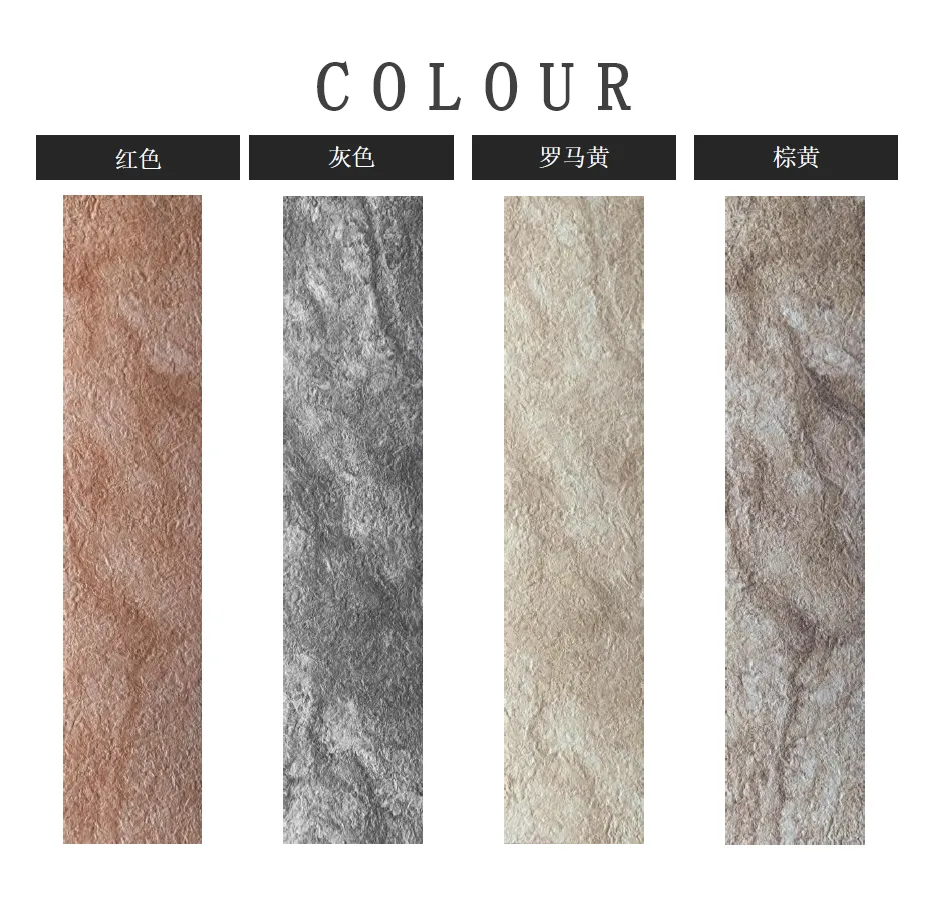
Saudi Arabian architecture is a living narrative, where every wall, arch, and stone whispers tales of desert resilience, ancient trade, and a culture that has long turned harsh landscapes into havens of community. In this tapestry of tradition and modernity, materials are more than building blocks—they are storytellers. Among them, rock cut dolomitic stone stands out, a material that bridges the rugged beauty of the past with the innovative spirit of the present. Its claybank and dark grey hues, etched with the marks of careful craftsmanship, carry the weight of heritage while embracing the demands of contemporary design.
To touch rock cut dolomitic stone is to touch the earth itself. Quarried from layers of sedimentary rock formed over millennia, this stone bears the imprint of time in its texture—rough yet refined, with visible lines that mimic the natural fractures of desert cliffs. Unlike polished marbles or uniform concretes, it wears its "imperfections" proudly: a slight variation in color here, a jagged edge there, each telling a story of the land it came from. In its claybank form, it glows with the warmth of sunbaked sand, while the dark grey variant echoes the storm-cloud shadows that sweep over the Arabian Peninsula. This duality—warmth and depth—makes it a chameleon in architectural design, equally at home in sunlit courtyards and shadowed passageways.
What truly defines rock cut dolomitic stone, though, is its "cut." Unlike stones shaped by heavy machinery into sleek, uniform slabs, this material is often worked with precision that honors its natural grain. The result? A surface that feels both intentional and organic, as if the stone itself guided the craftsman's hand. It's a material that doesn't just look like it belongs in Saudi Arabia—it feels rooted there, a physical extension of the country's rocky plateaus and windswept wadis.
In traditional Saudi architecture, texture was never accidental. Mud-brick walls, for example, bore the fingerprints of the community members who shaped them, their uneven surfaces a testament to collective labor. Rock cut dolomitic stone carries this legacy forward. Its rough-hewn finish evokes the same sense of human connection—reminding us that buildings are not just constructed, but nurtured . In a world of mass-produced materials, this stone stands as a rejection of sterility, a choice to keep architecture grounded in the tactile, the personal, and the real.
To understand rock cut dolomitic stone's place in Saudi culture, we must first look to the stones that came before it: markers of heritage like historical pathfinders stone . For centuries, stones dotted the Saudi desert, guiding travelers across vast, featureless landscapes—caravan routes, oases, and sacred sites marked by these silent sentinels. They were more than navigation tools; they were symbols of resilience, proof that even in the harshest environments, humans leave traces of purpose.
Rock cut dolomitic stone channels this spirit of endurance. Its ruggedness mirrors the desert's own tenacity—the way sand and wind carve mountains into valleys, yet life persists. In regions like Al-Ula, where ancient Nabatean cities once rose from stone, modern architects now use rock cut dolomitic stone to echo those historical forms. A hotel facade in Madinah, for instance, might feature panels of dark grey dolomitic stone, their edges chiseled to resemble the weathered walls of a centuries-old fortress. Here, the stone isn't just decorative; it's a bridge to the past, a way of saying, "We remember."
This connection to heritage runs deeper than aesthetics. In Saudi culture, the land is sacred—a source of identity and pride. Rock cut dolomitic stone, quarried from Saudi soil, embodies this bond. Unlike imported materials, it carries the "soul" of the country, making buildings feel less like foreign imports and more like organic extensions of the landscape. It's a choice that honors the idea that architecture should grow from the land it occupies, not stand apart from it.
Today's Saudi architects are not content to merely replicate the past—they are reimagining it. Rock cut dolomitic stone, with its versatility, has become a favorite tool in this endeavor. Paired with materials like mcm flexible stone , it gains newfound adaptability: imagine a museum in Riyadh where a curved wall of claybank dolomitic stone flows seamlessly into a lightweight mcm panel, the combination allowing for bold, sweeping designs without sacrificing the stone's cultural weight.
Then there's the rise of boulder slab —large, monolithic pieces of stone that make a statement in contemporary spaces. In Jeddah's waterfront developments, boulder slabs of dolomitic stone might frame floor-to-ceiling windows, their rough surfaces contrasting with the smoothness of glass. The effect is striking: a dialogue between the natural and the modern, the earthy and the sleek. It's a visual metaphor for Saudi Arabia itself—a nation rooted in tradition but reaching for the future.
One notable example is a cultural center in Dammam, where the exterior is clad in rock cut dolomitic stone (claybank), its panels arranged in a pattern that mimics the weave of traditional Saudi textiles. The stone's warm tones glow at sunset, while at night, LED lights embedded behind the panels highlight its texture, turning the building into a beacon of cultural pride. Inside, polished concrete floors and steel beams complement the stone, creating a space that feels both ancient and forward-thinking.
In Saudi culture, texture is emotional. A mud-brick wall in a traditional Najdi house isn't just a barrier—it's a record of the hands that mixed the mud, the families that gathered within its walls, the stories shared over generations. Rock cut dolomitic stone carries this same emotional weight. Its surface, with its visible tool marks and natural variations, invites touch, connection, and reflection. A visitor running a hand along its surface might be reminded of their grandmother's mud-brick home, of the way the desert sun warmed those walls, of the smell of cardamom and coffee drifting through open doors.
This emotional layer is what sets rock cut dolomitic stone apart from more sterile modern materials. In a world increasingly dominated by glass and steel, it offers a sense of grounding—a reminder that architecture is about people, not just function. A school in Riyadh, for example, uses claybank dolomitic stone in its courtyard walls. Children play nearby, their laughter bouncing off the stone's rough surface, creating a space that feels safe, familiar, and rooted in the community's heritage.
Rock cut dolomitic stone is more than a material in Saudi Arabian architecture—it is a symbol of identity. It speaks to a culture that honors its past while building bravely for the future, that finds beauty in imperfection, and that sees the land itself as a partner in creation. Whether in the dark grey panels of a contemporary office tower or the claybank walls of a heritage museum, it carries the stories of the desert, the resilience of its people, and the quiet pride of a nation that has always turned stone into legacy.
As Saudi Arabia continues to grow—with cities like NEOM rising from the desert, and historic sites being restored to their former glory—rock cut dolomitic stone will undoubtedly remain a key chapter in this architectural story. It is a stone for the ages, one that will continue to bridge generations, connect people to their land, and remind us all that the most enduring buildings are those built not just with materials, but with meaning.
Recommend Products












