
There's something almost primal about the way natural stone draws us in. Walk into a room clad in it, and suddenly the air feels calmer, the space more grounded—like standing at the edge of a forest, or running your hand along the weathered face of a cliff. That's the magic of textures shaped by time, pressure, and the quiet chaos of nature. Today, we're diving into one of the most captivating players in this world: Rock Cut Dolomitic Stone . Its name might sound technical, but its beauty is anything but. Let's unpack the story behind its patterns, the endless ways to use it, and why it's become a favorite for designers craving that perfect blend of raw elegance and everyday practicality.
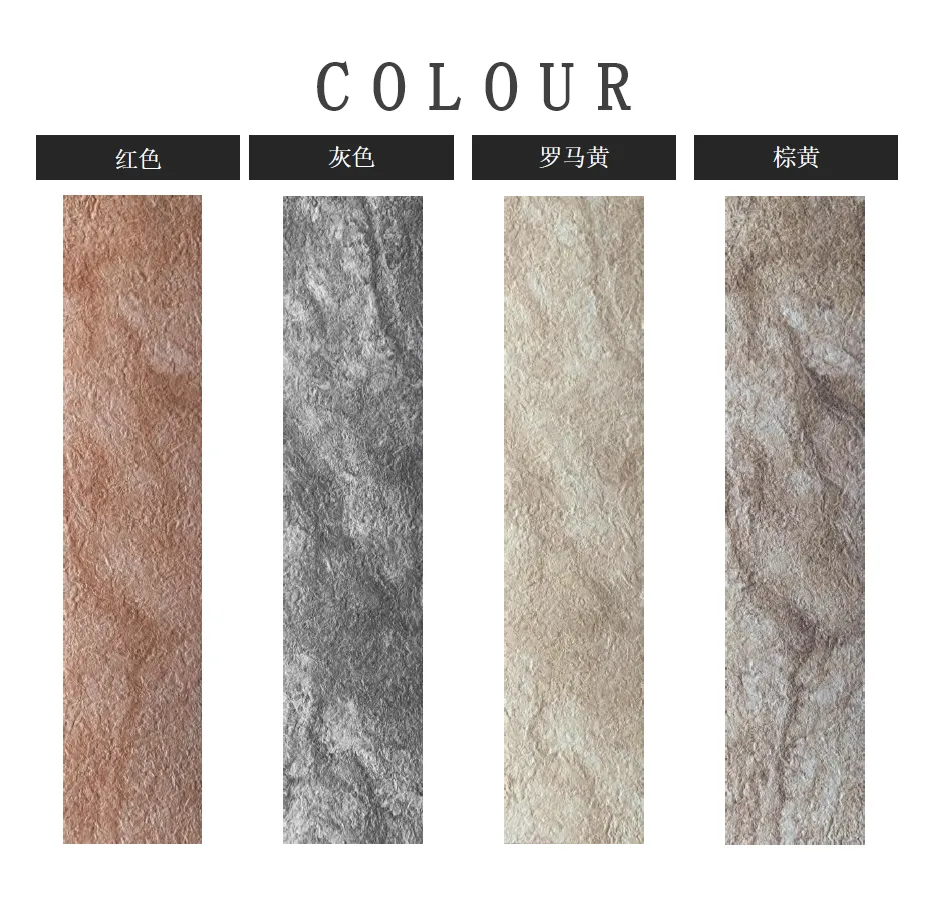
First things first: let's demystify the term. Dolomitic stone is a cousin of limestone, formed over millennia from mineral-rich sediments and the slow, steady pressure of the earth. What makes it "dolomitic" is its high dolomite content—a mineral that gives it a unique density and a palette of earthy hues, from soft claybank to deep, moody greys. When we talk about "rock cut," we're referring to the way it's extracted and finished: not polished to a high shine, but split or chiseled to reveal the stone's natural, unfiltered texture. Think of it like peeling back a layer to show the stone's "bones"—the grooves, ridges, and subtle color variations that make each slab one-of-a-kind.
You've probably seen its close relatives in the keyword list: dolomitic travertine (dark grey) and dolomitic travertine (claybank) . Travertine is another sedimentary stone, often with more visible pores, but dolomitic varieties? They're denser, more durable, and carry that same organic, time-worn charm. Rock Cut Dolomitic Stone takes that a step further by leaning into the "unfinished" look—no sanding down the edges, no masking the marks of nature. It's stone as it was meant to be: bold, honest, and full of character.
Here's the thing about natural stone patterns: they're never random. Every line, every swirl, every fleck of color is a fingerprint of the environment that created it. With Rock Cut Dolomitic Stone, those patterns tell a story millions of years in the making. Let's break down what makes them so visually arresting:
Run your hand over a slab of dolomitic travertine (claybank) , and you'll feel it immediately: the texture isn't just rough—it's directional . Those gentle ridges? They're the ghost of ancient water currents, carrying sediments that settled layer by layer, like pages in a book. In darker variants, like dolomitic travertine (dark grey) , the contrast between light and dark veins is sharper, almost like ink bleeding into paper. It's not just a texture; it's a timeline. When you install this stone, you're hanging a piece of Earth's history on your wall.
Natural light turns Rock Cut Dolomitic Stone into a living canvas. Morning sun, soft and golden, will make Stream Limestone (claybank) (a close texture cousin) glow from within, highlighting the warm undertones in its clay-colored base. By afternoon, as light slants lower, the deeper grooves of Stream Limestone (dark grey) cast tiny shadows, adding depth that no paint color could ever replicate. Designers love this because it means the space changes with the day—never static, always evolving. A kitchen backsplash here isn't just a backsplash; it's a mood ring for your home.
No two slabs of Rock Cut Dolomitic Stone are identical. One might have a cluster of tiny fossilized shells (a nod to its marine origins), another a splotch of lighter color where mineral deposits seeped in. These "flaws" are what make it unforgettable. Compare that to a synthetic material, where every tile is a carbon copy, and you'll see why designers are ditching the "perfect" for the "perfectly imperfect." It's the same reason we love hand-knit sweaters or vintage furniture—there's a soul in the irregularity.
Rock Cut Dolomitic Stone isn't just pretty—it's versatile. Whether you're dreaming of a cozy home office or a sprawling hotel lobby, its texture plays well with styles from minimalist to rustic, industrial to bohemian. Let's map out the possibilities.
Imagine your living room: a neutral sofa, a few potted plants, and one wall entirely clad in dolomitic travertine (claybank) . Suddenly, the space isn't just "nice"—it's memorable . The stone softens the room, adding warmth, but its texture keeps it from feeling flat. Pair it with wooden furniture, and you've got a cabin-in-the-woods vibe without the kitsch. For something moodier, try dolomitic travertine (dark grey) in a bathroom. It turns a utilitarian space into a spa-like retreat, especially when paired with matte black fixtures and soft, diffused lighting. Pro tip: Use it on a fireplace surround, and watch how the flickering flames dance across its ridges—pure magic.
Restaurants, boutiques, and hotels thrive on first impressions—and Rock Cut Dolomitic Stone delivers. A café with an exterior wall of Stream Limestone (dark grey) immediately signals "artisanal" and "thoughtful," drawing passersby in. Inside, a hotel lobby with a reception desk wrapped in Stream Limestone (claybank) feels both grand and approachable, like stepping into a historic villa. Even offices are getting in on the action: imagine a tech startup with meeting rooms clad in this stone—suddenly, the sterile "corporate" vibe melts away, replaced by a space that feels creative and grounded. It's a texture that says, "We care about details."
Here's where the "dolomitic" part really shines: this stone is tough. Rain, snow, UV rays—none of it phases it. That makes it perfect for outdoor kitchens, patio floors, or even pool surrounds. Rock Cut Dolomitic Stone doesn't just look good; it performs . Unlike some softer stones, it won't etch easily from pool chemicals, and its non-slip texture (thanks to those natural ridges) keeps it safe underfoot. Pair it with MCM Flexible Stone (a modern, lightweight alternative that mimics natural textures) for a seamless indoor-outdoor flow—same look, different applications, all durability.
Curious how Rock Cut Dolomitic Stone holds up against other natural textures? Let's break it down. The table below compares it to a few close relatives from the keyword list—all stars in their own right, but each with its own superpower.
| Material | Color Range | Texture Vibe | Best For |
|---|---|---|---|
| Rock Cut Dolomitic Stone | Claybank, Dark Grey (via dolomitic travertine variants) | Rugged yet refined; directional ridges, subtle veining | Feature walls, fireplaces, outdoor kitchens |
| Stream Limestone (Claybank/Dark Grey) | Warm clay, Charcoal-like dark grey | Smoother than dolomitic stone; "water-worn" grooves | Bathroom walls, patio flooring, backsplashes |
| Slate Veil White | Crisp white with soft grey marbling | Fine-grained, layered; more uniform than dolomitic stone | Modern kitchens, minimalist accent walls |
| MCM Flexible Stone | Wide range (mimics natural stones) | Lightweight, thin; replicates rock cut textures | High-rise exteriors, curved surfaces, DIY projects |
Let's get real: beauty only gets you so far. What makes Rock Cut Dolomitic Stone a smart choice? Let's count the ways.
Dolomite is tough stuff. Unlike some marbles that scratch easily or limestones that etch with acid, dolomitic stone holds its own. Spill coffee on your dolomitic travertine (dark grey) backsplash? Wipe it up, no stain. Drag a chair across a Stream Limestone (claybank) floor? Maybe a tiny scuff, but nothing a quick buff won't fix. This isn't a material that fades with time—it ages gracefully , like a well-loved leather jacket. In fact, many designers prefer the "patina" it develops, where the high points soften slightly, making the texture even more dynamic.
No need for fancy sealers every six months (though a yearly coat never hurts). Rock Cut Dolomitic Stone is porous, yes, but its density means it resists moisture better than pure limestone. A quick wipe with mild soap and water is all it takes to keep it looking fresh. Even outdoors, where it's exposed to the elements, it won't crack or crumble—unlike wood, which rots, or some synthetics that fade. For busy homeowners or commercial spaces with high foot traffic, this is a game-changer: beauty without the hassle.
In a world obsessed with "green" design, natural stone checks a lot of boxes. Rock Cut Dolomitic Stone is quarried from the earth, but responsible mining practices mean minimal environmental impact. Plus, it's 100% recyclable (though we doubt you'll ever want to replace it). Compare that to synthetic wall panels, which often off-gas chemicals or end up in landfills after a decade. Choosing stone is choosing a material that doesn't just look timeless—it acts timeless, too.
Rock Cut Dolomitic Stone is a team player. It loves being paired with other textures, adding depth without overwhelming a space. Here are a few designer-approved combos:
At the end of the day, Rock Cut Dolomitic Stone isn't just a building material. It's a conversation starter, a mood booster, and a reminder of how beautiful imperfection can be. Whether you're drawn to the warm, earthy tones of dolomitic travertine (claybank) or the moody drama of dolomitic travertine (dark grey) , this stone has a way of making spaces feel less like "designs" and more like experiences .
So the next time you're planning a renovation, or staring at a blank wall, ask yourself: Do I want something that looks "done," or something that feels alive ? If it's the latter, let Rock Cut Dolomitic Stone be your guide. After all, nature has been perfecting its textures for millions of years—who are we to argue with that kind of expertise?
*Note: All product names mentioned, including MCM Flexible Stone, Dolomitic Travertine, and Stream Limestone, are referenced from the provided keyword list to highlight texture versatility and design applications.
Recommend Products












