
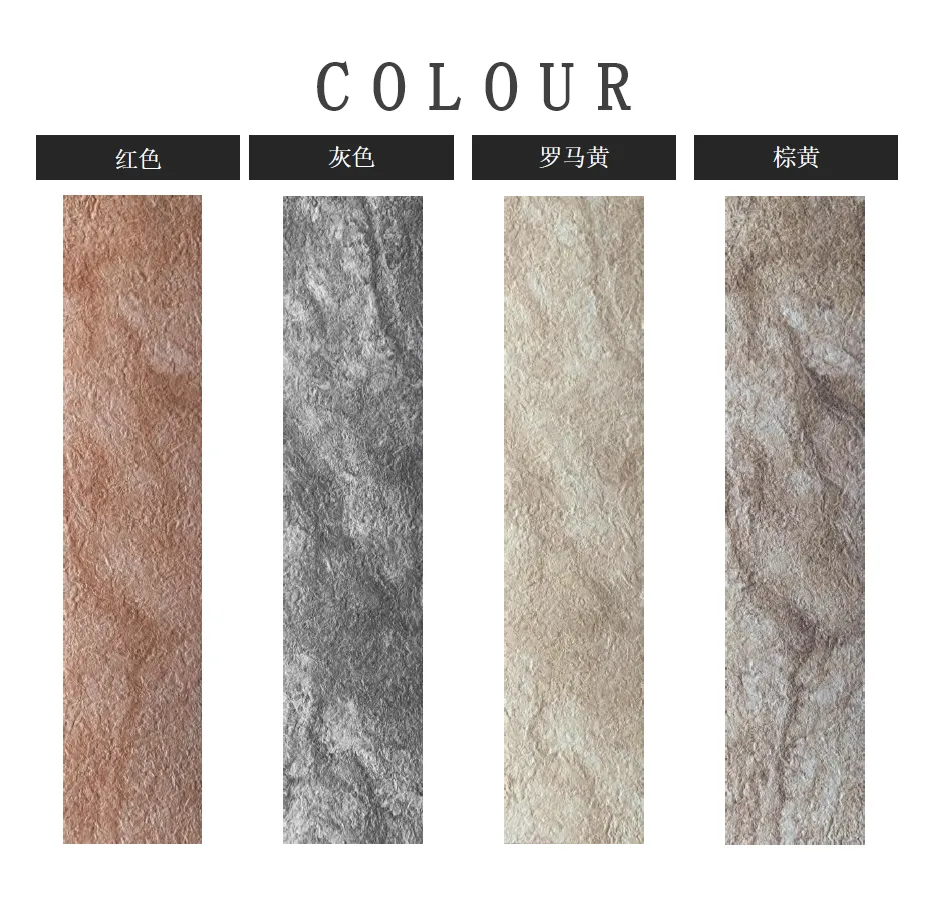
Walk through any historic city center, and you'll feel it—the quiet power of stone. The rough-hewn edges of a medieval castle, the smooth polish of a marble lobby, the layered texture of a cliff-face-inspired facade—these aren't just building materials. They're storytellers. For architects and designers, natural stone textures are more than aesthetics; they're a language that connects spaces to the earth, to history, and to the human experience of touch and sight. But for decades, this language has come with a heavy price: environmental strain from quarrying, logistical nightmares from transporting heavy slabs, and the heartache of inconsistent patterns that never quite match the vision.
Enter rock cut dolomitic stone—a material celebrated for its rugged, organic texture, born from centuries of geological pressure and time. Its layers, grooves, and mineral deposits tell a tale of the earth's movement, making it a favorite for projects aiming to blend raw nature with modern design. Yet, replicating that texture at scale, without depleting natural reserves or sacrificing structural integrity, has long been the holy grail of architectural innovation. That is, until MCM technology stepped in.
Imagine an architect sketching a hotel in Bali, dreaming of a facade that echoes the island's volcanic cliffs—rough, tactile, alive with the texture of rock cut dolomitic stone. They source samples from a quarry, fall in love with the unique veining of a particular slab, and order 500 square meters. But when the shipment arrives, half the slabs are too brittle, a quarter have inconsistent color, and the rest are so heavy the building's foundation needs reinforcement. It's a scenario that plays out in design offices worldwide: the tension between honoring nature's artistry and meeting the practical needs of 21st-century construction.
Traditional stone replication methods—like concrete casting or veneer slicing—have tried to bridge the gap, but they often feel flat, artificial. Concrete can mimic shape but not the subtle mineral shifts; veneers save weight but lose depth. And then there's sustainability: quarrying natural dolomitic stone disrupts ecosystems, consumes water, and emits carbon. For brands and cities committing to net-zero goals, specifying large-scale natural stone feels like a step backward, even if the aesthetic payoff is high.
"We wanted the warmth of natural stone in our retail flagship, but we couldn't justify the environmental impact," says Maria Gonzalez, a senior designer at a global fashion brand. "We tried faux stone panels—they looked plastic, almost cheap. Our customers notice that. Texture isn't just about looks; it's about authenticity. If the wall feels 'off,' the whole space loses that emotional connection."
The Texture Gap: What architects crave isn't just a "look"—it's the experience of stone. The way light catches a groove at dawn, the way fingers trace a ridge, the way the material ages gracefully, developing patina over time. Traditional replicas miss this because they replicate the surface , not the essence of the stone's formation.
MCM—short for Modified Composite Material—isn't just a new material; it's a revolution in how we think about texture. Born from a fusion of material science and digital innovation, MCM technology starts with a simple question: What if we could capture the soul of natural stone, then recreate it in a way that's lighter, greener, and infinitely customizable? The answer lies in a process that marries 3D scanning, precision engineering, and sustainable composites to replicate rock cut dolomitic stone texture so faithfully, even geologists do a double-take.
At its core, MCM is a blend of mineral aggregates, polymer resins, and reinforcing fibers—engineered to mimic the density, feel, and durability of natural stone, but at a fraction of the weight. What sets it apart, though, is how it's shaped. Enter the MCM 3D printing series: a suite of advanced manufacturing tools that don't just mold material, but sculpt texture. Here's how it works:
The first time you run your hand over an MCM rock cut dolomitic stone panel, you'll understand the breakthrough. It's cool, slightly gritty, with the same subtle give as natural stone. Step back, and the texture shifts with light—deeper grooves darken in shadow, mineral flecks catch the sun—just like the real thing. But beyond the sensory experience, MCM solves the practical headaches that once made natural stone a risky choice.
| Feature | Natural Rock Cut Dolomitic Stone | MCM Replicated Dolomitic Stone |
|---|---|---|
| Weight | 20-25 kg/m² (requires structural reinforcement) | 6-8 kg/m² (can be installed on standard framing) |
| Sustainability | High carbon footprint (quarrying, transportation); limited supply | 85% recycled content; low energy manufacturing; no quarrying |
| Consistency | High variability (color, texture, strength) | 99% consistency across panels; custom color matching |
| Durability | Prone to cracking; sensitive to moisture | Impact-resistant; water/mold-proof; UV-stable |
| Installation | Heavy machinery required; longer lead times | Lightweight; can be cut on-site; 50% faster installation |
Take the "Gobi Panel" project in Dubai, where a luxury resort wanted to evoke the rugged beauty of the Gobi Desert's rock formations. The design called for 2,000 m² of rock cut dolomitic stone texture, but the building's rooftop location made heavy stone impossible. MCM stepped in, delivering panels that matched the desert's weathered, layered look—so convincing that guests often comment on "how authentic the stone feels." Best of all, the panels weighed 70% less than natural stone, eliminating the need for structural upgrades.
Or consider the "Historical Pathfinders Stone" collection, which uses MCM to replicate ancient dolomitic stone carvings for heritage restoration projects. In Rome, a 17th-century church needed to replace damaged exterior panels with matching texture to comply with historic preservation laws. MCM scanned the original stone, recreated the texture, and produced panels that blend seamlessly—saving the church from the cost and controversy of quarrying new stone.
While rock cut dolomitic stone is a standout, MCM technology's magic lies in its versatility. The same precision that replicates dolomitic texture can be applied to a universe of materials, from the smooth flow of stream limestone (claybank) to the industrial edge of fair-faced concrete . For example, the MCM flexible stone line uses the same 3D replication process to create lightweight, bendable panels that wrap curved surfaces—think a museum's spiral staircase clad in travertine (starry blue) , its texture undulating like a galaxy frozen in stone.
The MCM 3D printing series takes customization further, allowing designers to tweak texture parameters: deepen a groove here, lighten a mineral vein there, or even combine textures (dolomitic stone meets wood grain board ) for a hybrid look. "We worked with a restaurant in Tokyo that wanted walls that felt like a forest floor—part stone, part fallen timber," says Raj Patel, MCM's lead product developer. "Using 3D printing, we merged the texture of rock cut dolomitic stone with subtle wood grain indentations. The result? A wall that guests literally kneel to touch."
As MCM technology evolves, the line between "natural" and "replicated" texture is blurring—by design. Imagine a future where architects can scan a 500-year-old dolomitic stone wall in Tuscany, tweak the texture to be more slip-resistant for a hospital corridor, and have MCM panels delivered in weeks, not months. Or where AI analyzes climate data to predict how a texture will age, then pre-engineers that patina into the panel—so a building in Miami gets a texture that "matures" like it's been weathered by Florida rains, even on day one.
Sustainability will only deepen, too. MCM's current 85% recycled content target is just the start; research is underway to incorporate mycelium (mushroom-based) fibers into the composite, making panels fully biodegradable at end-of-life. "We're not just replicating stone—we're reimagining how we interact with the earth's resources," says Patel. "Why take from nature when we can honor it by preserving its most beautiful textures for generations?"
At the end of the day, MCM technology isn't about replacing natural stone—it's about extending its legacy. Rock cut dolomitic stone, with its raw, earthy texture, reminds us of our connection to the planet. MCM ensures that connection doesn't come at the cost of the planet itself. It lets architects, designers, and builders speak the language of texture with new fluency—creating spaces that feel authentic, sustainable, and deeply human.
So the next time you run your hand along a wall and pause, thinking, "This feels real," remember: it might be MCM. And that's the point. It's not about tricking you—it's about giving you the best of both worlds: the soul of natural stone, reborn through innovation. In a world that often feels disconnected, that's a texture worth celebrating.
Recommend Products












