
How Two Material Powerhouses Redefine Design Freedom for Modern Spaces
In the world of architecture and design, the quest for uniqueness has always been a driving force. Every space tells a story, and the materials that clothe its walls or floors are the words that bring that story to life. Today, two material families stand out as champions of customization: the timeless Rock Cut Dolomitic Stone , rooted in nature's raw beauty, and the innovative MCM 3D Printing Series , a product of cutting-edge technology. Both promise to turn design dreams into tangible reality—but how do they stack up when it comes to the ultimate goal: unlimited customization ?
Let's dive into their worlds, explore their strengths, and uncover how they're reshaping the way we build, design, and experience spaces.
Rock Cut Dolomitic Stone isn't just a material—it's a piece of Earth's history. Formed over millennia from mineral-rich sediments, dolomitic stone is quarried and then "rock-cut," a process that preserves its natural fractures, textures, and color variations. Think of it as nature's own artwork: each slab bears unique veins, pits, and tonal shifts, as if the stone itself is whispering tales of ancient oceans and geological upheavals.
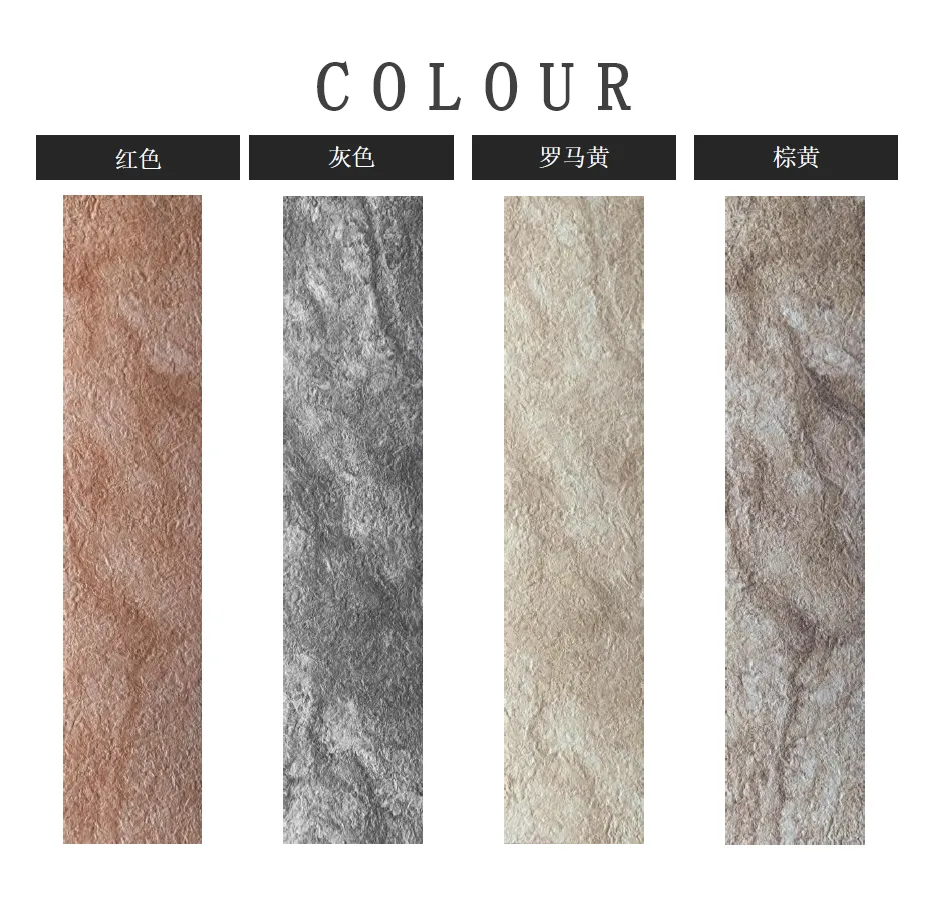
Available in hues like claybank and dark grey (as noted in the dolomitic travertine variants), this stone thrives on imperfection. Its rough-hewn surface, shaped by both natural forces and skilled craftsmen, adds depth and warmth to any space. For designers drawn to organic, earthy aesthetics—whether for a rustic villa facade or a heritage museum interior—Rock Cut Dolomitic Stone is a love letter to authenticity.
If Rock Cut Dolomitic Stone is a classic novel, the MCM 3D Printing Series is a futuristic graphic novel—bold, dynamic, and unapologetically modern. MCM (Modified Composite Material) is a lightweight, durable material made from mineral composites, and when paired with 3D printing technology, it becomes a playground for designers. Imagine being able to program a machine to extrude layers of material into any shape, texture, or pattern—from intricate geometric grids to flowing, organic curves—with pinpoint precision.
Part of the broader MCM project board series , the 3D printing line includes innovations like MCM flexible stone , which bends without breaking, and 3D art concrete board , which mimics the look of concrete but with endless design flexibility. Whether you're craving the sleekness of foamed aluminium alloy board (vintage silver) or the warmth of wood grain board , the MCM 3D Printing Series turns digital designs into physical reality, no idea too wild.
Customization isn't just about choosing a color—it's about control: over texture, size, shape, and even functionality. Let's break down how Rock Cut Dolomitic Stone and MCM 3D Printing Series measure up in key areas:
| Feature | Rock Cut Dolomitic Stone | MCM 3D Printing Series |
|---|---|---|
| Design Flexibility | Limited by natural stone's structure. Customization focuses on cutting size/shape (e.g., big slab board series formats) and surface finishing (polished vs. rough). | Unlimited. 3D printing allows for complex geometries, custom textures (e.g., wave panel , thread patterns), and even multi-material combinations. |
| Color Range | Natural hues: claybank , dark grey , earthy tones. Limited to stone's inherent mineral composition. | Vast: vintage silver , vintage gold , starry red , rusty red , and custom color matching via pigment infusion. |
| Texture Control | Natural, unpredictable textures—veins, pits, and fractures are unique to each slab. | Digitally controlled textures: ripple board , fine line stone , weaving (khaki) , or even custom 3D scans of natural textures. |
| Sustainability | Eco-friendly if sourced from responsible quarries; minimal processing, but heavy (higher transport emissions). | Lightweight (reduces transport impact), uses recycled materials in some variants (e.g., foamed aluminium alloy board ), and 3D printing minimizes waste. |
| Application Versatility | Facades, flooring, accent walls in low-rise, heritage, or rustic projects. | High-rises, interiors, furniture, art installations—even curved surfaces (thanks to MCM flexible stone ). |
At the end of the day, customization is about more than specs—it's about making a space feel yours . Let's look at how these materials empower designers to do just that.
For the boutique hotel in Tuscany that wanted to evoke the region's rolling hills, Rock Cut Dolomitic Stone in claybank was the perfect choice. The stone's uneven surface and warm, terracotta-like hue mirrored the landscape, creating a facade that felt rooted in place. Each slab, with its unique pitting and veining, became a "chapter" in the hotel's story—a nod to the land that inspired it.
But customization here is about working with nature, not against it. A designer might specify big slab board series dimensions to minimize seams, or request a honed (rather than polished) finish to enhance the stone's tactile quality. It's about embracing imperfection as a form of beauty—because in nature, no two stones are alike, and that's what makes the result so authentic.
Contrast that with a tech startup's headquarters in Tokyo, where the design brief called for a "digital canyon" lobby. The MCM 3D Printing Series delivered with wave panel walls in lunar peak silvery and thread patterns that mimicked data streams. The panels, printed in custom 10-foot heights, curved seamlessly to create a sense of movement—something impossible with natural stone.
Or consider a restaurant in Dubai that wanted to replicate the gobi panel texture of the desert dunes but in a vibrant starry orange . MCM's 3D printing technology scanned actual dune patterns, then printed them onto flexible stone panels in the custom color. The result? A ceiling that felt like a slice of the desert sky, indoors.
The MCM series even allows for functional customization. Take foamed aluminium alloy board (vintage gold) : not only does it offer a sleek, metallic finish, but its lightweight composition makes it ideal for large-scale installations—like a 50-foot mural in an airport terminal, where weight restrictions would have ruled out natural stone.
Here's the secret: Rock Cut Dolomitic Stone and MCM 3D Printing Series aren't rivals—they're collaborators. A luxury resort in Bali might use Rock Cut Dolomitic Stone for its exterior walls, channeling the island's volcanic heritage, while using MCM 3D printed bamboo mat board for interior ceilings, adding a modern, sustainable twist. The contrast between natural and man-made textures creates a space that feels both timeless and fresh.
Sustainability is another area where they complement each other. Rock Cut Dolomitic Stone, when sourced ethically, is a renewable resource (stone quarries can be rehabilitated). MCM, with its foamed aluminium alloy and recycled composites, offers low embodied carbon. Together, they let designers prioritize both aesthetics and eco-responsibility.
Rock Cut Dolomitic Stone and MCM 3D Printing Series represent two sides of the customization coin: one celebrates the beauty of what's naturally given, the other the power of what we can create. Whether you're drawn to the earthy storytelling of natural stone or the boundless innovation of 3D printing, the goal is the same: to build spaces that don't just exist—but resonate .
So, to the architects, designers, and dreamers: the next time you pick up a material sample, ask yourself: What story do I want to tell? With Rock Cut Dolomitic Stone and MCM 3D Printing Series, the answer is entirely up to you.
Recommend Products












