
Walk down any city street, and your eyes are drawn upward—often to the facades of buildings that tell stories of design, culture, and purpose. A facade isn't just a wall; it's a first impression, a silent narrator of a structure's identity. When it comes to large-scale projects—think skyscrapers, cultural centers, or sprawling commercial complexes—the choice of facade material becomes more than a practical decision. It's about balancing grandeur with functionality, aesthetics with feasibility. Today, we're diving into two heavyweights in the world of facade design: the time-honored Rock Cut Dolomitic Stone and the innovative MCM Big Slab Board . But this isn't just a battle of materials—it's a showdown of size, and how that single factor can redefine what's possible for your next architectural masterpiece.
Before we pit these two materials against each other, let's talk about why size is the unsung hero of facade design. Imagine a 10-story office building wrapped in small, disjointed stone tiles. The seams multiply, the pattern feels busy, and the building loses its sense of scale. Now picture the same structure clad in massive, seamless slabs: suddenly, it stands taller, more cohesive, almost monumental. Size minimizes seams, which not only elevates aesthetics but also boosts performance—fewer gaps mean better weather resistance, improved insulation, and lower long-term maintenance costs. For architects, large slabs are a canvas; they let bold designs breathe, whether you're aiming for a sleek, modernist look or a textured, organic feel.
But here's the catch: not all materials can handle "large." Natural stones, carved from the earth, often hit a ceiling when it comes to slab dimensions. Engineered materials, on the other hand, are rewriting those rules. Let's meet our contenders.
Rock Cut Dolomitic Stone is the wise elder of facade materials. Quarried from ancient rock formations, it carries the weight of geological history in every inch. Its appeal is visceral: the rough-hewn texture, the unique veining, the way light plays on its surface like sunlight through canyon walls. For centuries, it's been the go-to for buildings meant to stand the test of time—cathedrals, government halls, and historic landmarks.
But when it comes to size, this elder has constraints. Dolomitic stone forms deep underground, layer by layer, and extracting large slabs is a high-stakes game. Quarry workers use diamond-tipped saws to slice through rock, but nature doesn't always cooperate. A slab larger than 1.8m x 3m (about 6ft x 10ft) is rare—and even then, it's a gamble. Natural fractures, mineral deposits, or inconsistencies in density can weaken the stone, making it prone to cracking during transport or installation. To avoid waste, quarries often stick to smaller, more reliable slab sizes, typically 1.2m x 2.4m (4ft x 8ft) or less. For a large facade, that means dozens—sometimes hundreds—of seams. Each seam is a potential weak point, and over time, weathering can make them more visible, disrupting the building's visual flow.
Take, for example, a recent hotel project in Prague that opted for Rock Cut Dolomitic Stone in a warm dolomitic travertine (claybank) hue. The design called for a facade that nodded to the city's historic architecture, but the 80-meter-wide frontage required over 300 individual slabs. While the end result was charming, the abundance of seams gave the building a patchwork feel, and the client later admitted they'd underestimated the cost of cutting and installing so many pieces.
If Rock Cut Dolomitic Stone is the wise elder, MCM Big Slab Board is the innovative newcomer—born from a desire to merge nature's beauty with modern engineering. MCM, or Modified Composite Material, is a blend of natural minerals, polymers, and fibers, crafted in factories to exact specifications. And "big" isn't just a marketing term: these slabs can reach sizes that make natural stone blush. We're talking 3m x 6m (10ft x 20ft) or larger, with thicknesses as thin as 4mm (0.16 inches) and as sturdy as 20mm (0.79 inches). How? By ditching the unpredictability of nature for precision manufacturing.
The secret lies in MCM's core: a lightweight, flexible base that can be molded into massive sheets without sacrificing strength. Unlike natural stone, which is heavy and brittle, MCM Big Slab Boards are flexible stone —they can bend slightly to follow curved facades or uneven surfaces, making installation a breeze. This flexibility also means fewer breakages during transport, a huge win for large projects where material waste can derail budgets.
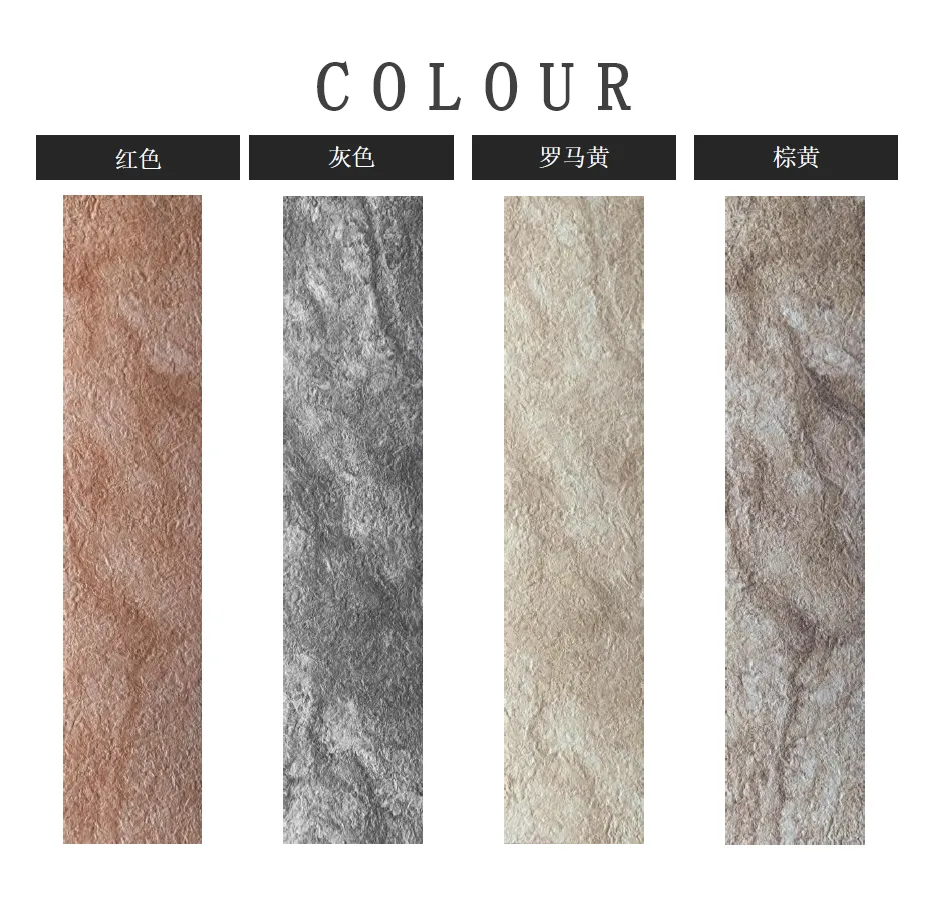
But size is just the start. What truly sets MCM apart is its chameleon-like ability to mimic other materials—including the very natural stones it's competing with. Want the look of travertine (starry green) , with its galaxy-like speckles? MCM can replicate that. Craving the metallic sheen of foamed aluminium alloy board (vintage silver) ? Done. Or perhaps the ethereal glow of lunar peak silvery , which shimmers like moonlight on rock? MCM delivers, all in a single, seamless slab.
A striking example is the "Skyline Museum" in Dubai, which opened in 2024. Its main facade spans 120 meters and features MCM Big Slab Boards in lunar peak silvery , cut into 4m x 5m slabs. The result? A smooth, reflective surface that mirrors the desert sky by day and transforms into a starlit canvas at night, with zero visible seams. "We wanted the building to feel like it's floating," says lead architect Amina Khan. "With natural stone, that would have been impossible—too many seams, too much weight. MCM let us create a facade that's both grand and weightless."
To truly understand how these materials stack up, let's break down their size-related strengths and weaknesses, along with other critical factors for large facades:
| Feature | Rock Cut Dolomitic Stone | MCM Big Slab Board |
|---|---|---|
| Max Slab Size | Typically 1.2m x 2.4m (rarely over 1.8m x 3m) | Up to 3m x 6m (custom sizes available) |
| Thickness Range | 20mm – 50mm (heavy, rigid) | 4mm – 20mm (lightweight, flexible) |
| Weight per sqm | 25kg – 50kg (requires strong structural support) | 5kg – 12kg (reduces load on buildings) |
| Seam Visibility | High (many seams, prone to weathering) | Low (minimal seams, can be color-matched) |
| Customization | Limited (depends on natural veining/texture) | Unlimited (mimics stones, metals, textures like starry green travertine) |
Numbers tell part of the story, but architecture is about emotion. Rock Cut Dolomitic Stone evokes warmth, tradition, and a connection to the earth. It's perfect for projects rooted in heritage—think a boutique hotel in a historic district or a cultural center celebrating local geology. Its seams, while more visible, can add character, like the wrinkles on a wise face.
MCM Big Slab Board, by contrast, feels forward-thinking, bold, and limitless. It's for architects who want to push boundaries—designs that surprise, that make people stop and stare. Its seamless slabs create a sense of calm, modernity, and unity, ideal for tech hubs, art galleries, or futuristic public spaces. When paired with finishes like travertine (starry green) , it blends the best of nature and innovation, offering the soul of stone without the size constraints.
In today's world, no material choice is complete without considering sustainability—and here, size plays a role again. Quarrying Rock Cut Dolomitic Stone is resource-intensive: it requires heavy machinery, disrupts ecosystems, and generates significant waste (up to 30% of quarried stone is discarded as scrap). Large slabs are even less efficient, as the bigger the block, the more rock is wasted to extract it.
MCM Big Slab Boards, on the other hand, are engineered for efficiency. They use recycled minerals and polymers, and their manufacturing process produces minimal waste. Because they're lightweight, transporting them requires less fuel than hauling heavy stone slabs. And since they're flexible, installers can cut them on-site with minimal offcuts, further reducing waste. For the Skyline Museum, choosing MCM over natural stone cut carbon emissions by 28% during construction—a statistic that aligned with Dubai's goal of becoming a sustainable city.
So, which material wins the size showdown? It depends on the story you want your building to tell. If you're designing a structure that honors tradition, craves the raw authenticity of natural stone, and doesn't mind seams, Rock Cut Dolomitic Stone is a timeless choice. But if you dream of a seamless, bold facade that pushes the limits of size and design—without sacrificing sustainability or budget— MCM Big Slab Board is the clear innovator.
At the end of the day, both materials have their place. But in a world where architecture is increasingly about breaking boundaries, MCM's size, flexibility, and versatility make it a game-changer. It's not just a material—it's a blank canvas, waiting to turn your vision of a grand facade into reality. Whether you're drawn to the cosmic allure of travertine (starry green) , the celestial glow of lunar peak silvery , or the industrial chic of foamed aluminium alloy board (vintage silver) , MCM big slab boards let you tell that story—loud, clear, and seamless.
"Architecture is the story of how we shape space. With MCM big slab boards, we're no longer limited by nature's rules—we're writing new ones." — Amina Khan, Lead Architect, Skyline Museum Dubai
Recommend Products












