
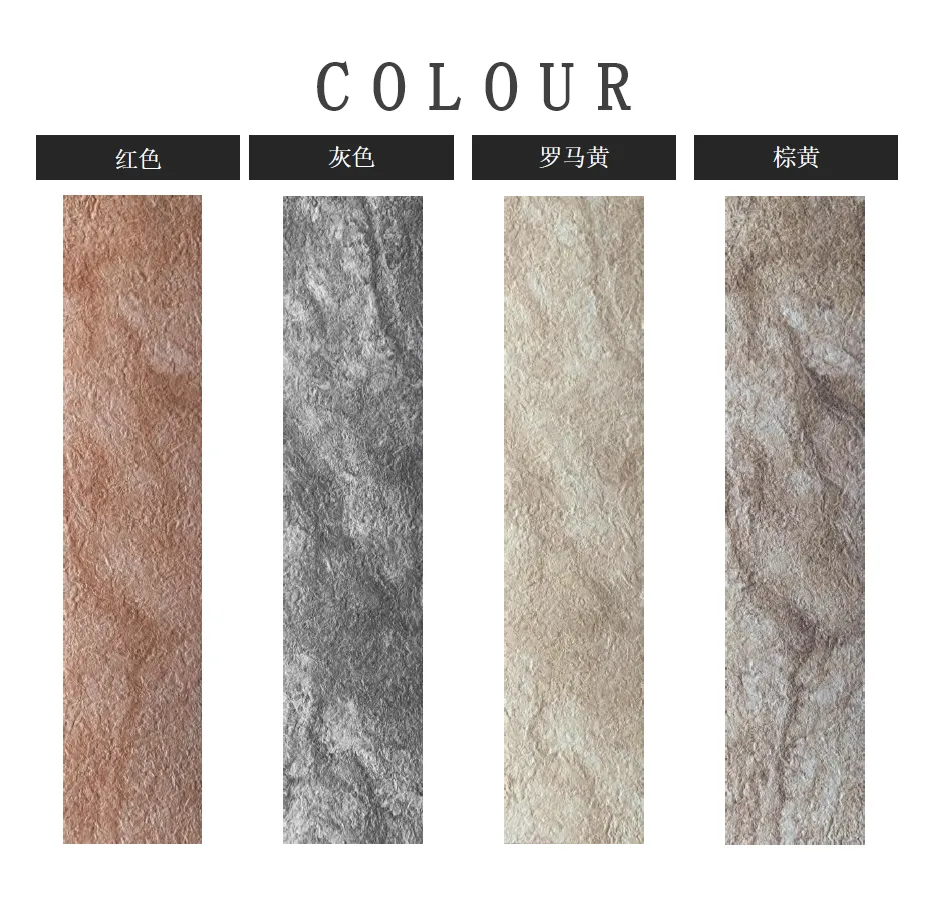
In the world of architecture and construction, every material tells a story—of where it came from, how it was made, and the impact it leaves on our planet. For builders, designers, and sustainability advocates alike, choosing between traditional stone and modern composites isn't just about aesthetics; it's about weighing decades of environmental legacy against innovation. Today, we're diving into two materials that often stand at this crossroads: Rock Cut Dolomitic Stone , a timeless natural option, and MCM (Modified Composite Material) , a flexible, engineered alternative. Let's unpack their lifecycles, carbon footprints, and what they mean for the buildings we live and work in.
Picture a quarry in the heart of a mountain range—sunlight glinting off jagged cliffs, the air thick with the scent of damp earth and stone dust. This is where Rock Cut Dolomitic Stone begins its journey. Miners use diamond-tipped saws and hydraulic drills to extract massive blocks from the earth, a process that's remained largely unchanged for centuries. The stone, formed over millions of years from compressed dolomite minerals, emerges with unique veining and textures—no two slabs are exactly alike. But this natural uniqueness comes with a cost: extraction is energy-intensive, often requiring heavy machinery that guzzles diesel, and quarrying can disrupt local ecosystems, altering soil composition and wildlife habitats.
Once extracted, the stone travels to processing facilities where it's cut into slabs, polished, and shaped. Water is a critical resource here—tons are used daily to cool saws and wash away debris. For every square meter of finished Rock Cut Dolomitic Stone, up to 200 liters of water might be consumed, and while some facilities recycle this water, many still discharge it into local waterways, carrying sediment and chemicals. Then there's the waste: up to 30% of the original stone block is lost to cutting and shaping, much of it ending up as landfill or low-value aggregate.
Now step into a modern MCM production plant—bright, automated, and far quieter than a quarry. MCM, short for Modified Composite Material, is a blend of natural stone aggregates (often recycled from quarry waste), polymers, and fiberglass. The magic lies in its flexibility: unlike rigid natural stone, MCM can be molded into curves, waves, or intricate patterns, making it a favorite for architects designing statement facades. But how does its birth compare to Rock Cut stone?
The manufacturing process starts with sourcing raw materials: stone dust and fragments from existing quarries (reducing the need for new extraction), combined with eco-friendly polymers derived from plant-based resins in some formulations. These ingredients are mixed, pressed into thin sheets (typically 3-5mm thick), and cured under controlled heat. The result? A material that's 70% lighter than natural stone, which drastically cuts down on transportation emissions later in the lifecycle. What's more, MCM production generates minimal waste—scraps from cutting can be ground up and reused in new panels, and the water used in mixing is almost entirely recycled within the facility.
A lifecycle assessment (LCA) looks at a material's environmental impact from extraction to disposal. Let's break down how Rock Cut Dolomitic Stone and MCM stack up across key stages:
| Lifecycle Stage | Rock Cut Dolomitic Stone | MCM Flexible Stone |
|---|---|---|
| Extraction | High energy use; ecosystem disruption; water pollution risk | Low impact; uses recycled stone aggregates; minimal land disturbance |
| Manufacturing | High water consumption (150-200L/m²); 20-30% waste | Low water use (recycled); 5-10% waste; energy-efficient curing |
| Transportation | Heavy (20-30kg/m²); high fuel emissions due to weight | Lightweight (3-5kg/m²); 70% lower transport emissions |
| Use Phase | Durable (50-100+ years); requires periodic sealing/maintenance | Durable (30-50 years); low maintenance; resistant to cracking |
| End-of-Life | Non-biodegradable; recyclable as aggregate but rarely done | Some components recyclable; lighter weight eases disposal |
Carbon footprint measures the total greenhouse gas emissions (usually in kg CO₂e) associated with a material. For Rock Cut Dolomitic Stone, the biggest emissions come from two stages: extraction and transportation. A 2023 study by the International Stone Federation found that extracting and processing one square meter of natural stone emits roughly 35-45 kg CO₂e, thanks to diesel-powered machinery and electricity for polishing. Transport adds another 10-15 kg CO₂e per m² if the stone is shipped over 500 km—a common scenario for global construction projects.
MCM, by contrast, shines here. Its lightweight nature slashes transport emissions to just 2-3 kg CO₂e/m² for the same distance. Manufacturing is also less carbon-intensive: the polymer binding process uses 30-40% less energy than stone polishing, bringing total embodied carbon (emissions from production) to around 15-20 kg CO₂e/m². That's less than half the footprint of Rock Cut stone. But there's a catch: MCM's lifespan is shorter (30-50 years vs. 50-100+ for natural stone). Over 100 years, a building might need two MCM replacements, while natural stone could last the full century. When factoring in replacement, MCM's total carbon footprint rises to roughly 45-50 kg CO₂e/m² over a century—still comparable to, if not slightly lower than, Rock Cut stone's 45-60 kg CO₂e/m².
MCM's flexibility isn't just a design perk—it's a sustainability win. Traditional stone, rigid and heavy, often requires extra structural support in buildings, adding steel or concrete (both high-carbon materials) to walls and foundations. Fair-faced concrete , for example, is a common companion to natural stone, but its production emits nearly 250 kg CO₂e per ton. MCM, being lightweight and moldable, reduces the need for such reinforcements. A 2022 project in Dubai used MCM flexible stone for a curved facade, cutting the building's structural steel needs by 18% and slashing associated carbon emissions by 22 tons.
Designers are also embracing MCM's versatility to mimic rare natural stones without depleting finite resources. Take travertine (starry green) —a vibrant, galaxy-like stone quarried in limited quantities in Turkey. MCM manufacturers can replicate its unique starry pattern using recycled stone dust, reducing demand for the natural version and preserving vulnerable quarries. Similarly, lunar peak silvery , a popular MCM finish with a metallic sheen, offers the look of polished silver travertine without the energy-heavy mining of silver ores.
This 30-story office building chose MCM flexible stone for its exterior cladding, citing both sustainability and design goals. The project used 12,000 m² of MCM, which weighed 60 tons total—compared to 360 tons for natural stone. Transporting the MCM from the factory in China to Dubai emitted 72 tons of CO₂e, versus 432 tons for natural stone. Over its projected 50-year lifespan, the building's cladding will emit ~240 tons CO₂e (including manufacturing and transport), saving an estimated 1,800 tons of CO₂ compared to a natural stone alternative. The architects also paired the MCM with foamed aluminium alloy board (vintage silver) for accent panels, another lightweight material that further reduced structural load.
For this 19th-century museum, authenticity was non-negotiable. The renovation team selected Rock Cut Dolomitic Stone to match the original facade, sourcing locally from a quarry 40 km away to minimize transport emissions. While the stone's embodied carbon was higher (42 kg CO₂e/m²), its longevity ensured the museum wouldn't need repairs for decades. To offset emissions, the team installed solar panels on the roof, generating enough energy to cover the quarry's annual electricity use. The result? A net-zero carbon renovation that honored history while protecting the planet.
Carbon footprint is critical, but it's not the only metric. Water use, waste, and biodiversity matter too. Rock Cut stone's high water consumption in processing can strain local supplies in drought-prone regions—especially in places like the Middle East, where many quarries operate. MCM's closed-loop water recycling reduces this risk, making it a better fit for arid climates. On the flip side, natural stone is inert and non-toxic, while some MCM polymers may off-gas volatile organic compounds (VOCs) during curing, though modern formulations have drastically reduced this issue.
Waste is another area where MCM leads. Its manufacturing process produces 5-10% waste, most of which is recycled into new panels. Natural stone's 20-30% waste often ends up in landfills, though some innovative companies are repurposing it into gravel omani stone or decorative aggregates. Still, progress is slow—only 12% of global stone waste is recycled, according to the Stone Recycling Association.
There's no one-size-fits-all answer. Rock Cut Dolomitic Stone is ideal for projects where longevity, heritage, or a unique natural aesthetic is paramount—think historic renovations or luxury resorts. Its high upfront carbon is offset by centuries of use, and local sourcing can mitigate transport emissions.
MCM, meanwhile, shines in modern, large-scale projects where weight, flexibility, and lower upfront carbon matter most. Its lightweight design reduces structural demands, and its recyclability eases end-of-life concerns. For buildings with a 30-50 year lifespan (common in commercial real estate), MCM is often the more sustainable choice.
At the end of the day, both materials have a role to play. The future of green construction lies not in choosing one over the other, but in using each where it excels—pairing Rock Cut Dolomitic Stone with MCM accents, or blending lunar peak silvery MCM with reclaimed wood for a low-carbon, high-style facade. After all, the most sustainable building is one that's designed with intention—honoring both the planet and the people who will call it home.
So next time you walk past a stone-clad building, take a moment to wonder: What's its story? And how will it write the next chapter of our planet's sustainability journey?
Recommend Products












