
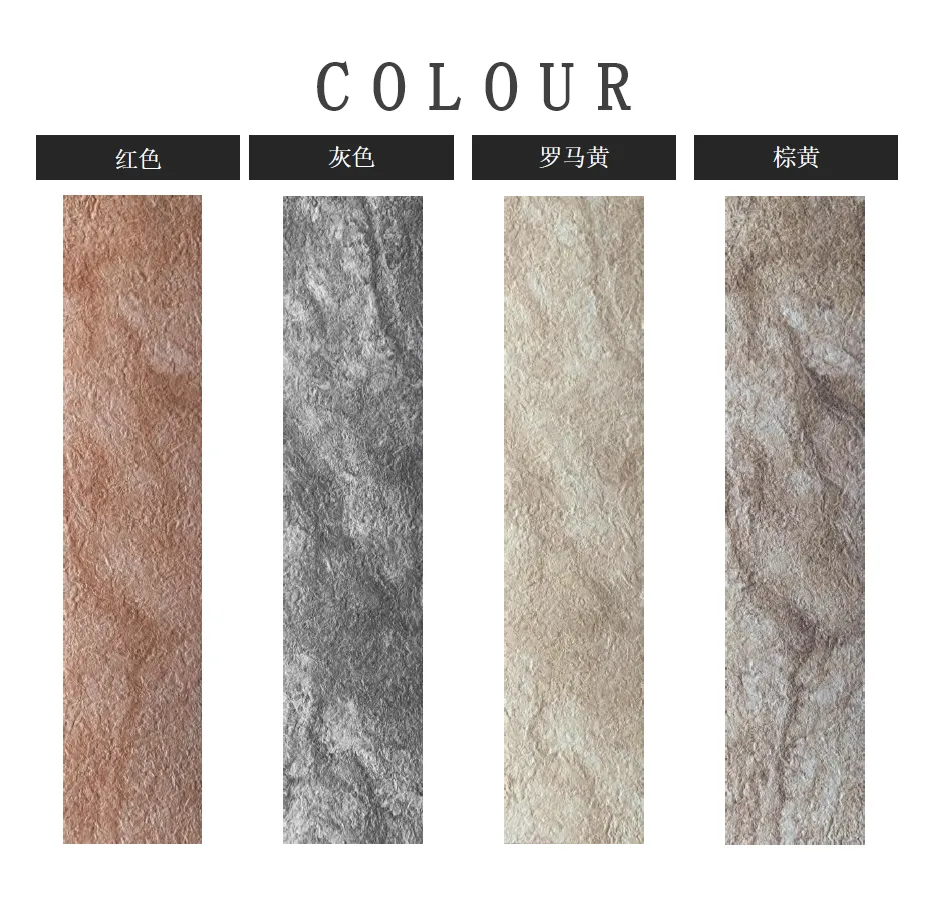
Walk into any building—whether it's a centuries-old cathedral, a sleek modern office, or a cozy neighborhood café—and the first thing that often catches your eye (and your touch) is the wall material. It's not just about looks; it's about how that material feels under your palm, how it ages over time, and how it interacts with light, sound, and the people who use the space. For architects and designers, choosing between traditional and modern materials isn't just a technical decision—it's a storyteller's choice. Today, we're diving into two materials that represent opposite ends of that spectrum: the time-honored Rock Cut Dolomitic Stone and the innovative MCM Project Board Series . Let's explore their engineering performance, their personalities, and why one might be the star of your next project while the other fades into the background.
Let's start with the veteran in the room: Rock Cut Dolomitic Stone. Picture a quarry in the Italian Alps, where workers in hard hats chip away at massive blocks of stone, each layer revealing millions of years of geological history. That's the origin story of dolomitic stone—a sedimentary rock formed from calcium magnesium carbonate, known for its crystalline structure and earthy tones, often ranging from claybank to dark grey (hello, Dolomitic Travertine (Claybank) and Dolomitic Travertine (Dark Grey) ). What makes "rock cut" dolomitic stone unique is the way it's harvested: instead of being polished to a shine, it's split or chiseled along natural fault lines, preserving the raw, rugged texture of the earth itself.
There's a reason this material has been used for millennia, from ancient Roman aqueducts to medieval castles. It's not just durable—it's characterful . Run your hand over a rock cut dolomitic stone wall, and you'll feel the irregularities: tiny grooves where the chisel slipped, subtle color variations from mineral deposits, and a cool, solid weight that anchors a space. It's the kind of material that gets better with age; rain streaks add depth, sunlight brings out hidden flecks of mica, and even scratches tell a story of life happening around it.
But beyond its aesthetic appeal, rock cut dolomitic stone is a workhorse. Geologically, it's dense and low-porous, which means it resists water absorption better than some other natural stones (we're looking at you, porous sandstone). This makes it ideal for exterior applications, where it can stand up to rain, snow, and UV rays without crumbling. Its compressive strength is impressive too—often exceeding 100 MPa (megapascals), which is more than enough to support structural loads in most buildings. However, its Achilles' heel? Weight. A standard 2cm-thick slab can weigh upwards of 50 kg per square meter, which means structural support is non-negotiable. Installers often need cranes or heavy machinery, and transportation costs add up quickly—especially for large projects.
Think heritage projects, boutique hotels aiming for a "rustic luxury" vibe, or public spaces where authenticity is key. Imagine a mountain lodge in Colorado, where the lobby walls are clad in rock cut dolomitic stone, complementing the surrounding peaks. Or a historic town square renovation, where preserving the area's stone-built character is paramount. In these cases, the material's weight and cost are justified by the emotional connection it creates—like bringing a piece of the mountain into the room.
Now, let's fast-forward to the 21st century. Enter the MCM Project Board Series —a lineup of modern building materials that's redefining what cladding can do. MCM, short for Modified Composite Material, is the brainchild of material scientists and architects who asked: "What if we could keep the beauty of natural stone but ditch the weight, cost, and hassle?" The result? A family of panels that blend natural minerals (like stone powder or aggregates) with high-performance polymers, creating a material that's thin, flexible, and surprisingly tough. And at the heart of this series is MCM Flexible Stone —a game-changer for designers who crave the look of stone without the limitations.
If rock cut dolomitic stone is the wise elder, MCM Project Board Series is the tech-savvy innovator. It's sleek, versatile, and unapologetically modern. MCM Flexible Stone, for example, is just 3-5mm thick—thinner than a credit card in some cases—and can bend up to 90 degrees without cracking. This means it can wrap around curves, follow intricate architectural details, or even be applied to uneven surfaces that would stump traditional stone. Imagine a retail store with a swooping, organic facade clad in MCM panels that mimic the look of Travertine (Starry Green) —a material that shimmers with tiny, iridescent flecks, like a night sky trapped in stone. MCM makes that possible without the weight of real travertine dragging down the structure.
MCM Project Board Series starts with a base of aluminum or fiberglass mesh for strength, layered with a modified composite core (hence the "MCM" name). On top, a thin veneer of natural stone particles or pigments is applied, giving it the texture and color of materials like travertine, granite, or even Fair-faced Concrete . The magic is in the bonding: the polymers in the core act like a flexible glue, allowing the panel to absorb impacts without shattering. This makes MCM panels surprisingly durable—resistant to scratches, dents, and even fire (most MCM products have a Class A fire rating, the highest possible for building materials).
Let's talk numbers. MCM panels weigh in at just 4-8 kg per square meter—less than 15% of the weight of rock cut dolomitic stone. That's a game-changer for installation: no cranes needed, just a team of workers with basic tools. It also reduces the load on a building's foundation, which can lower structural costs significantly. And while it's lightweight, it's no pushover. MCM has a flexural strength of around 20-30 MPa (depending on the series), which might sound lower than dolomitic stone, but remember: MCM isn't meant to be a structural material—it's cladding. Its job is to protect the building's core, and it does that admirably.
Sustainability is another feather in MCM's cap. Unlike natural stone, which requires quarrying (a process that can disrupt ecosystems), MCM uses recycled stone waste and low-VOC (volatile organic compound) adhesives. Some manufacturers even use 3D printing technology (hello, MCM 3D Printing Series ) to minimize material waste during production. And because MCM panels are so lightweight, transporting them emits far less CO2 than hauling heavy stone slabs across the country.
To really understand how these materials stack up, let's put them side by side. Below is a breakdown of key engineering properties that matter most to architects, builders, and project managers:
| Property | Rock Cut Dolomitic Stone | MCM Project Board Series (MCM Flexible Stone) |
|---|---|---|
| Weight per Square Meter | 40-60 kg (2cm thickness) | 4-8 kg (3-5mm thickness) |
| Compressive Strength | 100-150 MPa (excellent for structural use) | Not structural (cladding only), but core material has 15-25 MPa flexural strength |
| Water Absorption | Low (1-3% by weight), depending on porosity | Very low (<0.5%), due to polymer sealing |
| Fire Resistance | Class A (natural stone is inherently fire-resistant) | Class A (polymer core is fire-retardant; some series include mineral additives for extra protection) |
| Installation Complexity | High: Requires heavy machinery, structural support, and skilled stonemasons | Low: Lightweight, can be cut on-site with standard tools, and installed with adhesives or mechanical fasteners |
| Sustainability | Moderate: Natural material, but quarrying has environmental impact; long lifespan offsets some issues | High: Uses recycled materials, low waste production, lightweight = lower transportation emissions |
| Cost (Material + Installation) | High: $80-150 per square meter (stone) + $50-100 per square meter (installation) | Moderate: $30-80 per square meter (panels) + $15-30 per square meter (installation) |
| Aesthetic Versatility | Limited: Natural texture and color; customization requires specialized cutting | High: Can mimic any stone, concrete, or even wood; 3D printing allows for custom patterns (e.g., Travertine (Starry Green) effects) |
At a glance, MCM Project Board Series shines in areas like weight, cost, and installation ease, while Rock Cut Dolomitic Stone leads in raw strength and natural character. But as any architect will tell you, the "best" material depends on the project's unique needs.
Let's look at two hypothetical (but realistic) projects to see how these materials play out in the field.
A 1920s courthouse in New England needs its exterior walls restored. The building is a local landmark, and the community wants to preserve its original charm. The architects specify rock cut dolomitic stone to match the existing facade. Why? Because nothing else captures the same sense of history. The stone is quarried from a nearby site to minimize transportation, and skilled masons hand-chisel each block to replicate the original texture. Yes, it's expensive—over $500,000 for materials and labor—but the result is a building that feels like it's been standing for centuries (because, well, part of it has). The stone's durability ensures it will stand for centuries more.
A Silicon Valley tech company is adding a new 10-story office building to its campus. The design calls for a sleek, futuristic facade with curved walls and integrated greenery. The architects choose MCM Project Board Series—specifically MCM Flexible Stone panels in a Travertine (Starry Green) finish. Why? The lightweight panels make it possible to curve the facade without adding excessive structural support. Installation takes just two weeks (compared to two months for natural stone), and the panels' UV resistance ensures the starry green color won't fade in the California sun. The project comes in under budget, and the building becomes a campus icon—proof that modern materials can still feel warm and inviting.
So, which is better: Rock Cut Dolomitic Stone or MCM Project Board Series? The answer, as with most things in design, is "it depends." If your project is about heritage, authenticity, or creating a space with deep, earthy character, rock cut dolomitic stone is irreplaceable. It's a material with a past, and it brings that history into every room.
But if you're building for the future—prioritizing innovation, sustainability, cost-effectiveness, or bold architectural shapes—MCM Project Board Series is hard to beat. It's a material that adapts to your vision, not the other way around. And with options like MCM Flexible Stone and 3D printing, the design possibilities are nearly endless.
At the end of the day, both materials are tools in the designer's toolkit. The best projects often blend the old and the new: a historic stone foundation with an MCM-clad addition, or a rock cut dolomitic stone accent wall inside a building wrapped in MCM panels. Because great architecture isn't just about materials—it's about how they make us feel. And whether that feeling is "ancient and grounded" or "fresh and forward-thinking," there's a material out there ready to tell that story.
Recommend Products












