
In the heart of Saudi Arabia's construction boom—where skyscrapers pierce the desert skyline and heritage districts blend old and new—one question looms large for architects, developers, and sustainability advocates alike: what building materials truly align with the kingdom's vision for a greener future? As Saudi Arabia pushes forward with initiatives like Vision 2030, which emphasizes environmental stewardship and sustainable urban development, the choice between traditional natural stones and innovative man-made alternatives has never been more critical. Today, we're diving into two heavyweights in the cladding and facade material world: Rock Cut Dolomitic Stone and MCM (Modified Composite Material), particularly MCM flexible stone. Let's unpack their sustainability credentials, real-world performance, and why one might edge out the other for Saudi projects.
Let's start with the classic: Rock Cut Dolomitic Stone. If you've wandered through Riyadh's historic Diriyah district or admired the grand facades of Jeddah's luxury hotels, chances are you've seen dolomitic stone in action. A type of sedimentary rock formed from calcium magnesium carbonate, it's quarried from the earth in large blocks, then cut, shaped, and polished into slabs for cladding, flooring, and decorative elements. Its appeal is undeniable: rich, earthy tones (think warm beiges, deep grays, and subtle veining), a tactile, natural texture, and a reputation for durability that spans centuries.
But here's the catch: "natural" doesn't always equal "sustainable." Quarrying dolomitic stone involves heavy machinery, blasting, and excavation—processes that can disrupt local ecosystems, fragment habitats, and contribute to soil erosion. In Saudi Arabia, where fragile desert ecosystems are already under pressure from urbanization, the environmental footprint of quarrying matters. Then there's transportation: these stones are heavy—really heavy. A single slab can weigh hundreds of kilograms, meaning more fuel burned to transport them from quarries (often located outside major cities) to construction sites. Once installed, their weight also adds strain to building structures, requiring reinforced foundations that consume more concrete and steel—both carbon-intensive materials.
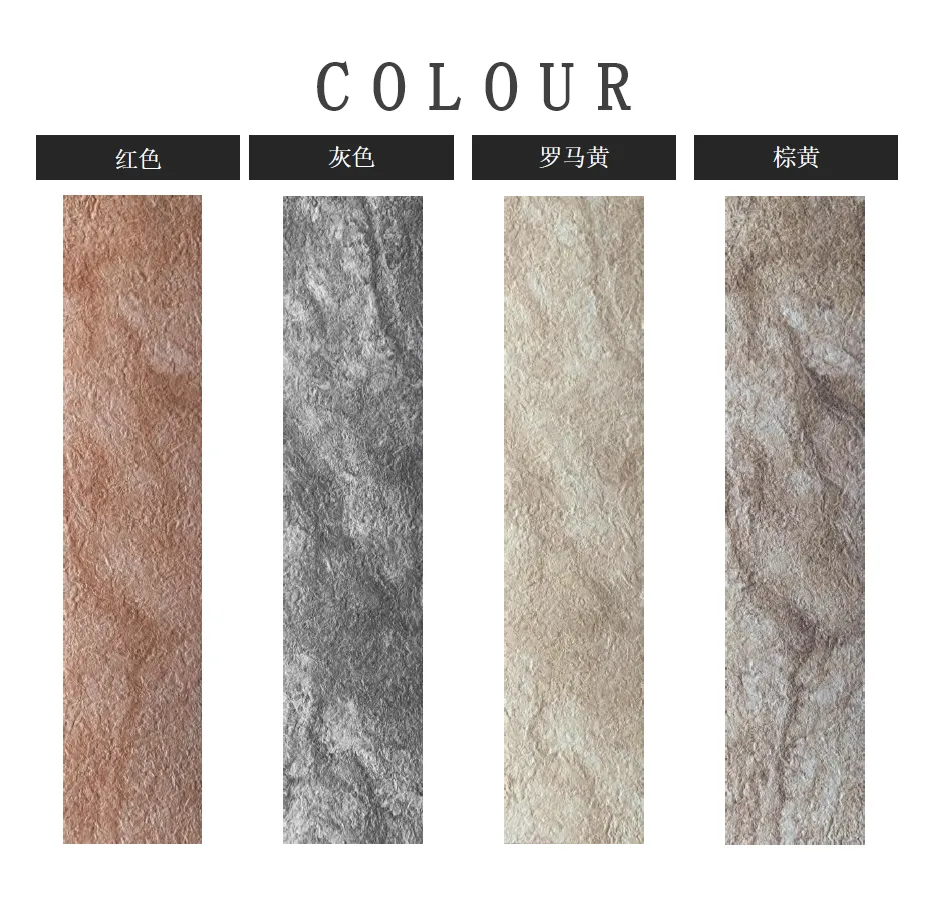
Now, enter MCM flexible stone: the new kid on the block that's turning heads (and challenging norms). MCM, short for Modified Composite Material, is a hybrid product that marries the best of natural stone with cutting-edge engineering. Here's how it works: manufacturers take crushed natural stone aggregates (often recycled from quarry waste), mix them with polymers and resins, and press the blend into thin, lightweight panels. The result? A material that looks and feels like natural stone but is flexible, ultra-lightweight (up to 80% lighter than traditional stone slabs), and remarkably durable. Think of it as stone with a "flex" – it bends without cracking, making installation a breeze even on curved surfaces or high-rise facades.
MCM flexible stone was designed with sustainability in mind from the start. Unlike quarrying, its production process uses far less raw natural stone—often incorporating waste from other industries, which reduces the need for new mining. The polymer binding agents are carefully selected to minimize toxicity, and the manufacturing process itself is energy-efficient, with many producers using solar-powered facilities or recycling heat from production. But the real game-changer? Its flexibility and light weight. A 10-square-meter panel of MCM flexible stone weighs roughly 30kg, compared to 200kg for the same area of dolomitic stone. That translates to lower transportation emissions, easier installation (no need for heavy cranes), and reduced structural stress on buildings—meaning less steel and concrete are needed for support.
To really understand which material comes out on top, let's put them head-to-head in the categories that matter most for Saudi projects: environmental impact, resource efficiency, durability, and climate resilience. We'll use a simple comparison table to break it down—no jargon, just clear, actionable insights.
| Category | Rock Cut Dolomitic Stone | MCM Flexible Stone |
|---|---|---|
| Environmental Impact (Production) | High: Quarrying disrupts ecosystems, causes soil/air pollution, and generates waste rock. | Low: Uses recycled stone aggregates, minimal waste, and energy-efficient manufacturing. |
| Resource Depletion | High: Non-renewable; quarries deplete finite stone reserves. | Low: Reduces reliance on virgin stone; some manufacturers use up to 70% recycled content. |
| Carbon Footprint (Cradle-to-Site) | High: Heavy transportation and energy-intensive quarrying contribute ~200-300 kg CO₂ per sqm. | Low: Lightweight design cuts transport emissions; total CO₂ per sqm is ~50-80 kg (3-4x lower). |
| Durability in Saudi Climate | Good: Resists heat but can crack in extreme temperature swings; sandstorms may scratch polished surfaces. | Excellent: UV-resistant, heat-stable (doesn't expand/contract in desert heat), and scratch-resistant. |
| Maintenance Needs | High: Requires regular sealing (every 2-3 years) to prevent staining from dust and humidity. | Low: Non-porous surface resists stains; occasional washing with water is usually enough. |
| Recyclability | Limited: Old slabs are often landfilled; recycling requires crushing, which is energy-intensive. | Moderate: Can be recycled into aggregate for new MCM panels or road base at end-of-life. |
| Installation Efficiency | Low: Heavy slabs require cranes, specialized labor, and longer installation times. | High: Lightweight and flexible; can be installed with basic tools, cutting labor time by 30-40%. |
Let's zoom in on a category that's make-or-break for Saudi projects: how do these materials hold up in the kingdom's harsh climate? Saudi Arabia isn't just hot—it's extremely hot, with summer temperatures regularly exceeding 45°C (113°F), coupled with intense UV radiation, sudden sandstorms, and occasional humidity along the coast. These conditions test the limits of any building material.
Rock Cut Dolomitic Stone, while tough, has a Achilles' heel: thermal expansion. When exposed to direct sunlight, the stone absorbs heat, expands, and then contracts rapidly as temperatures drop at night. Over time, this cycle can lead to cracks, especially in thinner slabs. Sandstorms exacerbate the issue, with blowing grit scratching polished surfaces and making them look dull over time. To keep them looking fresh, property owners often resort to frequent sealing—a process that uses chemical-laden sealants, adding to the environmental load.
MCM flexible stone, on the other hand, was engineered for climates like Saudi's. Its polymer matrix acts as a buffer against thermal stress, allowing the material to expand and contract without cracking. The non-porous surface repels dust and sand, so even after a sandstorm, a quick hose-down is all it takes to restore its appearance. And because it's lightweight, it doesn't absorb heat like natural stone—meaning buildings stay cooler, reducing the need for air conditioning (a huge plus in a country where AC accounts for up to 70% of electricity use in summer).
Sustainability is crucial, but let's be real: budgets matter too. For developers eyeing Saudi projects, the upfront cost of materials can make or break a decision. At first glance, Rock Cut Dolomitic Stone might seem cheaper—after all, it's "just" quarried stone. But when you factor in the hidden costs (transportation, heavy machinery rental, structural reinforcements, and long-term maintenance), the tables turn.
Take installation, for example: MCM flexible stone panels are so light that a two-person crew can install them in a fraction of the time it takes to mount dolomitic slabs. Faster installation means lower labor costs and shorter project timelines—both big wins in a market where construction delays can eat into profits. Then there's maintenance: sealing dolomitic stone every 2-3 years costs roughly SAR 15-20 per square meter, plus labor. MCM? No sealing required. Over a 20-year building lifespan, that's a savings of SAR 600-800 per sqm—enough to offset any slight upfront premium for MCM.
To see this in action, let's look at a hypothetical (but realistic) example: a 30-story commercial tower in Riyadh targeting LEED Gold certification. The developer initially considered Rock Cut Dolomitic Stone for the facade, drawn to its aesthetic. But after crunching the numbers, they switched to MCM flexible stone. Here's why:
It's a pattern we're seeing more and more across Saudi Arabia: developers aren't just choosing materials for looks—they're choosing them for impact .
We'd be remiss not to acknowledge that Rock Cut Dolomitic Stone still has its place. For heritage restoration projects, where historical accuracy is paramount (like the ongoing preservation of Mada'in Saleh), natural stone is irreplaceable. Its timeless beauty and cultural significance can't be replicated by man-made materials. Additionally, in low-rise projects with minimal transportation needs (e.g., a villa in Al Khobar sourcing stone from a nearby quarry), the carbon gap narrows. But for most large-scale, forward-looking Saudi projects—especially those aiming for sustainability certifications—MCM flexible stone offers a more balanced, future-proof solution.
When you weigh the environmental impact, resource efficiency, climate resilience, and long-term costs, MCM flexible stone emerges as the more sustainable choice for most Saudi projects. It's not just about "being green"—it's about aligning with Saudi Arabia's goals to build smarter, reduce carbon emissions, and create cities that thrive in harmony with the desert environment. Rock Cut Dolomitic Stone will always have a role in the kingdom's architectural story, but MCM represents the next chapter: one where innovation meets tradition, and sustainability isn't just a buzzword, but a built reality.
So, to the architects and developers reading this: the next time you're drafting plans for a Saudi project, ask yourself: am I choosing a material that honors the past, or one that builds the future? For the kingdom's green vision, the answer is clear.
Recommend Products












