
As the sun dips below the horizon, casting a warm glow over a quarry in northern Italy, Marco, a third-generation stone craftsman, kneels beside a pile of irregular stone fragments. He picks up a piece of rock cut dolomitic stone , its surface rough but flecked with hints of silver-gray—likely a discard from a recent travertine order. "This wasn't 'waste' to my grandfather," he says, brushing dust off the fragment. "He'd call it 'unfinished potential.'" Today, Marco's workshop isn't just cutting stone; it's reimagining it. In an industry that generates millions of tons of scrap annually, stories like Marco's are sparking a quiet revolution: turning stone waste into sustainable, beautiful resources.
Stone has shaped human civilization for millennia, from the pyramids to modern skyscrapers. But progress has come with a cost. For every ton of usable stone extracted, up to 30% becomes waste—broken chunks, off-cuts, or pieces deemed "imperfect." For dense, durable stones like dolomitic travertine, this waste often ends up in landfills, leaching minerals into soil and water, or is left to pile up in quarries, a silent reminder of resource inefficiency. Yet, as architects, craftsmen, and environmentalists unite, this narrative is shifting. Recycling and reusing stone waste isn't just an eco-friendly choice; it's a creative one, breathing new life into materials once cast aside.
To understand the stakes, let's start with the stone itself. Dolomitic travertine —a cousin of classic travertine—boasts a unique composition: high magnesium content gives it extra strength, while natural pores and veining make it a favorite for both rustic and contemporary designs. Quarried in regions like Turkey, Italy, and Iran, it's used in everything from kitchen countertops to hotel facades. But its density and irregular formation mean that even skilled cutting leaves behind scraps. A single large slab cut for a luxury project might generate 50kg of waste; multiply that by thousands of projects globally, and the numbers stagger.
The environmental impact is tangible. Traditional stone extraction requires heavy machinery, fuel, and water, contributing to carbon emissions and habitat disruption. When waste is dumped, it occupies landfill space—space that could be used for organic matter or non-recyclables. Worse, dolomitic stone's slow formation (it takes centuries for mineral-rich water to deposit layers) means over-extraction depletes a non-renewable resource. "We're mining stone formed 20 million years ago, then throwing away a third of it," says Dr. Elara Voss, an environmental geologist specializing in construction waste. "That's not just unsustainable—it's short-sighted."
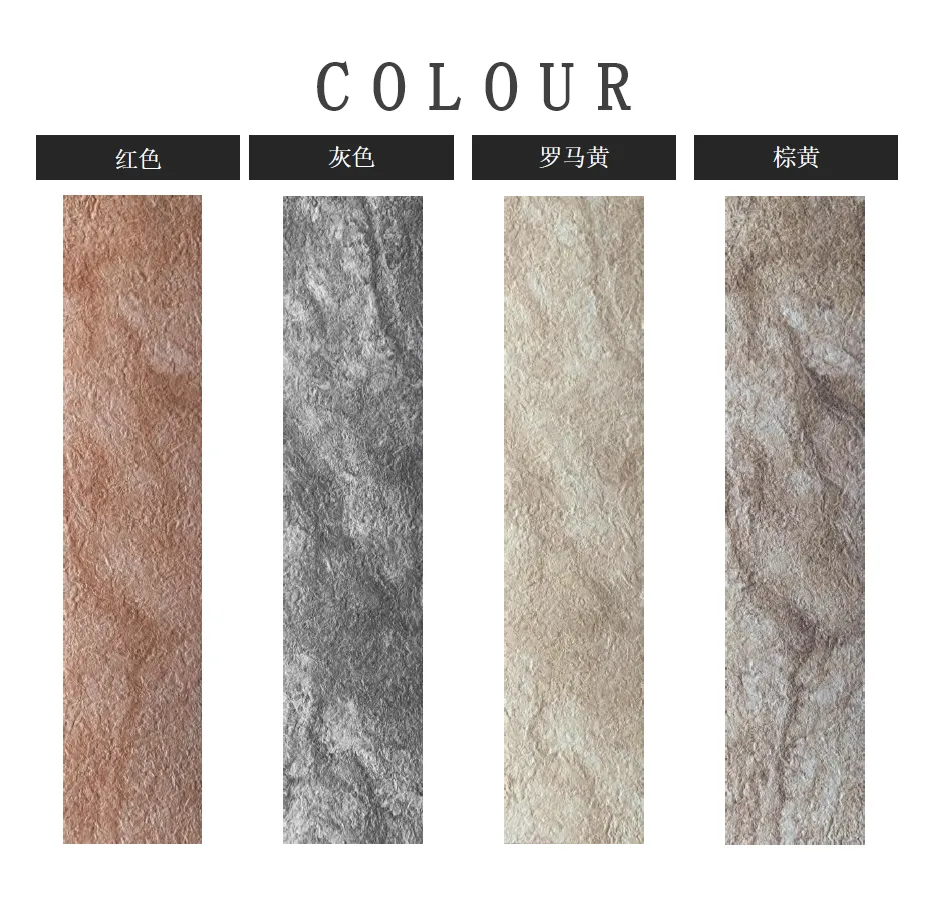
But there's another layer: economic loss. For small quarries, waste represents lost revenue; for craftsmen like Marco, it's time and labor spent on material that doesn't pay. "A decade ago, we'd haul scraps to the dump and write it off as a cost of doing business," says Lina, Marco's daughter and business partner, who manages the workshop's sustainability initiatives. "Now? We track every fragment. A dolomitic travertine (dark grey) off-cut might become a mosaic tile; a claybank dolomitic travertine piece could end up as a backsplash tile. What was once a liability is now a line item in our profit margin."
Recycling stone waste isn't as simple as crushing and reusing. It's a dance of science, art, and patience. Here's how Marco's workshop—and others like it—transforms "unfinished potential" into marketable products:
Waste collection starts at the source: quarries and fabrication shops. Marco's team partners with local quarries to collect off-cuts, prioritizing rock cut dolomitic stone due to its recyclability. Back at the workshop, the first task is sorting. "It's like panning for gold," Lina laughs, gesturing to a table covered in labeled bins. "We separate by type (dolomitic vs. other stones), color ( dark grey vs. claybank dolomitic travertine ), and size. Small chips go into aggregates; larger pieces might be carved or polished for decorative use."
Smaller waste (think: chips and dust) heads to a specialized crusher. Unlike concrete recycling, which uses brute force, stone crushing here is gentler to preserve mineral integrity. The result? A fine powder or small granules, which are then washed to remove impurities like dirt or metal fragments. "Dolomitic stone has a unique crystalline structure," Marco explains, holding up a jar of powder. "If we crush it too roughly, we that structure, and the recycled material loses strength. It's about balance."
This is where innovation shines. The refined powder becomes the base for mcm flexible stone —a game-changer in sustainable design. MCM, or Modified Composite Material, blends stone powder with eco-friendly resins and fibers, creating thin, lightweight panels that mimic natural stone but are easier to install and more durable. "Traditional stone slabs are heavy—you need steel supports for a facade," Lina says. "MCM panels weigh 70% less, stick to walls with simple adhesives, and can be bent or curved. Architects love them for their versatility."
For larger scraps, the team uses 3D scanning to map irregular shapes, then designs custom pieces. A jagged rock cut dolomitic stone chunk might become a one-of-a-kind fireplace surround; smaller off-cuts are arranged into mosaic patterns, often paired with materials like foamed aluminium alloy board (vintage silver) for contrast. "Aluminium's metallic sheen complements the stone's earthiness," Marco notes, running a hand over a sample panel combining claybank dolomitic travertine mosaic with vintage silver foam aluminium. "It's not just recycling—it's art."
Recycled dolomitic stone waste isn't just "good enough"—it's becoming a premium choice. Here are the spaces where it's making the biggest impact:
Modern buildings crave texture, and mcm flexible stone delivers. Take the GreenHaven Office Complex in Barcelona: its facade features over 2,000 square meters of MCM panels made from recycled dolomitic travertine waste. The design team chose dolomitic travertine (dark grey) for the lower levels, evoking strength, and claybank dolomitic travertine for upper floors, softening the look. "Clients love that it's sustainable, but they fall for the aesthetics," says Carlos Mendez, the project's lead architect. "The panels have the same veining and depth as natural stone, but with zero waste. It's a win-win."
In homes, recycled stone waste shines in smaller, high-impact areas. A homeowner in Portland, Oregon, used crushed dolomitic stone aggregates (from off-cuts) mixed with resin to create a terrazzo-like bathroom floor, flecked with bits of rock cut dolomitic stone in varying shades. "It feels like walking on a piece of the earth," they say. Meanwhile, restaurants and hotels are embracing custom mosaics: Marco's workshop recently completed a project for a boutique hotel in Milan, where dolomitic travertine (claybank) scraps were arranged into a mural depicting the city's skyline, framed by foamed aluminium alloy board (vintage gold) for a touch of luxury.
Outdoors, recycled stone waste finds purpose in paths, retaining walls, and water features. Crushed dolomitic stone (screened to uniform size) makes excellent drainage material for garden beds, while larger, polished scraps become stepping stones. "We had a client who wanted a 'wild' garden path that looked like it had been there for decades," Lina recalls. "We used irregular rock cut dolomitic stone off-cuts, laid them in a haphazard pattern, and filled the gaps with moss. It's now the most photographed spot in their yard."
| Metric | Traditional Stone Production | Recycled Stone Production (MCM & Reused Scraps) |
|---|---|---|
| Carbon Footprint | High (extraction, transport, cutting) | Up to 60% lower (reduced extraction, local sourcing) |
| Waste Generated | 20-30% of extracted stone | <5% (scraps from recycling process are reused) |
| Material Cost | High (raw stone + extraction fees) | 30-40% lower (waste is often free or low-cost) |
| Design Flexibility | Limited by slab size/shape | High (custom molds, flexible panels, mosaics) |
In the small town of Pietra, Italy, population 2,000, the local community center was falling apart. Built in the 1970s, its concrete walls were cracking, and the budget for repairs was tight. Enter architect Sofia Lorenzi, who proposed a radical idea: rebuild using 80% recycled materials, with rock cut dolomitic stone waste as the star.
Sofia partnered with Marco's workshop and local quarries, collecting over 100 tons of dolomitic stone scraps. "We sorted them by color: dark grey dolomitic travertine for the exterior walls, claybank dolomitic travertine for the interior," she explains. "Larger pieces were cut into thin tiles for the facade; smaller ones became MCM panels for the ceiling. Even the floor uses crushed stone aggregate mixed with resin." The result? A warm, inviting space where every wall tells a story. "The kids call it 'the stone puzzle building,'" Sofia laughs. "And the best part? The project cost 25% less than using new stone, and we diverted 100 tons from landfills."
But the impact went beyond bricks (or stones). The project trained 15 local workers in stone recycling, creating new jobs. "I was a quarry laborer before," says Giovanni, now a full-time sorter at Marco's workshop. "Now I'm not just moving stone—I'm helping my town. That feels different."
Recycling stone waste isn't just about saving the planet (though that's a big part). It's about redefining value. For quarries, it turns a cost center into a revenue stream. For designers, it unlocks new textures and stories—materials with "character," as Marco puts it. For communities, it creates jobs and fosters pride. And for the planet, it reduces carbon emissions, conserves water, and keeps valuable resources in circulation.
Consider the numbers: A single ton of recycled stone saves 1,200 gallons of water (used in extraction) and reduces CO2 emissions by 500kg compared to new stone. Multiply that by the millions of tons of waste generated annually, and the potential is staggering. "We're not just recycling stone," Dr. Voss says. "We're recycling hope—proving that sustainability and beauty can go hand in hand."
The revolution is just beginning. Innovators are experimenting with AI-powered sorting systems that can identify stone types and colors in seconds, making recycling more efficient. Startups are developing bio-based binders for MCM panels, cutting reliance on synthetic resins. And architects are pushing boundaries, combining recycled stone with materials like foamed aluminium alloy board or bamboo to create hybrid designs that marry sustainability with cutting-edge style.
Back in Marco's workshop, the sun has set, but the lights are still on. He's working on a small sculpture—a bird, carved from a single piece of claybank dolomitic travertine waste. "This piece was too small for a slab," he says, smiling. "But it was perfect for this. My grandfather would have loved this." As he works, the bird takes shape, its wings curved like the edge of a quarry cliff. It's not just a sculpture. It's a symbol: of resilience, of creativity, and of the endless potential in what we once called "waste."
The next time you walk past a stone building or run your hand over a travertine countertop, take a closer look. Maybe, just maybe, it's not new. Maybe it's a story—of a quarry, a craftsman, a community—all woven into the stone. And that, perhaps, is the most beautiful part of recycling: it turns waste into something with soul.
Recommend Products












