
Few materials carry as much architectural memory as Roman huge travertine. From the towering walls of the Colosseum, erected in AD 80 as the largest amphitheatre of the ancient world, to the carefully restored southern piazza redesigned by Stefano Boeri Interiors in 2026, this warm, honey-toned stone has shaped how we read Rome's skyline. A recent restoration project that recreated the footprints of the amphitheatre's long-lost columns with evenly placed travertine benches, each 40 centimetres high, shows how the material still anchors contemporary design decisions more than two thousand years after it was first quarried.
The case study matters not only because of its historical weight, but because it reveals what architects actually value in travertine: a porous surface formed by mineral-rich hot springs over millennia, tiny bubbles, subtle veining, and a palette that runs from creamy beige to deep honey. Designers gravitate to this lived-in texture because it softens the severity of modern geometry, giving facades and interiors a sense of depth that flat, uniform surfaces cannot match.
What makes Roman huge travertine a case-study favourite
Several factors explain why Roman huge travertine keeps appearing in award-winning projects. Its visual warmth works in both heritage and contemporary settings, pairing naturally with timber, brass, and neutral tones. Its natural character means no two panels are identical, which gives a facade a quiet sense of craft. And because the stone has been used for centuries, clients and specifiers trust it, expecting a mature performance record rather than an unproven experiment.
Yet the same qualities that make the material desirable also create practical challenges on site. Natural travertine is heavy, which increases structural load and logistics cost. It requires careful handling, and its open pores can absorb moisture and stains if not sealed properly. Large-format natural slabs are difficult to cut and fix on curved or irregular surfaces, and lead times for genuine quarry stone can stretch project schedules. For many commercial and residential builds, these constraints make full natural stone impractical even when the aesthetic is exactly right.
Bringing the case study into the real world
This is where the conversation moves from the stone in its purest form to how it can be delivered on modern projects. Rather than abandoning the look, developers and architects are increasingly turning to engineered flexible materials that reproduce the appearance of Roman huge travertine while solving the weight, cost, and installation problems. Coloria Group, a Foshan-based manufacturer specialising in modified clay building materials, builds its product range around exactly this need.
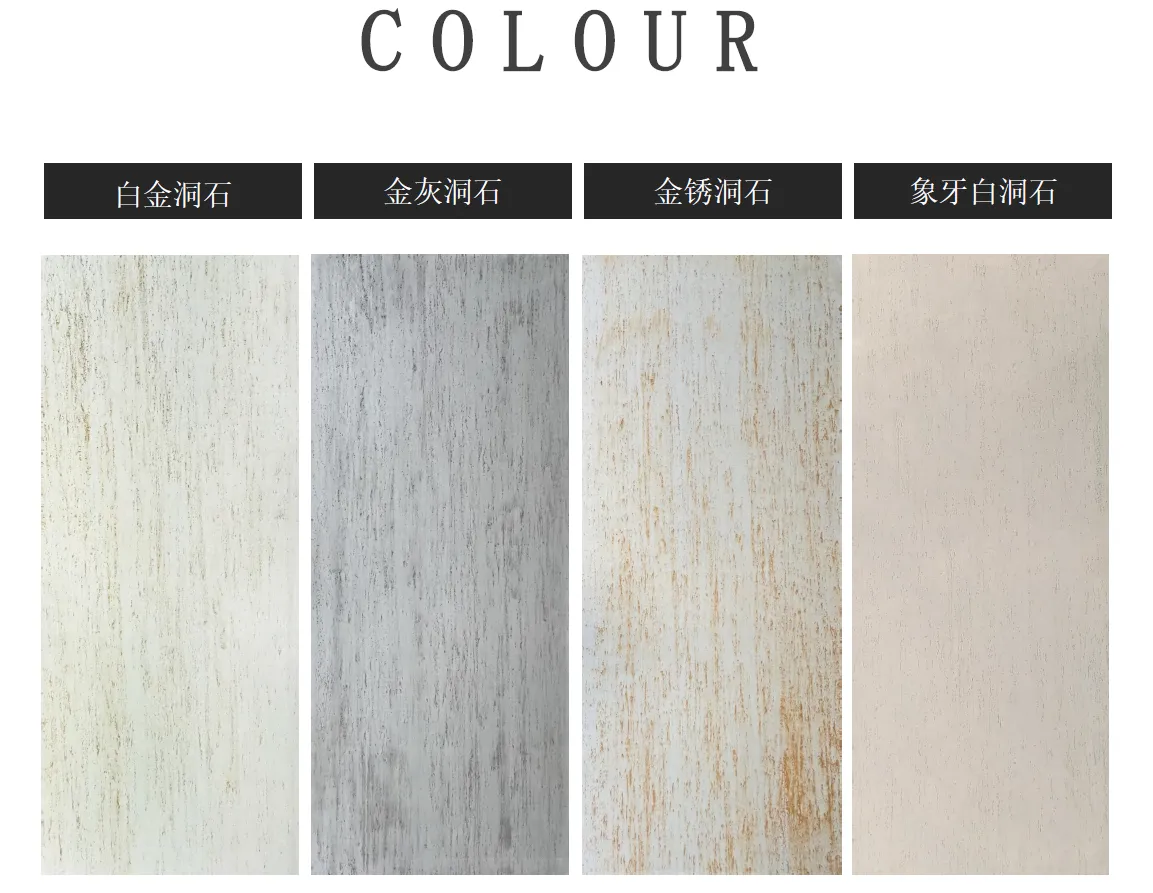
Coloria Group's roman huge travertine flexible panels recreate the stone's colour variation and surface character in a lightweight, bendable format that can wrap columns, arches, and curved walls. Because the material is modified clay rather than quarried rock, it dramatically reduces structural load, simplifies transport and handling, and shortens installation time. The same approach extends across the range, from huge travertine boards and project-ready panels to 3D-printed finishes that add realistic texture without the mass of stone.
For a facade that needs the warmth of natural travertine but must stay within budget and weight limits, these flexible panels offer a practical path. They bend around corners, can be applied over existing surfaces during renovation, and come in finishes that echo classic travertine tones, from creamy beige and light grey to vintage silver, gold, and black. This makes them a strong option for heritage-adjacent infill, hotel lobbies, retail facades, and residential exteriors where the Roman aesthetic is desired but a full stone build is not viable.
Lessons the case study teaches specifiers
The Colosseum restoration offers a clear lesson: travertine's appeal lies in its material honesty and enduring warmth, qualities that can be preserved even when the delivery method changes. When selecting cladding, specifiers should weigh not only the visual finish but also structural load, installation complexity, long-term maintenance, and the supplier's ability to deliver consistent quality at scale. A flexible, factory-controlled alternative can deliver the same tactile warmth with far greater design freedom.
For architects and building owners exploring the Roman huge travertine look, the smartest first step is to clarify the project's real constraints, then match the material platform to them. Where weight, cost, and curved geometry are concerns, engineered flexible panels provide a proven route to the timeless travertine aesthetic that has defined Rome for two millennia.
Recommend Products












