
Every architect has been there: staring at a vision board covered in images of sun-dappled travertine, its honeyed tones and natural veining promising warmth and timelessness. But then comes the reality check. Traditional travertine, quarried from the earth in massive slabs, weighs upwards of 80 kg per square meter. On a 40-story building, that weight isn't just a number—it's a structural headache, a logistical nightmare, and a budget-buster. "We wanted the lobby of our new high-rise to feel like a slice of ancient Rome," says Elena, a senior designer at a leading architectural firm, "but the engineers kept shaking their heads. The building's foundation couldn't handle the load, and installing those heavy slabs on the 35th floor? It felt impossible."
This is the paradox of natural stone: its beauty is unparalleled, but its heft limits where and how it can be used. For decades, high-rise projects have been forced to compromise—opting for cheaper, lighter materials that lack the depth of real stone, or scaling back designs to fit within structural constraints. But what if there was a way to have both: the authentic look of travertine, without the weight? Enter MCM's Roman Huge Travertine and its family of lightweight cladding solutions.
MCM (Modified Composite Material) isn't just a manufacturer—it's a problem-solver. Founded by a team of material scientists and designers frustrated by the limitations of traditional building materials, the brand set out to create products that marry nature's beauty with modern engineering. Their breakthrough? A proprietary blend of mineral aggregates, high-performance polymers, and reinforcing fibers that replicate the texture, color, and depth of natural stone—at a fraction of the weight.
"We started with a simple question," says Marco, MCM's lead product developer. "What if we could take the essence of travertine—the way light plays on its pores, the warmth of its tones—and distill it into something that's as easy to install as wallpaper?" The result is a line of products that includes MCM flexible stone , MCM big slab board series , and the star of the show: Roman Huge Travertine. These materials weigh as little as 6 kg per square meter, making them up to 90% lighter than their natural counterparts. Suddenly, that 40-story travertine facade isn't just a dream—it's a viable, cost-effective reality.
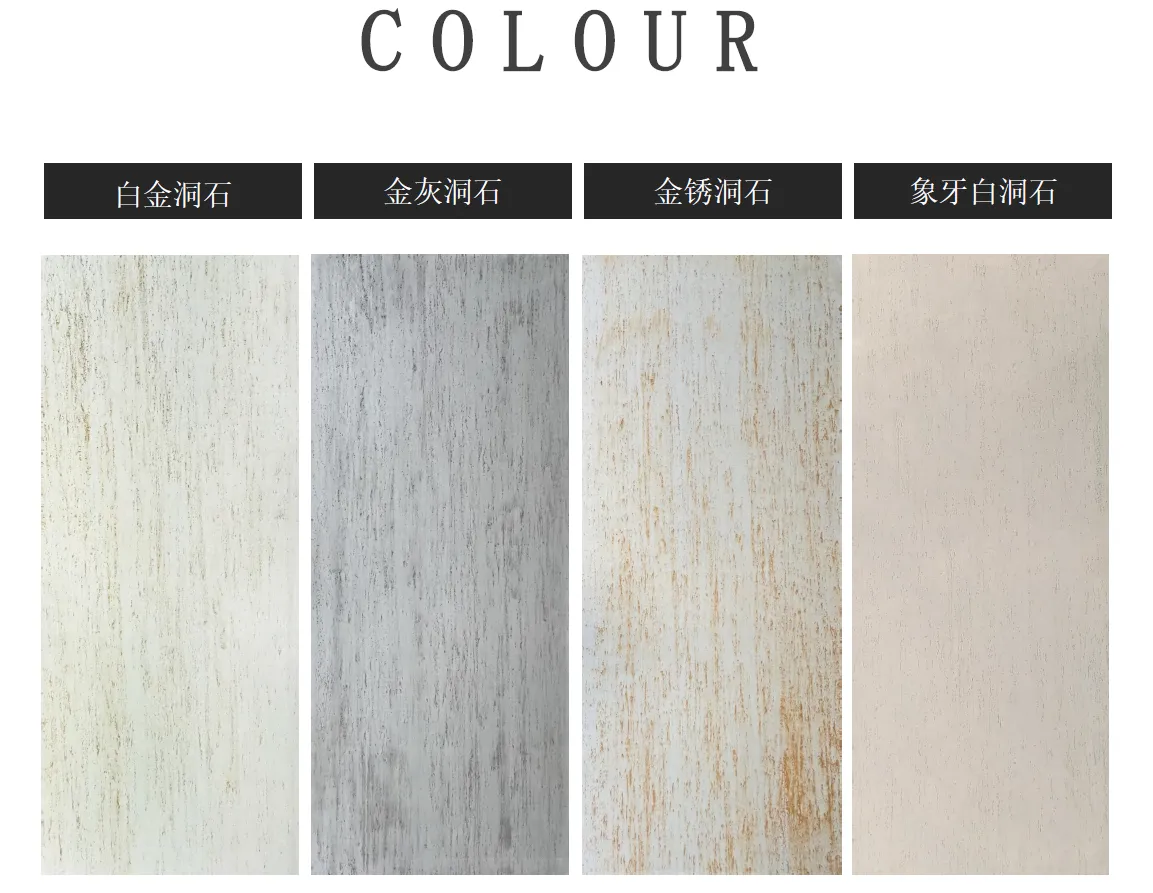
At first glance, you'd never guess Roman Huge Travertine isn't quarried from the hills of Tuscany. Run your hand over its surface, and you'll feel the same subtle ridges and hollowed pores that define natural travertine. Peer closely, and you'll spot the same earthy hues—warm beiges, soft golds, and the occasional veining of terracotta—that have made the stone a favorite for centuries. But pick up a slab, and the difference is (striking). It's light enough for two people to carry with ease, yet tough enough to withstand decades of rain, wind, and urban pollution.
What makes it work? MCM's manufacturing process starts with capturing the exact texture of natural Roman travertine using 3D scanning technology. That digital blueprint is then used to mold the composite material, which is infused with mineral pigments to match the stone's natural color variations. The result is a panel that doesn't just look like travertine—it feels like it, too. "Our clients often run their hands over it and ask, 'Are you sure this isn't real?'" laughs Sarah, a sales rep at MCM. "That's the highest compliment."
Roman Huge Travertine is just one piece of MCM's lightweight puzzle. The brand's big slab board series takes the concept further, offering seamless panels up to 3 meters in length—perfect for creating sleek, modern facades with minimal joint lines. Imagine a high-rise exterior that reads as a single, continuous expanse of stone, unbroken by unsightly grout lines. That's the magic of the big slab series, which uses MCM's flexible composite to bend and adapt to a building's curves without cracking or warping.
Then there's MCM flexible stone —the chameleon of the lineup. Thin, pliable, and available in a spectrum of finishes (from rough-hewn to polished), it's ideal for tricky surfaces: curved walls, columns, even ceilings. "We used it in a hotel lobby with a vaulted ceiling," Elena recalls. "Traditional stone would have required custom-cut pieces and a army of installers. With MCM's flexible stone, the team wrapped it around the curves like fabric. It saved us weeks of work and looked flawless."
Still skeptical? Let's break it down. Below is a side-by-side comparison of traditional travertine and MCM's Roman Huge Travertine, based on data from real-world installations:
| Feature | Traditional Travertine | MCM Roman Huge Travertine |
|---|---|---|
| Weight per sq.m | 70–90 kg | 5–8 kg |
| Installation Time (per sq.m) | 2–3 hours (requires 2–3 workers) | 30–45 minutes (1–2 workers) |
| Structural Load (on a 50-story building) | Requires additional steel reinforcement | No extra reinforcement needed |
| Weather Resistance | Prone to staining and frost damage | UV-resistant, frost-proof, and stain-resistant |
| Cost (material + installation) | $150–$250 per sq.m | $80–$120 per sq.m |
The savings add up fast. For a 10,000 sq.m high-rise facade, switching to MCM could cut installation time by 60% and reduce labor costs by nearly half. And because the panels are lightweight, transportation is easier—no need for specialized heavy-duty trucks, which slashes carbon emissions, too. "Sustainability was a big factor for us," says Raj, a project manager at a green-building firm. "MCM's materials use 70% recycled content, and their manufacturing process produces almost no waste. It checked every box."
Take a walk through downtown Chicago, and you'll spot it: the 32-story Aquila Tower , its exterior clad in MCM's Roman Huge Travertine. From a distance, the building glows with the same warm radiance as Rome's ancient forums. Up close, the detail is remarkable—veins of cream and gold winding through the stone, just like the real thing. "We wanted to honor the city's architectural heritage while pushing forward," says the tower's lead architect, James. "Traditional travertine would have added $2 million to the budget and delayed construction by three months. MCM let us have our cake and eat it too."
Another success story is the Verde Residences in Dubai, where the developer opted for MCM's big slab board series in a custom "sandy beige" finish. The result? A 45-story tower that looks like it's been carved from a single block of stone, with none of the weight issues. "Our residents love the way the light hits the facade at sunset," says the project's marketing director. "It feels luxurious, but we didn't have to compromise on safety or speed."
MCM's Roman Huge Travertine and lightweight series aren't just changing how buildings are clad—they're changing how designers think. No longer limited by the weight of stone, architects are dreaming bigger: curved exteriors that mimic natural landscapes, mixed-material facades pairing travertine with foamed aluminium alloy board for a modern twist, and even vertical gardens integrated with flexible stone panels. "It's like someone lifted a weight off our shoulders—literally," Elena says. "Now, when I look at a high-rise, I see endless possibilities. The stone I love, on the buildings that need it most."
In the end, great architecture is about balance—between form and function, tradition and innovation, beauty and practicality. MCM's lightweight solutions don't just tip that balance in favor of beauty; they redefine what's possible. So the next time you pass a high-rise shimmering with the warmth of travertine, take a second look. It might just be MCM's Roman Huge Travertine—proving that some of the best innovations are the ones that let us hold onto the past, without being weighed down by it.
Recommend Products












